How to Bake Bacon: The Ultimate Guide to Perfectly Crispy, Mess-Free Strips
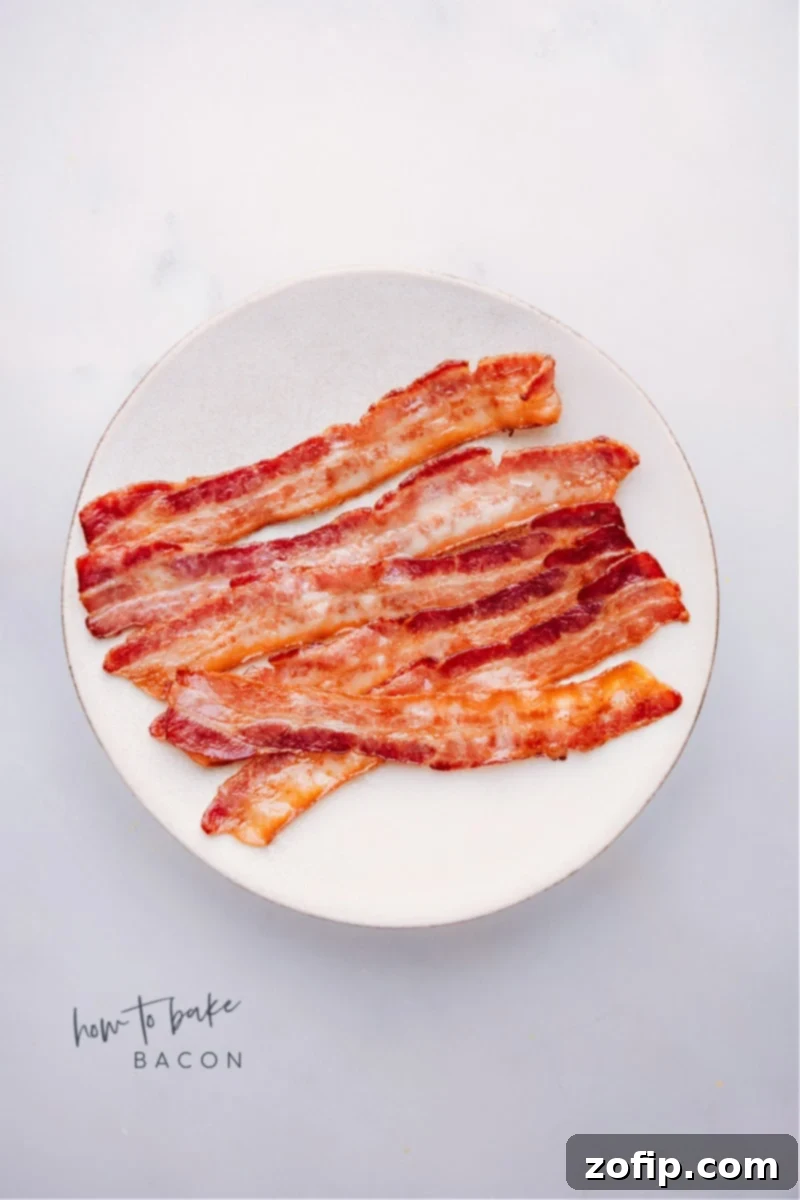
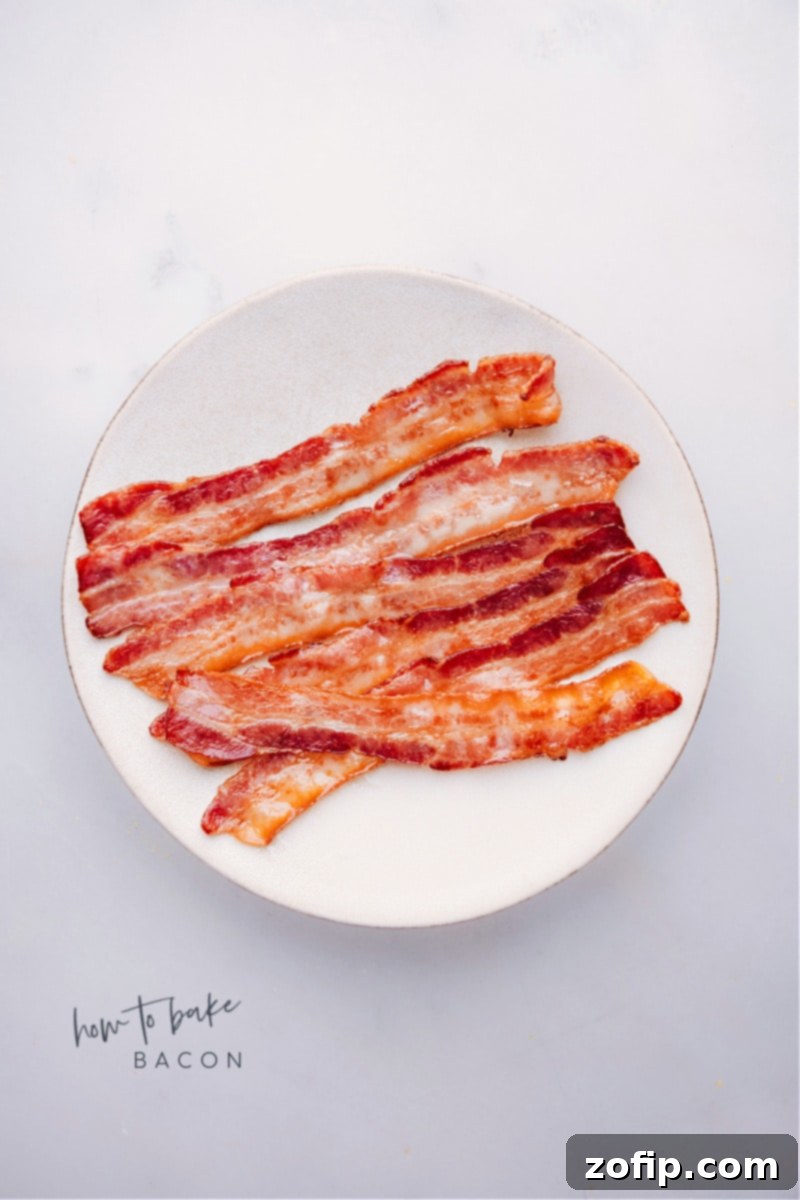
Bacon is undeniably one of the most beloved foods globally, cherished for its irresistible crispiness, savory depth, and perfectly salty flavor. It graces breakfast plates, elevates sandwiches, and adds a delightful crunch to countless dishes. While pan-frying bacon is a common method, it often comes with a messy stovetop and unevenly cooked strips. Discovering how to bake bacon in the oven is a game-changer, offering a hands-off, cleaner, and consistently superior way to achieve golden, uniformly crispy results every single time. This comprehensive guide will walk you through the simple steps and essential tips to bake bacon to perfection, transforming your cooking experience and delivering impeccable bacon for any meal.
Why Baking Bacon Reigns Supreme
Once you experience the ease and superior results of oven-baked bacon, you’ll likely never go back to frying. Baking bacon offers several distinct advantages over traditional stovetop frying:
- Achieve Unrivaled Crispness and Even Cooking: The consistent heat of the oven ensures that every inch of each bacon strip cooks evenly. Unlike a skillet where hot spots can lead to some parts burning while others remain undercooked, baking provides gentle, uniform heat distribution. This allows the fat to render slowly and thoroughly, resulting in bacon that is perfectly crispy from end to end without the need for constant flipping or worrying about raw spots.
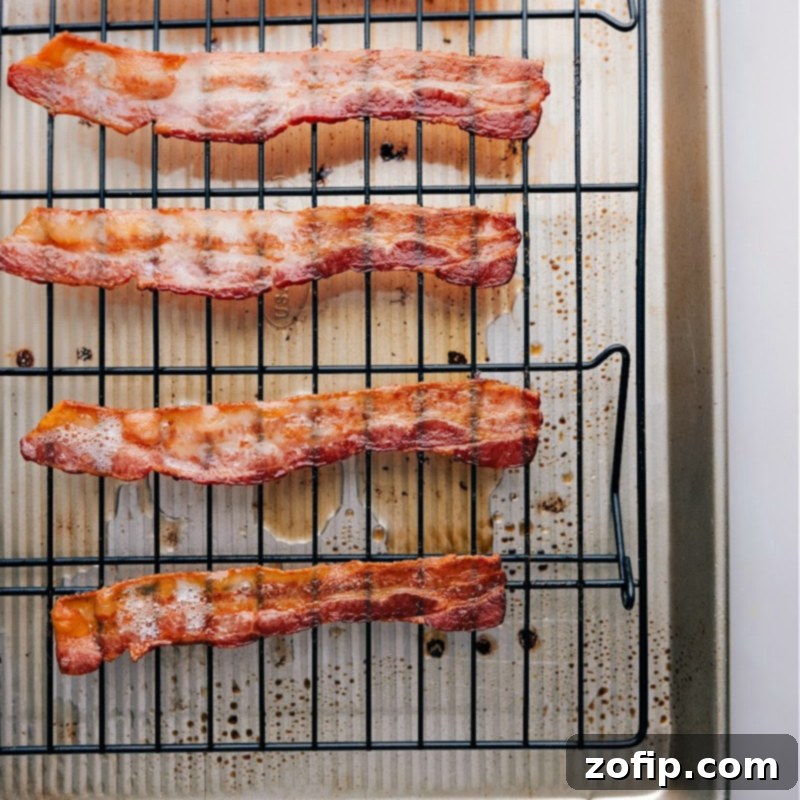
- Significantly Less Greasy Results: When bacon is fried in a pan, it often sits directly in its own rendered fat, which can prevent it from crisping properly and often leads to a greasy, soggy texture. By baking bacon on a cooling rack set over a baking sheet, excess fat drips away as it cooks. This separation of bacon from its grease is key to achieving that desirable, light, and crispy texture, making for a more enjoyable eating experience.
- A Truly Hands-Off, Mess-Free Method: One of the biggest perks of baking bacon is its incredible convenience. Once the bacon is arranged on the baking sheet, it goes into the oven, freeing you up to prepare other components of your meal. There’s no standing over a splattering stovetop, no need to constantly monitor and flip, and significantly less cleanup. The baking sheet catches all the rendered grease, keeping your cooking area spotless. This method is especially ideal for cooking larger batches of bacon for family breakfasts or meal prep.
Mastering Baked Bacon: Tips and Tricks for Perfection
Follow these simple steps and expert tips to ensure your oven-baked bacon is nothing short of perfection:
- Preheat Your Oven to 400°F (200°C): This is a critical first step. Ensure your oven is fully preheated before placing the bacon inside. A hot oven allows the bacon to begin cooking immediately and evenly, promoting crispness and preventing it from steaming rather than crisping.
- Utilize an Extra-Large Rimmed Baking Sheet: A sturdy, extra-large sheet pan with raised sides is essential. The raised edges will contain all the rendered bacon grease, preventing it from overflowing and causing a smoky mess in your oven. Lining the pan with aluminum foil also makes cleanup incredibly easy – simply discard the foil once the grease has cooled.
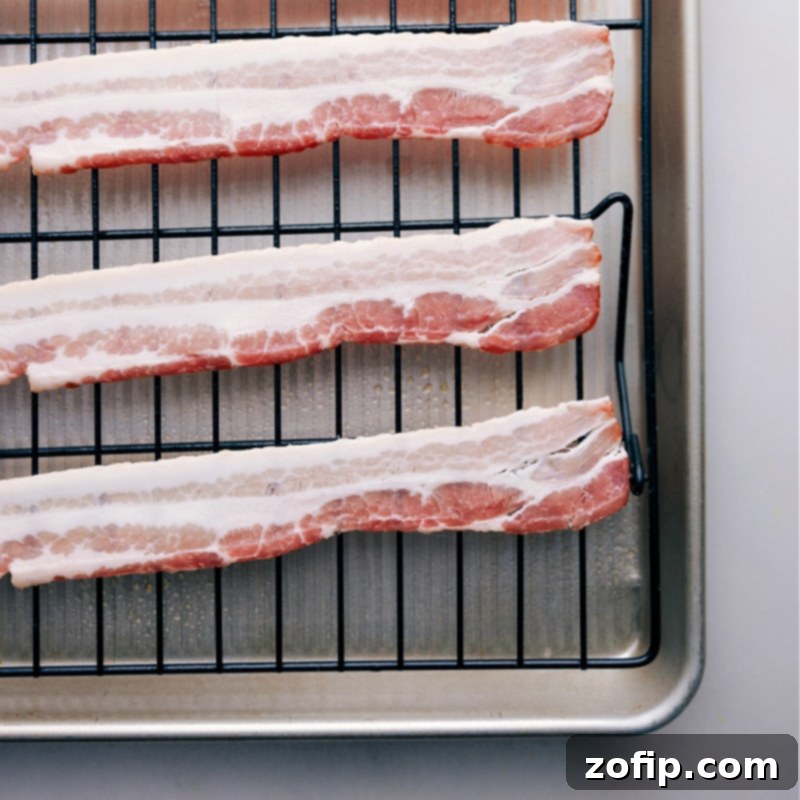
- Employ an Oven-Safe, Heavy-Duty Metal Cooling Rack: This is the secret to truly crispy, less greasy bacon. Placing the bacon slices on a wire rack elevates them, allowing hot air to circulate all around each strip and enabling the rendered fat to drip down into the lined baking sheet below. This prevents the bacon from stewing in its own grease, ensuring maximum crispness.
- Lightly Grease the Cooling Rack: A quick spray of cooking oil or a light brush of vegetable oil on the cooling rack will prevent the bacon from sticking. This ensures that your beautifully cooked strips lift off cleanly, preserving their shape and crisp texture.
- Arrange Bacon Slices in a Single Layer, Without Touching: For optimal crispness, each bacon slice needs its space. Arrange them in an even layer on the cooling rack, making sure no pieces are overlapping or touching. Overcrowding the pan can lead to steaming, resulting in chewy rather than crispy bacon. If cooking a large quantity, use multiple baking sheets.
- Bake Until Golden and Crisp to Your Liking: The cooking time for baked bacon can vary based on several factors, including the thickness of your bacon slices (thin, regular, or thick-cut) and your oven’s calibration. Generally, bacon will cook for 15-25 minutes. Begin checking around the 15-minute mark, looking for a rich golden-brown color and a firm, crisp texture. Thicker slices will require a longer cooking time, sometimes up to 25-30 minutes. Keep a close eye on it, especially towards the end, as bacon can go from perfectly crisp to burnt very quickly.
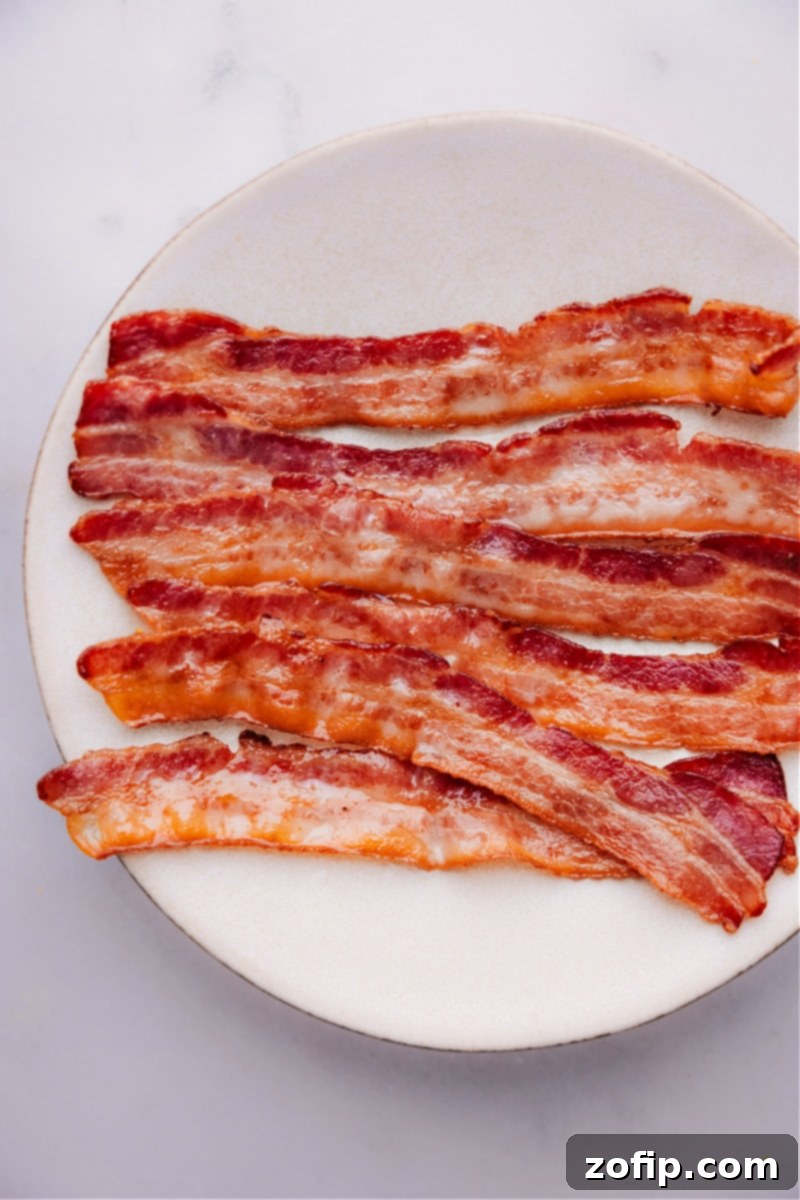
- Remove and Blot Excess Grease: Once the bacon reaches your desired level of crispness, carefully remove the baking sheet from the oven. Using tongs, transfer the cooked bacon strips to a plate lined with several layers of paper towels. Gently blot the top of the bacon with another paper towel to absorb any remaining surface grease, ensuring the ultimate crisp finish.
Versatile Culinary Uses for Your Delicious Baked Bacon
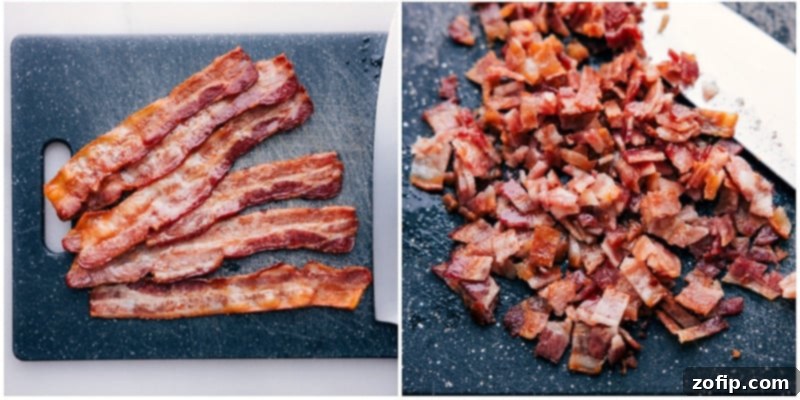
Once you’ve mastered the art of baking bacon, a world of culinary possibilities opens up. Beyond enjoying it straight off the plate, here are countless ways to incorporate your perfectly crispy baked bacon into your favorite dishes:
- Elevate Breakfast & Brunch Dishes: Baked bacon is a quintessential breakfast component. Serve it alongside fluffy scrambled eggs, in hearty omelets, or as a savory filling for breakfast burritos and sandwiches. Crumble it generously over sweet pancakes or waffles for a delightful sweet and savory contrast. It’s also fantastic in quiches, frittatas, and breakfast casseroles.
- Add Flavor and Crunch to Salads: Bacon brings a smoky, salty depth and wonderful textural contrast to any salad. Crumble it over a classic Wedge Salad, a vibrant Cobb salad, a robust spinach salad with warm bacon vinaigrette, or a refreshing Caesar salad. Don’t forget to try it with our current obsession, this Herbalicious Quinoa Salad, for an extra layer of deliciousness.
- Enhance Sandwiches and Wraps: Baked bacon is a beloved sandwich ingredient. It’s non-negotiable in a classic BLT (Bacon, Lettuce, Tomato). Add it to a turkey club, a chicken salad sandwich, or a flavorful wrap for an extra burst of savory goodness. We particularly love the addition of bacon to this Turkey Avocado Ranch Club Wrap!
- Infuse Depth into Pasta Dishes: Bacon can transform simple pasta into a rich, flavorful meal. Incorporate diced baked bacon into creamy sauces like our favorite Fettuccine Alfredo or Chicken Alfredo. It’s also fantastic in carbonara, mac and cheese, or mixed into a pasta bake.
- Garnish Soups and Stews: For a delightful textural and flavor boost, crumble some crispy baked bacon over a creamy soup. It pairs wonderfully with our Cauliflower Soup Recipe, Broccoli Soup, potato leek soup, or lentil soup. The salty crunch perfectly complements the smooth warmth of the broth.
- Creative Appetizers & Sides: Beyond main dishes, baked bacon shines in appetizers. Think bacon-wrapped dates, deviled eggs topped with bacon bits, or loaded potato skins. It can also be chopped and mixed into savory muffins or cornbread.
Storing and Reheating Baked Bacon
Properly storing your baked bacon ensures you can enjoy its deliciousness for days, making it perfect for meal prep. Here’s how to store and reheat your perfectly cooked strips:
- Allow the Bacon to Cool Completely: Before storing, it’s crucial that your baked bacon has cooled down to room temperature. Storing warm bacon can create condensation, leading to soggy strips and potential spoilage.
- Store in an Airtight Container: Once cooled, place the bacon in an airtight container. This could be a plastic food storage container or a glass container with a tight-fitting lid. You can layer the bacon between sheets of paper towel to absorb any residual moisture and maintain crispness.
- Refrigerate or Freeze: For short-term storage, keep the airtight container of bacon in the refrigerator for up to 3-5 days. If you wish to store it for a longer period, you can freeze cooked bacon. Arrange the cooled bacon in a single layer on a baking sheet and freeze until solid, then transfer to a freezer-safe bag or container. Frozen bacon can last for up to 2-3 months.
- Reheat Before Serving: To bring your bacon back to its crispy glory, reheating is key.
- Oven Reheating: For best results, place refrigerated bacon in a single layer on a baking sheet and reheat in a preheated oven at 350°F (175°C) for 5-10 minutes, or until heated through and crisp again. For frozen bacon, you can often reheat it directly from frozen, adding a few extra minutes to the cooking time.
- Microwave Reheating: While less ideal for crispness, the microwave is a quick option. Place bacon on a microwave-safe plate lined with a paper towel and heat in 15-30 second intervals until warm. Be aware that microwave reheating often results in a chewier texture.
Frequently Asked Questions About Baking Bacon
Here are answers to some common questions about baking bacon, ensuring you get the best results every time:
- What kind of bacon is best for baking? All types of bacon can be baked! Regular-cut, thick-cut, applewood smoked, or even uncured bacon work wonderfully. Thick-cut bacon will simply require a slightly longer baking time to achieve crispness.
- Can I use parchment paper instead of aluminum foil? Yes, you can. Parchment paper is excellent for non-stick purposes and can also aid in cleanup. However, foil is often preferred for its ability to create a sturdy lining that can be easily folded and discarded with the rendered grease.
- How long does it take to bake thick-cut bacon? Thick-cut bacon typically takes longer, usually between 20-30 minutes at 400°F (200°C). Keep a close eye on it after 20 minutes and adjust baking time until it reaches your desired crispness.
- Can I bake bacon at a different temperature? While 400°F (200°C) is often recommended for its balance of speed and crispness, you can bake bacon at lower temperatures (e.g., 375°F / 190°C) for slightly longer, which might result in a chewier texture. Higher temperatures (e.g., 425°F / 220°C) will cook bacon faster but require more vigilant monitoring to prevent burning.
- How do I dispose of bacon grease? Once the grease has cooled and solidified in the foil-lined pan, you can simply wad up the foil and discard it in the trash. Alternatively, you can carefully pour the cooled liquid grease into a heat-safe container (like a mason jar) and store it in the refrigerator. This flavorful rendered bacon grease can be used for cooking eggs, sautéing vegetables, or adding richness to other dishes – a true kitchen staple!
- Can I make candied bacon in the oven? Absolutely! Baking is the perfect method for candied bacon. After about 10-15 minutes of initial baking, brush the bacon with maple syrup, brown sugar, or a blend of spices, then continue baking until crisp and caramelized.
Delicious Recipes Featuring Baked Bacon
Here are some more fantastic recipes where crispy baked bacon can add an incredible layer of flavor and texture:
- Arugula Salad with a white balsamic vinaigrette – the peppery greens are beautifully complemented by salty bacon bits.
- Cheesy Potatoes – crumble baked bacon over the crunchy topping for an irresistible savory upgrade!
- Big Mac In A Bowl – add crispy bacon for extra protein and a smoky, meaty texture.
- Biscuits and Gravy – mix finely diced baked bacon into the sausage gravy for an even richer, more complex flavor.
- Potato Leek Soup – a sprinkle of crispy bacon on top adds a perfect salty crunch to this creamy, comforting soup.

User Rating: 5 out of 5 stars (based on 1 vote)
How To Bake Bacon
Equipment
- Rimmed sheet pan
- Cooling rack
- Aluminum foil
Ingredients
- Cooking spray
- 8 slices bacon (see note 1)
Instructions
- Preheat your oven to 400°F (200°C).
- Take an extra-large sheet pan with raised sides and line it well with aluminum foil. Place a metal cooling rack on top of the tray. Lightly grease the cooling rack with cooking spray.
- Place bacon slices in an even layer (not touching) on top of the cooling rack.
- Bake the bacon in the oven for 15–20 minutes or until golden and crisped to your liking. The cooking time may vary depending on the thickness of your bacon slices, so keep a close eye on them as they cook.
- Remove the bacon from the oven and place it on a paper-towel-lined plate. Blot the excess grease off the bacon with another paper towel to remove any remaining grease. Enjoy whole pieces or dice to use in recipes.
- You can wad up the foil with grease and discard it, or carefully transfer the cooled grease to a mason jar. Save that delicious rendered bacon grease in the fridge to use in other recipes!
Recipe Notes
Storage: Store cooked bacon in an airtight container in the fridge for a few days. Reheat in the oven at 350°F (175°C) for 5-10 minutes, or in the microwave in 15–30 second intervals for a quicker (though less crispy) option.
Nutrition
| Calories: 117 kcal
| Carbohydrates: 0.4 g
| Protein: 3.5 g
| Fat: 11.1 g
| Cholesterol: 18.5 mg
| Sodium: 185.4 mg
Nutrition information is automatically calculated, so should only be used as an approximation.
There you have it – a foolproof guide to baking bacon that promises crispy, delicious results with minimal fuss and mess. This method is perfect for busy mornings, large family brunches, or simply ensuring you always have perfectly cooked bacon on hand for your favorite recipes. So, ditch the pan-frying, embrace the oven, and prepare to enjoy the best bacon of your life!
Like this ultimate guide to crispy bacon? Leave a comment below and share your favorite ways to enjoy oven-baked bacon!