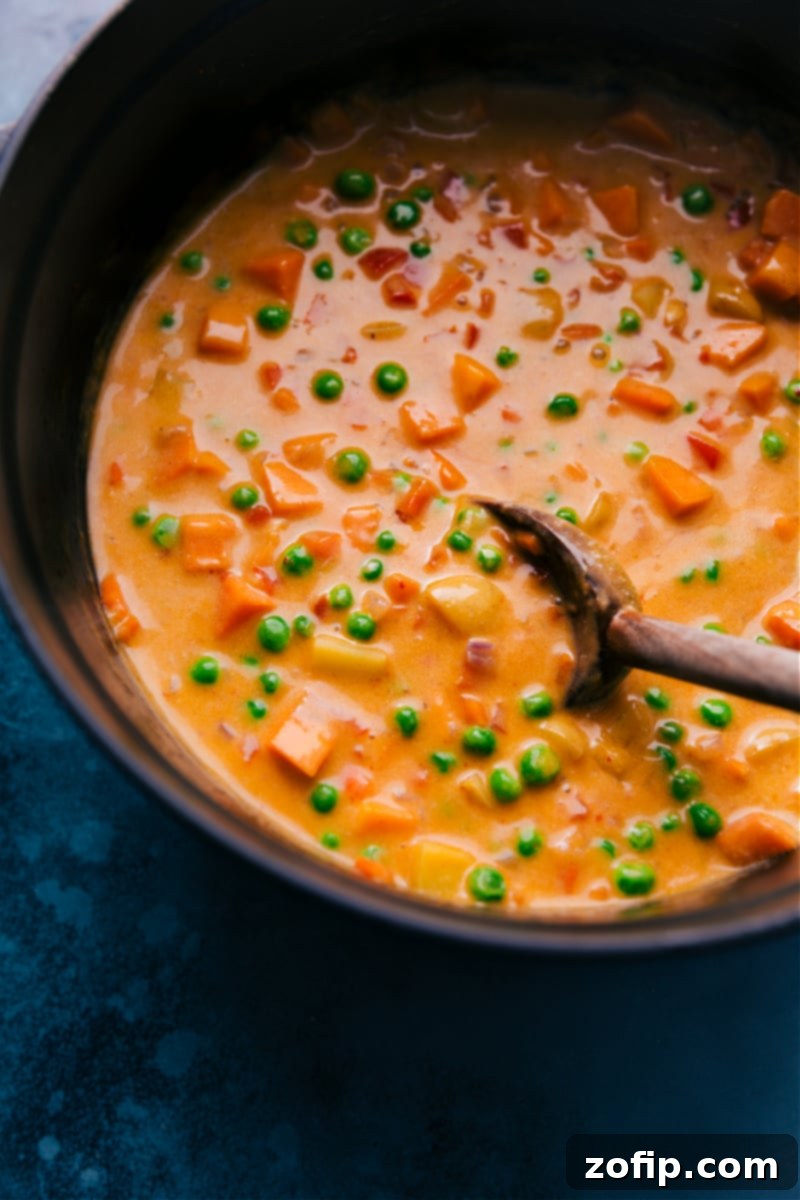
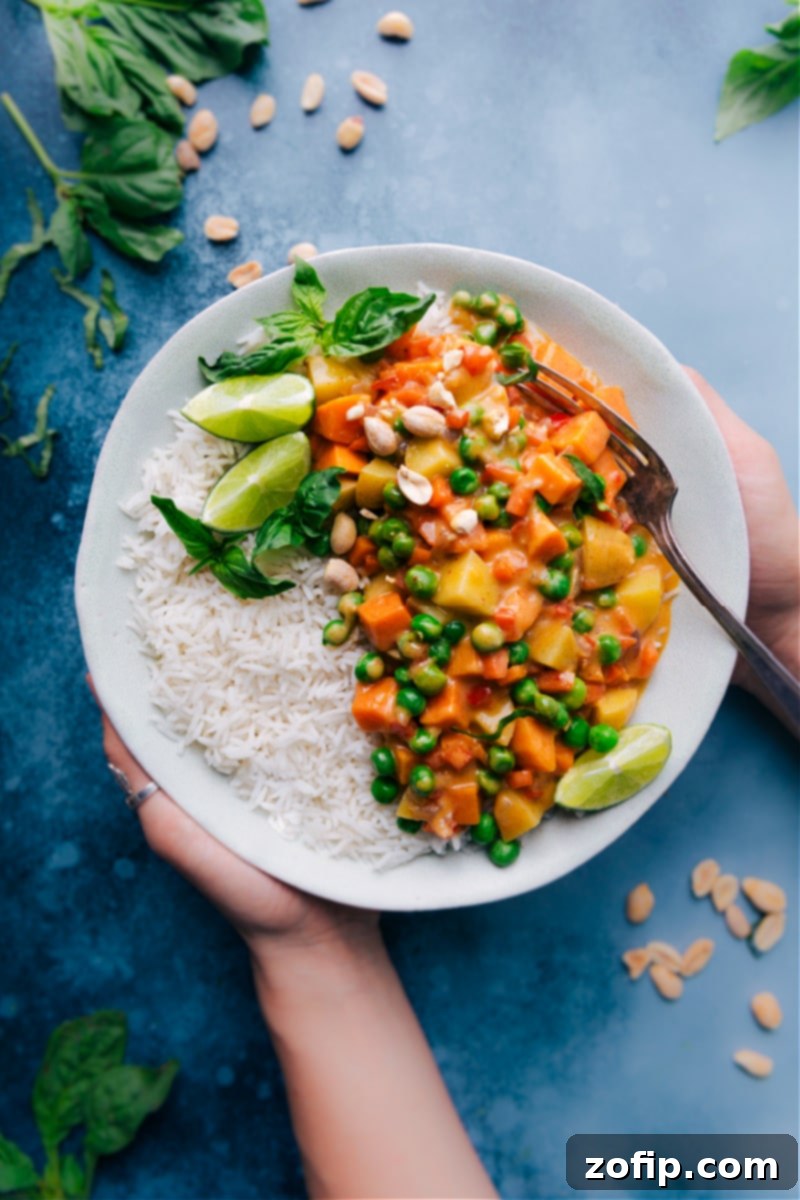
This easy-to-follow Panang Curry recipe masterfully blends aromatic vegetables and premium Panang curry paste with a delightful combination of sweet and golden potatoes, all bathed in a rich, velvety coconut milk sauce. Get ready to create a truly unforgettable Thai culinary experience right in your own kitchen.

author’s note
The Panang Curry Recipe I Finally Perfected!
Years ago, my husband and I stumbled upon an incredible Panang Curry at a tiny, unassuming restaurant during our travels. It was one of those memorable meals that stuck with us, inspiring a long quest to recreate its magic. The curry was exceptionally rich, featuring a subtly sweet and nutty sauce, generously loaded with a medley of fresh vegetables and a hearty mix of both sweet and golden potatoes.
After countless attempts and refinements, I genuinely believe this Panang Curry recipe finally captures the authentic flavors we cherished so many years ago. It’s more than just a meal; it’s a satisfying and hearty experience that even my children adore – a testament to its perfectly balanced heat! While there’s a pleasant hint of spice, it’s beautifully mellowed by the natural sweetness of coconut milk. Underlying notes of peanut butter add depth, while a burst of freshness from citrus, particularly lime, brightens every spoonful. This dish is not only delicious but also remarkably comforting, making it a perfect addition to your weekly meal rotation.
What is Panang Curry?
Panang Curry, or Phanaeng Curry, is a distinctive type of Thai curry known for its rich, creamy texture and a flavor profile that perfectly balances sweet, salty, and spicy notes with a prominent nutty undertone. Unlike its red or green counterparts, Panang curry paste typically contains roasted peanuts and often less dried chili, resulting in a milder heat and a thicker sauce. It’s traditionally served with thinly sliced meat, but this vegetarian version demonstrates its incredible versatility, using hearty root vegetables to soak up all the delicious flavors. The name “Panang” is believed to come from the island of Penang in Malaysia, reflecting the region’s culinary influences.
Why You Will Love This Easy Panang Curry
- Unforgettable Flavor: This recipe delivers that coveted restaurant-quality taste, with layers of complex flavors from the aromatic curry paste, creamy coconut milk, and fresh ingredients.
- Hearty & Satisfying: Loaded with sweet and golden potatoes, along with other wholesome vegetables, it’s a truly fulfilling meal that will keep you satisfied.
- Family-Friendly Heat: With adjustable spice levels, this Panang curry can be tailored to everyone’s palate, from those who prefer a gentle warmth to those who crave more heat.
- Vegetarian & Adaptable: Naturally vegetarian, this recipe is also incredibly flexible. Easily add your favorite protein like chicken, tofu, or shrimp if you desire.
- Simple to Make: Despite its gourmet taste, the preparation process is straightforward, making it an ideal choice for busy weeknights or relaxed weekend cooking.
- Perfect for Leftovers: Like many curries, this dish tastes even better the next day as the flavors deepen and meld together, making it excellent for meal prepping.
Key Ingredients for the Perfect Panang Curry
Crafting an exceptional Panang Curry starts with high-quality ingredients. Here’s a breakdown of what you’ll need and some helpful tips for each:
| Ingredient | Tips and Substitutions |
|---|---|
| Panang Curry Paste | This is the heart of your curry. Start with 2 tablespoons for a mild flavor suitable for children. If you prefer more heat and a richer taste, add a third tablespoon. The Maesri brand is highly recommended for its authentic flavor profile, and you can often find it in Asian grocery stores or online. |
| Full-Fat Coconut Milk | Using two cans of full-fat coconut milk is key to achieving that luxurious, creamy, restaurant-style sauce. For a slightly lighter version, you can substitute one can of coconut milk with one cup of vegetable stock. Avoid “cream of coconut,” which is typically sweetened, and “coconut cream,” which is too thick for this recipe. Ensure it’s unsweetened full-fat coconut milk for the best result. |
| Sweet & Golden Potatoes | This combination adds fantastic depth and texture. Always peel the sweet potato. For golden (or Yukon Gold) potatoes, their thin skin can be left on for added nutrients and rustic charm – just make sure to wash them thoroughly. Dice both types into uniform, bite-sized pieces for even cooking. |
| Onion & Bell Pepper | These vegetables form the aromatic base of the curry. Any color bell pepper will work beautifully in this easy Panang Curry recipe; red or orange peppers add a lovely sweetness and vibrant color. Finely dice them to ensure they soften and integrate well into the sauce. |
| Sweet Peas | These add a pop of color and natural sweetness. Add them towards the very end of the cooking process to ensure they remain bright green and tender-crisp, rather than becoming mushy. Frozen peas are perfectly fine and convenient. |
| Soy Sauce | Regular soy sauce is preferred for its balanced savory notes. If you are not strictly vegetarian, a splash of fish sauce can be used instead to introduce a more authentic umami depth, common in traditional Thai curries. |
| Lime Zest & Juice | Fresh lime is crucial for brightening the overall flavor of the curry, cutting through the richness of the coconut milk. If you have access to Kaffir lime leaves, crumple a few and simmer them with the coconut milk for an even more authentic citrus aroma. Otherwise, a generous amount of fresh lime zest and juice added at the end works wonders. |
| Basil | Thai basil, with its distinct anise-like flavor, is ideal for garnishing. If unavailable, regular fresh basil is a wonderful alternative and still provides a lovely aromatic finish. Do not substitute with dried basil. |
How To Make This Delicious Panang Curry
Creating this flavorful Panang Curry is a straightforward process, broken down into a few simple steps. Follow these instructions for a perfect, creamy, and aromatic curry every time.
- Prepare Ingredients: Begin by finely dicing the red onion, carrot, and bell pepper. Mince the garlic and ginger. Peel and chop sweet potatoes into ½-inch bite-sized pieces. Wash golden potatoes thoroughly and chop them into similar ½-inch pieces (no need to peel them). Uniform piece sizes ensure even cooking.
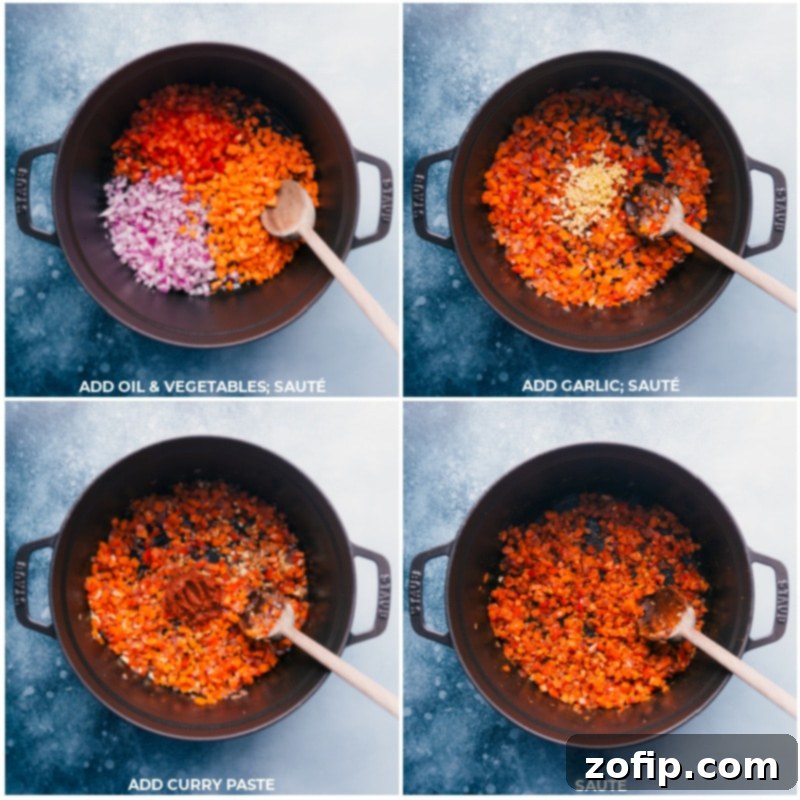
- Bloom the Curry Paste: Heat coconut or olive oil in a large, deep pot or Dutch oven over medium-high heat. Add the diced onion, carrot, and bell pepper, sautéing for 7-10 minutes until the onions begin to turn golden and the vegetables soften. Stir in the minced garlic and ginger, cooking for another minute until fragrant. Season with a pinch of salt. Reduce the heat to medium, then add the Panang curry paste. Stir frequently for 2-3 minutes, allowing the paste to “bloom” and release its intense aromas and flavors. This step is crucial for developing the curry’s depth.
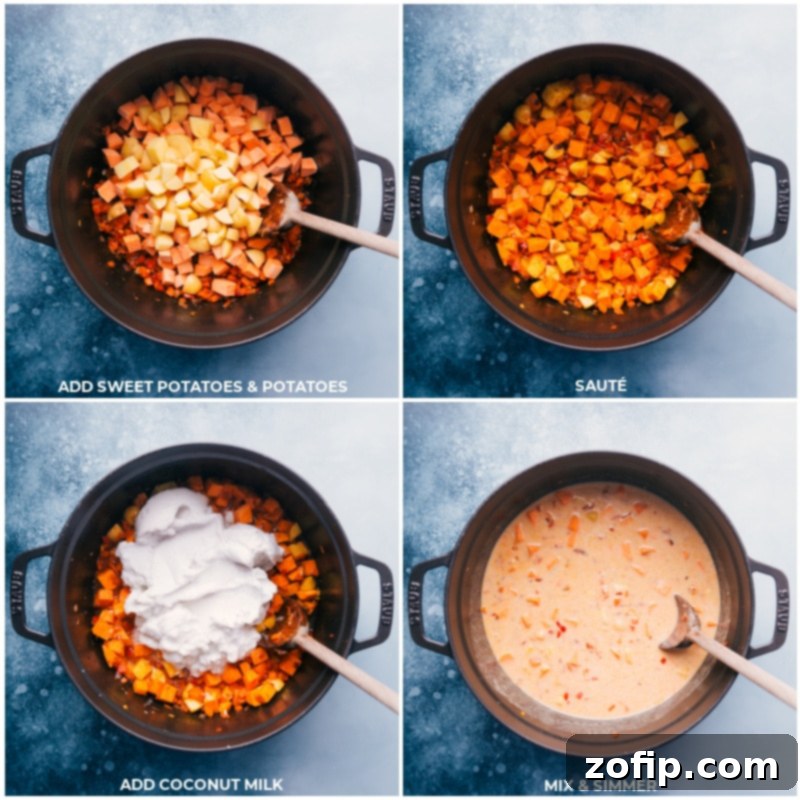
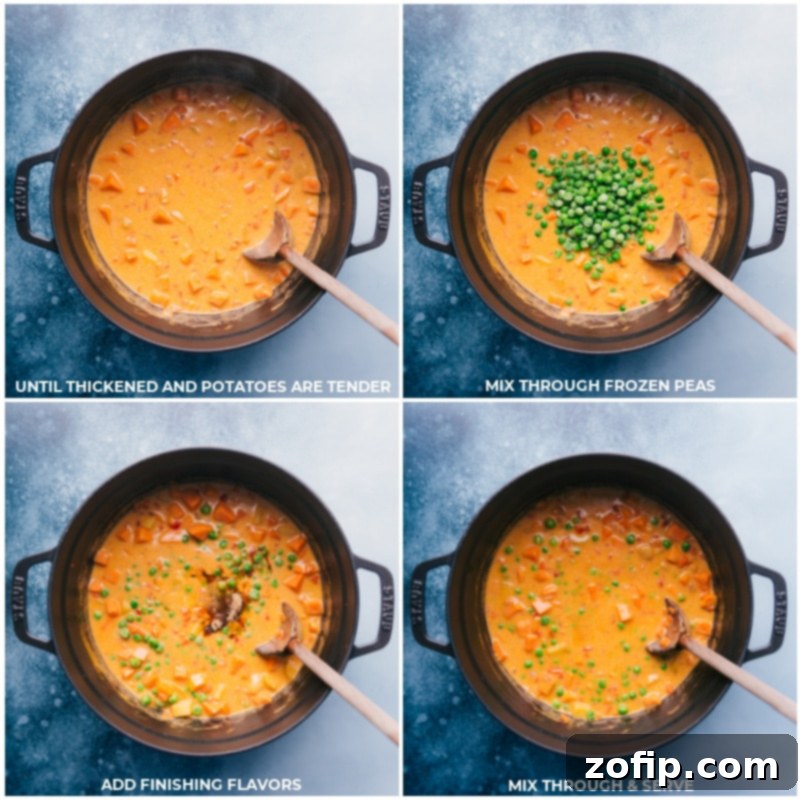
- Build the Base & Simmer: Add the chopped sweet and golden potatoes to the pot, stirring well to coat them in the fragrant curry paste for about a minute. Pour in both cans of full-fat coconut milk. Stir everything together, ensuring to scrape the bottom of the pot to prevent sticking and press the potatoes below the liquid. Bring the mixture to a gentle boil, then reduce the heat to a rapid simmer (it should be bubbling gently at the edges, not a rolling boil). Let it simmer for 18-25 minutes, stirring occasionally, until the potatoes are fork-tender and the curry sauce has thickened and reduced to your desired consistency. If the sauce reduces too quickly before the potatoes are tender, add a splash of water or vegetable stock. Adjust heat as needed to maintain a consistent simmer.
- Finish with Freshness: Once the potatoes are tender and the sauce is perfect, turn off the heat. Stir in the frozen peas; the residual heat will cook them perfectly while keeping them bright. Now it’s time to balance the flavors: add the soy sauce, light brown sugar (start with 1 tablespoon and add more to taste, adjusting for sweetness), and the fresh lime juice. Taste and adjust seasonings – you might need more soy sauce for umami, more lime for zest, or a bit more sugar if you find it too spicy. A final pinch of salt often brings all the flavors to life, as curries generally benefit from good seasoning.
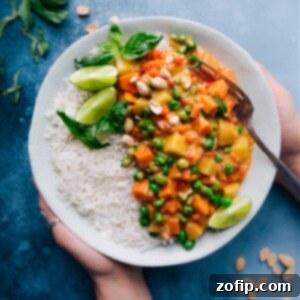
- Serve & Garnish: Spoon the hot Panang Curry into bowls, ideally over a bed of fluffy cooked rice or with warm roti bread. Garnish generously with fresh basil leaves (Thai basil if you have it) and a sprinkle of coarsely crushed roasted peanuts. Serving extra lime wedges on the side allows everyone to add a final squeeze of freshness to their individual bowls. Enjoy this delightful and comforting homemade Panang Curry!
Essential Tips for the Best Panang Curry
Achieving a truly exceptional Panang Curry is easy with a few key techniques. These tips will help you maximize flavor and texture, ensuring your homemade Thai curry is a showstopper every time.
- Always Bloom the Curry Paste: This is a non-negotiable step for an intensely flavorful curry. Sautéing the Panang curry paste in oil for a few minutes before adding liquids helps to toast the spices, deepening their flavor and creating a more aromatic base. Don’t rush this step; it truly transforms the curry.
- Uniform Potato Dicing for Even Cooking: Cut both your sweet and golden potatoes into roughly ½-inch dice. Keeping the pieces uniform in size ensures they cook through evenly as the sauce simmers and reduces. This prevents some pieces from being undercooked while others turn to mush. If you cut them too large, they might not tenderize properly within the recommended simmering time.
- Season Liberally and at the End: Panang Curry benefits immensely from careful seasoning. The initial salt is for the aromatics, but the final adjustments of soy sauce (or fish sauce), brown sugar, and fresh lime juice right before serving are crucial. Taste the curry and adjust these elements to achieve that perfect balance of salty, sweet, sour, and umami. Don’t be shy with the lime – it truly brings the flavors to life and adds a delightful zing.
- Use Full-Fat Coconut Milk: For a truly rich and authentic Panang curry, full-fat coconut milk is essential. It provides the luxurious creaminess and depth of flavor that defines this dish. Lighter versions might save on calories but will compromise the curry’s signature texture and richness.
- Don’t Overcook the Peas: Frozen peas cook very quickly. Adding them at the very end, after you’ve turned off the heat, allows them to warm through gently while retaining their vibrant color and slight crispness. Overcooked peas can become mushy and lose their bright flavor.
Panang Curry Variations & Additions
While this recipe is fantastic as a vegetarian Panang curry, it’s also incredibly versatile. Feel free to customize it with your favorite proteins and vegetables:
- Protein Boost: For a non-vegetarian option, add sliced chicken breast, shrimp, or thinly sliced beef during the sautéing stage after blooming the curry paste. Cook until browned before adding the coconut milk. For a vegetarian protein, cubed firm tofu or tempeh can be added and simmered with the potatoes.
- Extra Vegetables: Enhance the nutritional value and texture with additional vegetables. Consider adding broccoli florets, green beans, bamboo shoots, bell peppers of different colors, or thinly sliced carrots. Add harder vegetables earlier with the potatoes and softer ones like broccoli towards the end.
- Spice Level: If you love heat, increase the amount of Panang curry paste. You can also add a pinch of red chili flakes or a few sliced bird’s eye chilies to the pot while blooming the paste for an extra kick.
- Nutty Flavor: If you don’t have peanuts for garnish but still want a stronger peanut presence, stir in 1-2 tablespoons of creamy peanut butter along with the coconut milk.
Serving Suggestions
This creamy Panang Curry is a meal in itself, but a few accompaniments can elevate the dining experience:
- Steamed Rice: Fluffy jasmine rice or brown rice is the classic pairing, perfect for soaking up every drop of the rich sauce.
- Warm Roti or Naan Bread: For a delicious alternative to rice, serve with warm roti or naan bread to scoop up the curry.
- Fresh Garnishes: Don’t forget the garnishes! Fresh basil (Thai basil if available) and crushed roasted peanuts add essential texture and aroma. Extra lime wedges are a must for squeezing fresh juice over individual servings.
- Side Salad: A simple, crisp cucumber salad or a light green salad can provide a refreshing contrast to the richness of the curry.
Storage
Panang Curry Leftovers?
One of the best things about curry recipes is how wonderfully they store! Leftovers often develop even deeper, more complex flavors as they sit. To store any leftover Panang curry, transfer it to an airtight container and keep it in the refrigerator for 3-5 days. When reheating, do so over low heat on the stovetop, adding a splash of vegetable broth or stock (or chicken stock if you’re not vegetarian) as needed to thin the sauce back to your preferred consistency.
For longer storage, freeze leftovers in an airtight, freezer-safe container for up to 3 months. Be sure to defrost the curry fully in the refrigerator overnight before reheating it on the stovetop. This ensures even thawing and best texture.
More Delightful Curry Recipes:
Dinner
Curry Lentil Soup
Dinner
Sweet Potato Curry
Dinner
Easy Chicken Curry
Dinner
Butternut Squash Curry
Print Recipe
Panang Curry
Chelsea Lords
30
30
1
4
servings
Video
A video tutorial for this Panang Curry recipe can be found on the original blog post.
Equipment
- Large, deep pan or Dutch oven
Ingredients
- 2 tablespoons coconut oil or olive oil
- 1 cup finely diced red onion (about 1 large red onion)
- 1 cup finely diced red bell pepper (about 1 bell pepper)
- 1 cup finely diced carrot (3–4 large carrots)
- 1 tablespoon minced garlic (about 4 cloves)
- 2 teaspoons minced ginger
- 1 teaspoon salt
- 3 cups peeled and diced sweet potato
- 1 cup diced baby gold potatoes or more sweet potatoes
- 2 tablespoons Panang curry paste (see Note 1 for adjustments)
- 2 (13.5-ounce) cans full-fat coconut milk (see Note 2)
- 1 cup frozen peas
- 1 tablespoon soy sauce (regular; see Note 3 for fish sauce option)
- 1 to 3 tablespoons light brown sugar (add to taste)
- 1 lime (zest and juice; see Note 4)
- Roasted peanuts (optional topping, coarsely chopped; see Note 5)
- Fresh basil (optional topping, Thai basil preferred)
- Cooked rice (optional, for serving)
- Warmed roti bread (optional, for serving)
Instructions
- Prepare Vegetables: Dice the red onion, carrot, and bell pepper into fine, even pieces (you can use a food processor for speed). Mince the garlic and ginger (peeling ginger with a spoon or vegetable peeler first is easiest). Peel and chop sweet potatoes into ½-inch bite-sized pieces. Wash and chop golden potatoes into ½-inch pieces; their thin skin can be left on. Ensure all potato pieces are roughly the same small size for even cooking.
- Sauté Aromatics & Bloom Paste: Heat coconut oil in a large, deep pot or Dutch oven over medium-high heat. Add the diced onion, carrot, and red pepper, and sauté for 7-10 minutes, stirring occasionally, until the onions begin to soften and turn golden. Stir in the minced garlic and ginger, cooking for another minute until fragrant. Season with 1 teaspoon of salt (or to taste). Reduce the heat to medium. Add the Panang curry paste and stir often for 2-3 minutes, allowing it to “bloom” and become very aromatic. Add the diced sweet and golden potatoes, stirring to coat them in the curry paste for 1 minute.
- Simmer to Perfection: Pour in both cans of full-fat coconut milk. Stir everything well, ensuring to scrape the bottom of the pot periodically and gently press any floating potatoes beneath the liquid. Bring the curry to a boil, then immediately reduce the heat to a rapid simmer (it should be gently bubbling around the edges). Continue to simmer for 18-25 minutes, stirring occasionally, until the potatoes are fork-tender and the curry sauce has reduced to a rich, creamy consistency. For me, this typically takes around 20-22 minutes. If the sauce reduces too quickly and potatoes aren’t tender, add a splash of water or vegetable stock and lower the heat slightly. If potatoes aren’t tender and the sauce isn’t reducing, increase the heat slightly.
- Finish & Season: Turn off the heat. Stir in the frozen peas. Add 1 tablespoon of soy sauce, 1-3 tablespoons of light brown sugar (start with less and add more to taste, balancing sweetness), and 1 tablespoon of fresh lime juice. Taste the curry and adjust these ingredients to your preference. Add more soy sauce for a deeper umami flavor, more lime for a fresh, zesty kick, and more sugar if the curry is too spicy for your liking. Taste again and add more salt if needed (I often add an additional ¼ to ½ teaspoon); curries typically need robust seasoning to truly shine. The flavors should be vibrant and well-balanced.
- Serve: Ladle the delicious Panang Curry into bowls. Serve it warm over cooked rice, with warmed roti bread, or both. Garnish individual servings generously with fresh basil leaves and coarsely chopped roasted peanuts. I also love to serve additional lime wedges on the side for an extra burst of freshness. Enjoy your authentic homemade Panang Curry!
Recipe Notes
Note 2: Coconut Milk Selection: To achieve the thick, rich, and creamy texture reminiscent of the Panang Curry I fell in love with, this recipe calls for two cans of full-fat coconut milk. If you prefer a lighter curry, you can substitute one can of coconut milk with one cup of vegetable or chicken stock. I often use Imperial Kitchen® coconut milk for its excellent creamy texture and robust flavor. Always use full-fat, unsweetened coconut milk for the most authentic and satisfying results.
Note 3: Soy Sauce vs. Fish Sauce: This recipe uses soy sauce to keep it vegetarian. However, if you are not vegetarian, feel free to use fish sauce instead of soy sauce. Fish sauce is a traditional Thai ingredient that adds a unique depth of umami flavor. When using soy sauce, opt for regular (not low-sodium or “lite”) for the best flavor contribution.
Note 4: The Power of Lime: Fresh lime is a game-changer in this curry, adding a vibrant and essential freshness that cuts through the richness. I’m a big fan of lime in this dish and often serve extra lime wedges on the side for those who want more. For an even deeper citrus aroma, incorporate lime zest into the curry as well. If you happen to have Kaffir lime leaves, crush a few gently and add them to the pot when you pour in the coconut milk; remember to remove them before serving.
Note 5: Peanuts & Basil: Roasted peanuts are recommended as a garnish, providing a wonderful crunch and nutty flavor. If you don’t have peanuts but still crave a peanut undertone, stir in 1 tablespoon of creamy peanut butter when you add the coconut milk. For basil, fresh Thai basil offers a unique anise-like flavor, but regular fresh basil is a perfectly delicious and widely available substitute.
Storage: Leftover Panang Curry stores exceptionally well, often tasting even better the next day! Store it in an airtight container in the refrigerator for 3–5 days. For longer preservation, it can be frozen in an airtight container for up to 3 months. Always defrost completely in the fridge before reheating on the stovetop over low heat, adding a splash of broth if the sauce has thickened too much.
Nutrition Information
Serving:
1
serving
|
Calories:
742
kcal
|
Carbohydrates:
74
g
|
Protein:
12
g
|
Fat:
49
g
|
Saturated Fat:
43
g
|
Polyunsaturated Fat:
1
g
|
Monounsaturated Fat:
2
g
|
Sodium:
452
mg
|
Potassium:
1680
mg
|
Fiber:
12
g
|
Sugar:
17
g
|
Vitamin A:
38472
IU
|
Vitamin C:
81
mg
|
Calcium:
156
mg
|
Iron:
9
mg
Nutrition information is automatically calculated and should only be used as an approximation. Values may vary based on specific ingredients and preparation methods.
Love this recipe? Leave a comment below!