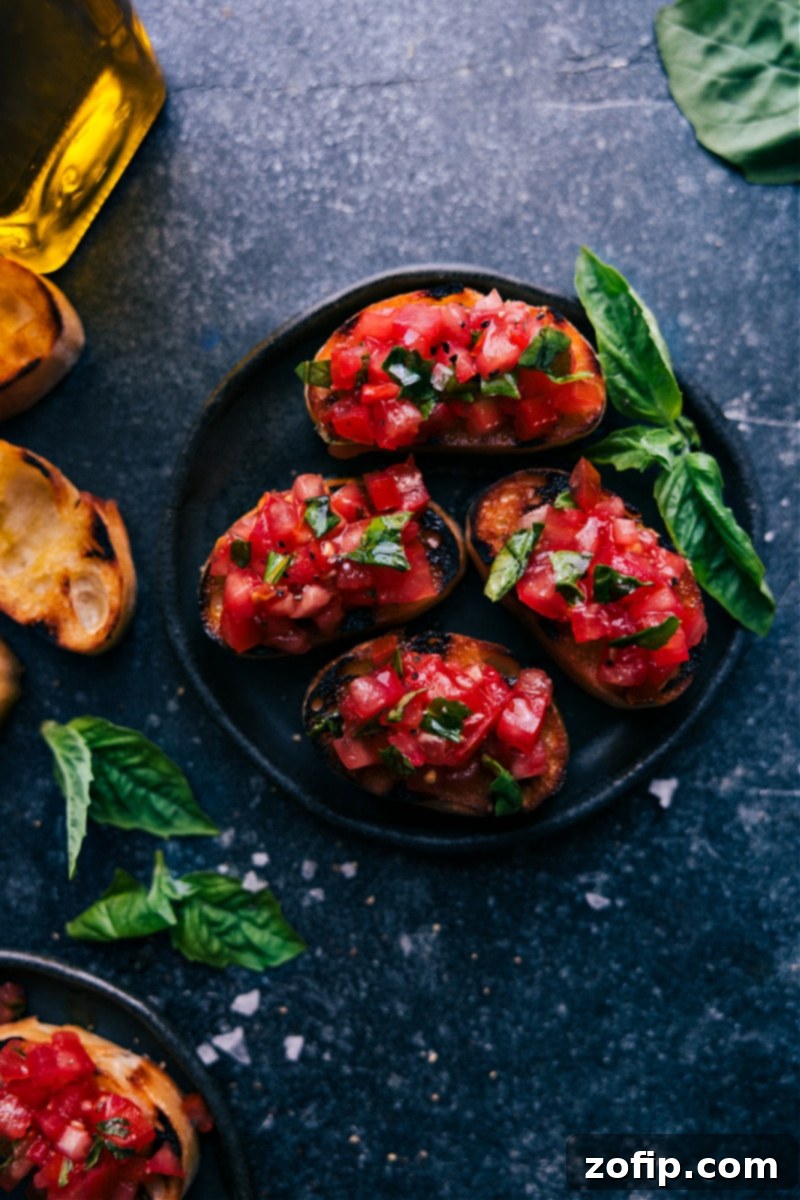
Embark on a culinary journey to Italy with this authentic Bruschetta Recipe, bringing you the true taste of Italian tradition. We’re sharing all our cherished tips and tricks, gathered firsthand from local Italian kitchens, to help you create the perfect bruschetta at home.
While exploring the rich gastronomic landscape of Italy, I was generously gifted several exceptional recipes. Don’t miss out on trying this creamy Gelato, the classic Tiramisu, a refreshing Apple Fennel Salad, and a robust Beef Ragu.
Authentic Italian Bruschetta Recipe: A Taste of Italy
Bruschetta, pronounced broo-skeh-tuh (you can find helpful pronunciation guides online to practice), is more than just an appetizer; it’s an experience, a celebration of simple, fresh ingredients. Originating from Italy, this beloved dish sets the stage for any Italian meal, perfectly balancing flavors and textures.
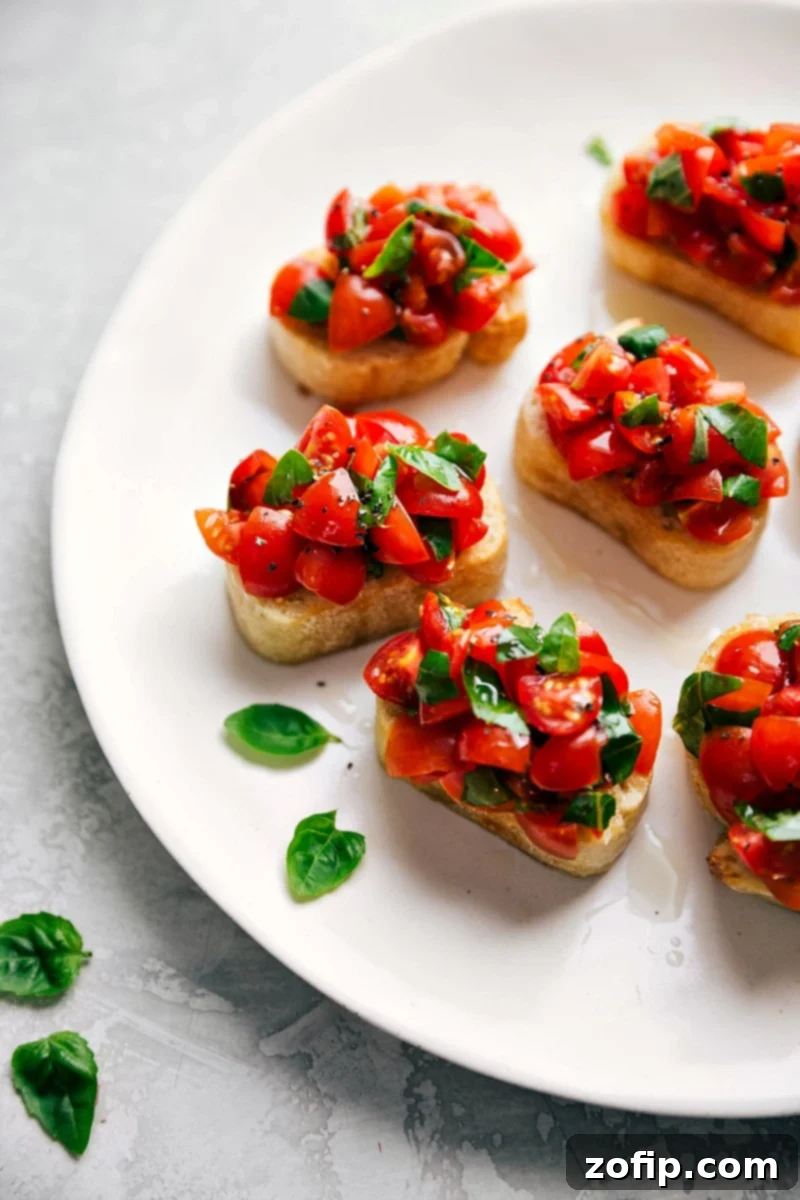
My Italian Culinary Journey: Discovering the Soul of Bruschetta
If you follow me on Instagram, you might have caught glimpses of my incredible trip through Italy. Our adventure took us to picturesque Venice, historic Rome, vibrant Naples, the breathtaking Amalfi Coast, the iconic leaning tower of Pisa, the medieval charm of Siena, the ancient ruins of Pompeii, and finally culminated in the artistic haven of Florence. This journey wasn’t just about sightseeing; it was a deep dive into the heart of Italian culture, particularly its world-renowned cuisine.
During our travels, we were fortunate enough to immerse ourselves in several local cooking classes, where we learned to craft an array of Italian dishes and delightful desserts. One particular class stands out as my absolute favorite, an experience that profoundly shaped my understanding of Italian cooking. It unfolded in the serene Tuscan countryside, nestled near Siena, at a charming farmhouse called Le Pietre Vive. Surrounded by expansive farms, grazing livestock, and an abundance of ancient olive trees, the setting itself felt like a step back in time. The magic of this class was amplified by the fact that most of the ingredients we used were grown and produced right there on the farm, embodying the true farm-to-table philosophy.
Our instructor, Nonna Ciana, was the epitome of a warm, traditional Italian grandma. Her limited English was no barrier, as she was accompanied by a wonderfully engaging translator who brought her wisdom and humor to life. In Nonna Ciana’s rustic kitchen, I learned to prepare several truly authentic Italian dishes. It was here, savoring the fruits of our labor, that I enjoyed what was undeniably the best meal of my entire Italian trip. As an appetizer, we prepared three simple yet profoundly delicious types of bruschetta, each revealing a unique facet of this versatile dish.
What Is Italian Bruschetta? History and Delicious Variations
Bruschetta is a beloved classic Italian appetizer, known as *antipasto*. Its name derives from the Roman dialect word “bruscare,” meaning “to roast over coals,” highlighting its humble origins. Traditionally, it’s made with grilled bread, often a rustic country loaf, generously rubbed with garlic, drizzled with olive oil, and then topped with fresh ingredients. While the most iconic version features ripe tomatoes and fragrant basil, the beauty of bruschetta lies in its adaptability.
The three varieties we prepared with Nonna Ciana truly showcased this versatility: *fett’unta* (simply bruschetta with excellent olive oil), bruschetta with pungent pecorino cheese and a drizzle of chili honey, and the universally adored *bruschetta al pomodoro* (with tomatoes). Each was an absolute delight, but the vibrant and fresh *bruschetta al pomodoro* captured my heart as an all-time favorite!
Bruschetta Variations to Explore
While the classic tomato and basil topping is iconic, the world of bruschetta offers endless possibilities. The foundation always begins with perfectly grilled or broiled slices of rustic bread, which are then rubbed with a fresh garlic clove for an aromatic base. From there, you can customize to your heart’s content:
- Fett’unta (Bruschetta with Olive Oil): For the purest expression of Italian flavor, simply top your garlic-rubbed bread with a generous pour of high-quality extra virgin olive oil and a sprinkle of sea salt. A touch of fresh thyme can elevate this simple pleasure even further.
- Bruschetta with Cheese and Chili Honey: Indulge in a delightful balance of sweet and savory by adding a thin slice of rich pecorino cheese and a drizzle of honey. Experiment with saffron honey, spicy chili honey, or luxurious truffle honey for an adventurous twist.
- Mozzarella and Balsamic Glaze Bruschetta: Elevate the classic tomato mixture by folding in small mozzarella pearls. Once spooned onto the toasted bread, finish with a sweet and tangy balsamic glaze. You can use a store-bought glaze for convenience or easily make your own by simmering balsamic vinegar until reduced and slightly thickened.
- Seasonal Vegetable Bruschetta: Embrace seasonal produce! In autumn, consider roasted butternut squash and sage. In spring, try asparagus and lemon zest. The options are limitless.
- Prosciutto and Fig Bruschetta: A gourmet option, perfect for entertaining. Top with thinly sliced prosciutto and fresh figs, perhaps with a touch of goat cheese.
Inspired by this incredible appetizer, I’ve even created delicious main dishes that bring the vibrant flavors of bruschetta to the center of your plate: try my popular Bruschetta Chicken and satisfying Bruschetta Pasta!
Bruschetta Recipe Ingredients: The Power of Quality
One of the most profound lessons I learned from my Italian cooking classes, especially from Nonna Ciana, was the unwavering emphasis on high-quality, fresh ingredients. You don’t need a lengthy ingredient list or complicated techniques to create truly spectacular food. The secret lies in starting with the best possible components.
This principle is particularly true for Bruschetta. With so few ingredients, each one must shine and contribute its peak flavor. For the most authentic and delicious bruschetta experience, prioritize:
- Garden-Fresh, Perfectly Ripe Tomatoes: This is the cornerstone of bruschetta al pomodoro. Seek out tomatoes that are deep red, firm but yielding to the touch, and have that unmistakable sweet, earthy aroma. Farmers market finds are ideal, especially during peak season. Avoid pale, hard tomatoes; they simply won’t deliver the necessary flavor.
- Exceptional Quality Extra-Virgin Olive Oil: This isn’t just an oil; it’s a flavor enhancer. A good extra-virgin olive oil should have a fruity, slightly peppery, and rich taste. It adds depth and silkiness to the tomato mixture and richness to the toasted bread.
- Fresh Garlic Cloves: There’s no substitute for fresh garlic. Its pungent, aromatic qualities are essential for rubbing on the toasted bread, imparting that characteristic zesty kick.
- Vibrant, Garden-Grown Basil: Fresh basil provides a sweet, aromatic counterpoint to the acidity of the tomatoes. Its vibrant green leaves are not just for garnish; they’re an integral part of the flavor profile.
- The Perfect Bread Base: For the bread, choose a rustic, hearty loaf that can stand up to grilling or broiling without becoming soggy. Ciabatta or a high-quality French baguette are excellent choices, offering a crisp crust and a tender interior. Sourdough can also be a fantastic option.
Here are all the top tips and precise techniques straight from our unforgettable Italian cooking class, ensuring your bruschetta is nothing short of perfection:
How To Make This Bruschetta Recipe: Step-by-Step Mastery
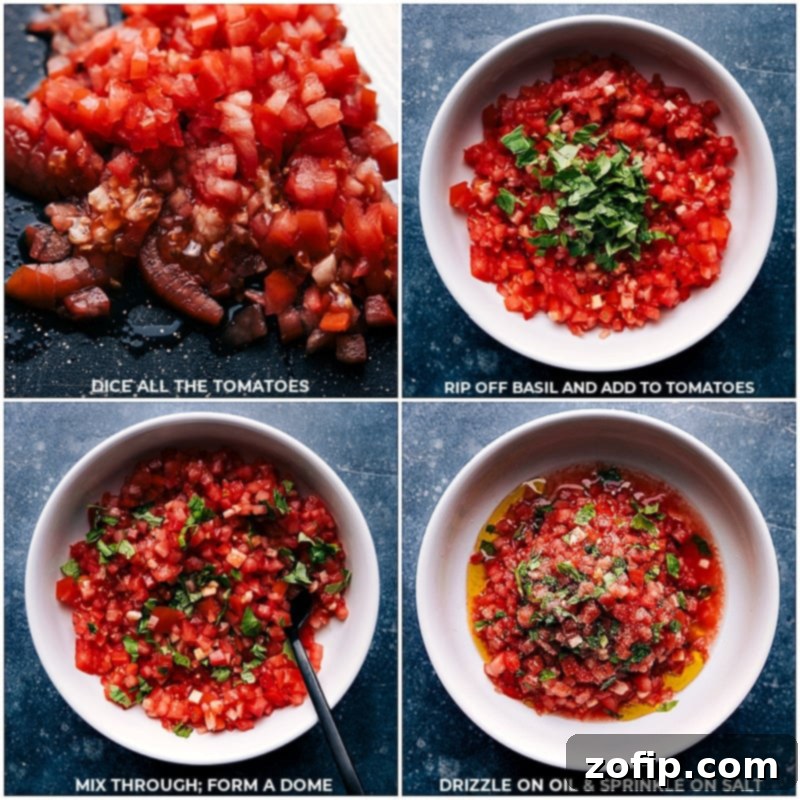
- Prepare the Tomato Mixture in Advance: For flavors to truly meld and deepen, prepare your tomato and basil mixture at least an hour before serving, or even up to two hours. This crucial resting time allows the tomatoes to release their delicious juices, creating a more robust and harmonious taste. The liquid that collects at the bottom of the bowl is also incredibly flavorful and should be saved to spoon over the bruschetta, enhancing moisture and taste.
- Tear the Basil, Don’t Cut: This might sound like a minor detail, but it makes a significant difference. Gently tear the fresh basil leaves into small pieces by hand instead of cutting them with a knife. Tearing prevents the basil from bruising, which can cause it to blacken and lose its vibrant color and fresh aroma prematurely. The rustic, imperfect tears also add to the authentic homemade feel.
- Dice Tomatoes into Small, Even Pieces: Uniformity in your tomato dice is key for both aesthetics and texture. Aim for very small, evenly sized pieces. This ensures that each bite of bruschetta offers a consistent burst of tomato flavor and prevents large chunks from falling off the bread.
- The “Dome” Marination Technique: After combining the chopped tomatoes and hand-torn basil in a bowl, gently form the mixture into a dome shape. Drizzle the olive oil and sprinkle the salt over this dome, and crucially, do not stir. This technique allows the oil and salt to slowly penetrate the tomatoes, coaxing out their juices and intensifying the flavors without over-muddling the delicate basil. Let this sit at room temperature until you’re ready to assemble your bruschetta.
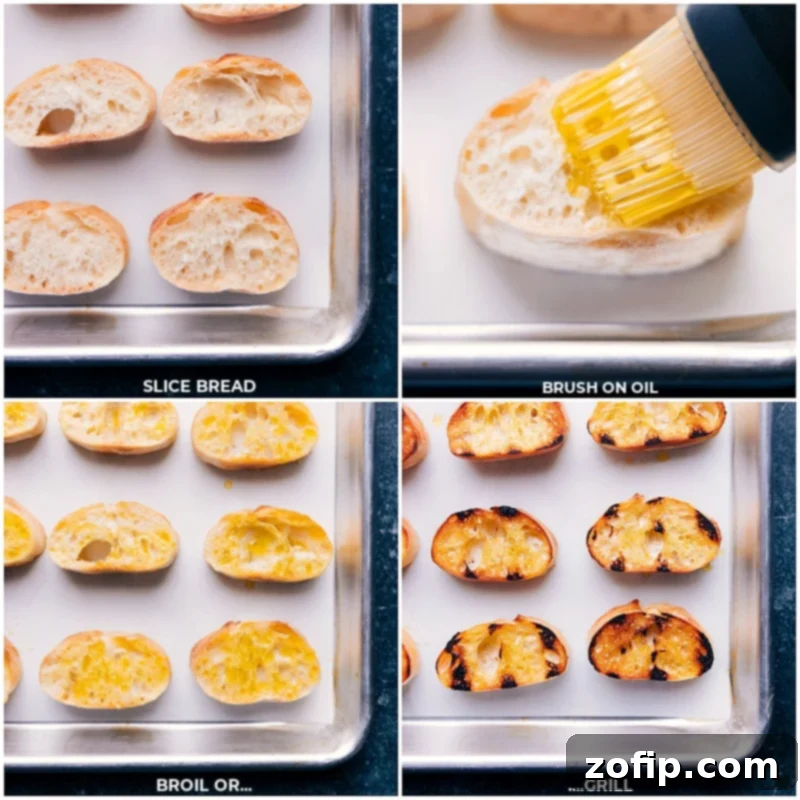
- Perfectly Toast the Bread: The bread should be crisp but not heavily browned or burnt. Whether you’re grilling or broiling, aim for a light golden toast that offers a satisfying crunch without being overly hard. As soon as you remove the warm bread from the heat, immediately rub both sides of each slice with the cut edge of a raw garlic clove. The warmth of the bread will help release the garlic’s oils, infusing it with a subtle yet distinct garlicky aroma and flavor.
- Assemble Just Before Serving: Right before serving, spoon the drained tomato mixture onto the warm, garlic-rubbed bread slices. It’s important to drain off any excess liquid from the tomato mixture to prevent the bread from becoming soggy. Serving immediately ensures the bread remains perfectly crisp and the flavors are at their peak.

FAQs: All Your Bruschetta Questions Answered
What do you serve with this Bruschetta recipe?
Bruschetta is incredibly versatile and pairs beautifully with a wide array of dishes, making it suitable for various occasions:
- Light Lunch or Dinner: Serve alongside a comforting bowl of homemade soup and a fresh salad, like a crisp Italian Salad or a simple Garden Salad. This makes for a wholesome and satisfying meal.
- Appetizer Platter: Incorporate bruschetta into an impressive antipasto platter or an elegant cheese board. Add other Italian delights such as cured meats, olives, roasted peppers, and a small bowl of homemade pesto for dipping.
- Summer Gatherings: It’s a fantastic addition to a summer barbecue or picnic. Pair it with a hearty pasta salad, such as a vibrant Mediterranean Pasta Salad.
- Pre-Main Course Starter: Offer it as a delightful starter before a classic, comforting pasta dish, setting the tone for a truly Italian dining experience.
- Wine Pairings: For a perfect pairing, enjoy bruschetta with a crisp, dry white wine like a Pinot Grigio or Sauvignon Blanc. A light-bodied red wine, such as a young Chianti, can also complement the tomato flavors beautifully.
What type of bread is best for Bruschetta?
The best bread for bruschetta is a rustic loaf with a good, sturdy crust and a relatively neutral flavor. It needs to be robust enough to hold up when grilled or broiled and then topped with the juicy tomato mixture without becoming soggy. Excellent choices include:
- Ciabatta: Known for its airy texture and crispy crust, ciabatta is a fantastic choice that toasts beautifully.
- French Baguette: While typically longer and thinner, a good quality baguette sliced into thick coins offers a perfect crunch.
- Sourdough: Its tangy flavor can add an extra dimension to the bruschetta, and its dense crumb holds up well.
- Country-Style White Bread: A rustic loaf with a firm crust works wonderfully. Look for something that isn’t too soft or crumbly.
Avoid overly soft sandwich bread or highly flavored artisan breads that might compete with the fresh bruschetta toppings.
Do you eat Bruschetta hot or cold?
The ideal temperature for bruschetta is a matter of personal preference, but generally, it’s best enjoyed with a delightful contrast in temperatures. I personally prefer serving bruschetta with the bread still warm from the grill or oven, topped with room-temperature tomatoes. The warmth of the bread enhances its crispness and releases the aromatic garlic, while the room-temperature tomatoes burst with fresh flavor, creating a wonderful sensory experience. While you can certainly enjoy it entirely cold, the warm bread truly elevates the dish.
Expert Tips for Storing and Prepping Ahead
To ensure your bruschetta remains fresh and delicious, especially if preparing for a gathering, proper storage is key:
- Tomato Mixture: The prepared tomato mixture can be stored in an airtight container in the refrigerator for up to 2 days. For optimal flavor, allow it to come to room temperature before serving. Remember to drain any excess liquid that accumulates.
- Toasted Bread: Store toasted bread slices separately in an airtight bag or container at room temperature. This prevents them from absorbing moisture and becoming soggy. They will stay crisp for about a day.
- Assemble Just Before Serving: The golden rule for bruschetta is to assemble it right before it’s served. This ensures the bread remains perfectly crunchy and doesn’t get soggy from the tomato juices. If you’re hosting, consider setting up a “bruschetta bar” where guests can top their own toasted bread slices from separate bowls of tomato mixture.
More Delicious Tomato Dishes You’ll Love
Soups And Stews
Easy Tomato Soup Recipe
Dinner
Italian Hoagies
Dressings
Pico De Gallo
Salads
Caprese Quinoa Salad

Pin
Authentic Bruschetta Recipe
Chelsea Lords
20 minutes
2 minutes
45 minutes
1 hour 7 minutes
10 servings
Video
Equipment
- Grill or oven with broiler function
- Large Mixing Bowl
- Baking Sheet (for broiling)
- Slotted Spoon
Ingredients
- 2-1/2 cups diced ripe tomatoes (approx. 3 medium tomatoes, see note 1)
- 5 tablespoons extra virgin olive oil (divided)
- 1 rustic Italian loaf (such as ciabatta or baguette, sliced into thick coins, see note 2)
- 1 large clove fresh garlic (sliced in half)
- 8 large fresh basil leaves (hand-torn into small pieces)
- 1/2 teaspoon fine sea salt (or to taste)
- Balsamic reduction (optional, for topping)
- Flaky sea salt (optional, for topping)
Instructions
- Dice your ripe tomatoes into small, even pieces and place them in a medium bowl. Gently tear the fresh basil leaves into small pieces by hand. Carefully combine the tomatoes and basil, then form the mixture into a loose dome shape in the bowl.
- Drizzle 2 tablespoons of olive oil over the dome of tomatoes and basil, and sprinkle with salt to taste (start with 1/2 teaspoon). It is crucial not to stir the mixture at this stage. Allow it to marinate uncovered at room temperature for 45 minutes to an hour. This process allows the flavors to develop and the tomatoes to release their juices.
- Slice your rustic bread into 1-inch thick pieces. Lightly brush one side of each bread slice with the remaining 2–3 tablespoons of olive oil.
To Grill: Preheat your charcoal grill to a medium-high heat (around 450°F) and ensure the grates are clean. Place the oiled side of the bread down on the grill. Grill until you see golden brown grill marks and the bread is crisp (this usually takes about 30 seconds per side).
To Broil: Position an oven rack approximately 6 inches from the heat source and preheat your broiler to high. Arrange the bread, oiled side up, on a baking sheet. Broil for 1–2 minutes, watching it very carefully to prevent burning, until golden and crisp. Remove from the oven immediately.
- Take your raw garlic clove, sliced in half, and immediately rub the cut sides over both surfaces of each warm, toasted bread slice. The warmth of the bread will help infuse it with a distinct, delicious garlic flavor.
- Taste the marinated tomato mixture and adjust salt if necessary. Using a slotted spoon to drain any excess liquid, top each garlic-rubbed bread slice generously with the tomato mixture. If desired, finish with an additional drizzle of olive oil, a splash of balsamic glaze, or a sprinkle of flaky sea salt. Serve immediately while the bread is still warm and crisp for the best experience.
Recipe Notes
Note 2: Any rustic bread with a good crust and neutral flavor will work well. The bread should be substantial enough to hold the tomato mixture without falling apart. Popular choices include ciabatta, a quality French baguette, or sourdough.
Note 3: To prevent the bread from becoming soggy, only top the bread slices you intend to eat immediately. If you are serving for a crowd or prefer a make-ahead option, keep the toasted bread separate from the tomato mixture. Guests can then assemble their bruschetta fresh as they wish, ensuring maximum crispness and enjoyment.
Storage: Store the prepared tomato mixture in an airtight container in the refrigerator for up to 2 days. Keep the toasted bread separate in an airtight bag or container at room temperature to maintain its crispness. Assemble just before serving for the best results.
Nutrition
|
Calories: 325kcal
|
Carbohydrates: 26g
|
Protein: 4g
|
Fat: 23g
|
Saturated Fat: 10g
|
Polyunsaturated Fat: 4g
|
Monounsaturated Fat: 9g
|
Trans Fat: 0.1g
|
Sodium: 287mg
|
Potassium: 241mg
|
Fiber: 2g
|
Sugar: 16g
|
Vitamin A: 535IU
|
Vitamin C: 8mg
|
Calcium: 7mg
|
Iron: 1mg
Nutrition information is automatically calculated and should only be used as an approximation.