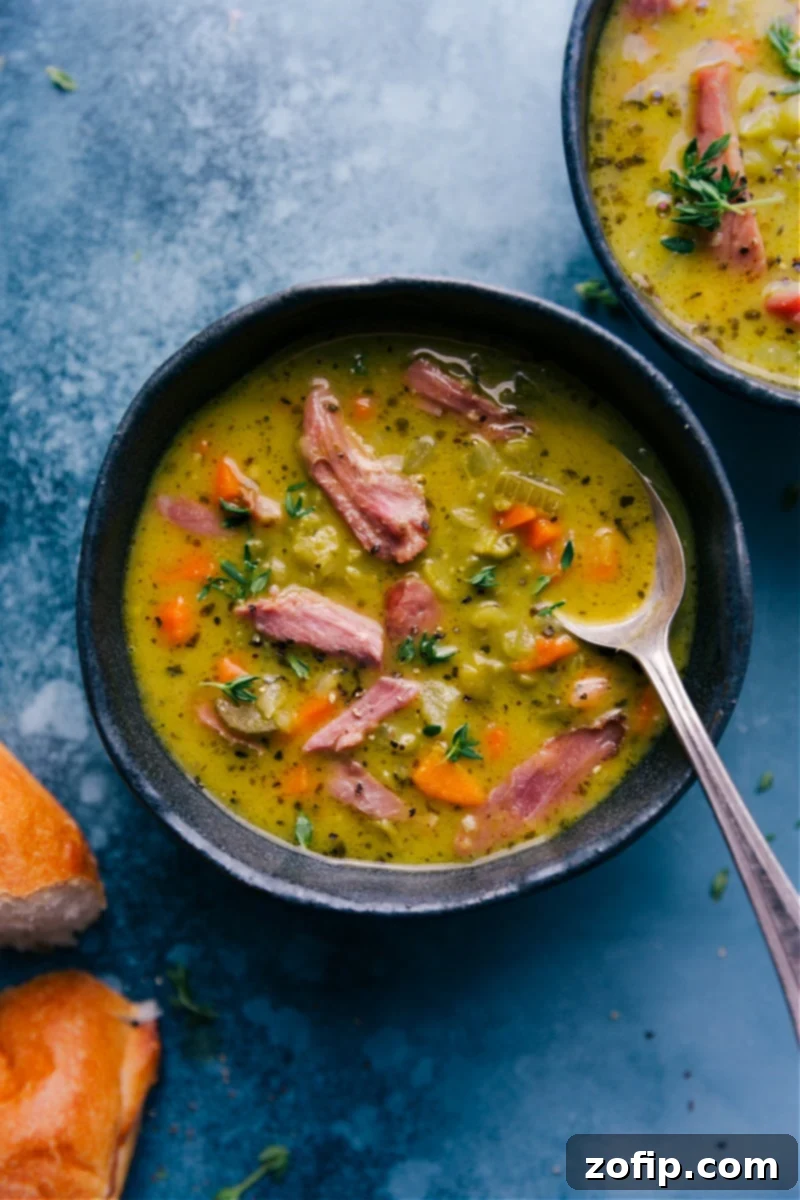
This **Split Pea Soup Recipe** delivers a perfect blend of richness, creaminess, and deep savory flavors. Loaded with tender split peas, a medley of fresh vegetables, and succulent shredded ham, this seemingly humble dish transforms into an extraordinary culinary delight. It’s the kind of comforting bowl that satisfies the soul, making it a beloved classic in any home.
For those preferring a plant-based option, fret not! Our versatile recipe can easily be adapted. Simply explore our Vegetarian Split Pea Soup Recipe for a equally delicious, meat-free alternative.

Author’s Note
If You Make One Soup This Season, Make This Comforting Classic!
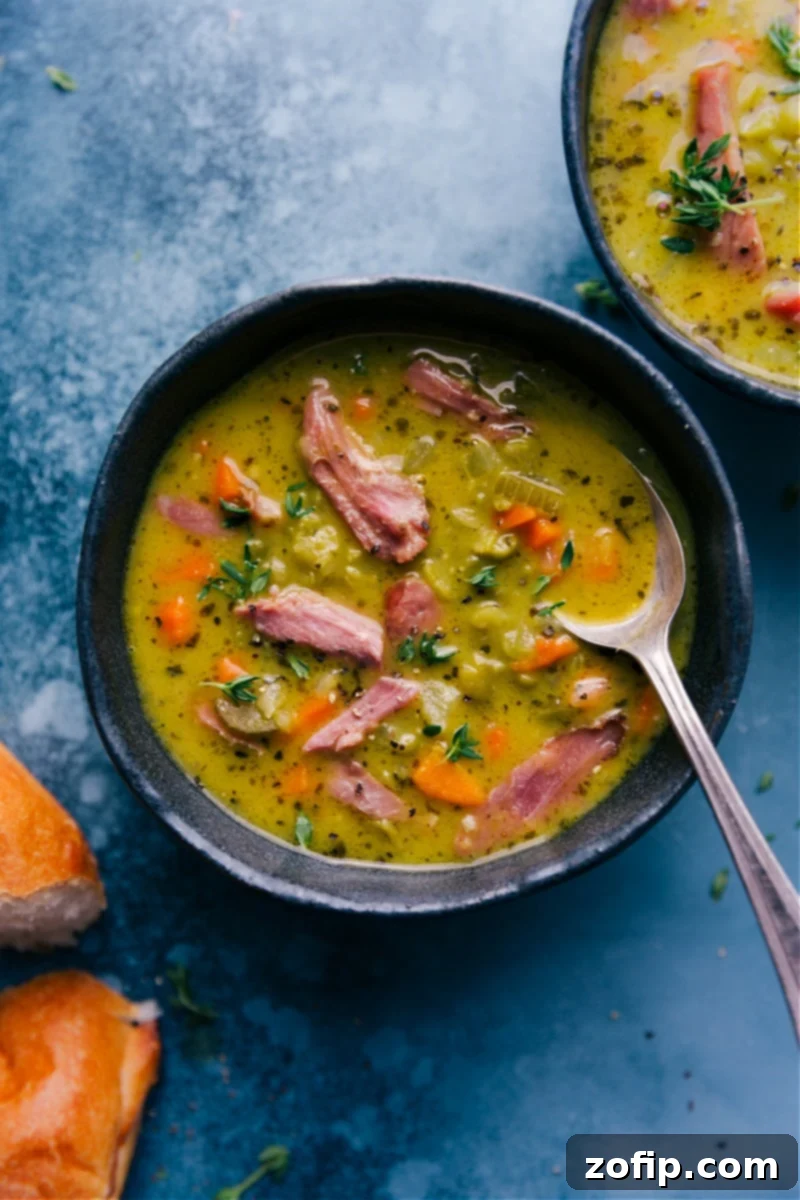
While my initial foray into split pea soup was driven by a practical need to utilize a leftover holiday ham bone, this recipe swiftly transcended its origin story to become a year-round craving. There’s an undeniable magic in how the split peas gently break down, creating a velvety, thick base, while the ham bone infuses the entire broth with an unparalleled depth of smoky, savory flavor. It’s truly comfort in a bowl, a culinary hug on even the chilliest of days.
My children adore dunking generous slices of crusty homemade bread into this rich soup, and I appreciate its incredible ease of preparation and the satisfying fullness it provides. Despite its deceptively simple appearance, I’ve spent years refining and testing various iterations, exploring different approaches to achieve perfection.
I’ve experimented with and without a ham bone, with just diced ham, and even created completely vegetarian versions. Through these culinary adventures, I’ve discovered that split pea soup is remarkably flexible, always delivering a deeply satisfying experience. This recipe represents the culmination of that testing, offering a robust flavor profile and a wonderfully creamy texture that will make it a staple in your kitchen.
Whether you’re looking for a hearty weeknight meal, a way to use up holiday leftovers, or simply a deeply flavorful and nourishing soup, this split pea recipe is guaranteed to impress. Its wholesome ingredients and slow-simmered goodness make it a timeless favorite that brings warmth and joy to any dining table.
Key Ingredients for the Perfect Split Pea Soup
Crafting the perfect split pea soup begins with selecting the right ingredients. Each component plays a vital role in building the soup’s signature flavor and creamy texture. Here’s a detailed look at what you’ll need and how to make the most of each choice:
| Ingredient | Tips for Best Flavor & Swaps |
|---|---|
| Split Peas | You can use either green or yellow split peas. Green split peas are traditionally used, offering a slightly sweeter flavor and a vibrant color. Yellow split peas are a bit earthier and will result in a lighter-colored soup. Ensure your split peas are fresh for optimal softening; older peas may take longer to cook or remain firm. Rinse them thoroughly before adding to the pot. |
| Ham Bone / Ham Hock | This is the secret to an incredibly flavorful, deeply savory soup. A meaty ham bone, especially one leftover from a holiday ham, infuses the broth with rich, smoky notes. If a ham bone isn’t available, two good-quality ham hocks are an excellent substitute. For a vegetarian version, simply omit the ham and add a generous teaspoon of smoked paprika, a dash of liquid smoke (if desired), and a bit of extra vegetable broth for depth. You can also add some diced, smoked tofu for texture. |
| Broth | Chicken broth provides a robust and rich foundation, enhancing the overall savory profile. However, vegetable broth works beautifully for a vegetarian or lighter option. Always opt for low-sodium broth, especially if using a salty ham bone or ham hock, to maintain control over the final seasoning. You can always add more salt, but you can’t easily remove it. |
| Aromatic Vegetables (Carrots, Celery, Onion) | This classic “mirepoix” trio forms the aromatic backbone of the soup, building a complex flavor profile from the very start. Ensure they are finely diced to meld seamlessly into the soup. For an exciting twist, consider swapping onion for sliced leeks or replacing carrots with parsnips for a slightly different sweet and earthy note. |
| Seasonings | A bay leaf is essential for its subtle, savory complexity, adding a classic touch to the broth. Beyond salt and pepper, consider enhancing the flavor with smoked paprika or dried thyme, particularly if you’re not using a ham bone, to introduce those warm, earthy undertones. A pinch of red pepper flakes can add a very mild, pleasant warmth without making the soup spicy. |
Quick Tip: Choosing Your Split Peas
While any brand of split peas will work in this recipe, my personal testing has shown a slight preference for Bob’s Red Mill® Green Split Peas for their consistent quality and tender cooking. This isn’t a sponsored recommendation, just a tip from my kitchen to yours!
Step-by-Step Guide: How to Make the Best Split Pea Soup
Making a deeply flavorful and creamy split pea soup is simpler than you might think. Follow these key steps to achieve a hearty, comforting bowl every time:
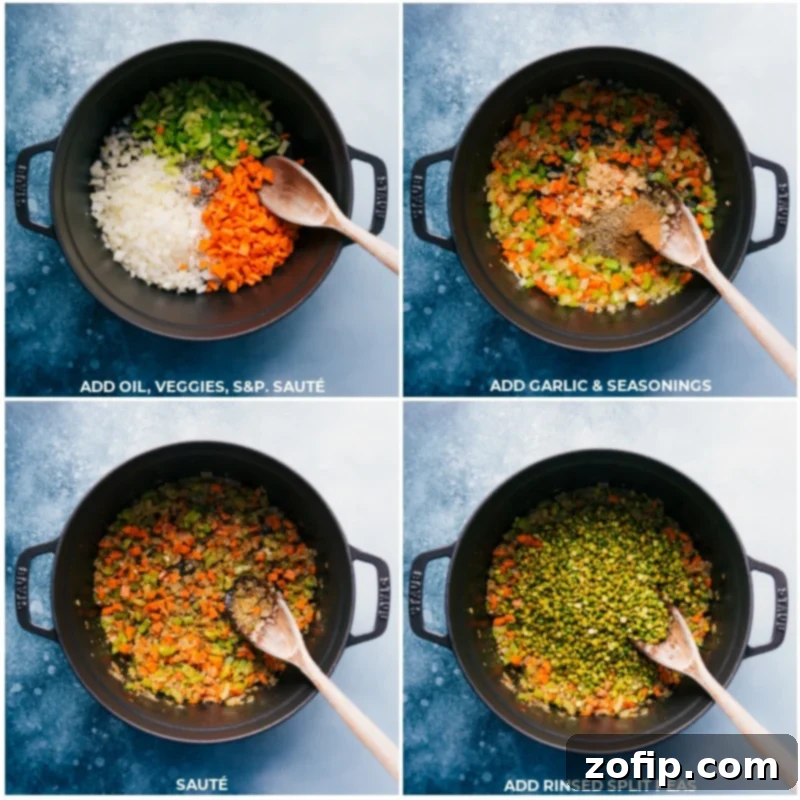
- Sauté the Aromatics: Begin by heating olive oil or butter in a large, heavy-bottomed pot. Add your finely diced onions, carrots, and celery. Cook them gently until they soften and the onions become translucent and slightly golden, typically 5-8 minutes. Season lightly with salt and pepper during this stage to build flavor.
- Infuse with Seasonings: Stir in the minced garlic, Italian seasoning, cumin, dried thyme, and a pinch of red pepper flakes. Sauté for just one minute more, stirring continuously, until fragrant. This step awakens the spices and garlic, embedding their essence into the vegetable base. Then, add your rinsed split peas, ensuring they are well coated with the aromatic mixture.
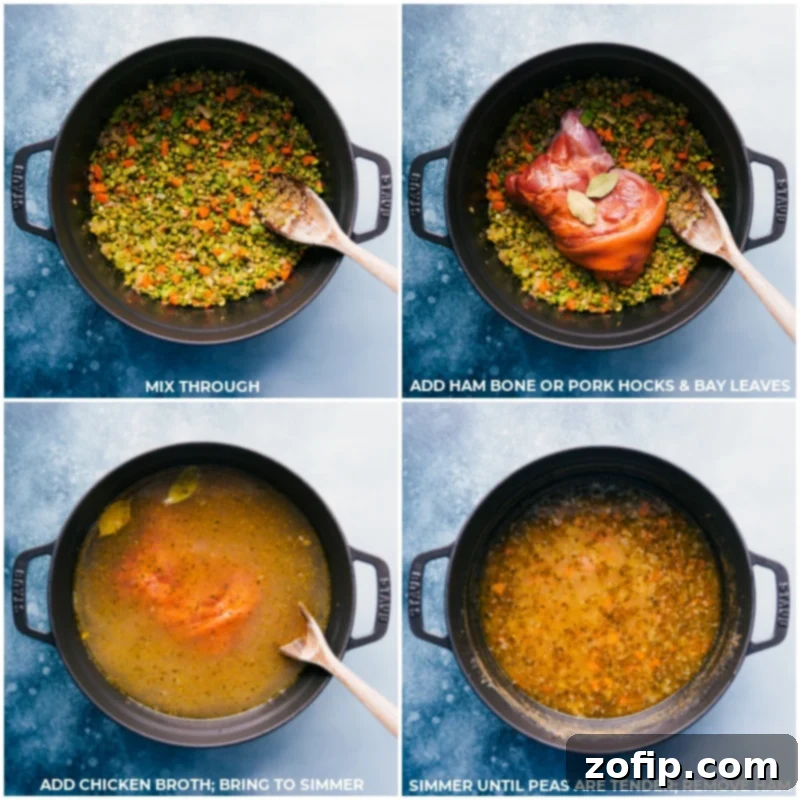
- Combine & Simmer: Carefully place the meaty ham bone (or ham hocks) and bay leaves into the pot. Pour in the reduced-sodium chicken broth. Bring the mixture to a rolling boil, then immediately reduce the heat to a low simmer. Allow the soup to cook uncovered for 60-90 minutes, or until the peas are incredibly tender and the ham easily shreds from the bone. Stir occasionally, increasing frequency as the soup thickens, to prevent the peas from sticking to the bottom.
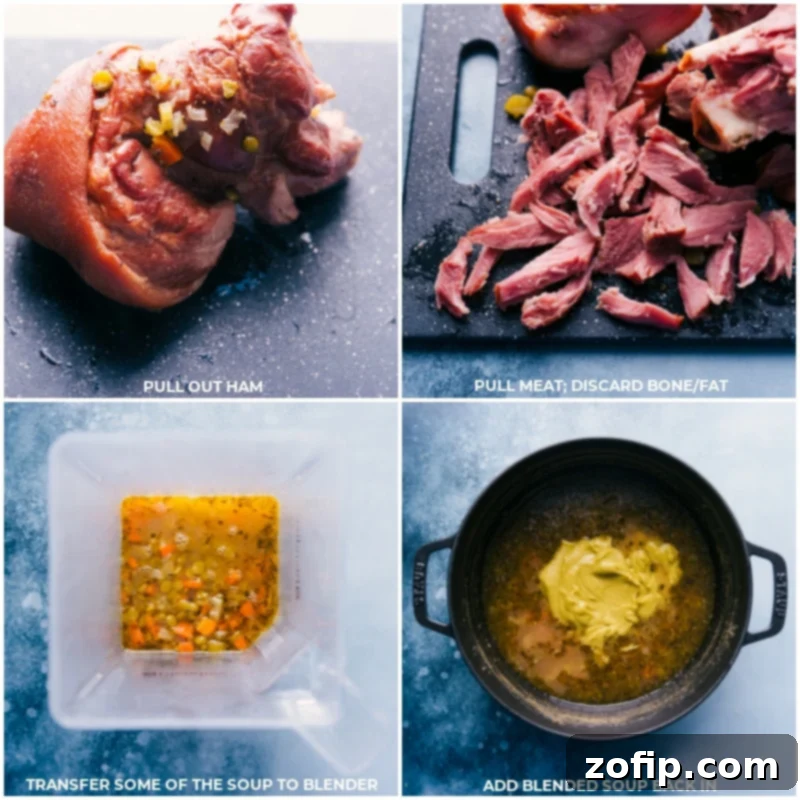
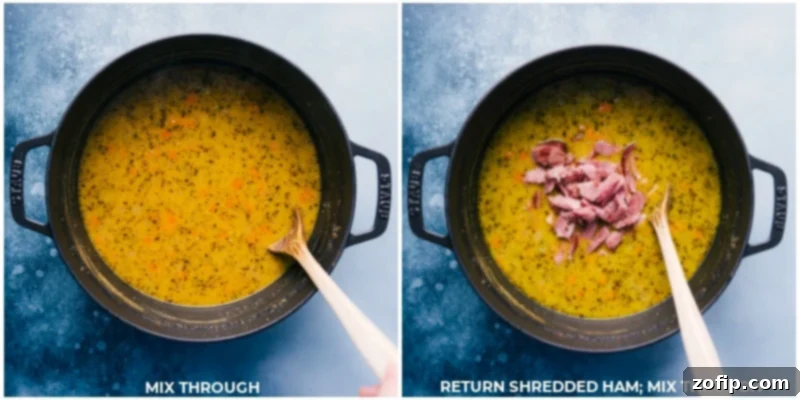
- Shred the Ham & Blend for Creaminess: Once the soup has simmered to perfection, carefully remove the ham bone and bay leaves. Shred all the tender meat from the bone, discarding any fat, and return the shredded ham to the soup. For an extra creamy texture, ladle out about 2 cups of the soup and blend it until perfectly smooth. Return this puree to the main pot and stir it through, creating a wonderfully rich consistency.
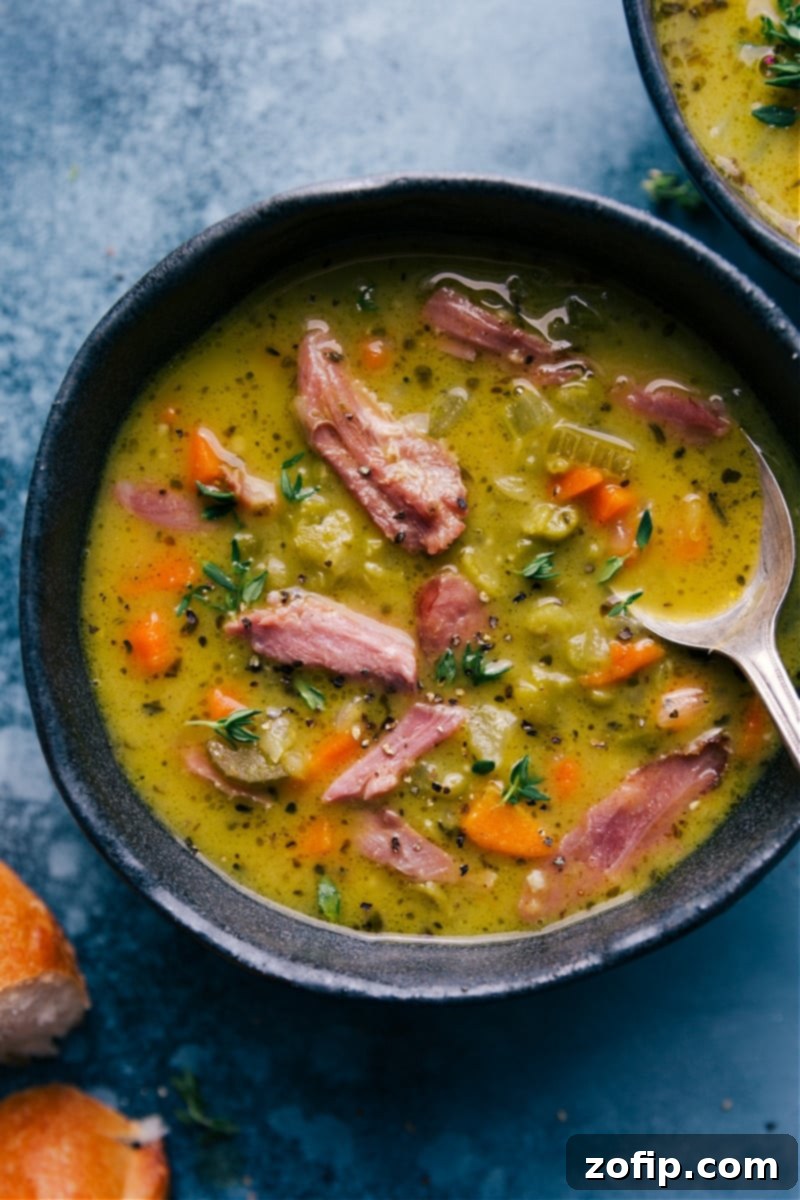
- Taste & Serve: Give your soup a final taste and adjust seasonings as needed, adding more salt, pepper, or other spices to your preference. Ladle the hot soup into bowls. Garnish with fresh thyme leaves and a sprinkle of black pepper, if desired. Serve immediately with warm, crusty bread or croutons for dipping. Enjoy the unparalleled comfort!
Expert Tips & Recipe Notes for Success
Achieving the perfect bowl of split pea soup is easy with these helpful tips and considerations:
- Understanding Cooking Time Variations: The cooking time for split pea soup can vary significantly. Factors like the age of your split peas, the type of pot you use, and even your stove’s heat consistency can influence how quickly the peas soften. The best indicators of doneness are when the ham easily shreds from the bone and the split peas are tender, or have started to break down for a creamier texture. Don’t rush it; a low, slow simmer is key to flavor development.
- Achieving Your Ideal Texture: If you prefer an extra creamy soup, simply allow it to simmer longer until the peas naturally begin to fall apart and thicken the broth. If the soup becomes too thick for your liking during or after cooking, don’t hesitate to stir in a splash of water or additional chicken broth until you reach your desired consistency. Remember, you can always thin it out, but thickening it takes more time.
- The Importance of a Heavy-Bottomed Pot: Using a heavy-bottomed pot is crucial for split pea soup. It distributes heat more evenly, which helps prevent the split peas from scorching and sticking to the bottom of the pot, especially as the soup thickens. This ensures a smooth cooking process and a delicious result without unwanted burnt bits.
- Blending for Ultimate Creaminess: When blending a portion of the soup for extra creaminess, always be cautious with hot liquids. Remove the center knob from your blender lid and replace it with a clean kitchen towel. This allows steam to escape safely and prevents pressure from building up, which could lead to splatters or an accident.
- Seasoning Strategy with Ham: Ham bones and hocks can vary greatly in saltiness. It’s best to add salt slowly and taste frequently, especially if using a salty ham hock. If you’re sensitive to salt, consider replacing up to two cups of chicken broth with water to dilute the initial saltiness and allow for better control over the final seasoning.
Storage & Leftovers
Enjoying Your Split Pea Soup Leftovers
This split pea soup is arguably even better the next day, as the flavors have more time to meld and deepen. Here’s how to store and reheat your delicious leftovers:
- How to Reheat: Store any leftover soup in an airtight container in the refrigerator for up to 3 days. When reheating, transfer the soup to a small pot and warm gently over low heat on the stovetop until it reaches your desired temperature. Alternatively, you can reheat individual servings in the microwave (ensure it’s covered to prevent splattering!). As the soup cools and stores, it will naturally thicken. You’ll likely need to stir in a splash of extra chicken broth or water to thin it back to your preferred consistency.
- Freezing for Later: Split pea soup freezes exceptionally well, making it a fantastic make-ahead meal. It can be stored in freezer-safe containers for up to 2 to 3 months. For best results and to preserve texture and flavor, allow the soup to cool completely before freezing. Discover some of the best methods for thawing frozen soup here to ensure it tastes as good as freshly made.
Perfect Pairings: What to Serve with Split Pea Soup
Complement your hearty bowl of split pea soup with these delicious side dishes for a complete and satisfying meal:
Appetizers
Life-Changing No-Knead Dinner Rolls
These incredibly soft and fluffy rolls are perfect for soaking up every last drop of your delicious soup.
Green Salads
Fresh & Crisp Garden Salad
A light and refreshing garden salad provides a wonderful contrast to the richness of the soup.
Sandwiches
Gooey Mini Grilled Cheese
Few things pair as well with soup as a classic grilled cheese. These mini versions are perfect for dipping!
Salads
Bright Winter Fruit Salad
Add a burst of freshness with a colorful fruit salad, especially lovely for balancing a rich main course.

The Best Hearty & Creamy Split Pea Soup Recipe
Chelsea Lords
20 minutes
1 hour 30 minutes
1 hour 50 minutes
6
servings
Equipment
- Large Pot (5.5 quart or larger, heavy-bottomed recommended)
- Blender (for optional creaminess)
Ingredients
(Default serving: 6. Units in US standard.)
- 2 tablespoons olive oil
- 2 cups finely diced onion (approximately 2 medium onions)
- 1 cup finely diced carrot (2 to 3 large carrots)
- 1 cup finely diced celery (3 to 4 stalks)
- Salt and pepper (see Note 1 for seasoning tips)
- 1 tablespoon minced garlic (about 4 cloves)
- 1 tablespoon Italian seasoning
- 1-1/2 teaspoons ground cumin
- 1 teaspoon dried thyme
- 1/8 teaspoon red pepper flakes
- 1-1/2 cups green split peas (rinsed; ensure they are fresh as old split peas may not soften properly)
- 2 small bay leaves (or 1 large)
- 1 meaty ham bone (or 1-2 ham hocks, see Note 2 for ham options, plus more ham if desired)
- 8 cups reduced-sodium chicken broth
- Fresh thyme leaves (for garnish, optional)
- Hearty buttered bread (for serving)
Instructions
- 1. Sauté Aromatics: In a large (5.5 quart or larger) heavy-bottomed pot, heat the olive oil over medium heat. Add the finely diced onion, carrot, and celery. Season with salt and pepper to taste (I typically start with 1/4 teaspoon salt and 1/2 teaspoon pepper). Cook, stirring occasionally, until the vegetables are softened and the onion begins to turn golden, about 5–8 minutes. Add the minced garlic, Italian seasoning, cumin, dried thyme, and red pepper flakes. Cook for 1 minute more, stirring constantly, until fragrant. Stir in the rinsed green split peas, ensuring they are well combined with the sautéed aromatics.
- 2. Simmer to Perfection: Place the meaty ham bone (or ham hocks) and bay leaves into the pot. Pour in the 8 cups of reduced-sodium chicken broth. Bring the mixture to a rolling boil over medium-high heat. Once boiling, reduce the heat to low, cover the pot partially (or leave uncovered if you prefer a thicker soup more quickly), and let it simmer gently for 60–90 minutes (refer to Note 3 regarding cooking time variations). Stir occasionally, especially as the soup begins to thicken, to prevent the peas from sticking to the bottom. Continue cooking until the split peas are very tender and the ham easily shreds from the bone. If the soup becomes too thick during cooking, add a splash more broth or water to reach your desired consistency. If you’re adding additional ham (beyond what’s on the bone/hock), stir it in during the last 10 minutes of simmering.
- 3. Finish & Season: Once the soup has reached its desired tenderness, carefully remove the ham bone and discard the bay leaves. Shred all the meat from the ham bone, discarding any fat or gristle, and return the shredded ham to the soup. (I prefer about 2 cups of shredded ham in my soup; if your ham bone was less meaty, you may wish to add additional chopped ham at this stage). For an extra creamy texture, ladle out about 2 cups of the soup into a blender (see Note 4 for blending safety tips) and blend until completely smooth. Return the blended puree to the soup pot and stir it thoroughly to combine. Taste the soup and adjust seasonings as needed, adding more salt, pepper, or other spices to your preference.
- 4. Serve Warm: Ladle the hot split pea soup into individual bowls. Serve immediately with hearty buttered bread or crusty croutons for dipping. Garnish with a sprinkle of freshly ground black pepper and fresh thyme leaves, if using. Enjoy this wonderfully comforting and flavorful meal!
Recipe Notes
Ham bones, and especially ham hocks, can be quite salty. Always add initial salt slowly and taste the soup before adding more. If you are using ham hocks or are sensitive to salt, consider replacing 2 cups of the chicken broth with water to better control the final sodium level. You can always add more salt at the end.
Note 2: Ham Options & Enhancements
The ham component is crucial for flavor and texture. Aim for a ham bone with a good amount of meat attached, as this greatly enhances the soup’s richness.
- Leftover Ham Bone: If you’ve baked a holiday ham, saving the bone (with plenty of meat still on it) is ideal for this recipe. You can also ask your local butcher for leftover ham bones.
- Ham Hocks: These are pre-cooked ham bones, usually found in the meat or deli section of grocery stores. They provide excellent flavor.
- Adding Extra Ham: If your ham bone or hocks yield less than 1-3/4 pounds of meat, or if you simply prefer more ham in your soup, you’ll want to add extra. I recommend having about 2 to 2-1/2 cups of shredded or diced ham in total. Stir in any additional ham about 10 minutes before the soup finishes cooking to ensure it’s heated through but not overcooked.
- Boosting Broth Flavor (without meaty bone): If you’re using a relatively bare ham bone or smaller ham hocks, the broth might need a boost. Consider adding a teaspoon of chicken bouillon powder or extra salt to ensure the soup has enough savory depth.
Note 3: Monitoring Cooking Time & Pea Tenderness
The exact cooking time for split pea soup can vary significantly. Key indicators of doneness are when the ham shreds very easily from the bone and the split peas are tender. For a creamier soup, continue simmering until the peas begin to break down and naturally thicken the broth. If the soup appears too thick, simply stir in additional water or broth. You can always cook longer for more tender peas or a thicker soup.
Note 4: Blender Safety for Hot Liquids
When blending hot soup, always remove the center knob (filler cap) from your blender lid. Replace it with a clean kitchen towel to allow steam to escape. This prevents pressure buildup, which can cause the lid to blow off and result in hot splatters.
Note 5: Storage & Freezing
Store leftover soup in an airtight container in the fridge for up to 3 days. It will thicken considerably upon cooling, so you’ll need to add a splash of chicken broth or water when reheating to thin it out. Split pea soup freezes beautifully for 2–3 months. For comprehensive tips on thawing frozen soup effectively, refer to these best practices.
Nutrition Information
Calories: 218kcal |
Carbohydrates: 29g |
Protein: 13g |
Fat: 7g |
Saturated Fat: 1g |
Polyunsaturated Fat: 1g |
Monounsaturated Fat: 4g |
Sodium: 161mg |
Potassium: 829mg |
Fiber: 9g |
Sugar: 8g |
Vitamin A: 6833IU |
Vitamin C: 10mg |
Calcium: 91mg |
Iron: 3mg
Nutrition information is automatically calculated and should only be used as an approximation.
Love this recipe? Leave a comment below!