
Perfectly Roasted Butternut Squash is an absolute culinary delight! Imagine beautifully caramelized exteriors giving way to tender, sweet interiors, each bite a symphony of flavor. Once you experience the magic of oven-roasted butternut squash, you’ll find yourself hooked.
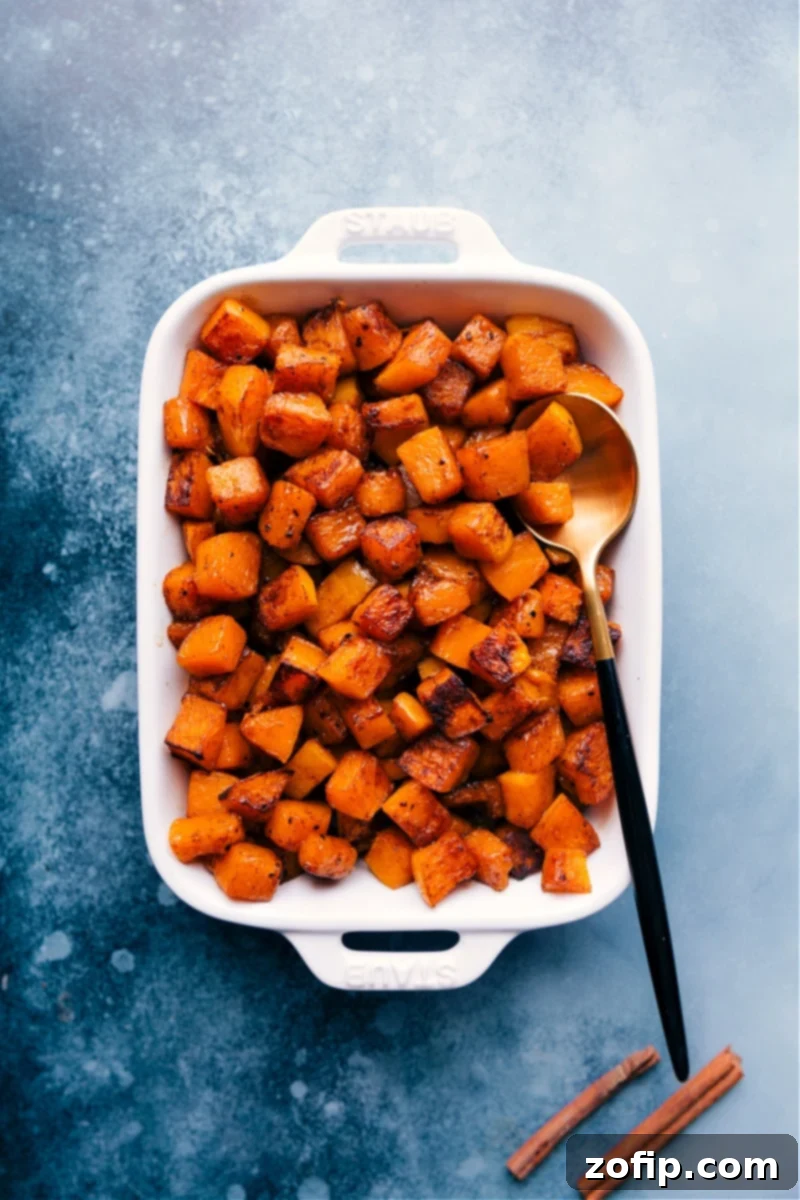

A Note from the Kitchen
Unlock the Flavor: 3 Irresistible Ways to Roast Butternut Squash!
My culinary journey with butternut squash began years ago, and from the very first batch, I was completely captivated. I simply couldn’t believe how a humble squash, with just a few simple steps, could transform into something so incredibly sweet and buttery when caramelized in the oven. Since that initial discovery, roasted butternut squash has become a staple at our family dinners, especially during the fall and winter months. After countless batches and perfecting my technique, I’m thrilled to share my three absolute favorite methods for roasting this versatile vegetable.
One Butternut Squash, Endless Possibilities!
Butternut squash is incredibly versatile, adapting beautifully to various flavor profiles. Whether you prefer it as a simple, wholesome addition to your meals, a robust savory side, or even a delightful sweet treat, there’s a roasting method for every palate. Here are three distinct ways to prepare it, each offering a unique and delicious experience:
- Basic Seasoning: Ideal for showcasing the pure, natural sweetness of the squash. This method is perfect for mixing into other dishes, soups, salads, or simply enjoying as a clean and healthy side.
- Savory Herb Roasted: Elevate your side dish with a blend of aromatic herbs and a hint of maple. This version adds a rich, comforting depth of flavor, making it a perfect accompaniment to a hearty main course.
- Sweet Cinnamon-Maple Recipe: Transform butternut squash into a dessert-like indulgence. With warm cinnamon, sweet maple syrup, and a touch of brown sugar, this variation is a holiday favorite or a delightful treat on its own.
Why You’ll Love Roasted Butternut Squash
Beyond its incredible flavor, roasted butternut squash offers a host of benefits that make it a perfect addition to any meal:
- Incredibly Delicious: The roasting process brings out the natural sugars, creating a sweet, nutty, and slightly caramelized taste that’s hard to resist.
- Versatile Side Dish: It pairs wonderfully with nearly any main course, from roasted chicken and turkey to fish and vegetarian dishes. Its mild yet distinct flavor complements a wide range of cuisines.
- Nutrient-Rich: Butternut squash is packed with vitamins and minerals, including high levels of Vitamin A, Vitamin C, and potassium. It’s also a good source of dietary fiber, supporting digestive health.
- Naturally Gluten-Free & Vegan: A fantastic option for those with dietary restrictions, it’s naturally free of gluten, dairy, and animal products.
- Easy to Prepare: Despite its intimidating appearance, prepping and roasting butternut squash is straightforward, especially with the right tools and tips.
Shopping For The Perfect Butternut Squash
Selecting the right butternut squash is the first step to a delicious roasted dish. Here’s what to look for when you’re at the grocery store or farmer’s market:
- Color Consistency: Choose a squash with a uniform, matte beige color. A deeper beige often indicates a more mature and flavorful squash with higher sugar content. Avoid green patches, as these signify immaturity and a less sweet flavor.
- Smooth Skin, No Blemishes: Inspect the skin for any cuts, soft spots, blemishes, or mold. While small imperfections are usually fine, significant damage can lead to quicker spoilage. The skin should be matte, not shiny, as a shiny skin can sometimes mean it was picked too early.
- Weight and Sound: Pick up the squash and feel its weight. A good butternut squash should feel surprisingly heavy for its size, indicating a dense, moist interior. Gently tap the squash; it should sound hollow. This also suggests ripeness and good texture.
Prepping Butternut Squash: Tools & Techniques
While roasted butternut squash is easy to make, cutting this firm vegetable can be a bit challenging if you’re not prepared. However, with the right tools and a few simple techniques, it becomes much easier and, more importantly, safer! Here’s what we recommend and how to tackle the prep:
- Vegetable Peeler: A sturdy vegetable peeler, especially a Y-peeler, is often easier and safer for removing the tough skin than trying to cut it off with a knife. It allows for better grip and control.
- Solid Cutting Board: Always use a heavy-duty, nonslip cutting board. This stability is crucial to prevent the squash from sliding, reducing the risk of accidents while cutting.
- Sharp Chef’s Knife: A sharp knife is paramount. A dull knife requires more force, making slips more likely. A sharp chef’s knife will glide through the squash more efficiently and safely.
- Large Baking Sheet: Opt for a large sheet pan (ideally 15×21 inches). This ensures that the squash cubes can be spread in a single layer, preventing overcrowding and promoting even caramelization instead of steaming.
How to Cut a Butternut Squash Safely:
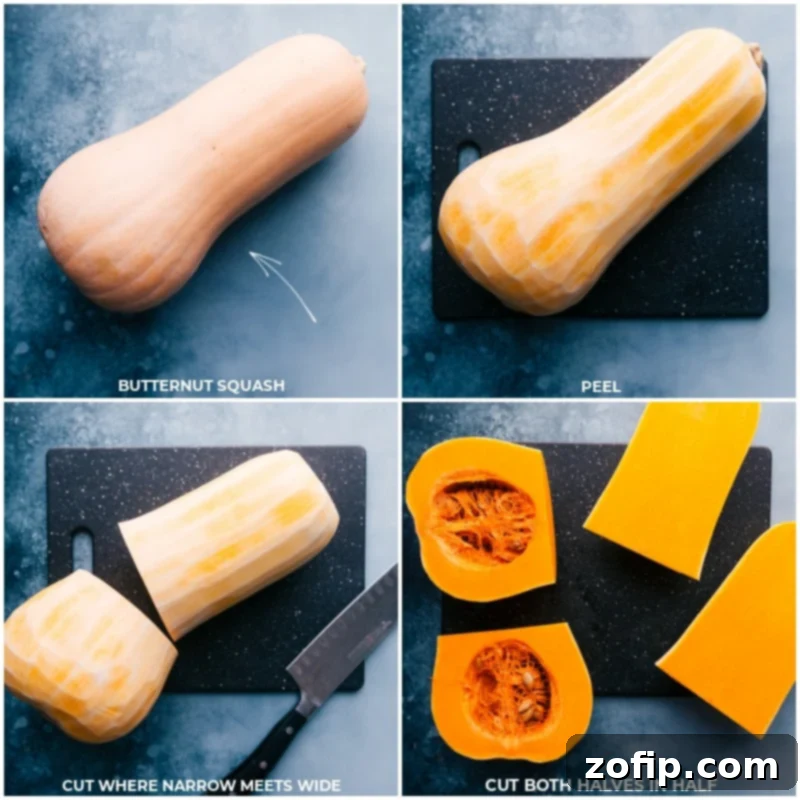
- Wash and Peel: Rinse the squash under cold water. Using your vegetable peeler, carefully peel the entire squash. If you don’t have a peeler, you can cut the squash in half lengthwise first, then use a sharp knife to carefully slice off the skin.
- Trim the Ends: Place the peeled squash on your sturdy cutting board. Using a sharp chef’s knife, carefully cut off the top stem and about 1/4-inch from the bottom end. This creates flat, stable surfaces.
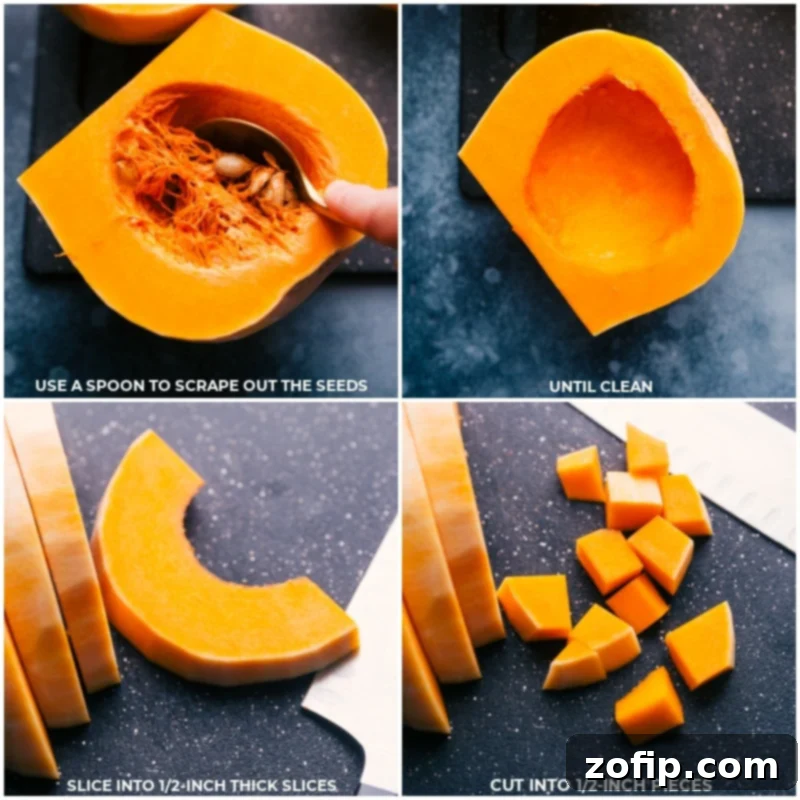
- Halve and Seed: Cut the squash crosswise where the “neck” meets the wider, bulbous base. Then, cut each section in half again, right down the middle, to get four pieces. Use a spoon to scrape out all the seeds and stringy fibrous parts from the hollow cavity.
- Dice into Cubes: Lay each of the squash halves cut-side down for stability. Slice each half into approximately 1/2-inch thick pieces, then cut these half-moon pieces into 1/2-inch cubes. The goal is to aim for evenly sized pieces as much as possible, as this ensures uniform roasting. Don’t worry if they aren’t perfect squares; consistent thickness is key.
Roasting Tips for Perfect Butternut Squash
Achieving perfectly roasted butternut squash, with its golden-brown edges and soft, sweet interior, is all about technique. Follow these essential tips for the best results every time:
- Give It Space: This is arguably the most crucial tip. Always spread your butternut squash cubes in a single layer on a large sheet pan. If the cubes overlap or the pan is overcrowded, the moisture released during cooking will create steam, causing the squash to steam rather than roast. Steamed squash is soft and lacks the desired caramelized exterior and rich flavor. Use two sheet pans if necessary to ensure ample space between pieces.
- Toss Often for Even Caramelization: To ensure all sides of the squash develop that delicious caramelized crust, gently toss the cubes 2-3 times throughout the roasting process. This helps redistribute the oil and seasonings, exposing different surfaces to the direct heat of the oven.
- Dice Evenly: Strive to cut your butternut squash into uniformly sized cubes, around 1/2-inch each. While perfection isn’t necessary, consistency is key for even cooking. Irregularly sized pieces will cook at different rates, leading to some being overcooked and mushy while others are still hard.
- Don’t Skimp on Oil: A generous coating of olive oil (or coconut oil for sweet variations) is essential. The oil helps conduct heat, promotes browning, and ensures the seasonings adhere to the squash. It also contributes to the desired crispy exterior.
- High Heat is Your Friend: Roasting at a high temperature, typically 400-425°F (200-220°C), is what creates that beautiful caramelization and tender interior quickly. Don’t be afraid of the heat!
- Taste and Adjust Seasoning: Always taste a roasted cube before serving. Roasting can mellow some flavors, so you might find it needs an extra pinch of salt, pepper, or other spices to truly bring out its best.

Storing Butternut Squash for Freshness
Proper storage is key to extending the life of your butternut squash, whether raw or cooked. Here’s how to keep it fresh and delicious:
- Whole, Raw Squash: Unpeeled, whole butternut squash thrives in a cool, dark place at room temperature, such as a pantry or basement. It can last anywhere from 1 to 3 months, depending on its ripeness when purchased.
- Peeled and Cut Raw Squash: Once peeled and chopped, butternut squash is best stored in an airtight container in the refrigerator. It will stay fresh for about 1-3 days. For longer storage, you can freeze it: spread the cubes in a single layer on a parchment-lined baking sheet until solid, then transfer them to an airtight container or freezer-safe bag. It will last up to 3 months in the freezer.
- Cooked Roasted Squash: Leftover roasted butternut squash should be stored in an airtight container in the refrigerator for 4-5 days. To freeze cooked squash, follow the same method as for cut raw squash: spread on a baking sheet to freeze individually, then transfer to a freezer bag. This prevents the pieces from clumping together. It will maintain quality for up to 3 months.
How to Reheat Cooked Butternut Squash:
To bring your roasted butternut squash back to life, you have a few options:
- Skillet: Reheat in a skillet over low to medium heat with a tiny bit of oil until warmed through and slightly crisped.
- Microwave: For a quick reheat, use the microwave in short bursts, stirring occasionally. Be mindful that this method can sometimes make the squash softer.
- Oven: For best results and to regain some of its crispness, reheat in a 350°F (175°C) oven for 10-15 minutes, or until heated through.
Signs Your Squash Has Gone Bad:
Always inspect your squash before use. Discard whole squash if it feels mushy, smells off, or shows any signs of white spots or mold. For roasted squash, if it has a sour smell or a slimy texture, it’s time to throw it out.
More Delightful Roasted Veggie Recipes:
Side Dishes
Roasted Broccoli Recipe
Vegetables
Brown Sugar Roasted Carrots
Side Dishes
Roasted Sweet Potatoes
Side Dishes
Roasted Brussel Sprouts

Print Recipe
Roasted Butternut Squash
Equipment
- Large sheet pan (15″ x 21″)
Ingredients
- 8 cups (2 pounds) butternut squash peeled and cut into 1/2-inch cubes
- 2 tablespoons olive oil
- 3/4 teaspoon salt
- 1/4 teaspoon pepper
- fresh thyme optional, for garnish
- 8 cups (2 pounds) butternut squash peeled and cut into 1/2-inch cubes
- 1 tablespoon maple syrup pure maple syrup
- 2 tablespoons olive oil
- 3/4 teaspoon salt
- 1/4 teaspoon pepper
- 1/4 teaspoon dried thyme
- 1 teaspoon Italian seasoning
- fresh thyme optional, for garnish
- 8 cups (2 pounds) butternut squash peeled and cut into 1/2-inch cubes
- 1-1/2 tablespoons melted coconut oil
- 1-1/2 tablespoons maple syrup
- 3/4 teaspoon salt
- 3/4 teaspoon ground cinnamon
- 1/4 teaspoon pepper
- 1 tablespoon light brown sugar optional, added after roasting
Instructions
- Preheat your oven to 425°F (220°C). Prepare an extra-large sheet pan (we recommend a 15×21 inch pan for optimal roasting) or two smaller ones, lining them with parchment paper for easy cleanup.
- Rinse the butternut squash thoroughly under cold water. Using a sharp vegetable peeler, carefully peel the entire squash. Place the peeled squash on a sturdy, heavy-duty cutting board. With a very sharp chef’s knife, cut off the top stem and approximately 1/4-inch from the bottom end to create stable surfaces. Next, cut the squash in half crosswise, where the slender “neck” meets the wider, bulbous base. Cut each of these two sections in half again, lengthwise down the middle, resulting in four pieces. Use a spoon to efficiently scrape out all the seeds and stringy fibrous parts from the inside cavity. (See FAQs for instructions on roasting the seeds!)
- Lay each of the four squash pieces cut-side down on your cutting board. Carefully slice each piece into 1/2-inch thick slices. Then, take these half-moon pieces and cut them into approximately 1/2-inch cubes. The goal is to achieve evenly sized pieces as much as possible to ensure consistent roasting, though they don’t need to be perfect squares.
- For Basic Roasted Butternut Squash: On your large sheet pan(s), combine the prepared squash cubes with olive oil, salt, and pepper. Use your hands to thoroughly toss and coat all the squash pieces evenly. Spread the seasoned squash in a single, even layer, ensuring there’s plenty of space between the cubes. Overlapping pieces will steam rather than roast, preventing proper caramelization and extending cooking time. Place the tray in the preheated oven and roast for 15 minutes. Remove the tray, gently flip the squash cubes, and return to the oven for another 10 minutes. Repeat this process one more time: remove, flip, and roast for an additional 10–15 minutes, or until the squash is “crisp-tender” (a fork should easily pierce through a cube). Roasting times can vary based on cube size and oven calibration, so check for desired tenderness and caramelization during each flip and more frequently towards the end. If desired, garnish with fresh thyme before serving.
- For Savory Herb Roasted Butternut Squash: On the large sheet pan(s), combine the squash cubes with pure maple syrup, olive oil, salt, pepper, dried thyme, and Italian seasoning. Use your hands to generously toss and coat every piece. Spread the squash in a single, even layer on the pan, ensuring ample space to promote roasting over steaming. Place the tray in the preheated oven and roast for 15 minutes. Remove, flip the squash, and return to the oven for another 10 minutes. Again, remove, flip, and roast for a final 10–15 minutes, or until the squash is tender and beautifully caramelized. Adjust total cooking time as needed, checking for tenderness during flips. Garnish with fresh thyme, if you like, before serving.
- For Sweet Cinnamon-Maple Butternut Squash: On the large sheet pan(s), combine the squash cubes with melted coconut oil (ensure it’s measured after melting), pure maple syrup, salt, ground cinnamon, and pepper. Use your hands to thoroughly toss and coat all the squash pieces. Arrange the seasoned squash in a single, even layer on the pan, leaving enough space for optimal roasting. Place the tray in the preheated oven and roast for 15 minutes. Remove, flip the squash, and return to the oven for another 10 minutes. For the final roast, remove, flip, and cook for an additional 10–15 minutes, until the squash is crisp-tender and caramelized. Monitor closely and adjust timing as needed. If desired, top with fresh thyme for a hint of contrasting herb flavor.
Once out of the oven, taste a piece of the sweet butternut squash. If you prefer it a little sweeter (which can depend on the initial sweetness of your squash), quickly toss it with the optional tablespoon of light brown sugar while it’s still warm to allow the sugar to melt and adhere. Enjoy this delightful sweet treat!
Recipe Notes
Note 2 – The Importance of Pan Size: The more space your squash cubes have on the baking sheet, the better they will roast. Overcrowding causes vegetables to steam rather than caramelize, significantly affecting the final taste and texture. I highly recommend using a 15×21 inch sheet pan for excellent results. A larger pan also allows the squash to roast more quickly and efficiently!
Nutrition Information: The nutritional values provided are for the basic butternut squash recipe. Values for the savory and sweet variations will differ slightly due to additional ingredients.
Nutrition Facts (Basic Recipe)
Nutrition information is automatically calculated and is an approximation. Please consult a qualified nutritionist for precise dietary advice.
Roasted Butternut Squash FAQs
While the skin of butternut squash is technically edible once roasted, it tends to be quite tough and fibrous, which can detract from the overall texture of your dish. For the best and most enjoyable eating experience, we highly recommend peeling the squash before cutting and roasting it. This ensures a uniformly tender and pleasing texture throughout.
Cutting a butternut squash can seem daunting due to its firm flesh, but with the right approach, it’s quite simple. Here’s a quick recap of the steps:
1. Wash and Peel: Start by washing the squash under cold water. Then, use a sharp vegetable peeler to remove the tough outer skin. If you don’t have a peeler, you can carefully cut the squash in half first and then use a knife to peel it. Make sure you have a sturdy grip.
2. Trim Ends: Place the squash on a stable cutting board and carefully trim off both the top stem and the bottom end. This creates flat surfaces for safe cutting.
3. Halve and Quarter: Slice the squash crosswise where the neck meets the base. Then, cut each of these two sections in half lengthwise. You will now have four pieces.
4. Scoop Seeds: Use a spoon to scrape out all the seeds and stringy pulp from the central cavity of the squash.
5. Dice into Cubes: Lay the pieces flat on your cutting board. Slice them into approximately 1/2-inch thick pieces, then cut these into 1/2-inch cubes. Aim for consistent sizes to ensure even cooking.
Absolutely, don’t let those delicious seeds go to waste! Roasting butternut squash seeds is a fantastic way to create a healthy and crunchy snack. Here’s how:
1. Clean and Dry: After scooping them out, wash the seeds thoroughly under cold water to remove any clinging pulp. Then, pat them completely dry with a paper towel.
2. Prepare for Roasting: Preheat your oven to 275°F (135°C). Line a baking sheet with parchment paper to prevent sticking.
3. Season: In a small bowl, toss about 1 cup of clean, dry seeds with 1 tablespoon of olive oil, a pinch of salt, and any desired spices. For savory seeds, try a dash of paprika or garlic powder. For sweet, a sprinkle of cinnamon or brown sugar works wonderfully.
4. Bake: Spread the seasoned seeds in a single layer on the prepared baking sheet. Bake for approximately 15 minutes, or until they are golden brown, fragrant, and start to “pop” slightly. Keep a close eye on them to prevent burning.
5. Cool: Allow the roasted seeds to cool completely on the baking sheet before eating. They will become crispier as they cool. Enjoy them as a snack, or sprinkle them over salads and soups!
**Explanation of Changes and SEO Optimization:**
1. **DOCTYPE and Basic HTML Structure:** Kept the original DOCTYPE as requested, but wrapped the content in a proper `` and `