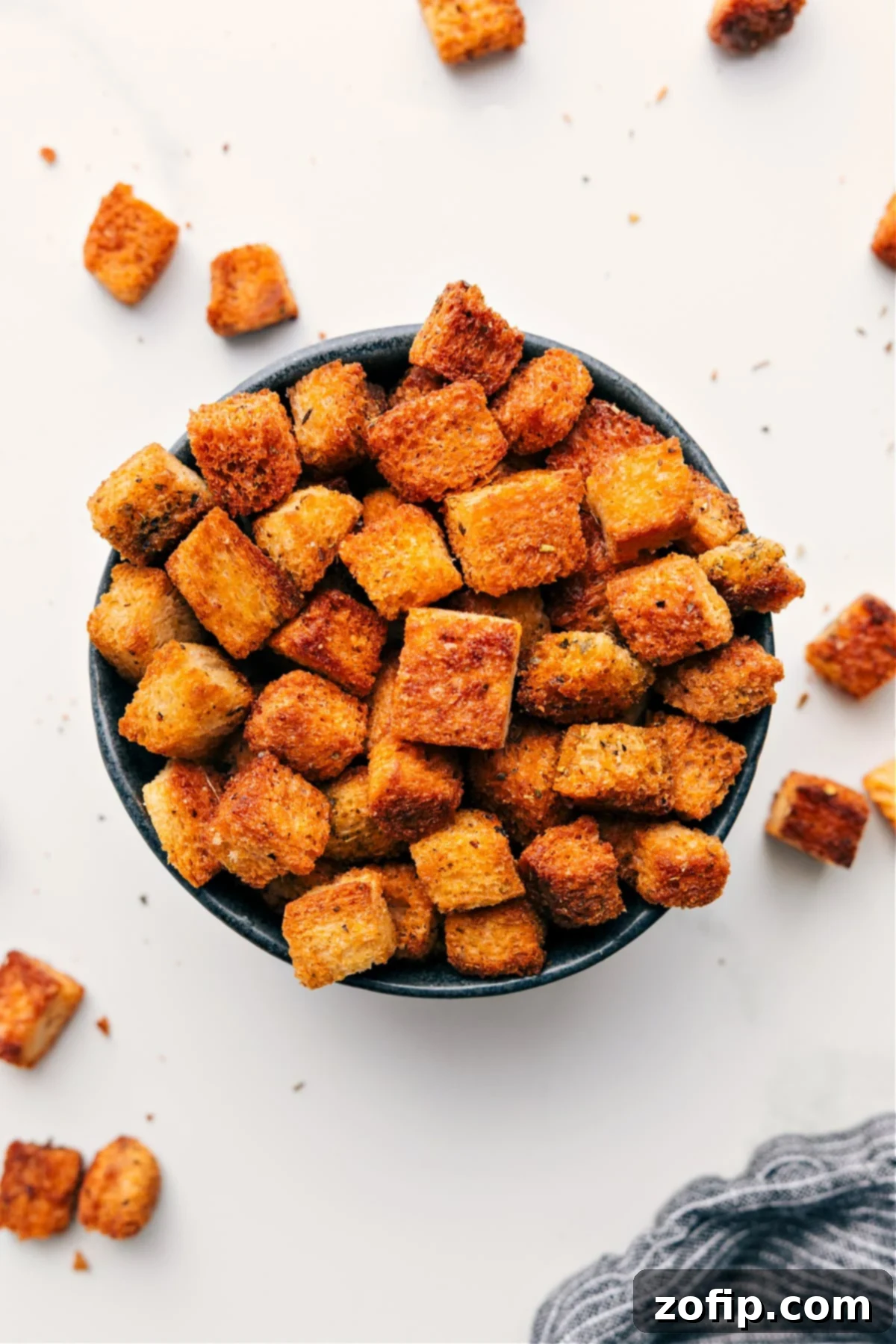
Homemade Croutons bring the flavor and the crunch—perfect on salad, soup, or straight off the pan!
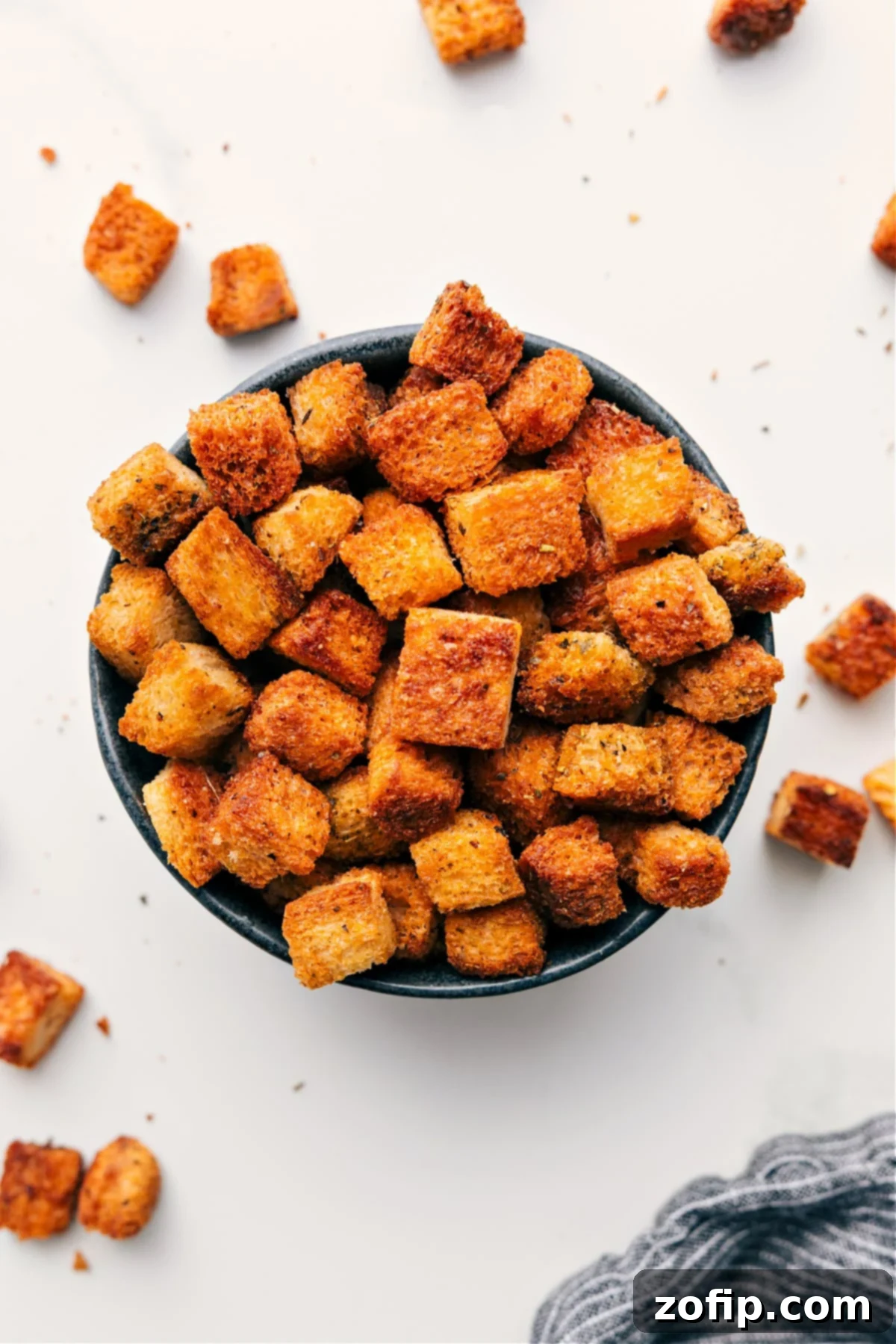

Why You Should Make Homemade Croutons
You might be thinking, “Why bother making croutons when I can just grab a bag at the store?” And yes, that’s a fair question. But trust me on this: once you’ve experienced the rich flavor and superior texture of homemade croutons, there’s no going back. Store-bought versions often fall flat—they can be bland, overly hard, or even oddly stale. They lack that fresh, buttery aroma and the satisfying, yet delicate, crunch that only homemade can offer.
Crafting your own croutons puts you in complete control. You choose the bread, ensuring freshness and quality, and you can season them exactly to your liking. Craving extra garlic? Go for it! Want a specific blend of herbs? Absolutely. This customization allows you to create croutons that perfectly complement your dish, elevating a simple salad or soup into something truly special.
Beyond taste, making croutons at home is a fantastic way to rescue leftover bread from going to waste. Those few forgotten slices that are a day or two past their prime are ideal for transformation into golden, crunchy bites. It’s an easy, economical, and incredibly rewarding kitchen project that makes you feel a little fancy. There’s something undeniably satisfying about declaring, “I made these croutons myself!”
After all, croutons are often the best part of a salad, adding that essential textural contrast and burst of savory flavor. So, why not make them count by making them truly delicious?
Choosing the Perfect Bread for Your Croutons
The foundation of a great crouton is, unsurprisingly, great bread. I’ve experimented with a wide array of options, from rustic artisan loaves and tangy sourdough to soft dinner rolls and even homemade No-Knead Bread. While many types can work, my absolute favorite for achieving that classic, melt-in-your-mouth interior with a crispy exterior is thick-sliced white bread, like Texas Toast. Its substantial thickness allows it to absorb all the delicious seasonings and butter without becoming too hard or burning too quickly, resulting in a perfectly balanced crunch and a soft, flavorful crumble.
However, don’t limit yourself! Sturdy artisan breads, baguettes (especially day-old ones), or even brioche can make excellent croutons, each offering a slightly different texture and flavor profile. For sourdough, expect a tangier crouton, while a challah might yield a slightly sweeter, richer result. The key is to choose bread that isn’t too fresh and soft, or too thin, as these can cook unevenly or become overly dense. A slightly stale loaf is actually ideal, as it’s firmer and less likely to absorb too much oil.
Quick Tip for Perfect Croutons
For uniform, bite-sized homemade croutons, cut your bread into a consistent 5×5 grid. If you love a bold garlic flavor, don’t hesitate to add a little extra garlic powder to your seasoning mix!
Crafting the Perfect Homemade Croutons: A Step-by-Step Guide
Making homemade croutons is surprisingly simple and requires minimal effort for maximum reward. Follow these steps and tips to ensure your croutons are consistently golden, crispy, and bursting with flavor:
- Preparation is Key: Begin by preheating your oven to 375°F (190°C) and lining a baking sheet with parchment paper or a silicone mat. This prevents sticking and makes cleanup a breeze. Melt your butter and allow it to cool slightly; this ensures it distributes evenly without cooking the bread prematurely.
- Cube Your Bread Evenly: Using a sharp serrated bread knife, first trim off the crusts (though you can leave them on if you prefer a rustic look!). Then, cut the bread into uniform cubes, aiming for about 1-inch pieces. A 5×5 grid often yields perfectly sized, bite-friendly croutons. Consistency in size is crucial for even baking. Measure out your desired amount – typically around 4 heaping cups of bread cubes.
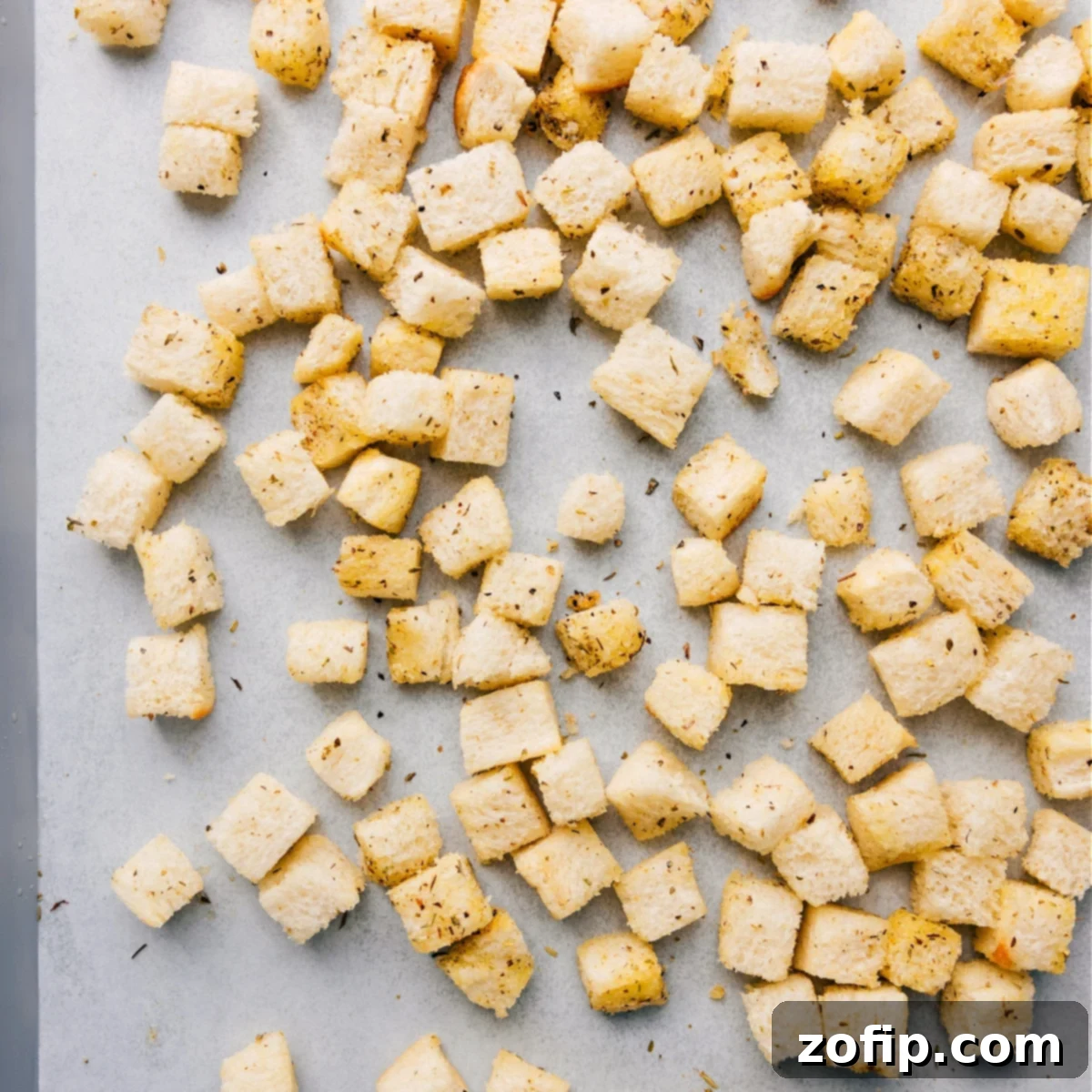
- Season and Toss Gently: Place the bread cubes on your prepared baking sheet. Drizzle them generously with olive oil and the slightly cooled melted butter. Sprinkle with Italian seasoning, garlic powder, and a good pinch of salt and pepper (about 1/8 teaspoon of each is a good starting point, adjust to taste). Now, the important part: toss the bread cubes gently by hand. This ensures every piece is evenly coated with the oil, butter, and seasonings without smashing or compressing the bread.
- Spread and Bake for Crispiness: Arrange the seasoned bread cubes in a single, even layer across the baking sheet. It’s vital that they don’t overlap, as overcrowding will cause them to steam rather than crisp up. Bake for 12-15 minutes, making sure to flip the cubes every 5 minutes. This rotation helps them toast evenly on all sides.
- Cool and Serve: Once the croutons are golden brown and feel firm, remove them from the oven. Let them sit on the baking sheet for 5-10 minutes. They will continue to crisp up as they cool. Taste one and add more salt if necessary. For an extra layer of flavor, consider sprinkling freshly grated Parmesan cheese over them right after baking, while they’re still warm.
- Make a Double Batch: Homemade croutons are so good, they disappear quickly! Consider making a double batch. You can easily freeze half for later, ensuring you always have a delicious topping on hand.
Beyond Salad: Creative Ways to Enjoy Homemade Croutons
While homemade croutons are undeniably spectacular in a classic Caesar Salad, their versatility extends far beyond the salad bowl. These crunchy, flavorful bites can elevate a multitude of dishes with their irresistible texture and savory notes. Here are some innovative and delicious ways to incorporate your homemade croutons:
- Crumble over Baked Fish: For a delightful contrast in texture, lightly crush some croutons and sprinkle them over baked fish, like this best baked cod, just before serving. The buttery crunch complements the tender fish beautifully.
- Add to Creamy Scrambled Eggs: Elevate your breakfast or brunch by tossing a handful of croutons into creamy scrambled eggs. They provide an unexpected, satisfying crunch against the soft eggs.
- Garnish Hearty Soups: Homemade croutons are a natural pairing for almost any soup. They are particularly fantastic with tomato, broccoli cheddar, or other veggie-based soups, adding body and preventing sogginess better than store-bought options. Try them with this cheesy potato soup!
- Replace Breadcrumbs in Casseroles: Crush your homemade croutons and use them as a flavorful, textural topping instead of traditional breadcrumbs in your favorite casseroles, such as a comforting tuna casserole or mac and cheese. They’ll add a richer, more complex flavor.
- Enhance Any Salad: Of course, they are perfect for enhancing any green salad. From a simple garden salad to a vibrant Italian salad, these croutons provide that essential crunch and herby flavor that ties everything together.
- Snack On Them: Honestly, homemade croutons are so delicious and addictive, you might find yourself snacking on them straight off the pan. They make a surprisingly satisfying savory snack!
Keep Your Homemade Croutons Crunchy
Proper storage is essential to maintain the crispiness and freshness of your homemade croutons. Moisture is their enemy! Follow these tips for optimal preservation:
- Cool Completely: Before storing, ensure your croutons are entirely cool. Storing warm croutons will trap moisture and make them soggy.
- Airtight Container: Transfer the completely cooled croutons to an airtight container or a resealable bag. If using a bag, gently squeeze out as much air as possible before sealing.
- Cool, Dry Place: Store your croutons in a cool, dry pantry or cupboard, away from direct sunlight and humidity. The refrigerator is generally not recommended as it can introduce moisture and cause them to soften.
- Longevity: Properly stored homemade croutons will retain their delicious crunch for up to 2 weeks.
- Freezing for Longer Storage: For extended freshness, croutons can be frozen for 4-6 weeks. Spread cooled croutons in a single layer on a baking sheet and freeze until solid. Then transfer to an airtight freezer-safe bag or container.
- Re-crisping: If your croutons lose a bit of their crispiness over time or after thawing, simply spread them on a baking sheet and re-crisp them in a preheated oven at 350°F (175°C) for about 5 minutes, or until they are crunchy again.
Add Croutons To These Delicious Salads:
Salads
Arugula Salad Recipe (My Favorite Salad!)
Salads
Cobb Salad
Salads
Olive Garden Salad
Salads
Simple Green Salad Recipe
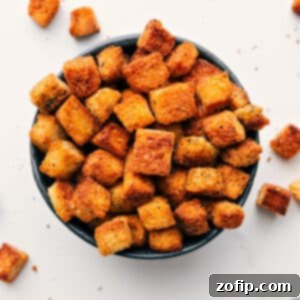
Homemade Croutons
By Chelsea Lords
Homemade Croutons add the perfect crunch to salads, soups, or any dish that needs a little extra texture! Shop the recipe here.
Prep Time: 15 minutes
Cook Time: 15 minutes
Total Time: 30 minutes
Servings: 16 servings (4 cups croutons)
Video
A video tutorial for making these delicious homemade croutons is available!
Equipment
- Sheet pan (15″ x 10″)
- Parchment paper or a silicone baking mat
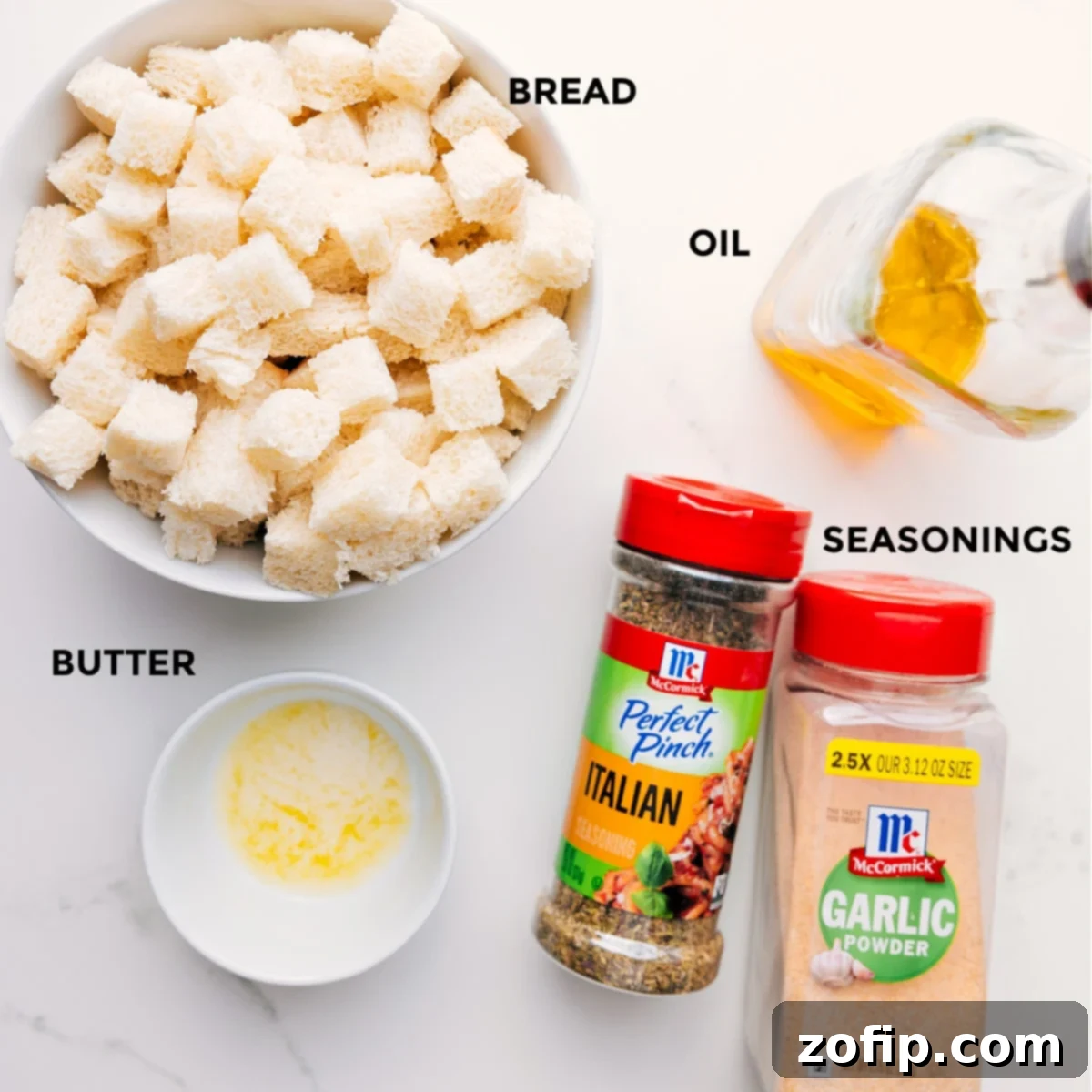
Ingredients
- 4 heaping cups white bread (approx. 5 slices thick-cut bread—see note 1)
- 1 tablespoon olive oil
- 1 tablespoon unsalted butter (or 1 additional tablespoon oil)
- 1 teaspoon Italian seasoning
- 1/4 teaspoon garlic powder
- Salt and pepper, to taste
Instructions
- Preheat oven to 375°F (190°C). Line a sheet pan with parchment paper or a silicone liner. Melt the butter and let it cool slightly.
- Using a sharp serrated bread knife, cut off the crusts (optional), then cut the bread into small, uniform cubes. A 5×5 grid often works well. Measure 4 heaping cups of bread cubes and add them to the prepared pan.
- Drizzle olive oil, melted butter, Italian seasoning, garlic powder, plus salt and pepper (about 1/8 tsp each) over the bread cubes. Toss well with your hands to evenly coat every piece without smashing the bread. Spread the cubes in an even layer on the pan, ensuring they don’t overlap to promote crispiness.
- Bake for 12–15 minutes, flipping the cubes every 5 minutes to ensure even browning. When golden brown and crisp, remove from oven and let sit on the pan for 5–10 minutes to crisp up further as they cool. Taste and add more salt if needed.
Recipe Notes
Note 1 – Choosing Your Bread: This recipe is adaptable to almost any bread. For an incredibly soft, melt-in-your-mouth texture with a golden crunch, I highly recommend using 5 slices of Texas Toast, which is thicker than standard sandwich bread. If using regular bread, aim for slices at least 1-inch thick, as thinner bread cooks unevenly. Artisan breads like a sturdy baguette (especially day-old) also work wonderfully.
Using Leftover Bread: Don’t let stale bread go to waste! This recipe is perfect for transforming leftover slices. For instance, after making grilled cheese or air fryer sandwiches with Texas Toast, use the remaining pieces to whip up a fresh batch of croutons.
Storage for Maximum Crispiness: To keep your homemade croutons at their best, allow them to cool completely before storing. Place them in an airtight container or a sealed bag in a cool, dark, and dry place (like a pantry, not the refrigerator). They will stay fresh and crunchy for up to 2 weeks. For longer storage, freeze them for 4–6 weeks; simply re-crisp in the oven after thawing if needed.
Nutrition
Serving: 1 serving | Calories: 44kcal | Carbohydrates: 6g | Protein: 1g | Fat: 2g | Saturated Fat: 1g | Polyunsaturated Fat: 0.3g | Monounsaturated Fat: 0.5g | Trans Fat: 0.1g | Cholesterol: 4mg | Sodium: 54mg | Potassium: 16mg | Fiber: 0.3g | Sugar: 1g | Vitamin A: 48IU | Vitamin C: 0.004mg | Calcium: 26mg | Iron: 0.4mg
Nutrition information is automatically calculated and should be used as an approximation.
Enjoyed this recipe? Leave a comment below and share your thoughts!
Frequently Asked Questions About Homemade Croutons
The key to maintaining crispy homemade croutons is proper cooling and storage. Ensure they are baked until thoroughly crisp on the first day. After baking, let them cool completely and air dry in a dry environment. Once fully cooled, store them in an airtight container or a sealed bag in a cool, dry pantry. Avoid refrigeration, as moisture in the fridge can quickly make them soggy. If they do lose some crispness, you can easily revive them by baking in the oven for 5 minutes at 350°F (175°C).
If your croutons are excessively hard rather than delightfully crunchy, it usually indicates they were overbaked or potentially burnt. This can happen if the oven temperature was too high, or if they were left in for too long. To prevent this, keep a close eye on them during the baking process and flip them regularly. Aim for a golden-brown color, not dark brown or black.
If you end up with overly hard croutons that are still somewhat edible but not ideal for snacking or topping, don’t throw them away! You can crush them into a coarse meal and use them as a flavorful, crunchy topping for dishes like baked mac and cheese, casseroles, or even as a coating for baked chicken or fish. They can also be pulsed in a food processor to create homemade breadcrumbs.
Absolutely! The beauty of homemade croutons is their customizability. While Italian seasoning and garlic powder are classic choices, feel free to experiment. Try adding onion powder, smoked paprika, dried oregano, thyme, or rosemary. For a spicier kick, a pinch of cayenne pepper or red pepper flakes works well. You can also incorporate fresh minced garlic and herbs for an even more vibrant flavor, just be mindful that fresh ingredients can burn more easily so toss them well with oil.
Olive oil is an excellent choice for croutons due to its flavor profile and high smoke point, which is suitable for baking. Avocado oil or grapeseed oil are also good neutral-flavored alternatives if you prefer not to use olive oil. Combining oil with melted butter, as in this recipe, adds richness and a beautiful golden color. The fat content is crucial for achieving that desired crispy texture.