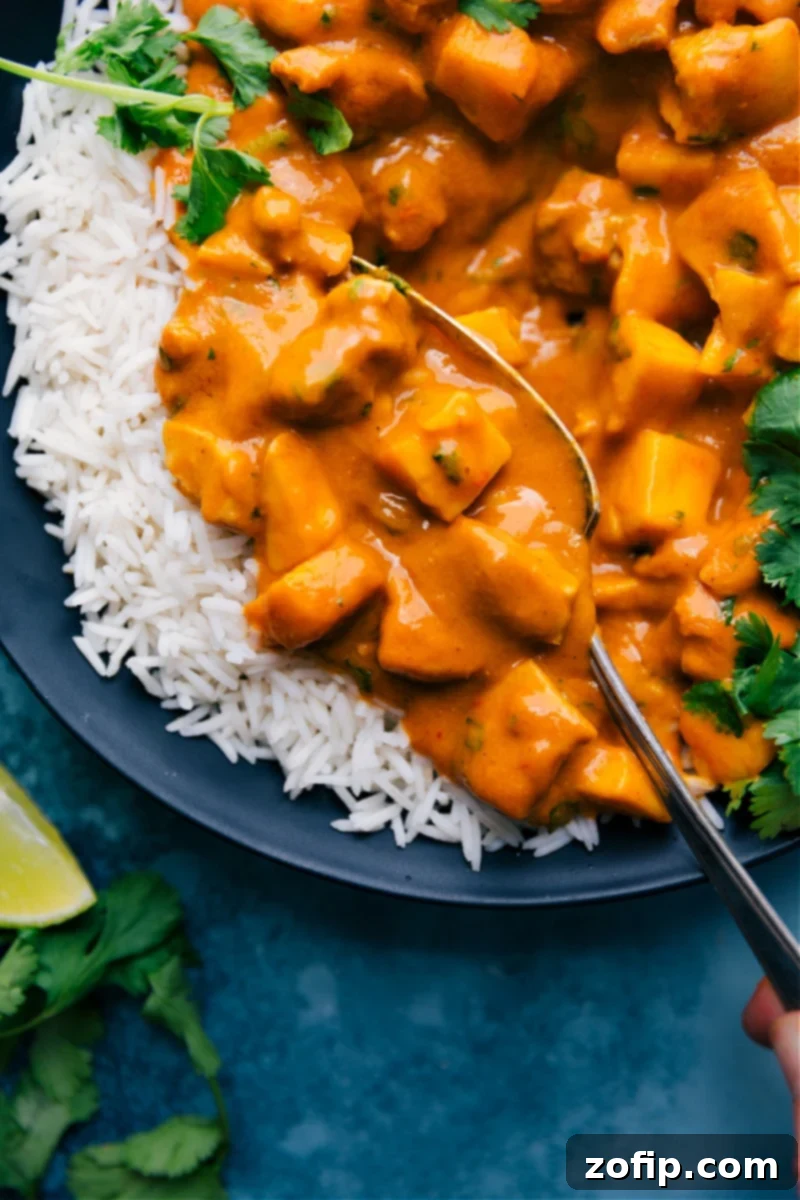
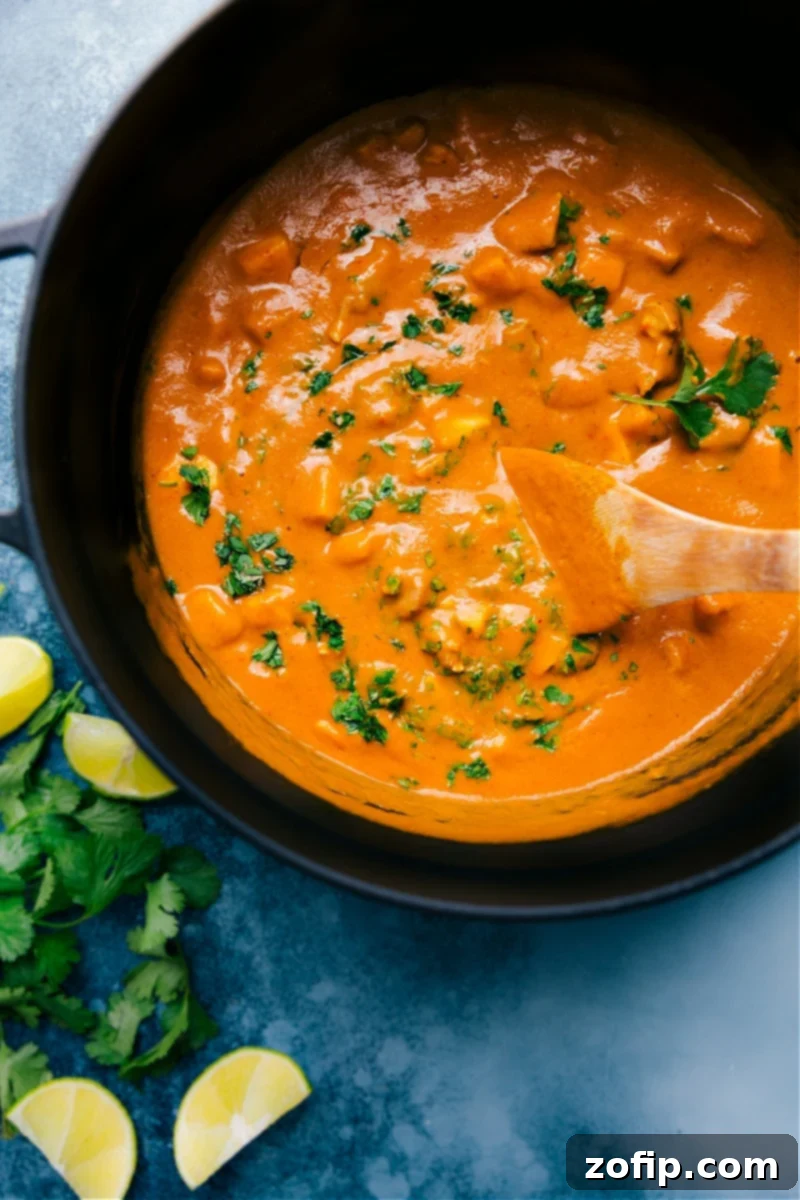
Welcome to a culinary journey that promises to tantalize your taste buds with every spoonful. This Mango Chicken Curry is more than just a meal; it’s a vibrant symphony of flavors, offering a rich, sweet embrace with just the right hint of warming spice. The secret to its undeniable allure? A genius blend of fresh mango integrated directly into the creamy coconut curry sauce, elevated further by generous chunks of succulent mango stirred in at the end. Get ready to transform your dinner table with a dish that’s both exotic and incredibly comforting.

A Note from the Kitchen
Experience Love at First Bite!
There’s an undeniable magic to mangoes. As an avid fan of this luscious fruit, I’m always exploring new ways to incorporate its vibrant flavor into both sweet and savory dishes. Given that chicken curry is a beloved staple in my household, it was only a matter of time before the tropical sweetness of mango found its perfect partner in a rich, aromatic curry.
This recipe began its life inspired by a blend of my tried-and-true Coconut Curry Chicken foundation and fresh ideas from culinary experts like Elise at Simply Recipes. After a delightful period of experimentation and refinement, I’m absolutely thrilled with the result. This Mango Chicken Curry is truly special, boasting a harmonious balance of flavors that will leave you completely hooked from the very first bite. I can’t wait for you to try it!
Why This Mango Chicken Curry Stands Out
What makes this Mango Chicken Curry a must-try? It’s the intentional layering of mango flavor. We don’t just add mango chunks; we infuse the very heart of the sauce with its fruity essence. This creates an incredibly smooth, naturally sweet, and deeply complex sauce that perfectly complements the succulent chicken. It’s an ideal dish for those who appreciate a curry that leans more towards sweet and fragrant than fiery hot, making it a crowd-pleaser for families and guests alike.
Beyond its unique flavor profile, this recipe is designed for ease. With straightforward steps and readily available ingredients, you can achieve restaurant-quality curry in your own kitchen. It’s also incredibly versatile, allowing for customization to suit your spice preference or dietary needs. Get ready to impress yourself and everyone around your table with this unforgettable curry.
Mastering Your Mangoes: Selection & Preparation
The star of our show is, of course, the mango. Choosing the right mango can significantly impact the final flavor of your curry.
- Choosing the Right Variety: While most mango varieties will work, I highly recommend using honey mangoes (also known as Ataulfo or yellow mangoes). Their naturally sweeter profile and exceptionally creamy texture create a more luxurious curry sauce. However, if honey mangoes aren’t available, standard red/green mangoes will still yield a delicious result.
- Assessing Ripeness: To determine if a mango is ripe, gently squeeze it. A ripe mango will give slightly under pressure, similar to a ripe avocado. Mangoes continue to ripen at room temperature; once they reach your desired level of ripeness, store them in the refrigerator to halt further ripening and extend their freshness.
- Sweetness Control: For a noticeably sweeter curry sauce that highlights the tropical notes, opt for mangos that are at their peak ripeness. If you prefer a curry with a more subtle sweetness and a stronger spicy kick, using slightly firmer mangoes can help achieve that balance.
- The Convenience of Frozen Mangoes: Don’t have fresh mangoes on hand? No problem! I’ve successfully tested this recipe with frozen mangoes, and they perform wonderfully. Frozen mangoes are picked and processed at their optimal ripeness (often slightly less ripe than peak to prevent mushiness when thawed), ensuring great flavor even when fresh options are scarce.
Need a little help with preparation? Here’s a quick visual guide on how to efficiently cut a mango, ensuring you get the most flesh from your fruit.
Quick Tip: Maximize Your Mango Supply!
If you’re like me and can’t get enough of this amazing fruit, consider buying a flat of mangoes (often 6-8 per tray) from stores like Costco. This ensures you have a steady supply throughout the week. While a few will go into this incredible curry, don’t let the rest go to waste! Mangoes are incredibly versatile. Try incorporating them into a refreshing Mango Salad, a cool and delightful Mango Sorbet, a power-packed Mango Smoothie, or even other savory dishes like Mango Chicken or a zesty Mango Salsa. Your palate will thank you!
Expert Tips for a Perfect Mango Chicken Curry
Achieving a truly exceptional Mango Chicken Curry involves a few key techniques and ingredient choices. Follow these tips to ensure your dish is flavorful, aromatic, and perfectly textured every time:
- Choosing the Right Coconut Milk: Always opt for canned coconut milk found in the international aisle, not the refrigerated beverage kind. For the richest flavor and ideal thickness, use a full-fat variety. Brands like Imperial Kitchen® are excellent, but any good quality full-fat coconut milk will do. Avoid “lite” coconut milk as it’s too thin, “cream of coconut” which is excessively sweet, and “coconut cream” which is too dense and overpowering for this recipe.
- Blooming Your Spices: This is a crucial step for unlocking maximum flavor. By briefly cooking your dry spices (coriander, curry powder, cumin) with the aromatics and curry paste, you “bloom” them. This process releases their essential oils and deepens their flavors, resulting in a much more aromatic and complex curry.
- Blending Hot Liquids Safely: When it comes to blending the hot curry sauce, safety is paramount. Always secure the blender lid tightly. If your blender has a “soup” or “hot” setting, use it, as these settings are designed to manage heat expansion. Otherwise, start blending on the lowest speed and gradually increase it. Be cautious when removing the lid, as hot steam will escape. As an extra precaution, if your blender doesn’t have a specific hot liquid setting, you can cover the lid with a folded kitchen towel and hold it firmly in place with your hands, allowing steam to escape safely without splattering.
- Selecting Your Red Curry Paste: The red curry paste contributes significantly to the curry’s depth and spice level. Brands vary wildly in intensity. Maesri® is renowned for its authentic, robust flavor, but it is quite spicy. If you prefer a milder curry or are cooking for children, Thai Kitchen® offers a delicious, milder alternative. Adjust the amount to your personal heat preference.
Featured Comment
“I made this for Valentines dinner and wow it is amazing. Just the right amount of flavour and nice thick sauce. Restaurant quality for sure, if not better.”
– Lezanne
Elevate Your Dish: Perfect Serving Suggestions & Toppings
While this Mango Chicken Curry is undeniably delicious on its own, the right accompaniments and toppings can truly transform it into an unforgettable culinary experience. Do not skip the toppings! They are essential for balancing the flavors and adding delightful textures.
- Fresh Herbs for Brightness:
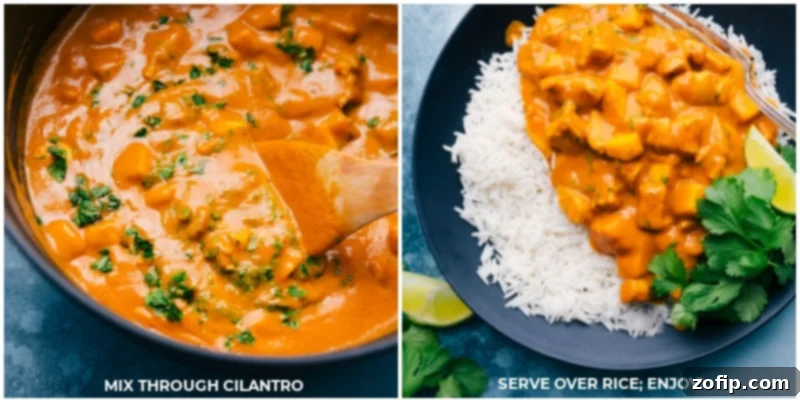
- Fresh, finely chopped cilantro is a classic choice, providing a burst of refreshing, bright flavor that cuts through the richness of the curry.
- Alternatively, or in addition, fresh basil (especially Thai basil, if you can find it) adds a wonderful aromatic and slightly peppery note, complementing the curry beautifully.
- A Zesty Citrus Finish: A generous squeeze of fresh lime juice is non-negotiable! The acidity from the lime provides a crucial counterpoint to the curry’s sweetness and richness, brightening all the flavors and making the dish sing.
- The Aromatic Power of Kaffir Lime Leaves: For an authentic Thai-inspired touch, consider adding kaffir lime leaves. These distinct leaves impart a unique, intense citrusy aroma and flavor that elevates the curry to another level. They can sometimes be tricky to find in mainstream grocery stores, so I often buy them in bulk and freeze them – they freeze exceptionally well and retain their potency. If fresh leaves are unavailable, a good substitute is additional lime zest, which will still deliver a lovely citrus punch.
- Cool & Creamy Coconut Yogurt: A dollop of plain coconut yogurt (or Greek yogurt for dairy consumers) on top adds a welcome element of coolness, a creamy texture, and an extra layer of subtle coconut flavor, enhancing the overall sensory experience.
- Ideal Accompaniments: This curry is fantastic served over fluffy white rice. For a traditional side, Roti bread is superb, but it can be hard to source. Delicious and widely available alternatives include lightly toasted naan or pita bread, which are perfect for soaking up every last drop of that incredible sauce. We personally adore Stonefire® naan for its soft texture and slight chewiness.
- Crunchy Cashew Garnish: Finish your plates with a sprinkling of dry-roasted and lightly salted cashews. Their satisfying crunch and nutty flavor provide a delightful contrast to the creamy curry, adding another layer of texture and taste.
Storage & Leftovers
Making the Most of Your Mango Chicken Curry Leftovers
One of the many joys of cooking curry is how wonderfully it stores. In fact, many curry enthusiasts agree that the flavors only deepen and meld together even more beautifully after a day or two! This makes Mango Chicken Curry an excellent meal-prep option.
Refrigerator Storage: To store leftover curry, simply transfer it to an airtight container and place it in the fridge. It will remain fresh and delicious for 3 to 5 days. When reheating, use low heat on the stovetop to prevent the chicken from overcooking. If the sauce has thickened too much during storage, add a splash of chicken stock/broth or coconut milk to thin it back to your desired consistency.
Freezer Storage: For longer storage, this Mango Chicken Curry freezes exceptionally well. Allow the curry to cool completely, then transfer it to freezer-safe airtight containers or heavy-duty freezer bags. It can be stored in the freezer for up to 3 months. When you’re ready to enjoy it, thaw the curry overnight in the refrigerator before reheating gently on the stovetop, again adding a bit of liquid if needed to loosen the sauce.
Explore More Delicious Curry Creations:
If you’ve fallen in love with the vibrant flavors of this Mango Chicken Curry, you’re in for a treat! The world of curries is vast and incredibly diverse, offering a comforting warmth and complexity that appeals to every palate. Dive into these other delightful curry recipes, each bringing its own unique twist to your table.
Dinner
Grilled Curry Chicken
Dinner
Lentil Curry Recipe
Dinner
Sweet Potato Curry
Soups And Stews
Chicken Curry Soup
Print Recipe
Mango Chicken Curry
Chelsea Lords
30 minutes
30 minutes
1 hour
4
servings
Equipment
- Large pot
- Blender
Ingredients
- 2 tablespoons coconut oil
- 1 large yellow onion chopped, about 1-1/2 cups
- 1 red bell pepper chopped
- 2 tablespoons minced fresh ginger coarsely chopped
- 2 tablespoons garlic coarsely chopped
- 3 tablespoons red curry paste see Note 1
- 2 teaspoons ground coriander
- 2 teaspoons yellow curry powder
- 1/2 teaspoon ground cumin
- 2 cups ripe mango cubed, see Note 2
- 1 (13.5-ounce) can full-fat coconut milk see Note 3
- 1-1/4 pounds boneless, skinless chicken thighs or breasts, cut into 1-inch pieces; thighs recommended for best flavor and texture
- Optional additions see Note 4
- Cooked rice for serving, see Note 5
Instructions
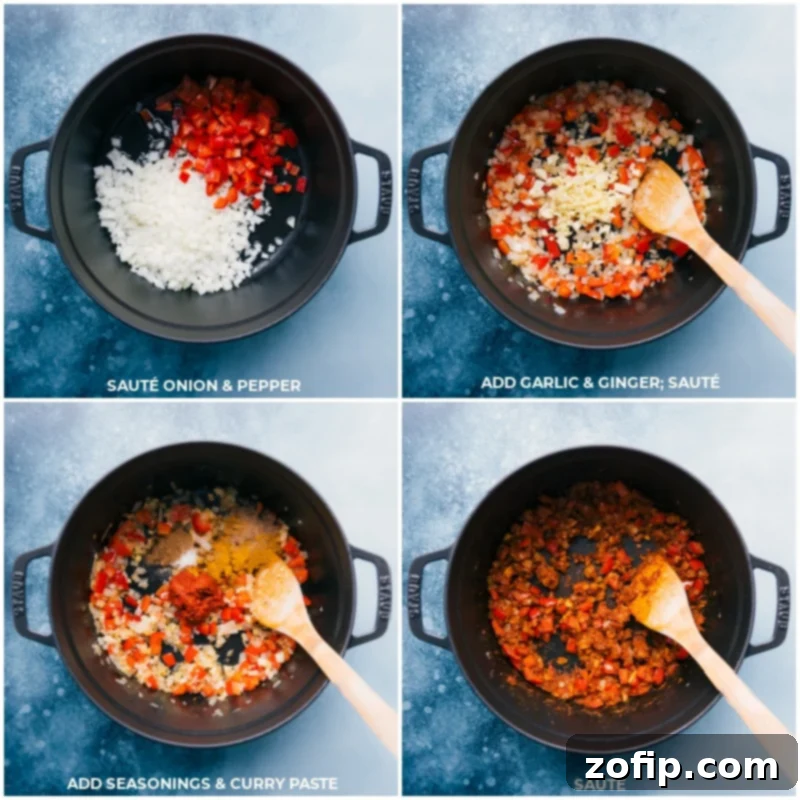
- In a large pot, heat coconut oil over medium heat. Once melted and shimmering, add the chopped yellow onions and red bell pepper. Sauté, stirring occasionally, until the vegetables are softened, which should take about 7–9 minutes. Next, stir in the minced garlic and fresh ginger and cook for another minute until fragrant. Add the red curry paste, ground coriander, yellow curry powder, ground cumin, and salt to taste (I typically add 1 teaspoon of salt at this stage). Cook, stirring constantly, for 1–3 minutes until the spices are very fragrant. If anything begins to stick, reduce the heat slightly and add a touch more oil.
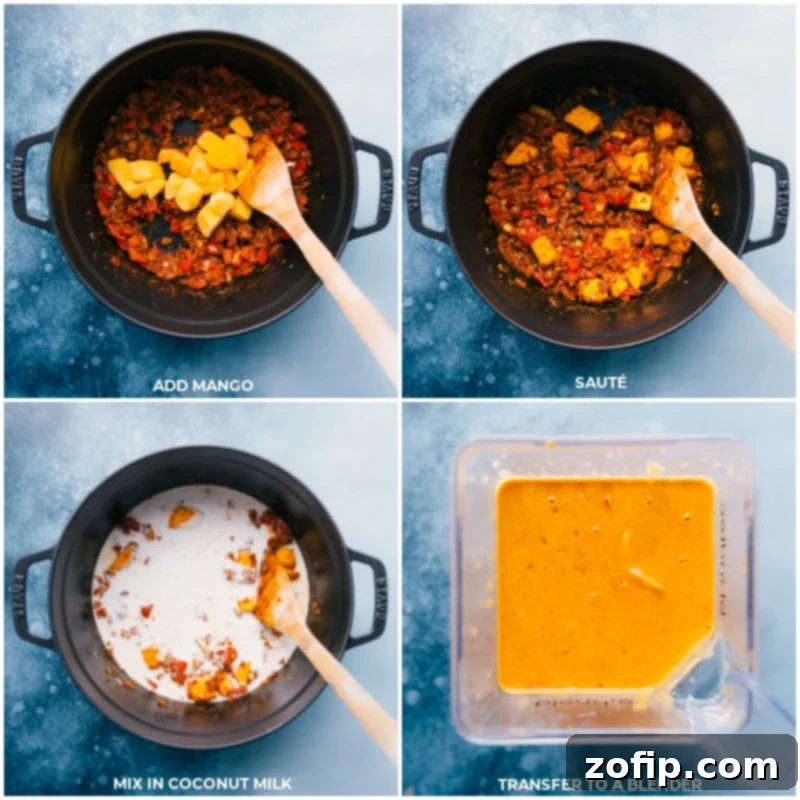
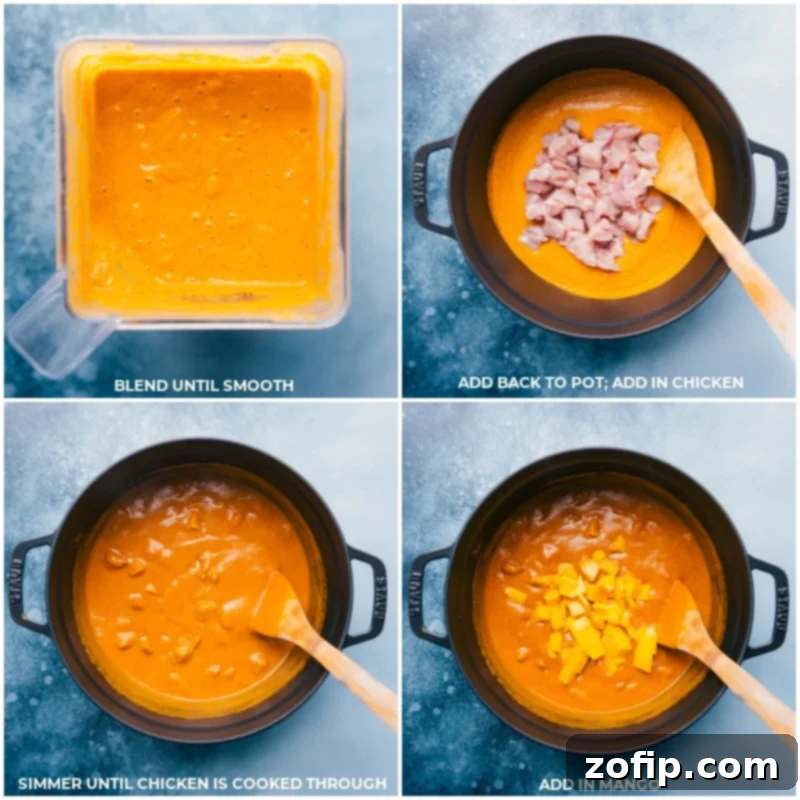
- Stir in 1 cup of the cubed mango and cook, stirring constantly, for 1 minute to lightly caramelize. Vigorously shake the can of full-fat coconut milk to ensure it’s well combined, then pour it into the pot. Increase the heat to high and bring the mixture to a boil. Once boiling, reduce the heat to a low simmer and let it cook for 10–15 minutes, allowing the flavors to meld. While the sauce simmers, cut your chicken into uniform 1-inch cubes. After simmering, carefully transfer the hot sauce to a blender. Blend until the sauce is completely smooth (see Note 6 for blending hot liquids safely), then pour the velvety smooth sauce back into the pot.
- Return the pot with the blended sauce to medium-low heat, bringing it back to a gentle simmer. Once simmering, add the cubed chicken pieces and stir them through the sauce to coat evenly. Cover the pot with a lid and cook for 8–15 minutes. Chicken breast pieces generally cook faster, around 8 minutes, while chicken thighs may require closer to 15 minutes or slightly longer, depending on their size and thickness. To ensure doneness, use a meat thermometer (internal temperature should reach 165°F / 74°C) or cut into the largest piece of chicken; it should be opaque and white throughout with no pink.
- Once the chicken is fully cooked, reduce the heat to the lowest setting. Stir in the remaining 1 cup of fresh mango chunks. At this stage, you can also incorporate your optional additions: finely chopped cilantro (I recommend about 1/3 cup), the zest and fresh juice of a lime, 1 tablespoon of fish sauce (for added umami depth), and 2-3 kaffir lime leaves if using. Taste the curry and adjust seasonings as needed. If it’s too sweet for your liking, a touch more fish sauce can balance it. If it’s not sweet enough, a pinch of sugar can brighten the flavors. The goal is a harmonious blend of sweet, savory, and tangy notes! Serve your vibrant Mango Chicken Curry immediately over warm, fluffy rice, garnishing with extra fresh cilantro or other preferred toppings. Enjoy this truly delicious and satisfying meal!
Recipe Notes
Note 2 – Mango Variety & Ripeness: My top recommendation for this recipe is Honey mangoes (Ataulfo or yellow mangoes) due to their superior sweetness and creamy texture, which translates to a richer curry. However, any ripe mango will yield delicious results. To check ripeness, gently squeeze; it should yield slightly. For the sweetest curry, use fully ripe mangoes. If fresh mangoes are not in season or available, frozen mango chunks are an excellent substitute. They are usually picked at a good stage of ripeness. When using frozen, ensure you chop the second cup of mango into smaller, bite-sized pieces after thawing, as frozen pieces can sometimes be quite large.
Note 3 – Coconut Milk Selection: Always seek out shelf-stable cans of coconut milk, typically found in the international foods aisle, rather than refrigerated coconut beverages. For an in-depth guide on brands, this article outlines the best options. I personally find Imperial Kitchen® to be a reliable and flavorful choice. It is crucial to use full-fat coconut milk; this is what provides the luscious creaminess and depth of flavor. Lite coconut milk will result in a much thinner sauce. Cream of coconut is too sweet and syrupy, while coconut cream is too thick and intense for the balance of this curry.
Note 4 – Optional Flavor Boosters: These additions truly elevate the curry: fresh lime juice and zest (for brightness and acidity), fresh cilantro (for herbaceous freshness), 1 tablespoon of fish sauce (for an umami depth that is key in Thai cooking), and 2-3 kaffir lime leaves (for an unparalleled citrus aroma). A pinch of fine sea salt to taste is also recommended.
Note 5 – Perfect Basmati Rice Method: For consistently fluffy and delicious basmati rice, follow these simple steps:
- Measure your desired amount of rice and rinse it thoroughly in a fine-mesh sieve under cold running water until the water runs completely clear. This removes excess starch, preventing stickiness.
- Place the rinsed rice in a bowl and cover it with fresh water. Let it soak for about 5–10 minutes. This helps the grains cook more evenly.
- While the rice is soaking, fill a large pot with a generous amount of water (like pasta water) and bring it to a rolling boil.
- Once the water is boiling vigorously, drain the soaked rice and add it to the pot of boiling water.
- Cook the rice without reducing the heat for 5–6 minutes. Taste a few grains to ensure they are tender but still have a slight bite (al dente).
- Drain the cooked rice immediately in a fine-mesh sieve and fluff it with a fork before serving.
- Important: These specific cooking instructions are tailored for basmati rice and may not yield the same results for other rice varieties (e.g., long grain, short grain, jasmine).
Note 6 – Blending Hot Liquids Safety Reminder: When blending hot liquids, always exercise extreme caution. Secure the blender lid tightly. If your blender features a “soup” or “hot” cycle, utilize it as it’s designed to manage steam build-up. If not, start blending on the slowest speed and gradually increase it, ensuring the lid remains securely in place. Heat causes liquids to expand, so do not overfill the blender. When you remove the lid, do so slowly and carefully, as there will likely be a burst of hot steam. As an added safety measure, you can place a folded kitchen towel over the blender lid while blending and hold it down firmly, allowing some steam to escape through the towel’s fabric.
Nutrition Note: The provided nutrition information is an approximation and does not include any accompanying rice or optional toppings. It is automatically calculated and should be used as a general guide.
Storage: Store any leftover Mango Chicken Curry in an airtight container in the refrigerator for 3–5 days. For longer storage, it can be frozen in an airtight container for up to 3 months. Always defrost fully in the fridge before gently reheating on the stovetop.
Nutrition
Calories: 178kcal |
Carbohydrates: 18g |
Protein: 7g |
Fat: 10g |
Saturated Fat: 7g |
Polyunsaturated Fat: 1g |
Monounsaturated Fat: 1g |
Trans Fat: 1g |
Cholesterol: 27mg |
Sodium: 29mg |
Potassium: 316mg |
Fiber: 3g |
Sugar: 14g |
Vitamin A: 3607IU |
Vitamin C: 71mg |
Calcium: 38mg |
Iron: 1mg
Nutrition information is automatically calculated, so should only be used as an approximation.
Love this recipe? Leave a comment below!