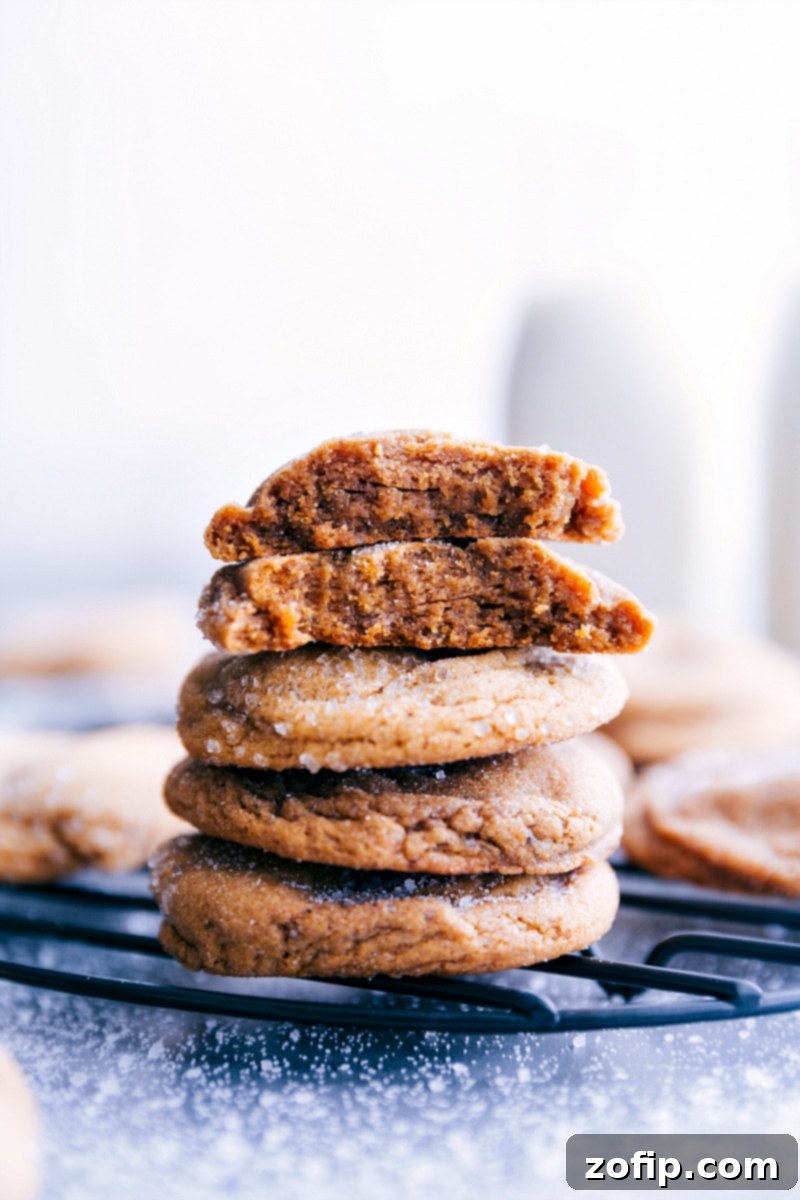
Gingersnap Cookies: A classic holiday delight featuring a perfect balance of chewy centers, crisp, crackled edges, and an aromatic blend of warming spices. This recipe promises to deliver the best homemade gingersnaps you’ve ever tasted, making them an instant favorite for any festive occasion or a cozy winter evening.
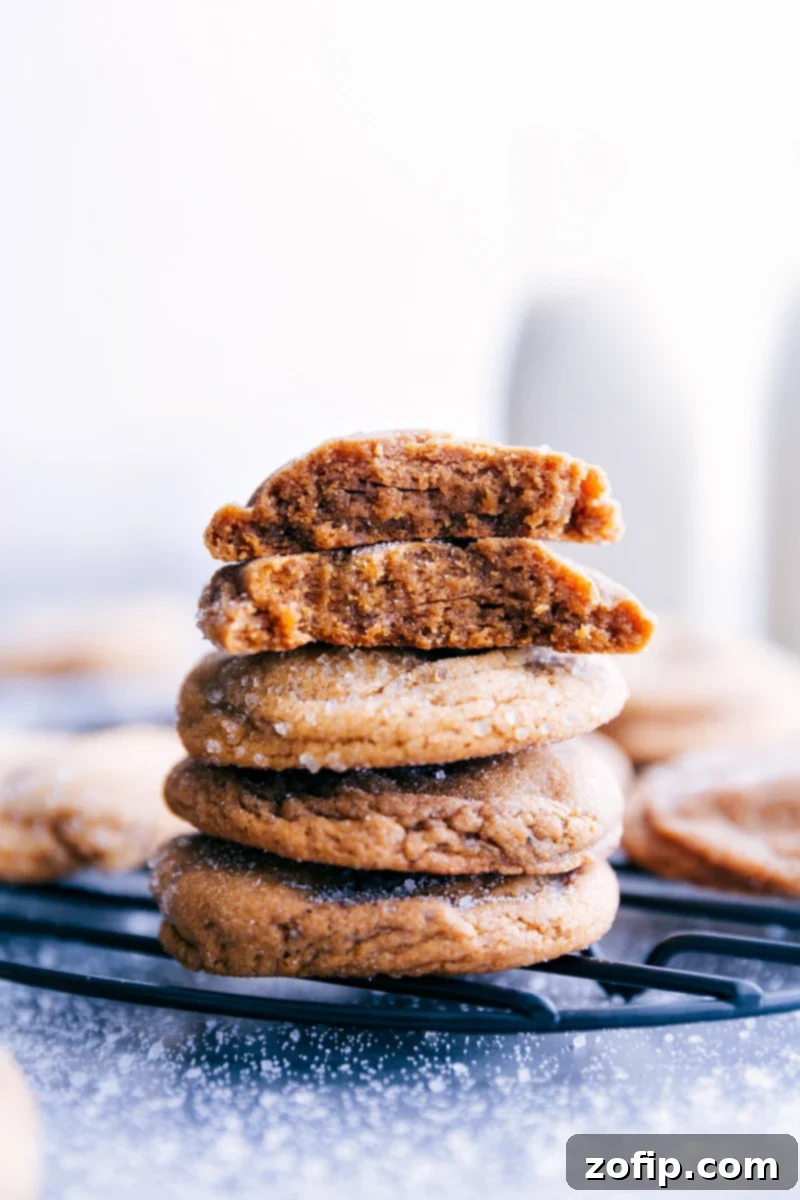
The Best Chewy Gingersnap Cookies Recipe
There’s nothing quite like the comforting aroma and taste of freshly baked Gingersnap Cookies to usher in the holiday season or warm up a chilly winter day. This recipe isn’t just a cookie; it’s a sensory experience, delivering soft, chewy centers perfectly complemented by delightfully crisp, crackled edges. Each bite is an explosion of classic holiday spices, making these cookies a truly unforgettable treat. From the moment you begin mixing the dough, the intoxicating scents of cinnamon, ginger, cloves, and nutmeg fill your kitchen, promising a treat that will become a cherished part of your festive traditions.
Our recipe meticulously blends cinnamon, ground ginger, cloves, and nutmeg, creating a robust, warm, and inviting flavor profile that embodies the spirit of festive baking. The magic truly happens with the addition of rich molasses, which not only gives these cookies their signature dark hue but also contributes to their deep, complex flavor and wonderfully chewy texture. Molasses is key to that distinctive snap and the soft interior that everyone loves. And for that iconic sparkle and delightful crunch, we roll the dough in sugar, creating a beautiful crackly top that’s as appealing to the eye as it is to the palate, adding an irresistible textural dimension to every mouthful.
Whether you’re preparing for a festive gathering, looking for the perfect cookie exchange contribution, or simply want to treat yourself to a comforting homemade delicacy, these gingersnaps are an absolute must-try. They are surprisingly easy to make, even for novice bakers, and the results are consistently spectacular. Move over, other holiday cookies – these Gingersnaps are destined to become a beloved tradition, perhaps even Santa’s new favorite, and certainly a highlight of your holiday dessert table.
Essential Ingredients for Perfect Gingersnap Cookies
Crafting the perfect gingersnap cookie begins with understanding the role each ingredient plays. Each component is carefully selected to contribute to the unique flavor, texture, and aroma that make these cookies so special. Here’s a closer look at what you’ll need and why it’s important:
- Unsalted Butter: Melted butter is key for a tender crumb and helps distribute flavors evenly throughout the dough. Allowing it to cool slightly after melting is crucial. If the butter is too hot, it can start to “cook” the eggs and dissolve the sugars prematurely, leading to greasy, flat cookies rather than the desired chewy texture with crisp edges. Unsalted butter gives you complete control over the salt content in your recipe.
- Brown and Granulated Sugars: This dynamic duo is a flavor powerhouse. Brown sugar (especially dark brown) provides essential moisture, contributing significantly to the cookie’s chewiness and adding a subtle, rich caramel note that perfectly complements the molasses. Granulated sugar, on the other hand, contributes to the crisp edges and helps create that wonderful crackle when combined with the outer sugar coating, offering a delightful textural contrast.
- Large Eggs: Eggs serve as a vital binder, holding all the ingredients together and adding essential moisture to the dough. They contribute significantly to the cookies’ structure, ensuring they are soft and slightly cakey in the center, while also helping to achieve that beautiful golden-brown color during baking. Eggs also emulsify the fats and liquids, creating a smooth, cohesive dough.
- Pure Vanilla Extract: A splash of high-quality pure vanilla extract elevates the overall flavor profile of the cookies, adding depth, warmth, and a hint of sweetness that perfectly balances the robust spices and rich molasses. Always opt for pure vanilla for the most authentic and best taste, avoiding artificial vanilla flavorings.
- Molasses: The undisputed heart and soul of any true gingersnap! Molasses is responsible for the cookies’ signature dark color, deep, complex flavor (often described as slightly smoky or caramelized), and incredibly satisfying chewy texture. Brands like Brer Rabbit® or Grandma’s® are excellent choices, offering that distinct, robust sweetness and body. Opt for unsulphured molasses for the purest flavor profile.
- Baking Soda and Baking Powder: These leavening agents work in harmony to give the cookies their delightful puff and characteristic soft, chewy interior. Baking soda reacts with the acidic molasses, contributing to spread and browning, while baking powder provides an extra lift and tenderness, ensuring your cookies aren’t too dense.
- Salt: Often overlooked but incredibly vital, salt is indispensable for balancing the sweetness and enhancing all the other intricate flavors in the cookie. It brings out the best in the spices and molasses, preventing the cookies from tasting one-dimensional. Measure carefully; too little won’t make a difference, and too much can make the cookies unpleasantly salty.
- Ground Spices (Cinnamon, Ginger, Cloves, Nutmeg): This harmonious blend is what truly defines a gingersnap. Cinnamon adds a comforting warmth and sweetness, ground ginger provides a delightful, characteristic zing and heat, cloves contribute a pungent, sweet, and aromatic depth, and nutmeg offers a subtle, nutty, and woody undertone. Using fresh, high-quality spices makes a significant difference in the vibrancy and overall intensity of the final taste.
- All-Purpose Flour: The structural backbone of the cookie, providing the necessary body and consistency. It’s crucial to measure flour correctly (spoon and level, don’t scoop directly from the bag, as this can add too much flour). Mix it until just combined; overmixing develops gluten, which can lead to tough, dense, and less tender cookies.
- Sugar Coating (Granulated, Coarse, or Sparkling Sugar): This outer layer is not just for aesthetics! Rolling the dough balls generously in sugar before baking creates those desirable crisp, crackled edges and adds an extra layer of sweetness and delightful texture, providing that satisfying “snap” that gives gingersnaps their name.
Quick Baking Tip: Understanding Brown Sugar
When shopping for ingredients, you’ll find both light and dark brown sugar readily available. While both are excellent in baking, they offer slightly different characteristics. Dark brown sugar contains a higher percentage of molasses compared to its lighter counterpart, giving it a deeper color and a more pronounced, richer, and slightly more intense caramel flavor that truly shines and adds complexity to gingersnap cookies. It also contributes extra moisture, which is essential for a chewier cookie. Light brown sugar can certainly be used if dark brown sugar is unavailable, but for that authentic deep gingersnap taste and texture, dark brown sugar is often the preferred choice among bakers.
How to Bake Perfect Gingersnap Cookies: Step-by-Step Guide
Follow these detailed steps carefully to ensure your gingersnap cookies turn out perfectly soft, delightfully chewy, and spiced to perfection. Precision in baking, especially with chilling times, is key to achieving that ideal balance of texture and flavor.
- Prepare the Sugar Coating: In a small, shallow bowl, combine 1/4 cup granulated sugar with 1/4 cup coarse sugar crystals. The coarse sugar adds a significant crunch and sparkle. If coarse sugar isn’t available, simply use 1/2 cup of granulated sugar for the coating. Ensure the sugars are well mixed and set this bowl aside; it will be used to coat the dough balls later.
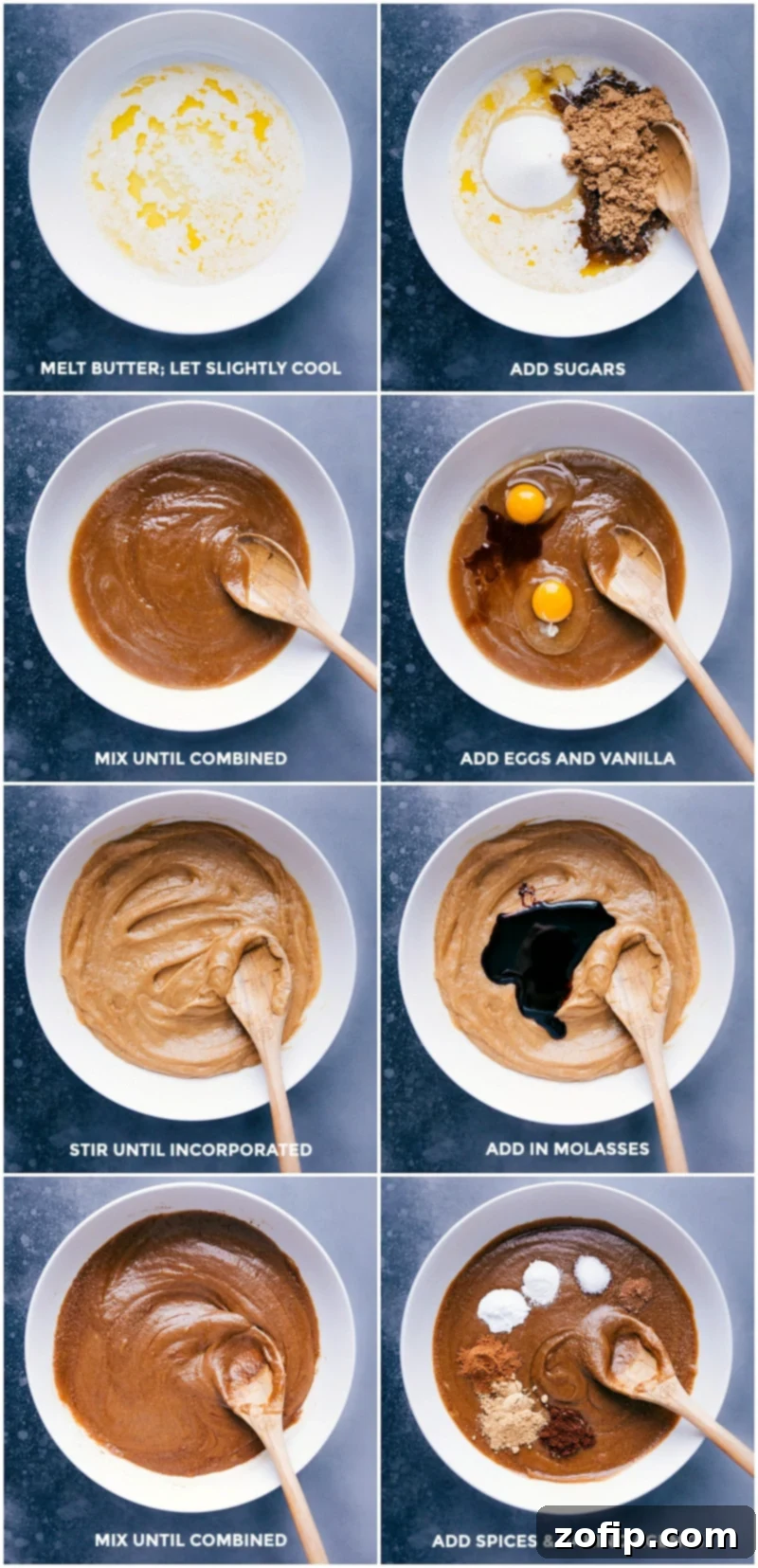
- Combine Wet Ingredients: Start by melting the butter in a microwave-safe bowl or a small saucepan over low heat. Once fully melted, let it stand at room temperature for about 5 minutes to cool slightly. This cooling step is absolutely critical; hot butter can cause the sugars to melt prematurely and potentially “cook” the eggs, leading to greasy, flat cookies. Scrape all the melted, cooled butter into a large mixing bowl. Add both the dark brown sugar and granulated sugar; stir thoroughly with a sturdy wooden spoon or rubber spatula until the mixture is smooth, cohesive, and all the sugar is well-incorporated. Beat in the large eggs one at a time, followed by the vanilla extract, stirring until just combined and smooth. Finally, add the molasses and stir vigorously until it is fully integrated into the mixture, resulting in a rich, dark, and glossy liquid base.
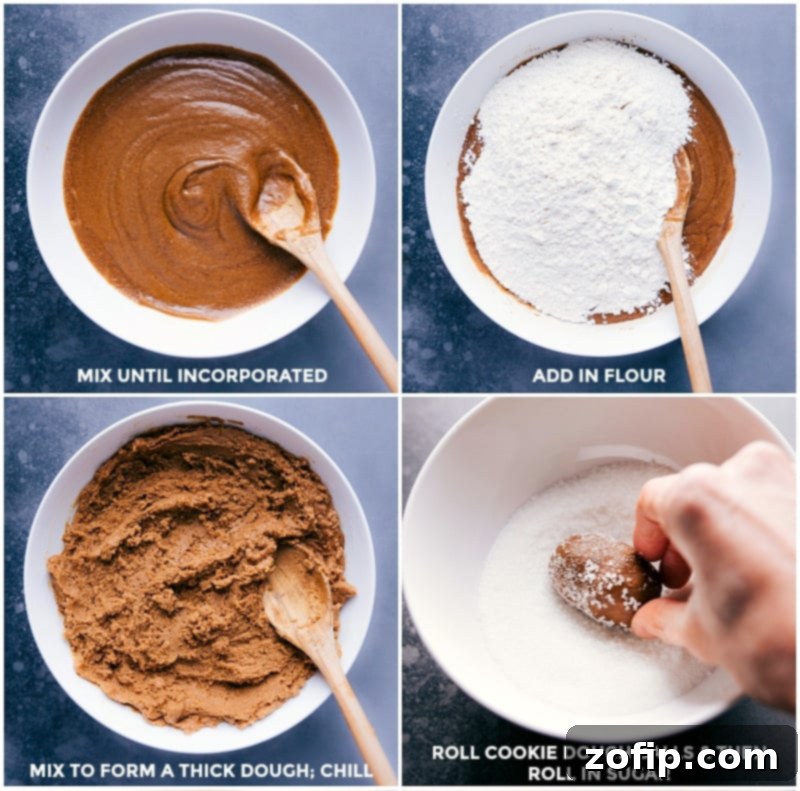
- Incorporate Dry Ingredients & Initial Chill: Sprinkle the baking soda, baking powder, salt, ground cinnamon, ground ginger, ground cloves, and ground nutmeg directly over the wet ingredients in the large bowl. Mix these dry spices into the wet mixture until they are evenly distributed. Next, add the all-purpose flour on top. Mix carefully using a wooden spoon or spatula until the flour is just combined and no streaks of dry flour remain. It is paramount to avoid overmixing the dough, as this can develop the gluten in the flour, leading to tough, dense, and less tender cookies. Once mixed, cover the dough tightly with plastic wrap, ensuring it’s sealed to prevent drying. Chill the dough in the refrigerator for at least 30 minutes. This initial chilling period is essential for firming up the dough, making it easier to handle, preventing excessive spreading during baking, and allowing the intense flavors of the spices and molasses to meld and deepen.
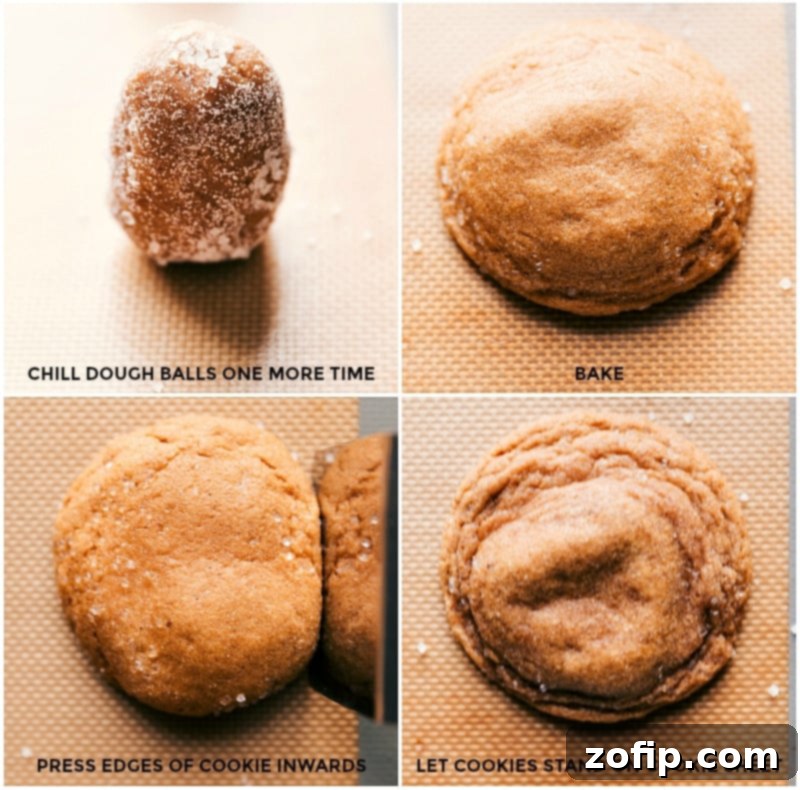
- Roll and Coat Dough Balls, Second Chill: After the initial chilling, remove the dough from the refrigerator. Scoop out uniform portions of dough; each cookie should be approximately 2 tablespoons in size (about 40 grams if you’re using a food scale for precision). Roll each portion into a tall, cylindrical ball, ensuring they are uniform in size for even baking. Generously coat each dough ball in the prepared sugar mixture, pressing gently to ensure the sugar adheres well to the entire surface. Place the sugar-coated dough balls on a clean plate or a separate baking sheet, cover them lightly with plastic wrap, and return them to the refrigerator for an additional 45 minutes. This second chill is key for that beautiful, distinct crackled exterior and helps the cookies hold their shape better in the hot oven.
- Bake to Perfection: While the dough undergoes its second chill, preheat your oven to 325°F (160°C). Line a large baking sheet with parchment paper or a silicone baking mat; this prevents sticking and ensures even baking. Arrange 6-8 chilled, sugar-coated dough balls on the prepared sheet, ensuring they are spaced far apart (at least 2-3 inches) to prevent them from merging as they spread during baking. Bake for 9-14 minutes, keeping a close eye on them. The ideal gingersnap is slightly under-baked in the center for maximum chewiness and softness. I highly recommend removing them from the oven between 10-11 minutes. The edges should appear set and lightly golden brown, while the centers still look soft and slightly puffed. They will continue to set as they cool.
- Cool and Enjoy: Immediately upon removing the cookies from the oven, if desired, you can gently press the edges of each cookie inward with the back of a metal spatula or a round cookie cutter that is slightly larger than the cookie. This helps to create that perfectly round shape and a slightly crispier edge, enhancing their visual appeal. Let the cookies cool on the baking sheet for a crucial 4-5 minutes before carefully transferring them to a wire cooling rack to cool completely. This resting period on the warm baking sheet allows the cookies to finish setting without breaking and helps achieve their final, perfect texture. Once cooled, they are ready to be savored with a glass of milk, a cup of tea, or your favorite holiday beverage!
The Secret to a Spectacular Sugar Coating
The sugar coating on a gingersnap cookie is far more than just a decorative touch; it’s a fundamental element that contributes significantly to achieving that coveted crackled surface and delightful textural contrast, which gives these cookies their name. For the most pronounced effect and a truly captivating presentation, we highly recommend rolling the dough in a mix of coarse and granulated sugar. The larger, more robust crystals of coarse sugar (often known as sanding sugar or decorator’s sugar) don’t melt as quickly as fine granulated sugar during baking. Instead, they hold their form, creating a glistening, crunchy crust that stands out beautifully against the soft, chewy interior.
Beyond the classic granulated and coarse sugar mix, you have several exciting options to customize your cookies’ sparkle and crunch, allowing for personal preference and creative expression:
- Turbinado Sugar: This unrefined sugar boasts larger, golden-brown crystals with a subtle, natural molasses flavor that harmonizes perfectly with the cookie’s base. It offers a robust, satisfying crunch and lends a beautiful, rustic appearance, making your gingersnaps feel extra special and homemade.
- Sparkling Sugar: For an extra festive and glamorous look, especially during the holiday season, sparkling sugar crystals are the ideal choice. Their even larger size provides a more dramatic shimmer and an undeniable crunch that catches the light, making your gingersnaps truly stand out on any holiday dessert platter or cookie display.
- Plain Granulated Sugar: While it offers a less intense crunch compared to coarse, turbinado, or sparkling sugars, plain granulated sugar still provides a lovely sweet crust and achieves that classic crackled look that is characteristic of gingersnaps. It’s a perfectly acceptable and readily available option that consistently results in delicious cookies with a pleasing texture.
Regardless of your choice, don’t skip this crucial step! A generous coating of sugar is essential for both the visual appeal and the signature texture that makes exceptional gingersnap cookies so beloved. It’s the final touch that transforms a simple dough ball into a glistening, crunchy-on-the-outside, chewy-on-the-inside masterpiece.
Gingersnap Cookie Variation Ideas: Get Creative!
While classic gingersnaps are undeniably perfect on their own, these deeply flavored cookies are also wonderfully adaptable, offering a fantastic canvas for culinary creativity. Here are some inspiring ideas to add your personal twist and elevate your gingersnap experience:
- White Chocolate Chip Zing: Introduce a delightful textural and flavor contrast by stirring in 1 cup of white chocolate chips to the dough during the final stages of mixing. The sweet, creamy notes of white chocolate pair exceptionally well with the warm, spicy kick of ginger and the rich depth of molasses, creating a harmonious and indulgent bite.
- Adjust the Spice Level: If you’re new to baking with a full complement of strong spices or simply prefer a milder flavor profile, feel free to start with slightly less of the ground ginger, cloves, and nutmeg. You can always increase the amounts in future batches to perfectly suit your taste preferences. Remember, the raw dough’s flavor is often more intense and concentrated than that of the baked cookies, which mellow out beautifully and become more balanced after their time in the oven.
- Drizzle or Dip in Chocolate: For an extra layer of decadence and visual appeal, melt 1 cup of your favorite chocolate (dark, milk, or semi-sweet) with a teaspoon of coconut oil or shortening until smooth. Transfer the melted chocolate to a piping bag or a ziplock bag with a small corner snipped off, and drizzle elegant, decorative patterns over your completely cooled cookies. Alternatively, for a richer treat, dip half of each cooled cookie into the melted chocolate, letting the excess drip off before placing them on parchment paper to set.
- Cream Cheese Frosting Swirl: For an ultimate indulgence, consider skipping the traditional sugar coating and, instead, generously frost your cooled gingersnaps. A rich and tangy cream cheese frosting would be an absolutely divine complement to the spicy cookie base. For an even more luxurious and velvety touch, consider a mascarpone cream cheese frosting, similar to those famously found on salted caramel cookies.
- Citrus Zest Boost: Brighten up the rich flavors by adding 1-2 teaspoons of finely grated orange or lemon zest to the wet ingredients. The vibrant, aromatic citrus notes will beautifully complement and lift the warm spices, adding a fresh dimension to your gingersnaps.
- Nutty Crunch: Fold in 1/2 to 3/4 cup of finely chopped pecans or walnuts into the dough for an added layer of texture and a subtle, earthy flavor that pairs well with ginger.
Storage Tips for Gingersnap Cookies & Dough
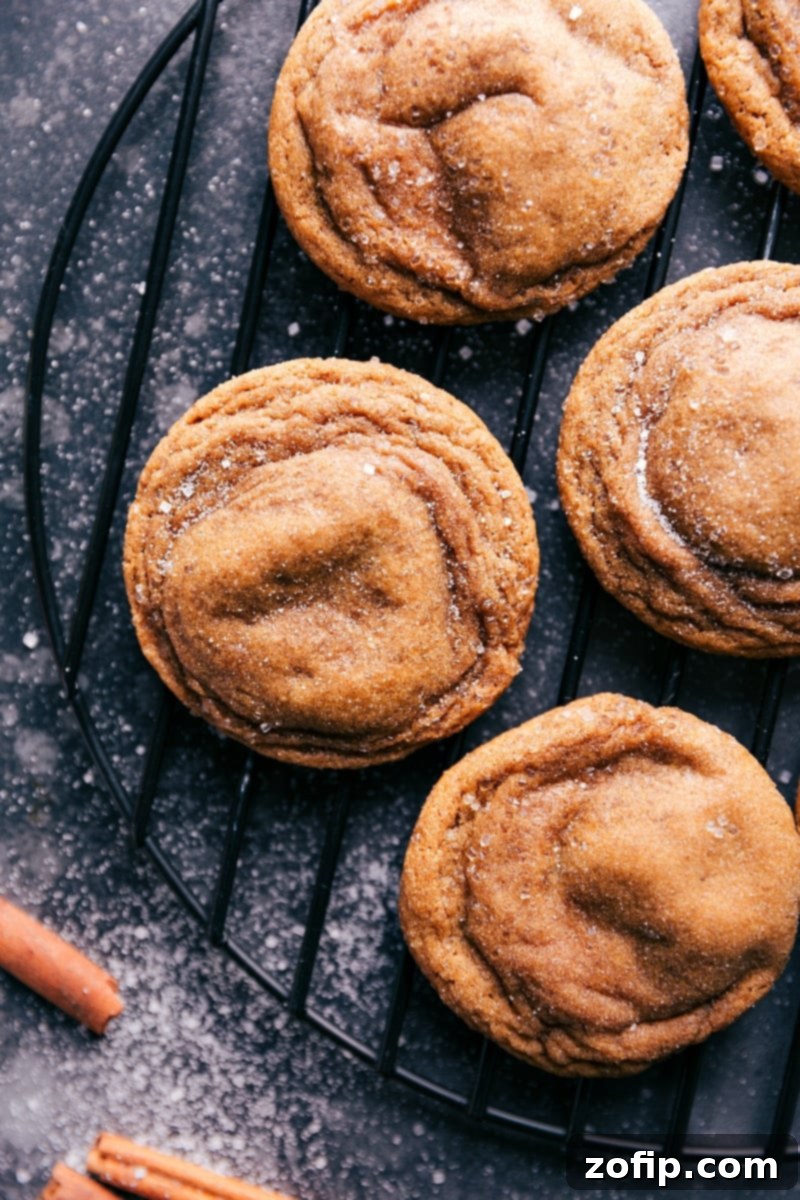
To ensure your delicious gingersnap cookies remain fresh, chewy, and full of flavor, proper storage is absolutely key. Whether you’re managing a batch of freshly baked cookies or prepping dough ahead of time, these tips will help you enjoy your homemade treats for longer:
- Storing Baked Cookies: Once your gingersnap cookies have completely cooled to room temperature, transfer them to an airtight container. They will retain their delightful chewiness, crisp edges, and vibrant spice for up to one week when stored at room temperature. For optimal freshness and the best texture, it’s recommended to enjoy them within the first 3-4 days after baking. If stacking, you may want to place a piece of parchment paper between layers to prevent them from sticking.
- Freezing Cookie Dough Balls: This is a fantastic and convenient way to prep ahead for future cravings, unexpected guests, or simply to have warm, fresh-baked cookies at a moment’s notice! Follow the recipe instructions to roll the dough into individual balls and generously coat them in sugar. Once prepared, place the dough balls on a baking sheet lined with parchment paper, ensuring they are not touching each other. Freeze for 1-2 hours, or until they are completely solid. Once frozen, transfer the solid dough balls to a freezer-safe, airtight bag or container. Label with the date. They can be safely stored in the freezer for up to 3 months, offering incredible flexibility.
- Baking Frozen Dough: When you’re ready to bake your frozen gingersnaps, there’s absolutely no need to thaw the dough! Simply place the frozen dough balls directly onto a lined baking sheet as you would with fresh dough. Bake directly from frozen, but be prepared to add an extra 2-4 minutes to the baking time compared to the recipe’s fresh dough instructions. Watch them carefully, baking until the edges are lightly browned and set, and the centers still appear soft and slightly puffed. This method ensures you always have warm, fresh-baked gingersnaps ready in minutes, making them perfect for impromptu treats or last-minute entertaining.
- Freezing Baked Cookies: If you have an abundance of baked gingersnaps, you can also freeze them. Once completely cooled, place them in a single layer on a baking sheet and freeze until solid. Then, transfer them to a freezer-safe container or bag, separating layers with parchment paper. Thaw at room temperature when ready to enjoy.
More Irresistible Holiday Treats to Explore
If you’ve fallen in love with the warm, comforting, and spicy flavors of these exceptional gingersnap cookies, then you’re in for a treat with these other festive recipes. Perfect for rounding out your holiday dessert table, bringing to potlucks, or simply enjoying during cozy winter evenings, these recipes are sure to become new favorites:
- No-Bake Peppermint Cheesecake with an Oreo cookie crust: A refreshing, incredibly decadent, and surprisingly easy-to-make dessert that’s perfect for entertaining and offers a cool contrast to warm spices.
- Christmas Snack Mix coated in white chocolate: A delightful sweet and savory medley, this crunchy mix is ideal for holiday parties, family gatherings, or beautifully packaged as thoughtful homemade gifts.
- Animal Circus Cookies with cream cheese frosting: Fun, colorful, and utterly delicious, these whimsically decorated cookies are a hit with all ages and bring a touch of playful charm to any dessert spread.
- Sugar Cookie Snack Mix with Christmas sugar cookie M&M’s: A festive and incredibly easy-to-make snack that captures the classic taste of sugar cookies in a crunchy, dangerously addictive mix.
- Peppermint Bark Pretzels: A wonderfully simple yet elegant three-ingredient treat that combines salty pretzels with cool peppermint and rich chocolate, offering a perfect balance of flavors and textures.
Chewy Gingersnap Cookies: The Full Recipe
By Chelsea Lords
With a delicious blend of holiday spices, these soft and sweet Gingersnap Cookies are the perfect festive treat!
Prep Time: 30 minutes
Cook Time: 10 minutes
Chilling Time: 1 hour 15 minutes
Total Time: 1 hour 55 minutes
Yield: 26 cookies
Equipment
- Sheet pan (15″ x 10″) (lined with parchment paper or silicone baking mat)
- Large mixing bowls
- Wooden spoon or spatula
- Measuring cups and spoons
- Wire cooling rack
Ingredients
- 16 tablespoons (1 cup) unsalted butter, melted and cooled
- 1 cup dark brown sugar (packed) or light brown sugar
- 2/3 cup granulated sugar
- 2 large eggs
- 1 teaspoon pure vanilla extract
- 1/4 cup molasses (Grandma’s® or Brer Rabbit® recommended for best flavor)
- 1 teaspoon baking soda
- 1 teaspoon baking powder
- 1 teaspoon salt
- 2 teaspoons ground cinnamon
- 2 teaspoons ground ginger
- 1 teaspoon ground cloves
- 1/4 teaspoon ground nutmeg
- 3-1/2 cups all-purpose flour (spooned and leveled, see Note 1 below)
- 1/2 cup sugar coating (optional, see Note 2 below)
Instructions
- Prepare Sugar Coating: In a small, shallow bowl, stir together 1/4 cup granulated sugar and 1/4 cup coarse sugar crystals. If coarse sugar is unavailable, use 1/2 cup granulated sugar. Set aside.
- Mix Wet Ingredients: Melt unsalted butter in a microwave-safe bowl. Allow butter to cool at room temperature for 5 minutes to prevent greasy cookies. Scrape all melted butter into a large mixing bowl. Add both brown and granulated sugars; stir with a wooden spoon until smooth and incorporated. Add eggs and vanilla extract; stir until just combined. Incorporate molasses, mixing until well combined.
- Combine Dry Ingredients & Initial Chill: Add baking soda, baking powder, salt, cinnamon, ginger, cloves, and nutmeg to the wet ingredients; mix until evenly distributed. Add the flour (spooned and leveled, refer to Note 1 for proper measurement). Mix until just combined, being careful not to overmix. Cover the dough tightly with plastic wrap and chill in the refrigerator for 30 minutes.
- Shape & Coat Dough Balls, Second Chill: Scoop the dough, forming tall cylindrical balls. Each ball should be approximately 2 tablespoons (40 grams). Generously roll each dough ball in the prepared sugar mixture, ensuring it’s well-coated. Place the sugar-coated dough balls on a plate or baking sheet, cover, and refrigerate for an additional 45 minutes. This second chill helps maintain shape and creates crackled edges.
- Bake Cookies: Preheat oven to 325°F (160°C). Line a large sheet pan with parchment paper or a silicone baking mat. Place 6-8 dough balls far apart on the sheet pan. Bake for 9-14 minutes. Watch carefully to avoid overbaking; gingersnap cookies are best when slightly under-baked in the center. I recommend baking for 10-11 minutes.
- Cool & Finish: Remove from oven. If desired, immediately after baking, gently press the edges of each cookie inward with the back of a metal spatula to create perfectly round, crisp edges. Let cookies cool on the baking sheet for 4-5 minutes before transferring them to a wire cooling rack to cool completely.
Recipe Notes
Note 1: Accurate Flour Measurement: To avoid dense cookies, it is crucial to measure flour accurately. Do not scoop flour directly from the bag with a measuring cup, as this packs it too tightly. Instead, use a spoon to lightly fill your measuring cup until it’s overfilled. Then, use the back of a straight edge (like a table knife) to level off the excess flour at the top of the cup. For a visual guide, search for “how to measure flour correctly” on YouTube.
Note 2: Sugar Coating Options: For the optional sugar coating, combine 1/4 cup coarse sugar crystals and 1/4 cup granulated sugar. If coarse sugar isn’t available, you can simply use 1/2 cup granulated sugar for a lovely sweet crust.
Storage: Store baked cookies in an airtight container at room temperature for up to 7 days, ideally consumed within 3-4 days for peak freshness. To freeze dough balls for later, form them, coat in sugar, then freeze on a tray until solid before transferring to an airtight container for up to 3 months. Bake directly from frozen, adding a few extra minutes to the bake time as needed.
Nutrition Information
Serving: 1 cookie | Calories: 252kcal | Carbohydrates: 41g | Protein: 4g | Fat: 8g | Saturated Fat: 5g | Cholesterol: 32mg | Sodium: 158mg | Potassium: 88mg | Fiber: 1g | Sugar: 17g | Vitamin A: 246IU | Calcium: 32mg | Iron: 2mg
Nutrition information is automatically calculated and should be used as an approximation.