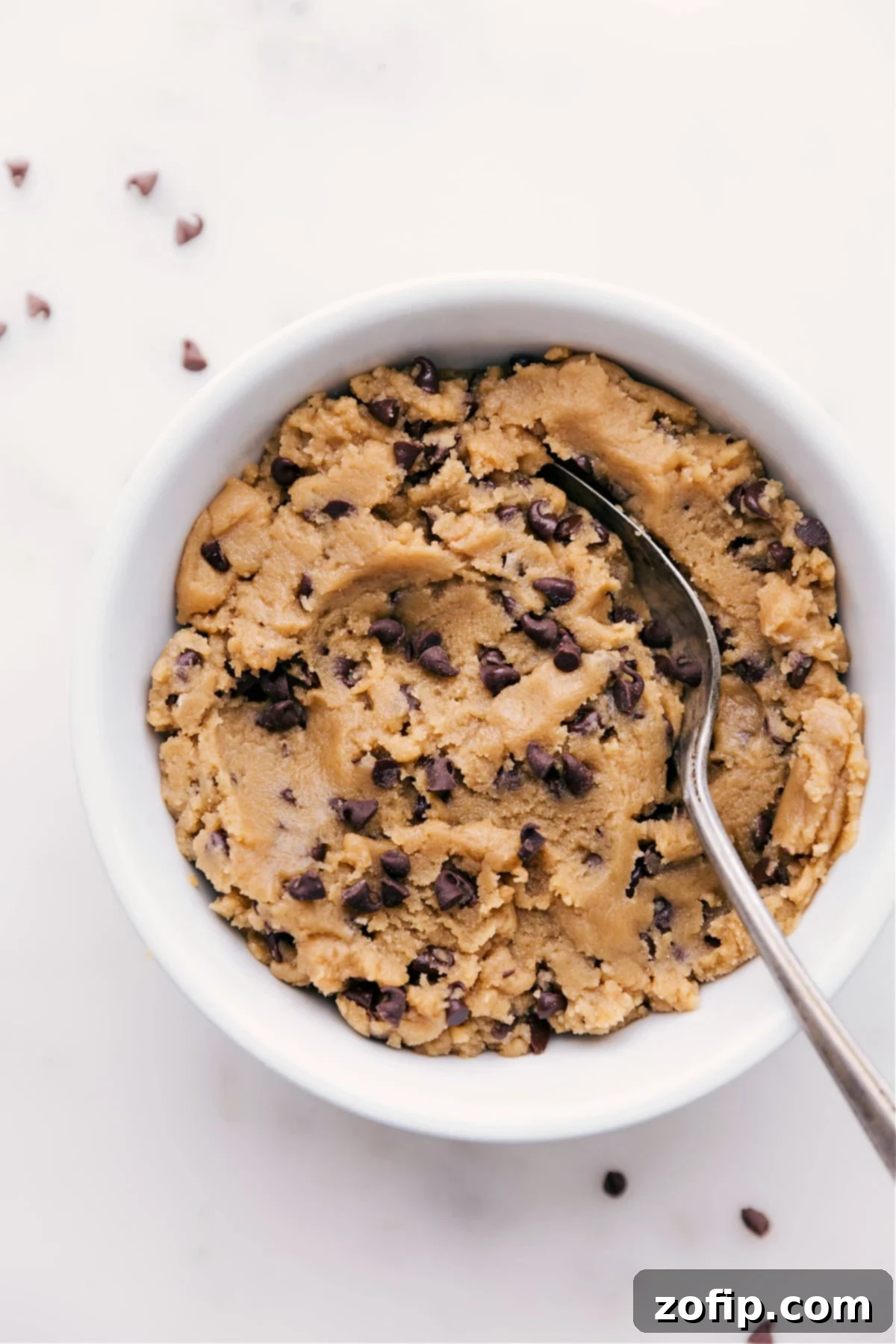
The Ultimate Edible Chocolate Chip Cookie Dough Recipe: Indulge your sweet cravings the safe way with this incredibly delicious, classic chocolate chip cookie dough you can enjoy without any baking required! Forget the risks and dive into pure, unadulterated cookie dough bliss.
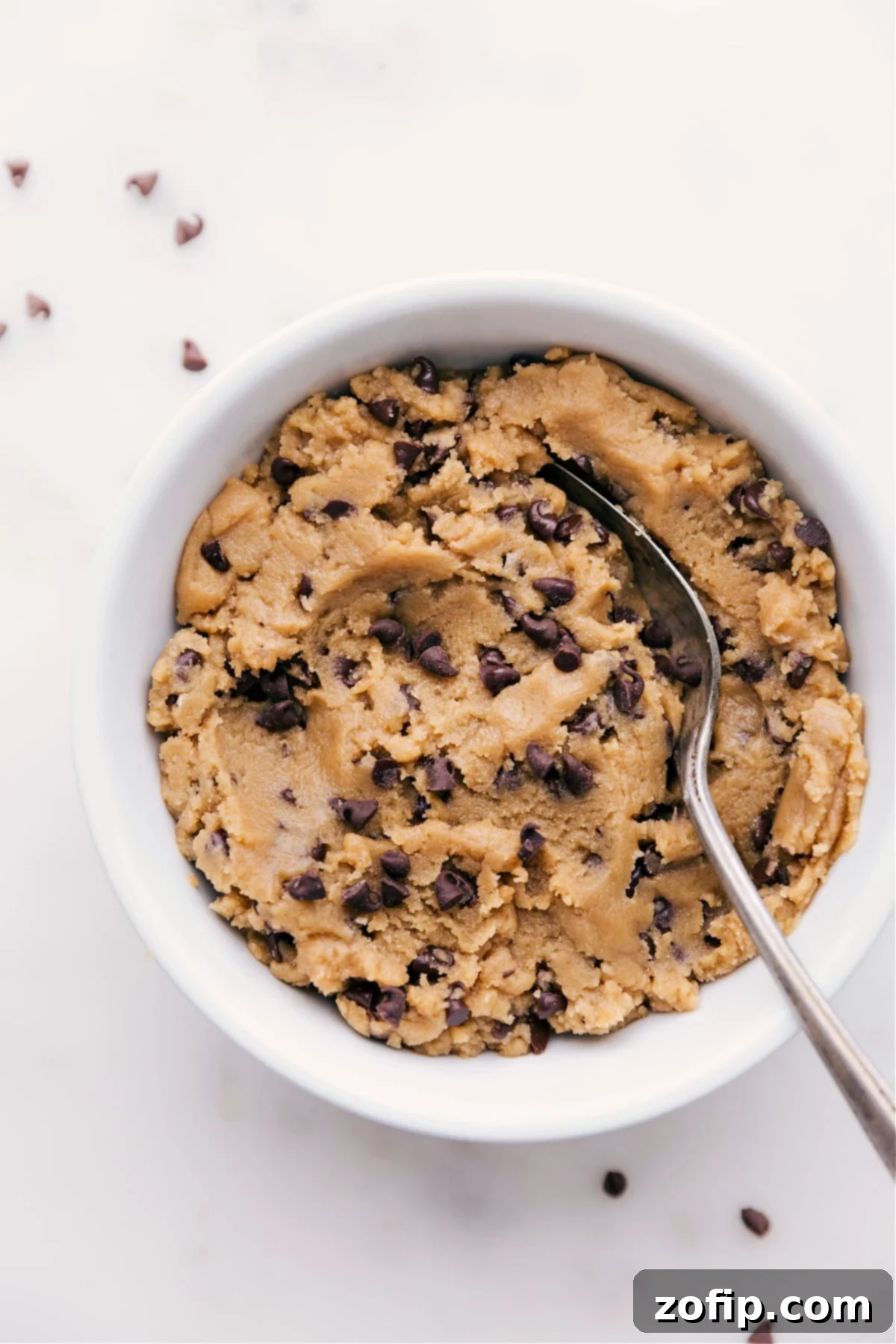
Unveiling the Best Edible Cookie Dough Recipe
There’s a universal truth for many dessert lovers: the raw cookie dough is often as, if not more, tempting than the baked cookies themselves. Growing up, this irresistible lure was often met with a stern warning from my mom. Her infamous “no eating raw cookie dough” rule stemmed from a past experience of foodborne illness, making it a non-negotiable directive in our household. Sneaking a quick spoonful while her back was turned became a rite of passage, a secret thrill that only added to the forbidden appeal of that creamy, sweet mixture.
But what if you could enjoy that pure, unadulterated cookie dough experience without any of the worry? This very thought sparked the creation of this recipe – a culinary quest to perfect a safe, delicious, and utterly irresistible edible cookie dough. After extensive experimentation, alongside crafting other delightful no-bake variations like this Edible Cake Batter, Peanut Butter Cookie Dough, and Edible Brownie Batter, I can confidently declare: this is the best edible cookie dough you will ever try! It’s a bold claim, but one bite, and you’ll understand why. This recipe delivers that nostalgic, comforting flavor and perfect texture you crave, all while ensuring peace of mind.
Understanding the Risks: Why Raw Cookie Dough Isn’t Safe (Usually)
It’s a bittersweet truth that the deliciousness of traditional raw cookie dough often comes with health risks. While the temptation is undeniable, there are two primary culprits that make conventional raw cookie dough a potential hazard, as highlighted by food safety authorities like the FDA:
- Raw Eggs: The most commonly known risk associated with raw cookie dough is the presence of uncooked eggs. Raw or undercooked eggs can carry Salmonella, a bacterium that can cause severe food poisoning. Symptoms typically include fever, abdominal cramps, and diarrhea. While the risk might seem small, the consequences can be serious, especially for vulnerable populations such as young children, the elderly, and individuals with compromised immune systems.
- Raw Flour: A lesser-known but equally significant risk comes from raw flour. Flour, a raw agricultural product, is not treated to kill bacteria before it’s processed and packaged. It can be contaminated with harmful bacteria like E. coli (Escherichia coli), which can originate from animal feces in the field and survive through milling. Consuming raw flour contaminated with E. coli can lead to serious illness, including severe stomach cramps, bloody diarrhea, and even kidney failure in severe cases. This is precisely why heat-treating your flour is a crucial step for making edible cookie dough safe.
Understanding these risks isn’t meant to deter your cookie dough dreams, but rather to empower you to enjoy them safely. Our recipe eliminates these concerns by employing specific techniques to ensure every spoonful is pure, worry-free indulgence.
Key Ingredients for the Perfect Edible Cookie Dough
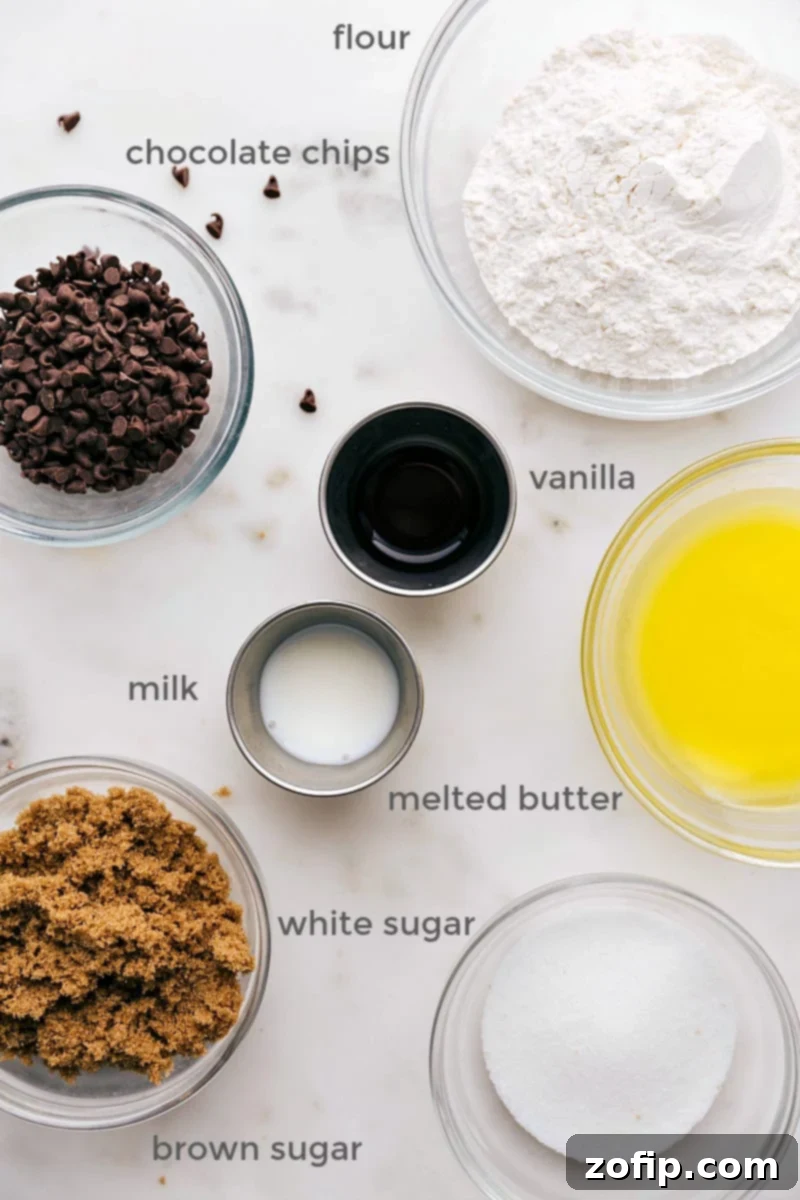
Crafting the best edible cookie dough relies on a few simple ingredients, each playing a vital role in achieving that perfect, irresistible texture and flavor:
- All-Purpose Flour: This is the foundation of our cookie dough. However, for safe consumption, it’s absolutely essential to heat-treat your flour. This process, which we’ll detail below, effectively kills any potential bacteria like E. coli, making it safe to eat raw. As a bonus, toasting the flour can also impart a subtle, delightful nutty flavor that enhances the overall taste profile of the dough.
- Unsalted Butter: We start with unsalted butter, melted down but then cooled back to room temperature. The cooling step is critical; if the butter is too warm, it can melt the sugars, leading to a greasy, undesirable texture in your final dough. Using unsalted butter allows you to control the salt content precisely. If you only have salted butter, reduce or omit the added salt in the recipe to maintain balance.
- Brown & White Sugar: This classic combination is key to the signature cookie dough flavor and texture. Brown sugar contributes moisture, chewiness, and a rich, caramel-like depth, while white granulated sugar provides sweetness and contributes to the dough’s structure. Remember to pack your brown sugar firmly into the measuring cup for accurate sweetness and moisture levels. We recommend dark brown sugar for an even richer, more complex flavor, but light brown sugar works beautifully as well.
- Vanilla Extract: A good quality vanilla extract is non-negotiable for that authentic, beloved cookie dough aroma and taste. It elevates the other flavors and truly captures the essence of a classic chocolate chip cookie.
- Milk: A small amount of milk helps to bind all the ingredients together and achieve the desired dough consistency, especially since we’re not using eggs. Start with one tablespoon and gradually add more, a teaspoon at a time, if the dough appears too dry or crumbly. Any type of milk—whole, 1%, 2%, or even a non-dairy alternative—will work perfectly here.
- Mini Chocolate Chips: While regular chocolate chips are great for baking, mini chocolate chips are the secret weapon for edible cookie dough. Their smaller size ensures better distribution throughout the dough, meaning you get chocolate in every bite. They also remain softer and easier to chew when the dough is chilled, providing a superior textural experience. Feel free to experiment with other mix-ins like sprinkles, crushed candies, or different types of chocolate chips (white chocolate, peanut butter chips) once you master the base recipe!
Quick Tip: Essential Heat-Treating Flour Guide
Heat-treating your flour is the most critical step to ensure your edible cookie dough is safe to consume. This process neutralizes harmful bacteria like E. coli that can be present in raw flour. Here’s how to do it effectively:
- Oven Method: Preheat your oven to 300°F (150°C). Spread the flour evenly on a baking sheet, ideally lined with parchment paper for easy cleanup and to prevent sticking. Bake for 5-7 minutes, stirring halfway through. The internal temperature of the flour should reach 165°F (74°C) to kill bacteria effectively. Use a food thermometer to check. Once it reaches the target temperature, remove it from the oven and let it cool completely to room temperature before using it in your recipe.
- Microwave Method: Place the flour in a microwave-safe bowl. Microwave in 30-second bursts, stirring thoroughly after each interval. Check the temperature with a food thermometer after each burst, aiming for 165°F (74°C). Be careful not to burn the flour; it should remain light and fluffy. This method is often quicker but requires more vigilance.
Always ensure the flour is completely cooled before adding it to your wet ingredients. Hot flour will melt the butter and sugars, leading to a greasy and undesirable dough consistency.
Featured Comment
“I was on the hunt for a good cookie dough recipe and I loved this recipe so much! I wish I could give it 100 stars! Definitely the best cookie dough recipe—trust me, I tried a lot of recipes.”
– AD
How to Make the Best Edible Cookie Dough: Step-by-Step Guide
Making this irresistible edible cookie dough is surprisingly simple. Just follow these steps for a perfectly safe and delicious treat:
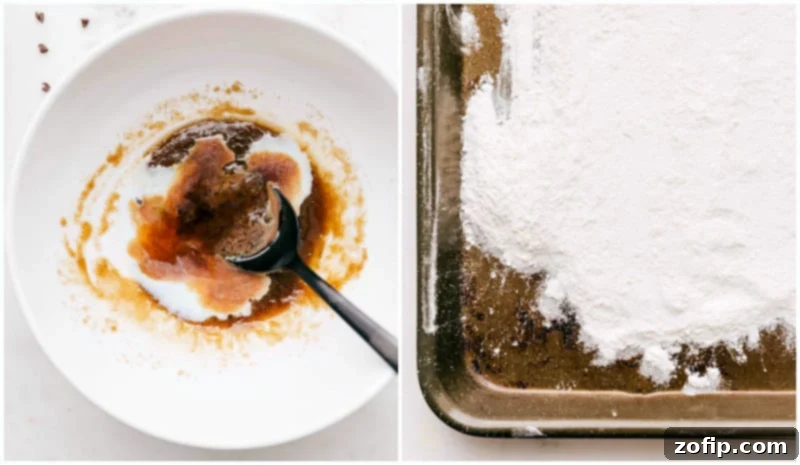
- Prepare the Flour for Safety: Begin by preheating your oven to 300°F (150°C). Spread the all-purpose flour evenly across a baking sheet. Toast it in the oven for about 5-7 minutes, stirring once halfway through, until its internal temperature reaches 165°F (74°C). This crucial step heat-treats the flour, killing any potential bacteria and making it safe for raw consumption. Once done, remove the flour from the oven and allow it to cool completely to room temperature. Using warm flour will negatively affect the dough’s texture.
- Melt and Cool the Butter: Gently melt the unsalted butter until it’s mostly liquid, but not boiling hot. Then, set it aside to cool down to room temperature. This is important because hot butter will instantly melt the sugars, leading to a greasy, flat dough that lacks the desired consistency. A cool, but still liquid, butter is key.
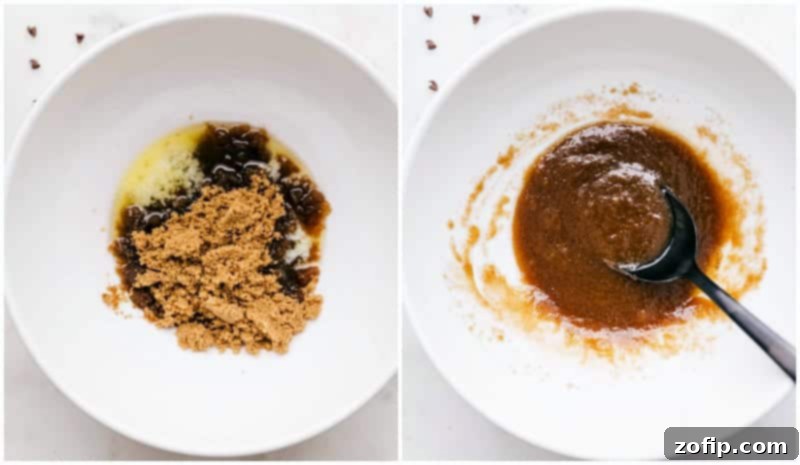
- Cream Butter and Sugars: In a medium-sized bowl, combine the cooled melted butter with both the packed brown sugar and granulated white sugar. Use a whisk to mix briskly for about one minute until the mixture is smooth, creamy, and well emulsified. This creaming process dissolves the sugar crystals and creates a light, airy base.
- Add Wet Ingredients: Stir in the vanilla extract and milk until they are fully combined with the butter and sugar mixture. Ensure everything is well incorporated for even flavor distribution.
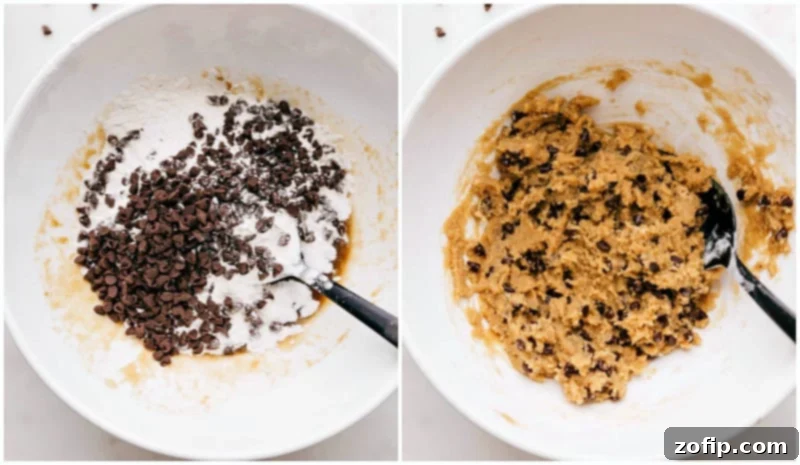
- Incorporate Dry Ingredients and Chocolate Chips: Add the cooled, heat-treated flour and the mini chocolate chips to the wet mixture. Stir gently with a spatula or wooden spoon until just combined. Be careful not to overmix, as this can make the dough tough. The dough should come together nicely. If it seems too dry or crumbly, add an extra teaspoon of milk at a time until the desired texture is achieved. If it’s too wet, you might have accidentally over-packed the flour earlier or the butter wasn’t cooled enough.
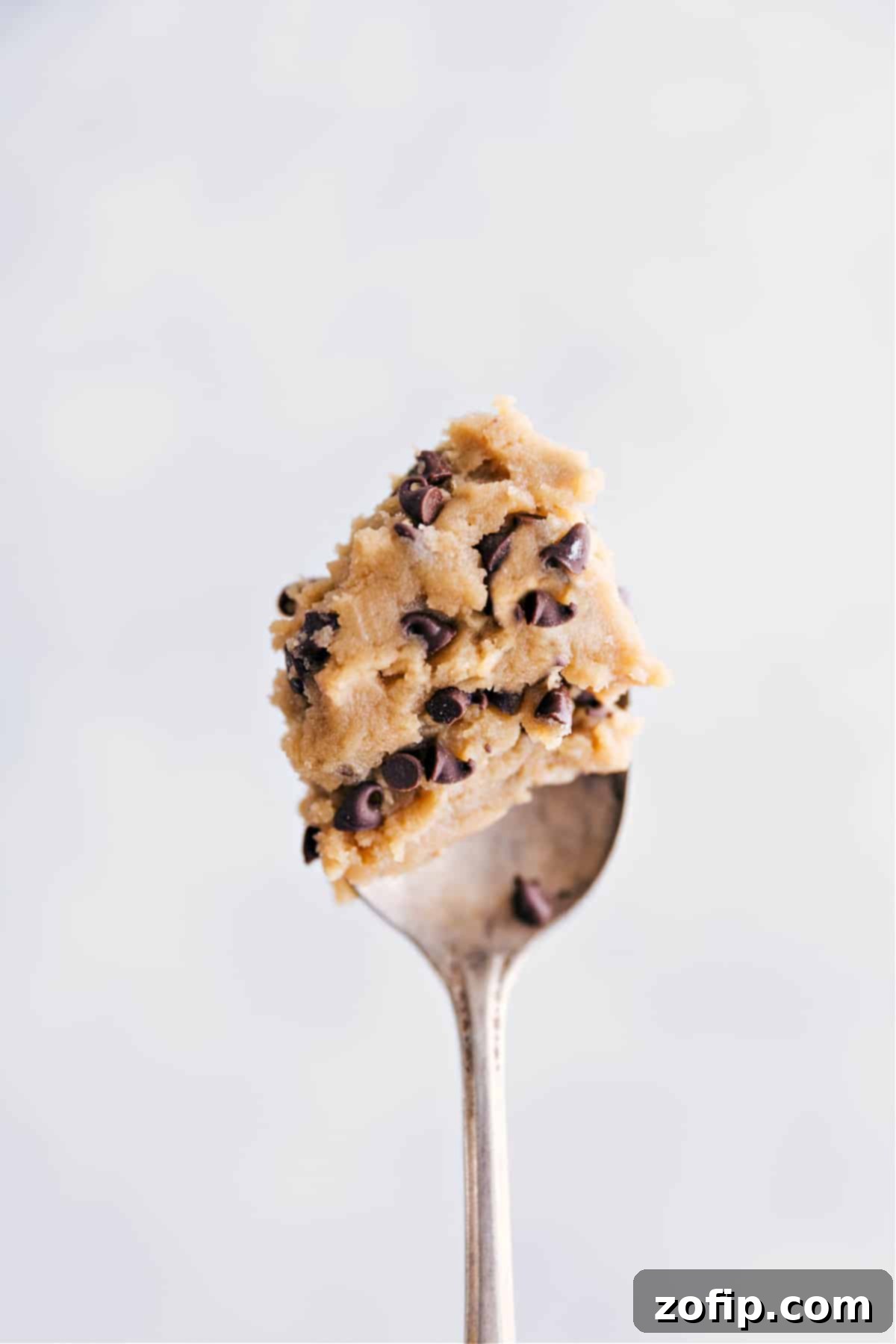
- Chill (If Needed) and Enjoy: If your dough feels a bit too soft from the melted butter, transfer it to the fridge and chill for about 10-15 minutes. This will help it firm up to that perfect, scoopable cookie dough consistency. Once chilled to your liking, grab a spoon and enjoy your safe-to-eat, incredibly delicious chocolate chip cookie dough!
Edible Cookie Dough FAQs: Your Questions Answered
Can I Bake This Edible Cookie Dough into Cookies?
No, this edible cookie dough recipe is specifically formulated for raw consumption and is not suitable for baking. Traditional cookie dough includes leavening agents like baking soda or baking powder, and raw eggs, which are essential for structure, texture, and rise during baking. This recipe omits eggs for safety and uses different ratios of butter and sugar to achieve a perfect raw texture. Baking this dough would result in flat, greasy, and likely unappetizing cookies that won’t rise or spread correctly. Stick to enjoying it by the spoonful!
How Do I Make A Smaller Batch?
For those times you only need a quick individual treat or are serving fewer people, making a smaller batch is simple. You can easily halve the recipe measurements to yield approximately 2 servings. Alternatively, you can prepare the full batch as instructed and then divide the finished dough into smaller, individual portions. These portions can be stored in an airtight container in the refrigerator for up to 5 days, or frozen for longer enjoyment (up to 3 months). This method ensures you always have a delicious, safe-to-eat treat on hand whenever a craving strikes!
Why do you have to heat treat the flour?
Heat-treating the flour is a crucial food safety step that cannot be skipped for edible cookie dough. Raw flour, being an unprocessed agricultural product, can sometimes be contaminated with harmful bacteria, most notably E. coli. These bacteria are naturally found in the environment and can transfer to grains during harvesting or processing. Heating the flour to an internal temperature of 165°F (74°C) effectively kills these potential pathogens, making the flour safe for raw consumption. This eliminates the second major risk factor, alongside raw eggs, associated with traditional cookie dough, ensuring your delicious treat is completely worry-free.
Can I Add Different Mix-ins?
Absolutely! While mini chocolate chips are a classic, this recipe serves as a fantastic base for all sorts of creative mix-ins. Feel free to experiment with sprinkles, crushed Oreos, M&M’s, peanut butter cups, white chocolate chunks, toffee bits, or even a swirl of caramel or peanut butter. Just remember to add them in the final step, after the flour has been incorporated.
How Long Does Edible Cookie Dough Last at Room Temperature?
Due to the butter content, it’s best not to leave edible cookie dough at room temperature for extended periods. While it doesn’t contain raw eggs, the butter will soften significantly, potentially making it greasy and less appealing. For optimal taste and texture, consume it within a couple of hours if left out, or store it in the refrigerator. Always prioritize chilling for safety and enjoyment.
Storage Tips for Your Edible Cookie Dough
To keep your delicious edible cookie dough fresh and ready whenever a craving hits, proper storage is key:
- Refrigerator Storage: Store edible cookie dough in an airtight container in the fridge for up to 5 days. Ensure it’s tightly sealed to prevent it from drying out or absorbing other odors from the refrigerator.
- Freezer Storage: For longer enjoyment, you can freeze the cookie dough for up to 3 months. Place the dough in a freezer-safe, airtight container or shape it into individual balls and flash-freeze them on a baking sheet before transferring to a freezer bag. This prevents them from sticking together. When ready to eat, simply thaw the frozen dough in the fridge for a few hours before indulging.
Always bring the dough to room temperature for a softer, more enjoyable texture, or enjoy it chilled straight from the fridge if you prefer a firmer bite.
Other Delicious No-Bake Treats to Satisfy Your Sweet Tooth
If you love the ease and pure indulgence of this edible cookie dough, you’ll definitely want to explore these other fantastic no-bake recipes from our collection:
- No-Bake Cookies: A classic favorite that requires no chilling or oven time at all – just mix, scoop, and enjoy!
- Salty and Sweet Pretzel Peanut Butter Bars: The perfect combination of crunchy, salty pretzels with creamy peanut butter, all coated in chocolate. Irresistible!
- Banana Pudding Recipe: Our adaptation of the famous Magnolia Bakery recipe, featuring layers of creamy pudding, fresh bananas, and vanilla wafers.
- Cannoli Dip: All the incredible flavors of a traditional cannoli, transformed into a delightful, dippable cream perfect for sharing.
- Super Popular No-Bake Brownie Bites: Rich, fudgy, and packed with chocolate flavor, these bites are a quick and easy way to satisfy your chocolate cravings.

Pin
Edible Cookie Dough Recipe
Video
Equipment
- Medium bowl
Ingredients
- 3/4 cup all-purpose flour measured correctly—see note 1
- 1/3 cup unsalted butter melted and slightly cooled
- 1/3 cup brown sugar packed, dark or light; I love dark
- 3 tablespoons granulated sugar
- 1/8 teaspoon salt
- 1 teaspoon vanilla extract
- 1 tablespoon whole milk 1% or 2% also work
- 1/3 cup mini chocolate chips
Instructions
- Melt butter and set it aside to cool back to room temperature. If the butter is too hot, it will melt the sugars and cause greasy cookie dough.
- Heat treat the flour in the microwave or oven (see note 1), and let it cool completely to room temperature before use. Do not use any burned or clumpy flour. The flour should be light, white, and fluffy. Spoon the cooled flour into a measuring cup and level it with a knife.
- In a medium bowl, add the melted and cooled-to-room-temp butter, brown sugar, and granulated sugar. Use a whisk to briskly mix until smooth and emulsified, about 1 minute. Add vanilla, salt, and milk, and stir until combined. Stir in the cooled flour and chocolate chips until combined.
- If needed, chill the dough in the fridge for 10 minutes before enjoying it. Chilling helps firm up the dough from melted butter. Enjoy!
Recipe Notes
Here’s how to heat treat flour:
- Heat treat 1/2 cup more flour than you’ll need (in case edges burn in oven).
- Microwave: Add flour to a microwave-safe bowl and microwave in 30-second bursts, stirring between each, to avoid burning or clumping. After each burst, check the temperature. It’s done when it has reached 165°F (74°C).
- Oven: Preheat the oven to 300°F (150°C) and line a large sheet pan with a nonstick liner or parchment paper. Spread the flour on the pan. Bake, stirring and checking the temperature every 2 minutes until it reaches 165°F (74°C), about 3–6 minutes.
Storage: When wrapped and stored well, this cookie dough will stay fresh in the fridge for up to 5 days or in the freezer for up to 3 months.
Nutrition
Calories: 406kcal |
Carbohydrates: 55g |
Protein: 3g |
Fat: 19g |
Saturated Fat: 12g |
Trans Fat: 1g |
Cholesterol: 43mg |
Sodium: 153mg |
Potassium: 61mg |
Fiber: 1g |
Sugar: 37g |
Vitamin A: 512IU |
Vitamin C: 1mg |
Calcium: 45mg |
Iron: 1mg
Nutrition information is automatically calculated, so should only be used as an approximation.
Like this? Leave a comment below!