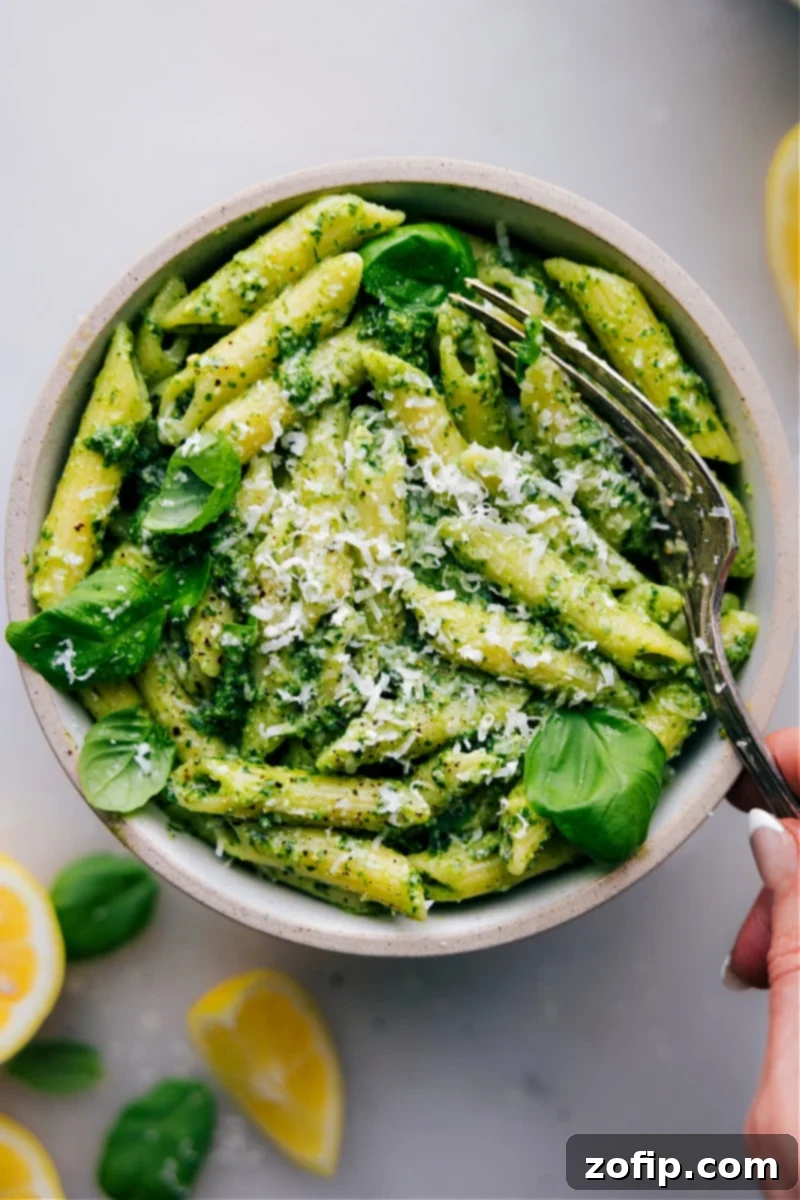
Welcome to your new favorite weeknight meal! This Pesto Pasta Recipe is not just incredibly delicious but also remarkably easy to prepare. With a minimal list of simple ingredients and less than 20 minutes of your time, you’ll create a restaurant-quality dish that’s perfect for busy evenings or a quick, satisfying lunch.

Author’s Note
From My Kitchen to Yours: The Magic of 25-Minute Pesto Pasta
I’ll never forget the first time I truly understood the magic of pesto pasta at home. It was one of those hectic evenings when time was scarce, but my craving for something more exciting than my usual routine pasta with red sauce was undeniable. I grabbed a jar of basil pesto from the fridge, cooked some pasta, tossed it all together with a splash of starchy pasta water, and in an instant, it transformed into a dish that tasted like it came straight from an authentic Italian trattoria.
That quick dinner wasn’t just a meal; it became a revelation and quickly cemented its place as one of my ultimate go-to weeknight dinners. Its simplicity, combined with its vibrant, fresh flavors, made it an immediate family favorite. Over the years, I’ve enjoyed experimenting with various pasta shapes, testing both homemade and quality store-bought pestos, and incorporating diverse add-ins like succulent grilled chicken, juicy shrimp, or tender roasted vegetables.
Through all these delicious trials, this particular recipe remains the version I consistently return to. It embodies everything I love about quick, flavorful cooking: it’s incredibly simple, undeniably reliable, and consistently a massive hit with everyone at my table. I’m thrilled to share this tried-and-true method with you, so you can experience the joy of effortless, delicious pesto pasta in your own kitchen.
What Makes Pesto Pasta a Must-Try?
Pesto pasta is a classic Italian dish celebrated for its fresh, aromatic basil pesto sauce coating perfectly cooked pasta. Originating from Genoa, Italy, traditional pesto (Pesto Genovese) is made from basil leaves, pine nuts, garlic, Parmesan cheese, Pecorino Sardo, and olive oil, all blended into a vibrant green sauce. When combined with pasta, it creates a wonderfully fragrant, flavorful, and surprisingly light meal.
This recipe focuses on bringing that authentic Italian experience to your home with maximum flavor and minimal effort. It’s perfect for:
- Busy Weeknights: Ready in less than 20-25 minutes from start to finish.
- Family-Friendly Dining: A crowd-pleaser that even picky eaters tend to love.
- Versatile Meals: Easily customizable with your favorite proteins or vegetables.
- Fresh & Vibrant Flavors: The bright taste of basil pesto is a true delight.

Essential Ingredients for Pesto Pasta
One of the beauties of this pesto pasta recipe lies in its simplicity. You only need a few key ingredients to create a memorable meal. However, the quality of these ingredients can significantly impact the final taste, so choose wisely!
| Ingredient | Swaps & Tips for Best Flavor |
|---|---|
| Pesto (1 cup) | The star of the show! For the absolute best flavor, homemade basil pesto is highly recommended. If short on time, opt for a good-quality, refrigerated store-bought pesto (often found near fresh pasta in the grocery store). For a delicious twist, consider sun-dried tomato pesto or even a kale pesto for an earthy note. |
| Pasta (16 ounces) | Any pasta shape works beautifully with pesto! Penne is used in this recipe, but feel free to substitute with fusilli, farfalle (bow-tie), spaghetti, linguine, or even orecchiette. Shorter, ridged pasta shapes tend to hold the sauce exceptionally well. |
| Pasta Water (reserved) | This is your secret ingredient for a silky, restaurant-quality sauce! Don’t skip saving about 1 cup of the starchy cooking water before draining your pasta. It helps emulsify the pesto, creating a cohesive sauce that perfectly clings to every strand or piece of pasta. |
| Parmesan Cheese (optional) | Freshly grated Parmesan is ideal for finishing the dish. For a sharper, more piquant flavor, consider using Pecorino Romano. If your pesto already contains a significant amount of cheese, you can reduce or omit this extra topping. |
| Salt & Pepper | Essential for seasoning the pasta water and adjusting the final taste of your dish. Season generously to bring out all the flavors. |
| Fresh Lemons (optional) | A squeeze of fresh lemon juice at the end brightens the entire dish, adding a lovely zesty counterpoint to the rich pesto. Highly recommended! |
Step-by-Step Guide: Crafting Your Perfect Pesto Pasta
Creating this flavorful pesto pasta is incredibly straightforward. Follow these simple steps for a dish that tastes gourmet yet takes minimal effort.

- Prepare the Pasta: Bring a large pot of generously salted water to a rolling boil. Adding salt at this stage is crucial for flavoring the pasta from the inside out. Add your chosen pasta (such as penne) and cook according to package directions until it’s perfectly al dente. This means it should be tender but still have a slight bite.
- Reserve Pasta Water: This step is vital! Before draining your pasta, use a mug or a heat-safe measuring cup to scoop out about 1 cup of the starchy cooking water. This liquid is gold for your sauce, helping it become creamy and cohesive. Then, drain the rest of the pasta thoroughly, but do not rinse it under cold water, as this removes the starch needed for the sauce to cling.
- Combine & Toss with Pesto: Immediately transfer the hot, drained pasta into a large mixing bowl (avoid mixing in the hot pot, as residual heat can dull the vibrant color of fresh pesto). Add your cup of pesto to the hot pasta. Drizzle in about 1/2 cup of the reserved pasta cooking water. Using tongs, gently yet thoroughly toss the pasta until every piece is beautifully coated in the lush green sauce. The heat from the pasta will help the pesto warm and meld with the pasta water to create a smooth, emulsified sauce. Add more pasta water, a tablespoon at a time, if you desire a thinner or creamier consistency.
- Finish & Serve: Season the pasta to taste with a pinch of salt and freshly cracked black pepper. Add freshly grated Parmesan cheese and toss again. Serve immediately, garnished with extra Parmesan and an optional squeeze of fresh lemon juice for brightness. Enjoy your homemade, restaurant-quality pesto pasta!
Quick Tip: Never Forget Pasta Water Again!
Do you often forget to save some of the pasta water before draining? It happens to the best of us! Here’s a super simple trick: before you drain the pasta, place your colander in the sink with a mug or a heat-safe measuring cup sitting in the center. When you go to pour the pasta into the colander, you’ll see the mug and be perfectly reminded to scoop out that essential liquid first!

Expert Tips for the Best Pesto Pasta
Elevate your pesto pasta from good to truly exceptional with these pro tips and customization ideas:
- The Magic of Reserved Pasta Water: We can’t stress this enough! The starchy cooking water from the pasta is crucial. It acts as an emulsifier, binding the pesto to the pasta and creating a beautifully silky, cohesive sauce that coats every strand. Start with half a cup and add more as needed until you reach your desired consistency.
- Mix in a Separate Bowl (Not the Hot Pot): Once the pasta is drained, transfer it to a large serving bowl or a separate mixing bowl before adding the pesto. Mixing the pesto directly into a hot metal pot can cause the delicate basil to “cook” and dull its vibrant green color and fresh flavor. A cooler bowl helps preserve the pesto’s freshness.
- Season Your Pasta Water Generously: Remember to salt your pasta water generously – it should taste like the ocean! This is the only chance to season the pasta itself from the inside out. A bland pasta will result in a bland dish, even with delicious pesto. Aim for about 1 tablespoon of salt per gallon of water.
- Brighten with Lemon: A squeeze of fresh lemon juice at the very end is a game-changer. It cuts through the richness of the pesto, adds a wonderful tang, and truly brightens the overall flavor profile of the dish.
- Customize to Your Heart’s Content: Pesto pasta is incredibly versatile!
- Add Protein: Fold in cooked grilled chicken, blackened shrimp, crumbled Italian sausage, or even white beans for a vegetarian option.
- Incorporate Vegetables: Cherry tomatoes (halved), blanched green beans, steamed broccoli florets, roasted bell peppers, or roasted asparagus are fantastic additions that add color, texture, and nutrients.
- Boost the Nutty Flavor: If your pesto is store-bought or you just love extra crunch, lightly toast some pine nuts or walnuts in a dry pan and sprinkle them over the finished dish.
Storage & Reheating
- Fridge: Store any leftover pesto pasta in an airtight container in the refrigerator for up to 3-5 days.
- Reheating: To reheat, gently warm the pasta in a skillet over low heat, adding a splash of water or chicken broth as needed to loosen the sauce and bring back its creamy texture. Alternatively, microwave in 30-second intervals, stirring in between, and add a little liquid. A squeeze of fresh lemon juice after reheating can revive the flavors beautifully.
- Freezer: Freezing pesto pasta is generally not recommended. The fresh basil in the pesto tends to lose its vibrant flavor and color, and the pasta can become mushy upon thawing. It’s best enjoyed fresh or from the fridge.
Perfect Pairings: What to Serve with Pesto Pasta
Pesto pasta is a complete meal on its own, but it also pairs wonderfully with a variety of side dishes that complement its fresh, savory flavors.
Salads
Caprese Salad Recipe
A simple Caprese salad with fresh mozzarella, ripe tomatoes, basil, and a balsamic glaze is a light and refreshing counterpoint to the richness of the pesto.
Appetizers
Crusty French Bread
No pasta meal is complete without a side of warm, crusty bread! French bread or garlic bread is perfect for soaking up any leftover pesto sauce.
Side Dishes
Roasted Asparagus (Two Ways!)
Roasted vegetables like asparagus, broccoli, or bell peppers make a healthy and flavorful side, adding texture and nutrients to your meal.
Appetizers
Fresh Bruschetta Recipe
A classic Italian appetizer featuring toasted bread topped with fresh tomatoes, garlic, basil, and olive oil. It’s a perfect starter for your pesto pasta.
Print Recipe
Quick & Easy Pesto Pasta Recipe
Chelsea Lords
15 minutes
10 minutes
25 minutes
4 servings
Equipment
- Large pot
- Large mixing bowl
- Tongs
Ingredients
- 1 cup basil pesto (packaged or homemade — see Note 1 below for recommendations)
- 16 ounces penne pasta (or your preferred pasta shape)
- 1 cup pasta cooking water (reserved)
- Salt and freshly ground black pepper
- Fresh lemons (optional, but highly recommended for serving)
- Parmesan cheese (optional, freshly grated for serving)
Instructions
- Bring a large pot of water to a rolling boil. Once boiling, add about 1 tablespoon of salt (or to taste, it should taste like the ocean). Add pasta and cook according to package directions until it is perfectly al dente.
- Before draining the pasta, scoop out and reserve approximately 1 cup of the starchy pasta cooking water. Then, drain the pasta thoroughly, but do not rinse it.
- While the pasta cooks, if using homemade pesto, prepare it. Measure out 1 full cup of pesto and add it to a large ceramic or glass mixing bowl (do not use the hot cooking pot, as the heat can cause the pesto to brown and lose its vibrant color).
- Once the pasta is cooked and drained, immediately transfer it to the bowl with the pesto. Drizzle in about 1/2 cup of the reserved pasta cooking water. Use tongs to toss the pasta with the pesto until every piece is evenly coated and the sauce is creamy and cohesive. Add more pasta water, a tablespoon at a time, if a looser or creamier consistency is desired.
- Season the pesto pasta to taste with salt and freshly ground black pepper. Serve immediately, topped generously with freshly grated Parmesan cheese. For an extra bright flavor, squeeze fresh lemon juice over the top just before serving. Enjoy your delicious and quick meal!
Recipe Notes
Storage: Keep leftover Pesto Pasta in an airtight container in the fridge for up to 5 days. When reheating, warm pasta on low heat in a skillet and gradually add water to the sauce until the desired consistency is reached. Or reheat in the microwave, stirring every 30 seconds. Add more salt if needed, and consider squeezing fresh lemon juice for extra flavor.
Nutrition
Calories: 661kcal |
Carbohydrates: 90g |
Protein: 18g |
Fat: 25g |
Saturated Fat: 4g |
Polyunsaturated Fat: 1g |
Monounsaturated Fat: 0.2g |
Cholesterol: 5mg |
Sodium: 587mg |
Potassium: 253mg |
Fiber: 5g |
Sugar: 5g |
Vitamin A: 1250IU |
Calcium: 124mg |
Iron: 2mg
Nutrition information is automatically calculated, so should only be used as an approximation.
Pesto Pasta Recipe FAQs
For this particular recipe, I recommend adding pesto to the hot pasta immediately after it’s cooked and drained. The residual heat from the pasta helps to slightly warm the pesto, allowing it to loosen up and coat the pasta beautifully, creating a more cohesive and creamy sauce. However, pesto pasta is also fantastic served cold as a refreshing pasta salad, especially during warmer months!
Absolutely! Using good-quality store-bought pesto from a jar or a refrigerated container is perfectly fine and a great time-saver. Simply scoop the desired amount into your large mixing bowl and combine with the hot pasta and reserved pasta water. No extra preparation is needed, making this an incredibly quick and convenient meal. Check our notes section for specific brand recommendations!
While virtually any pasta works, shapes that have ridges or nooks and crannies are excellent for catching and holding the pesto sauce. Penne (used in this recipe), fusilli, rotini, or orecchiette are fantastic choices. Longer strands like spaghetti, linguine, or fettuccine also work beautifully, allowing the sauce to intertwine elegantly.
The secret to super creamy pesto pasta lies in the reserved pasta water. The starches in this water help to emulsify the pesto and create a luscious, smooth sauce. Add it gradually, a tablespoon at a time, until you reach your desired creamy consistency. You can also stir in a tablespoon of mascarpone cheese or a tiny bit of heavy cream for an extra rich and creamy texture, though it’s usually not necessary with the pasta water technique.