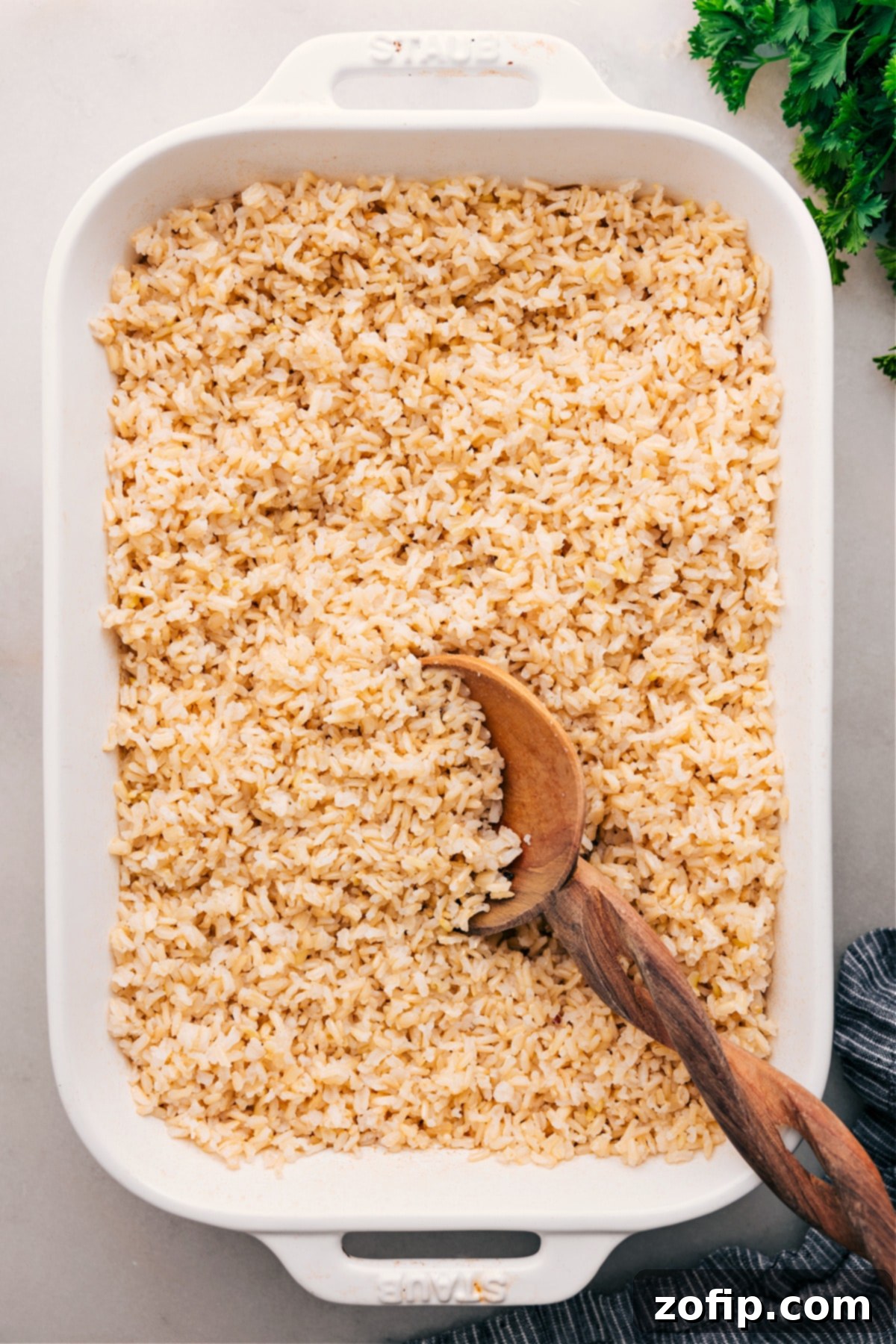
How to Cook Brown Rice: The Ultimate Guide to Fluffy Oven-Baked Perfection
Unlock the secret to consistently fluffy, tender, and perfectly cooked brown rice with our game-changing oven method. Forget sticky pots, inconsistent results, and constant monitoring. This hands-off baking technique simplifies the process, allowing you to prepare large batches of delicious brown rice with minimal effort. It’s the easiest way to make brown rice that’s ready to elevate any meal!
Looking for white rice? Be sure to check out our comprehensive guide on How To Make White Rice.
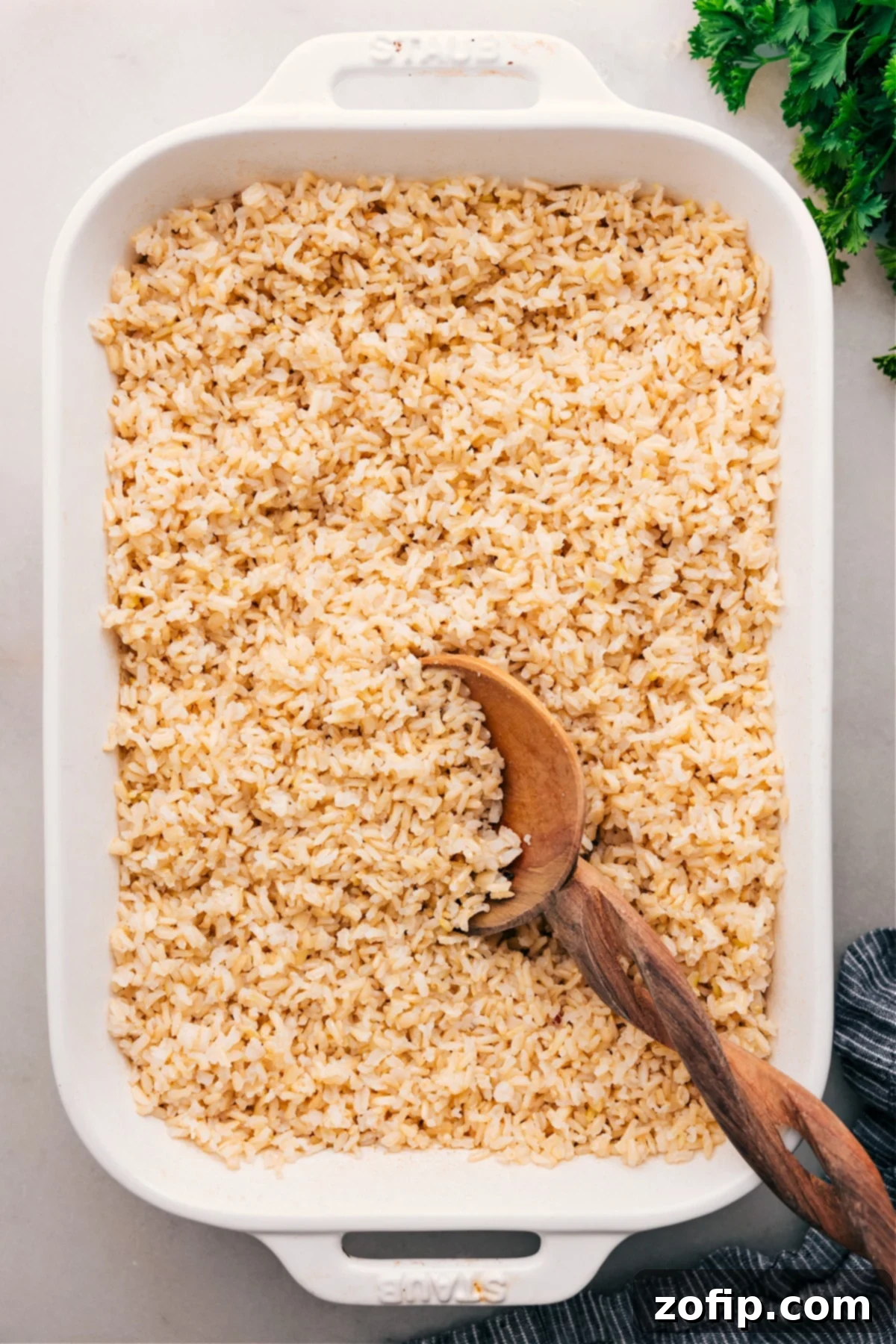
Why Oven-Baked Brown Rice is a Game-Changer
If you’ve struggled with stove-top brown rice that’s either too dry, too mushy, or unevenly cooked, the oven method is about to become your new best friend. Here’s why we’re absolutely obsessed with baking brown rice, and why you will be too:
- Effortless, Hands-Off Cooking: One of the biggest advantages of baking brown rice is its simplicity. Once your baking dish is covered and in the oven, it requires no attention. No need to stir, check water levels, or worry about burning the bottom. This truly hands-off approach frees up your time and your stove for preparing other components of your meal.
- Consistently Even Results: The gentle, consistent heat of the oven ensures that every grain of rice cooks uniformly. Unlike stove-top methods where heat can be uneven, leading to some rice being overcooked and other parts undercooked, baking provides a stable environment. This results in perfectly tender rice, from edge to center, with no hard bits or gummy clumps.
- Ideal for Big Batches & Meal Prep: The oven method shines when you need to cook a larger quantity of rice. It’s perfect for weekly meal prep, feeding a family, or preparing for gatherings. You can easily double or even triple the recipe in a larger baking dish without compromising quality, making healthy eating convenient throughout the week.
- A Versatile Kitchen Staple: Having a ready supply of perfectly cooked brown rice in your fridge opens up a world of culinary possibilities. It’s the ideal foundation for countless meals – from quick lunches to elaborate dinners. Use it as a base for grain bowls, a side dish, or an ingredient in stir-fries, salads, and casseroles.
- Frees Up Stove-Top Space: Kitchen real estate, especially on the stove, can be precious. By moving your brown rice cooking to the oven, you free up burners for sautéing vegetables, simmering sauces, or preparing proteins, allowing for more efficient multi-tasking and meal preparation.
Pro Tips for Foolproof Brown Rice Every Time
While the oven method for brown rice is incredibly straightforward, a few key tips will ensure your results are consistently perfect and delicious:
- Use Long-Grain Brown Rice for Best Texture: While other varieties can work, long-grain brown rice is generally recommended for its light, fluffy texture that holds up well. Its individual grains remain separate and tender, providing a satisfying mouthfeel. Avoid rice that appears discolored or smells musty, as this can indicate staleness.
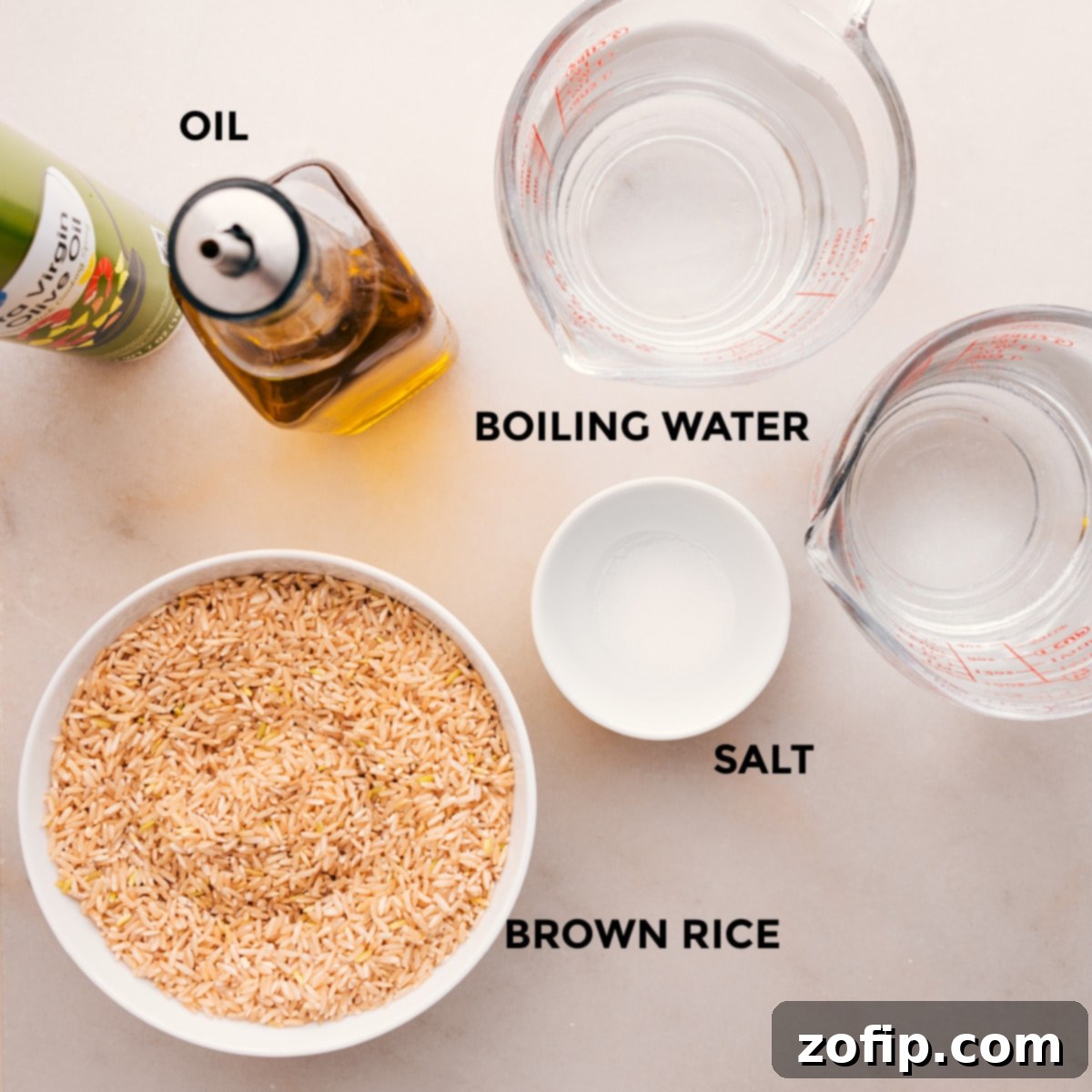
- Achieve the Right Water-to-Rice Ratio: Precision is key here. The recommended ratio for this oven method is 3 cups of brown rice to 4 2/3 cups of boiling water. Measuring the water *after* it has come to a full boil is crucial, as some evaporation occurs during the heating process. Too little water will result in dry, crunchy rice, while too much will yield a mushy, sticky texture.
- Don’t Skimp on Salt: Salt isn’t just about making the rice taste salty; it’s a flavor enhancer. A precise amount of salt (1-1/4 teaspoons for 3 cups of rice) brings out the natural, nutty flavor of the brown rice, transforming it from bland to wonderfully savory.
- Olive Oil Adds Flavor and Prevents Sticking: A small amount of olive oil (4 teaspoons) plays a vital role. It contributes a subtle, desirable flavor and, more importantly, helps to separate the rice grains, preventing them from sticking together or to the baking dish. If olive oil isn’t your preference, feel free to substitute with other neutral oils like avocado oil, or even a knob of butter for a richer taste.
- Cover Tightly with Two Layers of Foil: This step is non-negotiable for success. Creating a very tight seal with two layers of aluminum foil traps all the steam within the baking dish. This steam is what cooks the rice evenly and thoroughly, mimicking the environment of a pressure cooker. Without a tight seal, steam escapes, leading to dry, undercooked rice.
- Let the Rice Rest After Cooking: Patience is a virtue, especially when it comes to perfect rice. After removing the baking dish from the oven, resist the urge to immediately uncover it. Allowing the rice to rest, still covered, for 15-20 minutes is critical. During this resting period, the grains continue to absorb any remaining moisture, steam evenly, and firm up, resulting in that coveted fluffy, non-mushy texture. Skipping this step often leads to soggy rice.
Get Creative: Flavor Variations & Serving Suggestions
Plain brown rice is a wonderful foundation, but it’s also incredibly versatile! Elevate your dish by incorporating different flavors and textures. Here are some fantastic ways to customize your oven-baked brown rice:
- Add Veggies: Boost nutritional value and flavor by mixing in finely chopped raw vegetables like bell peppers, carrots, or celery before baking. Alternatively, stir in cooked vegetables such as roasted vegetables, sautéed spinach, or peas after the rice has cooked for a vibrant side dish or a hearty grain bowl base.
- Infuse with Protein: Transform your rice into a complete meal by adding cooked protein. Shredded chicken, tender shrimp, pan-fried tofu, or even hard-boiled eggs can be mixed in after the rice is fluffed.
- Crunchy Nuts & Seeds: For added texture and healthy fats, sprinkle your cooked rice with a handful of chopped nuts like almonds, cashews, walnuts, or pecans. Seeds such as pepitas (pumpkin seeds) or sunflower seeds also make a delightful addition.
- Aromatic Herbs & Spices: Experiment with different flavor profiles! Stir in fresh, finely chopped herbs like cilantro, parsley, basil, or chives after the rice has cooked for a burst of freshness. For deeper flavors, you can add dry spices like cumin, turmeric, smoked paprika, or a dash of chili powder to the rice and water before baking.
- Delicious Sauces & Dressings: A simple drizzle of sauce can utterly transform your brown rice. Try a zesty cilantro lime sauce, a creamy tzatziki sauce, a classic vinaigrette, or a splash of soy sauce and sesame oil for an Asian-inspired twist.
- Hearty Beans & Legumes: Increase the fiber and protein content by topping your brown rice with cooked lentils, hearty pinto beans, versatile black beans, or crispy chickpeas. This combination is excellent for creating satisfying vegetarian or vegan meals.
The Nutritional Power of Brown Rice
Beyond its delicious taste and versatility, brown rice is a nutritional powerhouse, making it an excellent choice for a healthy diet. As a whole grain, it retains its bran and germ layers, which are packed with essential nutrients that are stripped away during the refining process of white rice. Here’s a closer look at its health benefits:
- Rich in Fiber: Brown rice is an excellent source of dietary fiber, which is crucial for digestive health. Fiber helps regulate bowel movements, prevents constipation, and can contribute to a feeling of fullness, aiding in weight management.
- Complex Carbohydrate: It provides complex carbohydrates that are digested slowly, offering sustained energy release throughout the day without the sudden spikes and crashes associated with refined grains. This makes it an ideal food for maintaining stable blood sugar levels.
- Packed with Vitamins and Minerals: Brown rice is abundant in B vitamins (like B1, B3, and B6), which are vital for energy metabolism and nervous system function. It also supplies important minerals such as magnesium (critical for muscle and nerve function), selenium (an antioxidant), and phosphorus (important for bone health).
- Antioxidant Properties: The bran and germ layers of brown rice contain antioxidants, including phenols and flavonoids, which help protect the body’s cells from damage caused by free radicals, potentially reducing the risk of chronic diseases.
- Heart-Healthy Choice: Regular consumption of whole grains like brown rice has been linked to a reduced risk of heart disease. Its fiber content helps lower cholesterol levels, and its magnesium contributes to healthy blood pressure.
Common Questions About Baking Brown Rice (FAQs)
For achieving perfectly fluffy brown rice in the oven, the ideal ratio is 3 cups of uncooked long-grain brown rice to 4 2/3 cups of boiling water. It’s crucial to measure the water *after* it has come to a full boil to ensure accuracy, as some water evaporates during heating.
Several factors contribute to fluffy, non-sticky brown rice. Firstly, use the precise water-to-rice ratio mentioned above. Secondly, cover your baking dish with two layers of aluminum foil and ensure it’s sealed very tightly to trap all the steam. Most importantly, allow the rice to rest, undisturbed and still covered, for 15-20 minutes after baking. This resting period allows the grains to absorb any remaining moisture and steam thoroughly. Avoid stirring the rice before resting to keep the grains intact.
With this oven-baked method, brown rice consistently cooks to perfection in approximately 60 minutes at 375°F (190°C). Remember to also account for the essential 15-20 minute resting period after baking, which is vital for the final texture.
While rinsing white rice is often recommended to remove excess starch and prevent stickiness, it’s less critical for brown rice, especially with this oven-baking method. Brown rice retains more of its outer layers, which means less loose starch. You can choose to rinse it if you prefer, but it’s not strictly necessary for achieving fluffy results with this recipe.
Absolutely! While this guide focuses on the oven method for its consistent results and hands-off nature, a rice cooker is another convenient option. Most rice cookers have a specific setting for brown rice, which typically uses a slightly higher water ratio and longer cooking time than white rice. Always refer to your rice cooker’s manual for the best brown rice settings and water-to-rice ratios.
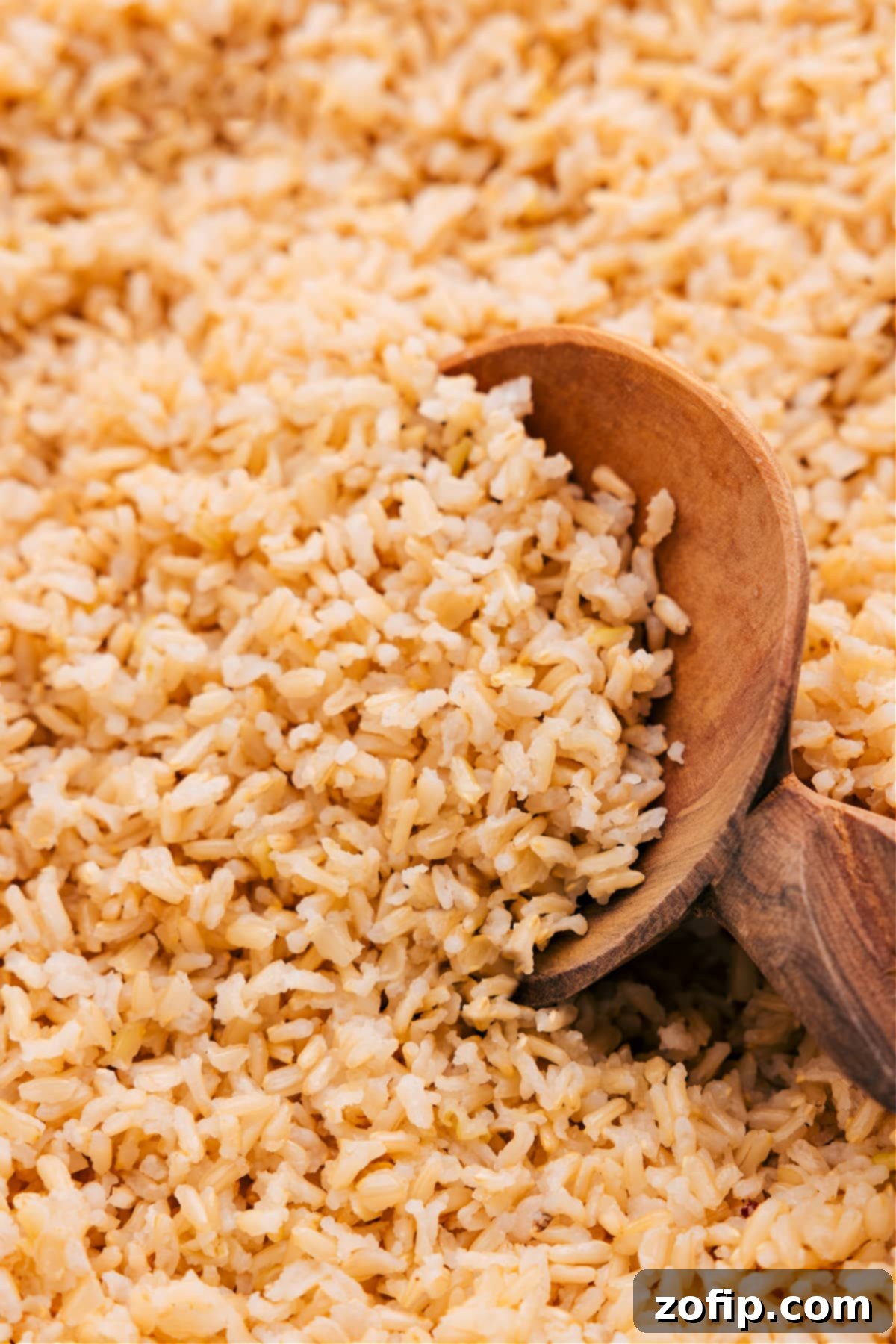
Storing & Reheating Leftovers for Maximum Freshness
Proper storage of cooked brown rice is essential for both food safety and maintaining its quality. Baked brown rice stores beautifully, making it perfect for meal prep.
- Cool Completely: Always allow cooked brown rice to cool down to room temperature completely before transferring it to storage containers. This prevents condensation from forming, which can lead to sogginess and promote bacterial growth.
- Store Airtight: Transfer the cooled rice to an airtight container or a heavy-duty sealed bag. This protects it from air exposure, which can dry it out and cause it to absorb odors from other foods in the refrigerator.
- Refrigerate or Freeze: Cooked brown rice can be safely stored in the refrigerator for up to 4 days. For longer storage, it freezes exceptionally well for up to 6 months. When freezing, consider portioning it into individual servings for easy thawing and reheating.
- Check for Freshness: Before eating leftovers, always give them a quick inspection. Discard any rice that has an off smell, feels slimy to the touch, or shows signs of discoloration. When reheating, ensure the rice is steaming hot throughout to kill any potential bacteria.
Transform Your Meals: Best Ways to Use Cooked Brown Rice
Once you have a batch of perfectly cooked brown rice, the culinary possibilities are endless! It’s a fantastic staple that can be incorporated into a multitude of dishes:
- Stir-Fry Base: Swap out white rice for brown rice in your favorite stir-fry recipes. Its nutty flavor and firm texture hold up beautifully in dishes like Chicken Stir-Fry or Pork Stir-Fry, adding a wholesome dimension.
- Hearty Burrito Filling: Combine your brown rice with black beans, corn, cheese, salsa, and your choice of protein for a satisfying burrito filling. It’s also an excellent, healthier base for vibrant Burrito Bowls.
- Comforting Casserole Base: Brown rice adds substance and nutrition to baked casseroles. It’s especially delicious as the foundation for creamy, savory dishes like a classic Chicken Divan.
- Healthier Fried Rice: Give your Fried Rice a nutritional upgrade by using day-old brown rice instead of white. The slightly chewier texture adds a delightful contrast.
- Paired with Daal: Serve your fluffy brown rice alongside rich, creamy lentil dishes. It perfectly complements the aromatic spices and comforting flavors of a homemade Daal, soaking up all the delicious sauce.
- Healthy Salads: Add cooled brown rice to salads for a boost of fiber and a more substantial meal. It pairs wonderfully with roasted vegetables, fresh greens, and a light vinaigrette.
- Stuffed Vegetables: Use brown rice as a key ingredient for stuffing bell peppers, tomatoes, or zucchini. Combine it with ground meat, herbs, and cheese for a flavorful and filling dish.
Oven-Baked Brown Rice Recipe
By Chelsea Lords
The easiest way to make a big batch of perfectly fluffy and tender brown rice? Skip the stove and bake it! This method is adapted from ATK’s Meal Prep Cookbook.
15 minutes
1 hour
20 minutes
1 hour 35 minutes
9 cups cooked brown rice
Equipment
- 9 x 13-inch baking pan
Ingredients
- Cooking spray
- 3 cups uncooked long-grain brown rice (see note 1)
- 1-1/4 teaspoons salt
- 4 teaspoons olive oil (see note 2)
- 4-2/3 cups boiling water (see note 3)
Instructions
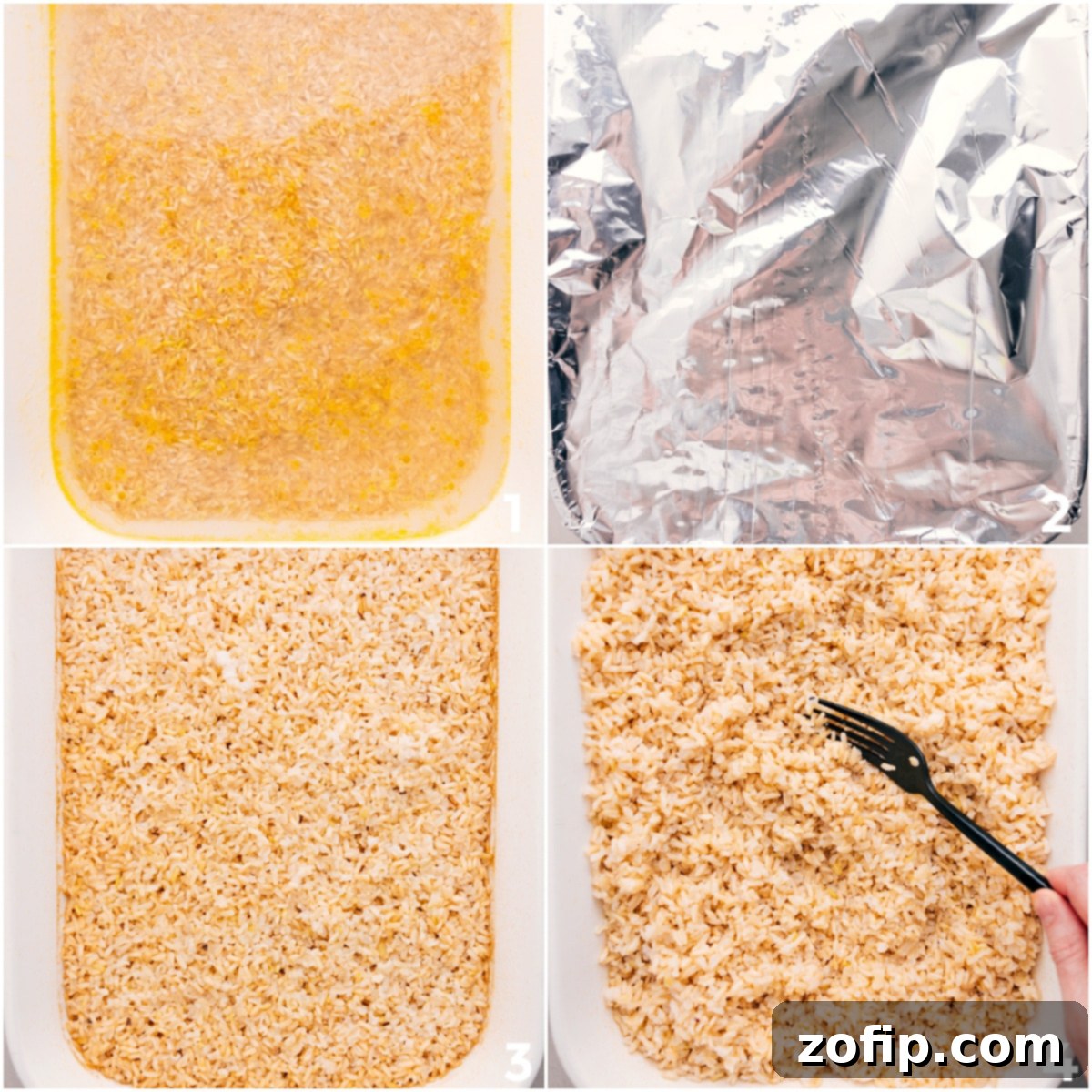
- Preheat your oven to 375°F (190°C). Generously grease a 9×13-inch baking dish with cooking spray. Bring a large pot or kettle of water to a rolling boil (ensure it can hold more than 5 cups).
- Add the brown rice, salt, and olive oil to the greased baking dish. Carefully pour 4-2/3 cups of the boiling water over the rice. Stir gently until all ingredients are evenly mixed, then smooth the rice into an even layer across the bottom of the dish.
- Cover the baking dish very tightly with two layers of aluminum foil. This creates a steamy environment crucial for perfect cooking. Place the covered dish in the center of the preheated oven and bake for 60 minutes.
- Once baking is complete, remove the dish from the oven. Keep it covered with the foil and let it rest on a heat-safe surface for an additional 15–20 minutes. This resting period allows the rice to fully absorb any remaining moisture and become wonderfully fluffy. Finally, fluff the rice with a fork before serving and enjoy!
Recipe Notes
Note 1: Rice Type: Long-grain brown rice is recommended for its ideal texture, yielding separate, fluffy grains. Medium or short-grain brown rice can also be used, but the texture may be slightly different. Always choose fresh rice; avoid any that looks discolored or has a musty odor.
Note 2: Olive Oil: The olive oil is essential as it adds flavor and helps prevent the rice grains from sticking together or to the pan. If you prefer, other oils like avocado oil or a dab of butter can be used as substitutes.
Note 3: Boiling Water Measurement: It’s important to measure the 4-2/3 cups of water *after* it has reached a full boil. This ensures the precise amount of liquid is added, as some water evaporates during the boiling process itself.
Resting Time is Key: Do not skip the resting period after baking. Keeping the rice covered allows it to continue steaming and absorb all the moisture, which is crucial for achieving a perfectly fluffy, non-mushy texture. Uncovering too early can lead to dry or unevenly cooked rice.
Storage Best Practices: For optimal freshness and safety, ensure the cooked rice is completely cooled before storing. Transfer it to an airtight container or a sealed bag. It can be refrigerated for up to 4 days or frozen for up to 6 months.
Nutrition Information
Serving: 1 serving | Calories: 245 kcal | Carbohydrates: 48g | Protein: 5g | Fat: 3g | Saturated Fat: 1g | Polyunsaturated Fat: 1g | Monounsaturated Fat: 2g | Sodium: 326mg | Potassium: 170mg | Fiber: 2g | Calcium: 21mg | Iron: 1mg
Nutrition information is automatically calculated and should only be used as an approximation. Variations may occur based on specific ingredients and preparation methods.