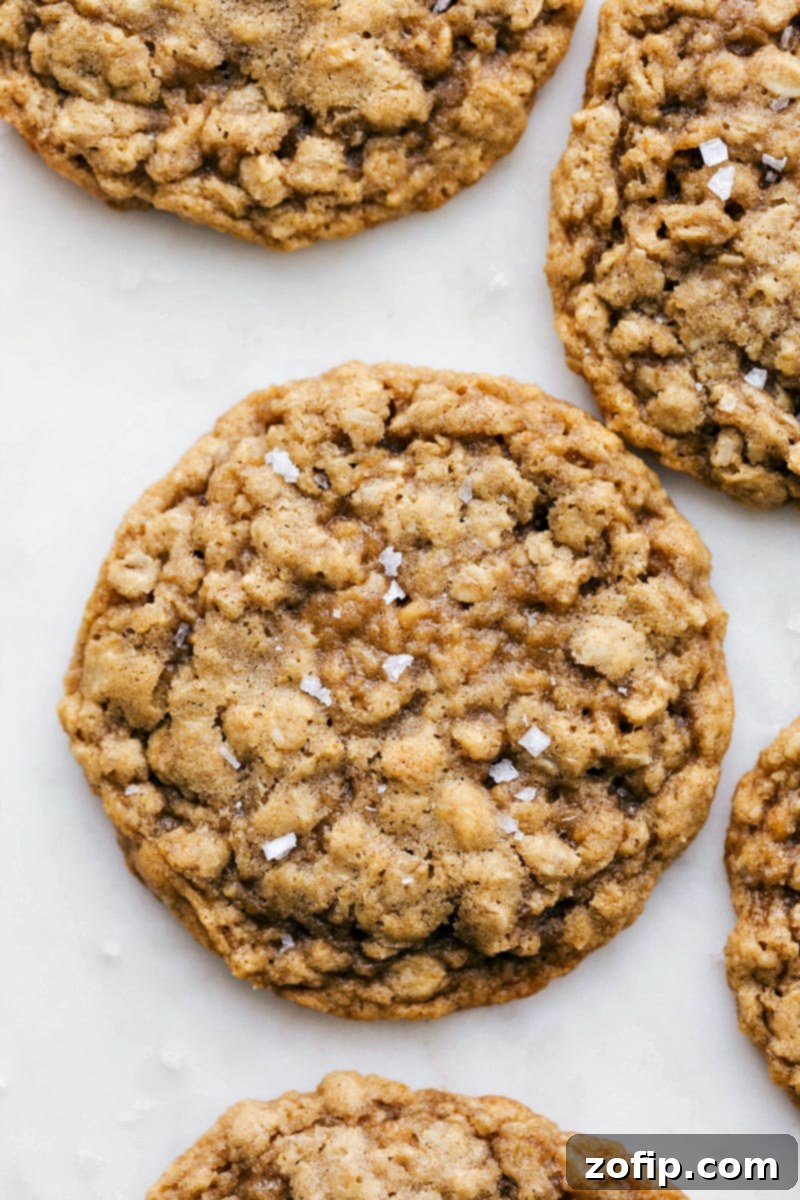
Indulge in the nostalgic comfort of these incredibly Soft, Chewy, and Flavorful Oatmeal Cookies. Whether you enjoy them plain, bursting with juicy raisins, crunchy nuts, or decadent chocolate chips, this recipe promises a delightful homemade treat every time!
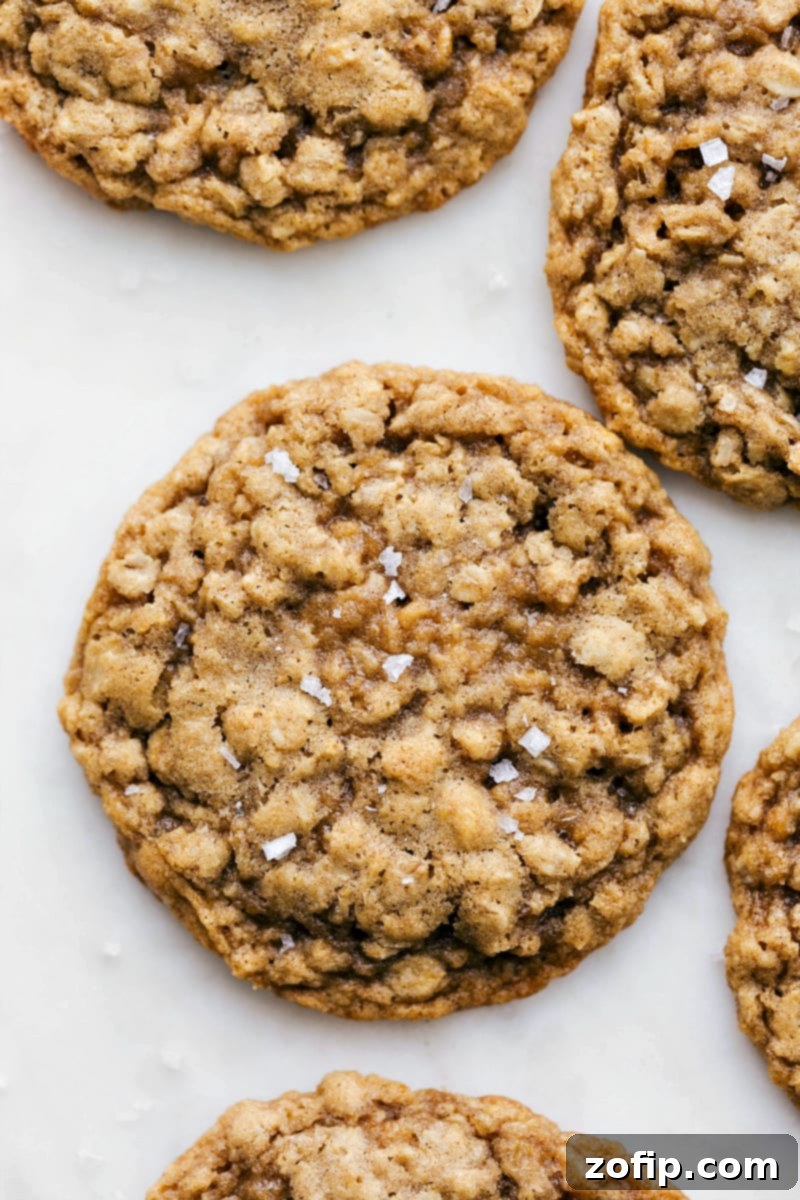

A Note from the Baker
Crafting the Perfect Soft, Buttery, and Chewy Oatmeal Cookie!
While my heart often yearns for chocolate, there’s an undeniable charm and simplicity to a classic old-fashioned oatmeal cookie that truly captures my soul. It’s a timeless treat that brings warmth and comfort with every bite, reminding me of simpler times and cozy afternoons spent in the kitchen.
For months, I’ve dedicated myself to perfecting this specific oatmeal cookie recipe, meticulously adjusting ingredients and techniques to achieve that ideal balance of soft chewiness, rich butteriness, and profound oat flavor. The result is a cookie that’s not just delicious, but truly extraordinary in its texture and depth of taste.
I’m beyond thrilled to finally share this labor of love with you. This isn’t just a recipe; it’s a versatile foundation for your favorite cookie creations. If you’re a fan of added textures and flavors, feel free to incorporate chocolate chips, plump raisins, or crunchy nuts into this base dough. For specific cravings, you can also explore my dedicated recipes for Oatmeal Chocolate Chip Cookies or Oatmeal Pecan Cookies.
For those who love a delightful twist, consider swapping out traditional raisins for dried cranberries. Their tart sweetness offers a fantastic contrast to the rich oat flavor, creating a cookie experience you absolutely won’t regret. Get ready to bake and enjoy a batch of the best homemade oatmeal cookies you’ve ever tasted – they’re sure to become a cherished favorite!
Key Ingredients for Unforgettable Oatmeal Cookies
While a classic oatmeal cookie recipe typically calls for basic pantry staples like sugar, butter, flour, eggs, and old-fashioned oats, I’ve incorporated a few special ingredients that elevate these cookies from good to absolutely outstanding. Each thoughtful addition plays a crucial role in achieving the perfect texture and a deep, rich flavor profile that sets this recipe apart from the rest. Understanding their purpose will help you appreciate the magic behind every bite.
- Cornstarch: The Secret to Persistent Softness. A seemingly small addition, cornstarch is a genuine game-changer when it comes to cookie texture. It works by inhibiting gluten development in the flour and absorbing moisture, which tenderizes the dough. The result? Cookies that remain wonderfully soft and resist drying out, even several days after baking. This ensures that melt-in-your-mouth quality you crave long after they’ve come out of the oven.
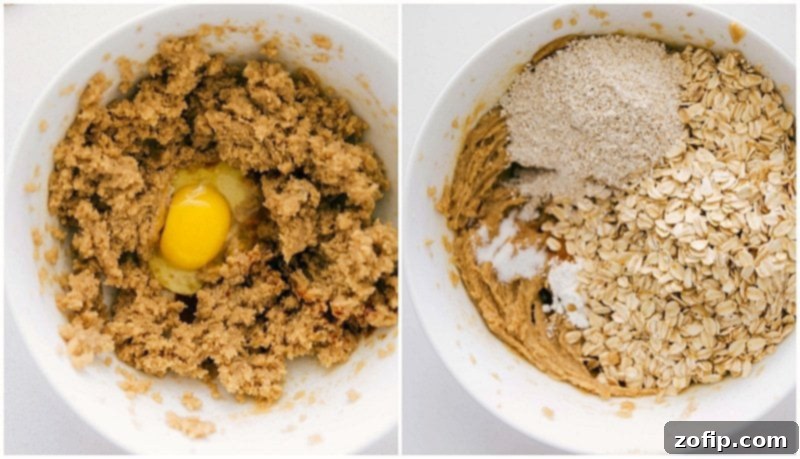
- Oat Flour: Intensifying the Wholesome Oat Flavor. To truly highlight the star ingredient, oats, I incorporate a touch of oat flour alongside regular all-purpose flour. This addition significantly boosts the natural, wholesome oat flavor, creating a more profound and aromatic taste that makes these cookies distinctly “oat-y” in the most delightful way. You can easily make your own oat flour at home by blending old-fashioned oats, and I’ll share how in the recipe notes!
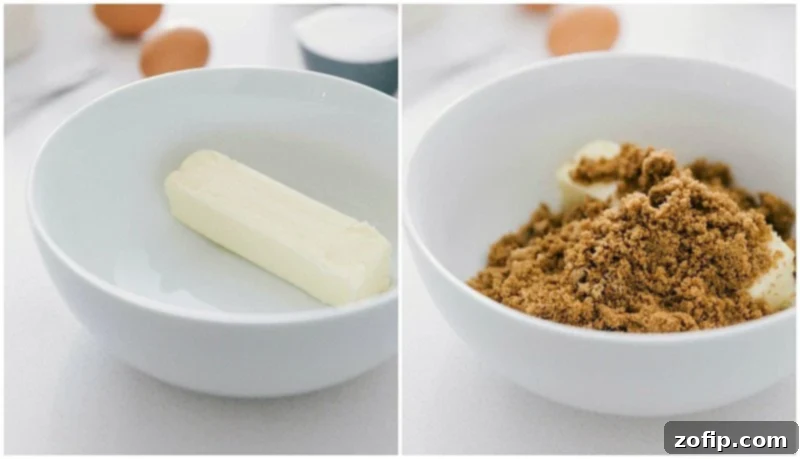
- Dark Brown Sugar: For Ultimate Chewiness and Richness. While light brown sugar certainly works in a pinch, dark brown sugar is my preferred choice for its higher molasses content. This not only contributes to an exceptionally chewy texture but also infuses the cookies with a deeper, more complex caramel-like flavor that is simply irresistible. The molasses also helps to retain moisture in the cookies, enhancing that desirable soft and moist consistency.
- Old-Fashioned Rolled Oats: The Heart of the Cookie. It’s absolutely essential to use old-fashioned (also known as rolled) oats for this recipe, not instant or quick oats. Old-fashioned oats provide the characteristic hearty texture and wholesome integrity that defines a truly great oatmeal cookie. Their larger flakes hold up better during baking, preventing the cookies from becoming mushy or crumbly and ensuring a satisfying chew.
- Unsalted Butter: The Foundation of Rich Flavor. Using unsalted butter allows you to precisely control the salt content in your cookies. Make sure it’s at proper room temperature (softened but not melted) for optimal creaming with the sugars. This step is vital as creaming incorporates air, which contributes to a lighter, more tender crumb.
- Vanilla Extract: Aromatic Depth. High-quality pure vanilla extract is paramount in almost any cookie recipe. It acts as a flavor enhancer, adding a warm, sweet, and aromatic depth that beautifully complements and completes the cookie’s overall profile.
- Baking Soda: For Lift and a Tender Spread. This essential leavening agent reacts with the acidic brown sugar to create carbon dioxide gas during baking. This reaction gives the cookies a beautiful lift, contributes to their desirable spread, and helps achieve that characteristic soft and slightly crinkled exterior.
- Salt: Balancing Sweetness and Enhancing Flavor. A crucial but often underestimated ingredient, a pinch of fine sea salt is vital for balancing the sweetness in the cookies. It enhances all the other flavors, making them taste richer, more nuanced, and preventing them from being overly saccharine.
Expert Tips for Baking the Best Oatmeal Cookies:
Achieving cookie perfection is often about paying attention to a few key details. With these tried-and-true tips, you’ll consistently bake oatmeal cookies that are soft, chewy, and bursting with flavor:
- Accurate Flour Measuring is Crucial: Baking is often referred to as a science, and precision truly matters, especially when measuring flour. Too much flour is a common culprit for dense, dry, and crumbly cookies. Avoid scooping flour directly from the bag with your measuring cup, as this compacts it, leading to an excess amount. Instead, gently spoon the flour into your measuring cup until it overflows, then use the flat side of a knife or a straight edge to level it off. This method, often called the “spoon and level” method, ensures you get the exact amount required for cookies with a wonderfully soft and tender crumb.
- Slightly Under-bake for Ultimate Softness and Chewiness: This is arguably the most crucial tip for achieving irresistibly soft and chewy oatmeal cookies. Remove your cookies from the oven when their edges are lightly golden brown and set, even if the centers still look a little pale or slightly under-done and glossy. Cookies continue to cook and firm up on the hot baking sheet after they are removed from the oven, a phenomenon known as “carryover cooking.” Over-baking even by a minute or two can quickly transform your perfectly soft cookies into dry, hard pucks. Trust the process – slight under-baking yields the best texture!
- Always Use Old-Fashioned Rolled Oats – Never Quick Oats!: For that signature hearty and chewy texture, along with a robust oat flavor, old-fashioned (or rolled) oats are non-negotiable. Quick oats or instant oats are pre-cooked, finely cut, and thinner, which means they absorb liquid too rapidly. This can result in a mushy, gluey, or excessively crumbly cookie texture that lacks the desirable chew. Stick to the classic rolled oats for optimal results every time.
- Don’t Skip Chilling the Dough: It’s Worth the Wait!: Patience is a virtue in baking, and chilling your oatmeal cookie dough is an absolutely essential step that’s well worth the wait. Refrigerating the dough for at least 1 hour (and even up to 24-48 hours for deeper flavor) serves several vital purposes. It allows the flour to fully hydrate, preventing the cookies from spreading too much during baking and maintaining their shape. More importantly, chilling allows all the flavors to meld, deepen, and intensify, resulting in a significantly more flavorful and cohesive cookie. It also firms up the butter, which further contributes to that desirable chewy texture.
- Bring Butter and Eggs to Room Temperature: This might seem like a minor detail, but allowing your butter and eggs to come to proper room temperature (about 30 minutes out of the fridge) makes a big difference. Room temperature ingredients emulsify much better, creating a smoother, more uniform, and lighter dough. Room temperature butter creams beautifully with sugar, trapping tiny air pockets that give the cookies a lighter texture. Cold eggs, on the other hand, can cause the butter to seize up, resulting in a lumpy, inconsistent batter.
- Avoid Overmixing the Dough: Once you add the dry ingredients to the wet ingredients, mix only until they are just combined. Overmixing the dough develops the gluten in the flour excessively, which can lead to tough, dense, and less tender cookies. Use a low speed on your mixer or mix by hand, stopping as soon as no dry streaks of flour are visible. A few remaining streaks are perfectly fine; they’ll disappear during the brief final mixing.
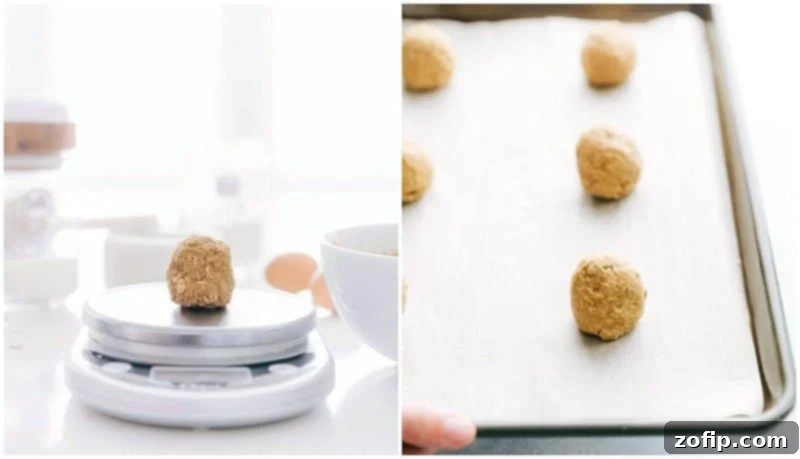
- Consider a Cookie Scoop or Food Scale for Uniformity: For consistently sized cookies that bake evenly, a cookie scoop is a fantastic and convenient tool. If you desire true precision, a food scale is even better. Aim for dough balls of about 1.7 ounces (approximately 48-50 grams) each for consistent results and to achieve a perfect batch of 15 beautifully baked cookies. Uniform size ensures all cookies finish baking at the same time.
- Cool on the Baking Sheet Briefly: After removing your perfectly baked cookies from the oven, resist the urge to immediately transfer them to a wire rack. Let them cool on the hot baking sheet for at least 5-10 minutes. This crucial resting period allows them to set up without breaking, and also helps them further develop their desired chewy texture before you carefully transfer them to a wire rack to cool completely.
Serving Suggestions and Delicious Variations
These classic oatmeal cookies are fantastic on their own, perhaps with a sprinkle of flaky sea salt, offering a pure taste of comfort. However, their versatile nature also makes them a wonderful canvas for culinary creativity. Here are a few ideas to elevate your oatmeal cookie experience, whether for a special occasion or an everyday treat:
- Classic Pairings: Serve these warm, tender cookies with a tall, cold glass of milk for the ultimate nostalgic comfort. They also pair wonderfully with a scoop of creamy vanilla bean ice cream, a rich mug of hot coffee, or a soothing cup of tea. They make an ideal after-school snack, a satisfying breakfast treat, or a comforting dessert after any meal.
- Oatmeal Raisin Perfection: For a beloved traditional favorite, simply fold in 1 cup of plump, juicy raisins during the last stage of mixing the dough. For an extra soft and succulent texture, consider soaking the raisins in warm water for 10-15 minutes, then draining them thoroughly before adding them to the dough.
- Decadent Oatmeal Chocolate Chip: If you crave chocolate, this is an easy and delicious variation! Add 1 cup of your favorite chocolate chips – semi-sweet, milk chocolate, dark chocolate, or even white chocolate chips all work wonderfully. You can also use a mix of different chocolate varieties for a more complex flavor profile.
- Crunchy Oatmeal Nut: Incorporate 1 cup of finely chopped nuts like pecans, walnuts, or even almonds for a delightful textural crunch and a rich, earthy flavor. Toasting the nuts lightly in a dry pan for a few minutes before adding them to the dough can significantly enhance their aroma and deepen their nutty taste.
- Tangy Oatmeal Cranberry: For a bright and tangy alternative to raisins, dried cranberries offer a beautiful pop of color and a zesty flavor that complements the sweet oats perfectly. Add 1 cup of dried cranberries for a festive twist, especially around the holidays, or anytime you want a little burst of fruitiness.
- Warm Spiced Oatmeal Cookies: For a deeper, more aromatic, and truly comforting cookie, consider enhancing the spice profile. In addition to the specified cinnamon, add 1/4 teaspoon each of ground nutmeg and ground cloves with the other dry ingredients. This blend creates an inviting, warmly spiced cookie that’s perfect for autumn or winter.
- Tropical Coconut Delight: For an extra layer of texture and a hint of tropical sweetness, fold in 1/2 to 1 cup of shredded coconut (sweetened or unsweetened, depending on your preference) along with the oats. This variation adds a lovely chewiness and a subtle exotic flavor.
Storage and Freezing Guidelines
Proper storage is essential to ensure your homemade oatmeal cookies remain fresh, soft, and delicious for as long as possible.
For Baked Cookies:
Once your oatmeal cookies have completely cooled to room temperature, store them in an airtight container. Keep the container at room temperature. They will remain wonderfully soft and chewy for up to one week. However, for the absolute best quality, texture, and flavor, it is recommended to enjoy them within the first 2-3 days of baking.
Freezing Oatmeal Cookie Dough:
Freezing cookie dough is a fantastic way to prepare ahead and enjoy fresh-baked cookies on demand!
- Portion and Flash Freeze: Scoop out individual cookie dough balls, just as you would for immediate baking. Place them onto a baking sheet lined with parchment paper, ensuring there is a little space between each ball so they don’t stick together. Freeze for at least 1 hour, or until the dough balls are solid.
- Transfer to Long-Term Storage: Once frozen solid, transfer the individual dough balls to a freezer-safe zip-top bag or an airtight freezer-friendly container. This prevents them from sticking together. They can be stored in the freezer for up to 3 months. Don’t forget to label the bag or container with the date and baking instructions!
- Baking from Frozen: When you’re ready for a fresh batch, simply place the frozen dough balls onto a prepared baking sheet. You can bake them directly from frozen, adding an additional 3-5 minutes to the typical baking time (so, approximately 10-14 minutes total). Alternatively, you can allow them to thaw in the refrigerator for a few hours before baking as usual. This method is perfect for enjoying warm, fresh-baked cookies anytime without the full preparation effort!
Explore More Amazing Cookie Recipes:
Cookies
BEST Snickerdoodle Recipe
Desserts
Oatmeal Creme Pies
Desserts
Fudgy Brownie Cookies
Desserts
Funfetti Cake Batter Cookies

★★★★★ (4.80 from 30 votes)
Print Recipe
The Best Homemade Oatmeal Cookies
By Chelsea Lords
These oatmeal cookies are the epitome of soft, chewy, and flavor-packed goodness. Enjoy them plain, or customize with your favorite mix-ins like raisins, nuts, or chocolate chips for an irresistible homemade treat.
Equipment
- Blender or food processor (for making oat flour)
- Standard baking sheet (15″ x 10″)
- Parchment paper or silicone baking mat
- Hand mixer (or stand mixer with paddle attachment)
- Large mixing bowls
- Cookie scoop (optional, for uniformly sized cookies)
- Wire cooling rack
Ingredients
- 8 tablespoons (1/2 cup) unsalted butter, at room temperature (softened but not melted)
- 1/2 cup dark brown sugar, firmly packed (or light brown sugar)
- 1/2 cup granulated sugar
- 1 large egg, at room temperature
- 2 teaspoons pure vanilla extract
- 1/4 cup oat flour (see Recipe Note 1 for making your own)
- 1/2 teaspoon baking soda
- 1/2 teaspoon fine sea salt
- 1/2 tablespoon cornstarch
- 1/2 teaspoon ground cinnamon (optional, see Recipe Note 2 for variations)
- 1-1/2 cups old-fashioned rolled oats (do NOT use quick oats or instant oats)
- 1/2 cup + 3 tablespoons all-purpose flour (measured by spooning and leveling)
- Flaky sea salt, for topping cookies (optional, for a gourmet touch)
- Optional Mix-Ins (add during step 3, up to 1 cup total):
- 1 cup raisins (for extra juiciness, soak in warm water for 10 mins and drain before adding)
- 1 cup chocolate chips (milk, semi-sweet, dark, or white)
- 1 cup chopped nuts (pecans, walnuts, almonds – lightly toasted for best flavor)
- 1 cup dried cranberries
Instructions
- Prepare Butter: Remove unsalted butter from the fridge at least 30 minutes in advance to allow it to reach proper room temperature (softened but still cool to the touch).
- Cream Wet Ingredients: In a large mixing bowl, using a hand mixer (or a stand mixer fitted with the paddle attachment), cream together the room temperature butter, dark brown sugar, and granulated sugar until the mixture is light, fluffy, and creamy. This should take at least 3 minutes on medium speed. Beat in the large egg and vanilla extract until the mixture is well combined and smooth, scraping down the sides of the bowl as needed to ensure everything is incorporated.
- Combine Dry Ingredients (excluding main flour): To make oat flour (if you don’t have it pre-made), blend 1/4 cup of old-fashioned oats in a blender or food processor until it resembles a fine flour. Measure carefully to ensure you have an exact 1/4 cup. Add the oat flour, baking soda, fine sea salt, cornstarch, and ground cinnamon (if using) directly into the bowl with the wet ingredients. Mix on low speed until all these dry ingredients are just combined with the wet mixture. Then, gently fold in the 1-1/2 cups of old-fashioned rolled oats and any optional mix-ins (raisins, chocolate chips, nuts, etc.) until evenly distributed.
- Add All-Purpose Flour and Chill Dough: Gradually add the all-purpose flour to the mixture. Remember to measure the flour by spooning it into the measuring cup and leveling it off. Mix on low speed until the flour is just incorporated into the dough. Be careful not to overmix; stop as soon as no dry streaks of flour remain. Cover the cookie dough tightly with plastic wrap and refrigerate for at least 1 hour. Chilling is essential to prevent the cookies from spreading too much during baking and allows the flavors to deepen and meld beautifully.
- Preheat Oven and Prepare Baking Sheet: While the dough is chilling, preheat your oven to 350°F (175°C). Prepare a large baking sheet by lining it with parchment paper or a silicone baking mat.
- Portion and Re-Chill Dough: Scoop out individual cookie dough balls. For consistent size and even baking, aim for about 1.7 ounces (approximately 48-50 grams) per cookie, which typically yields about 15 cookies for this recipe. Place the dough balls onto the prepared baking sheet, ensuring there is ample space between them (no more than 9 cookies per standard baking sheet to prevent crowding). Return the baking sheet with the portioned dough to the fridge for another 10 minutes; this extra chill helps them maintain their shape even better in the oven.
- Bake Cookies: Bake the cookies for 7–9 minutes, or until the edges are lightly golden brown and set, but the centers still appear slightly soft, pale, and perhaps a little glossy. It’s crucial to slightly under-bake these cookies for that incredibly soft, chewy, and tender texture. They will continue to set and firm up on the hot baking sheet after being removed from the oven. If desired, immediately sprinkle the warm cookies with a pinch of flaky sea salt for an enhanced flavor.
- Cool and Serve: Allow the cookies to cool on the baking sheet for at least 5-10 minutes before carefully transferring them to a wire rack to cool completely. This helps them set up without breaking and further develops their chewy texture. These cookies are best enjoyed warm or at room temperature within 2–3 days for optimal freshness and texture.
Recipe Notes
Note 1: Making Your Own Oat Flour. It’s surprisingly easy and cost-effective to make your own oat flour if you don’t have it on hand. Simply place old-fashioned rolled oats into a high-speed blender or food processor and process until they reach a fine, flour-like consistency. Stop and stir occasionally to ensure all oats are finely ground, then measure the required amount. Make sure it’s smooth and consistent, without large oat pieces.
Note 2: Customizing Spice Levels. The hint of ground cinnamon in these cookies adds a wonderful warmth and classic flavor. If you prefer a pure, unadulterated oat flavor, you can certainly omit it. For those who love a more robustly spiced cookie, consider adding an additional 1/8 teaspoon each of ground nutmeg and ground cloves along with the cinnamon for a truly aromatic and comforting treat.
Storage for Baked Cookies: Store completely cooled, baked cookies in an airtight container at room temperature for up to a week. They are typically at their absolute best, offering peak freshness and chewiness, within the first 2-3 days.
Nutrition Information (Approximate per serving)
Calories: 196 kcal |
Carbohydrates: 29g |
Protein: 3g |
Fat: 8g |
Saturated Fat: 4g |
Polyunsaturated Fat: 1g |
Monounsaturated Fat: 2g |
Trans Fat: 0.3g |
Cholesterol: 29mg |
Sodium: 45mg |
Potassium: 66mg |
Fiber: 1g |
Sugar: 14g |
Vitamin A: 215IU |
Vitamin C: 0.003mg |
Calcium: 18mg |
Iron: 1mg
Disclaimer: Nutrition information is an estimate calculated automatically and should be used as an approximation. Actual values may vary based on specific ingredients, portion sizes, and preparation methods.
Enjoyed this recipe and baked a batch? We’d absolutely love to hear from you! Leave a comment below and share your baking experience, tips, or favorite variations with our community!
Frequently Asked Questions About Oatmeal Cookies
Q: What’s the difference between old-fashioned oats and quick oats in cookies, and why does it matter?
A: Old-fashioned (or rolled) oats are whole oat groats that have been steamed and flattened. They are thicker and retain their shape well, providing a wonderfully chewy, hearty texture and robust flavor in cookies. Quick oats, on the other hand, are cut into smaller pieces and pre-cooked, which makes them absorb liquids much faster. This rapid absorption can result in a more crumbly, mushy, or even gummy texture in baked goods. For the best soft, chewy, and structurally sound oatmeal cookies, old-fashioned rolled oats are always recommended.
Q: Why do my oatmeal cookies spread too much and become flat?
A: Several factors can cause cookies to spread excessively. The most common reasons include butter being too warm or melted (it should be softened, not greasy), insufficient chilling time for the dough, over-mixing the dough (which develops gluten and makes it more elastic, leading to spreading), or using too much leavening agent (like baking soda) or too little flour. Ensure your butter is at room temperature but still firm, chill your dough for at least an hour as instructed, and measure all your ingredients accurately, particularly flour and leavening agents.
Q: Can I make this oatmeal cookie recipe gluten-free?
A: Yes, you can adapt this recipe to be gluten-free. You would need to use certified gluten-free old-fashioned oats and replace the all-purpose flour with a high-quality gluten-free all-purpose flour blend. It’s often beneficial to choose a GF blend that already contains xanthan gum or add a small amount (about 1/4 teaspoon per cup of GF flour) to provide necessary structure. Ensure that your homemade oat flour is also made from certified gluten-free oats. Always double-check all ingredient labels to confirm they are gluten-free.
Q: How can I prevent my oatmeal cookies from becoming dry and hard after baking?
A: The key to consistently soft and tender cookies lies primarily in careful baking and proper ingredient balance. The most common culprit for dry, hard cookies is over-baking. Remove cookies from the oven when the edges are set and lightly golden, but the centers still look slightly soft and pale. They will continue to cook and set as they cool on the baking sheet. Additionally, using accurate flour measurements (spooned and leveled), incorporating dark brown sugar (which adds moisture due to its molasses content), and including cornstarch (which tenderizes the dough) in this recipe are all designed to help maintain a wonderfully moist and chewy texture.
Q: Can I add different mix-ins to these oatmeal cookies?
A: Absolutely! This recipe provides a fantastic base for customization. You can easily add up to 1 cup of various mix-ins to the dough during step 3, such as chocolate chips (milk, dark, or white), chopped nuts (pecans, walnuts, almonds), dried cranberries, or a combination of these. For a spiced twist, you can also add a pinch of nutmeg and cloves, as mentioned in the recipe notes. Feel free to experiment and discover your favorite combinations!