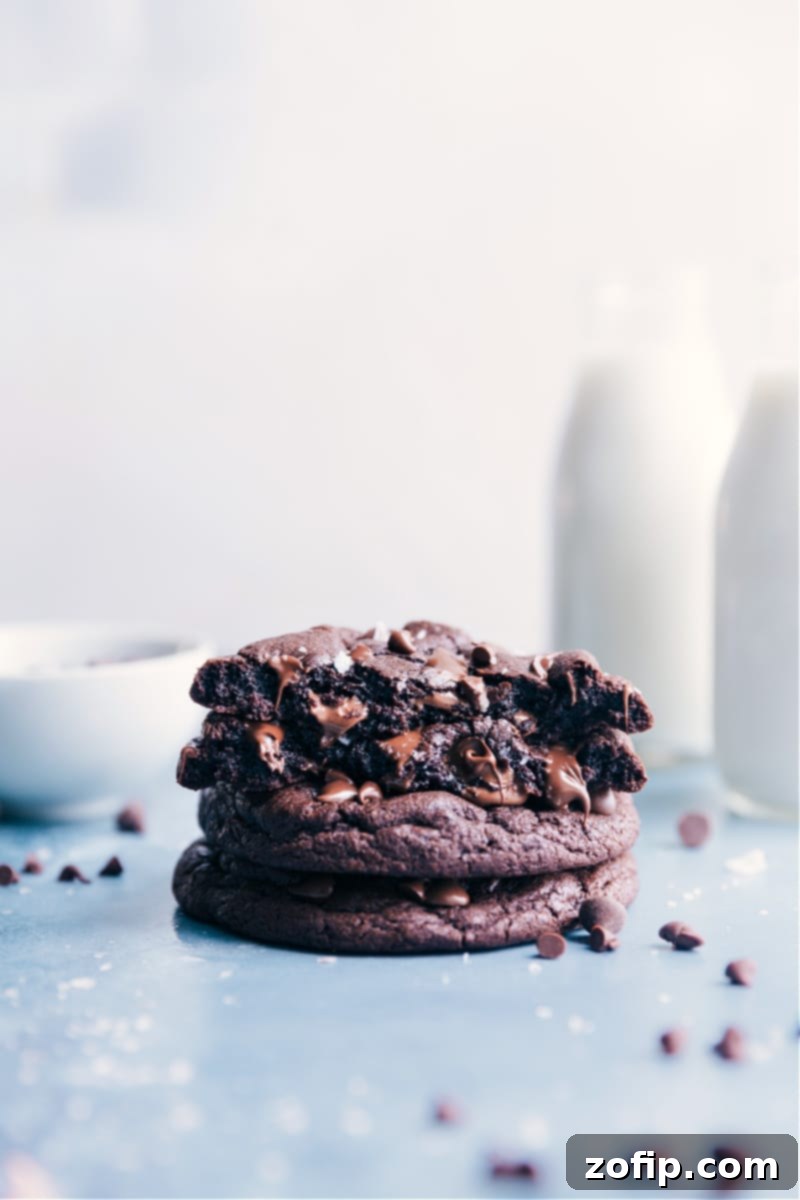
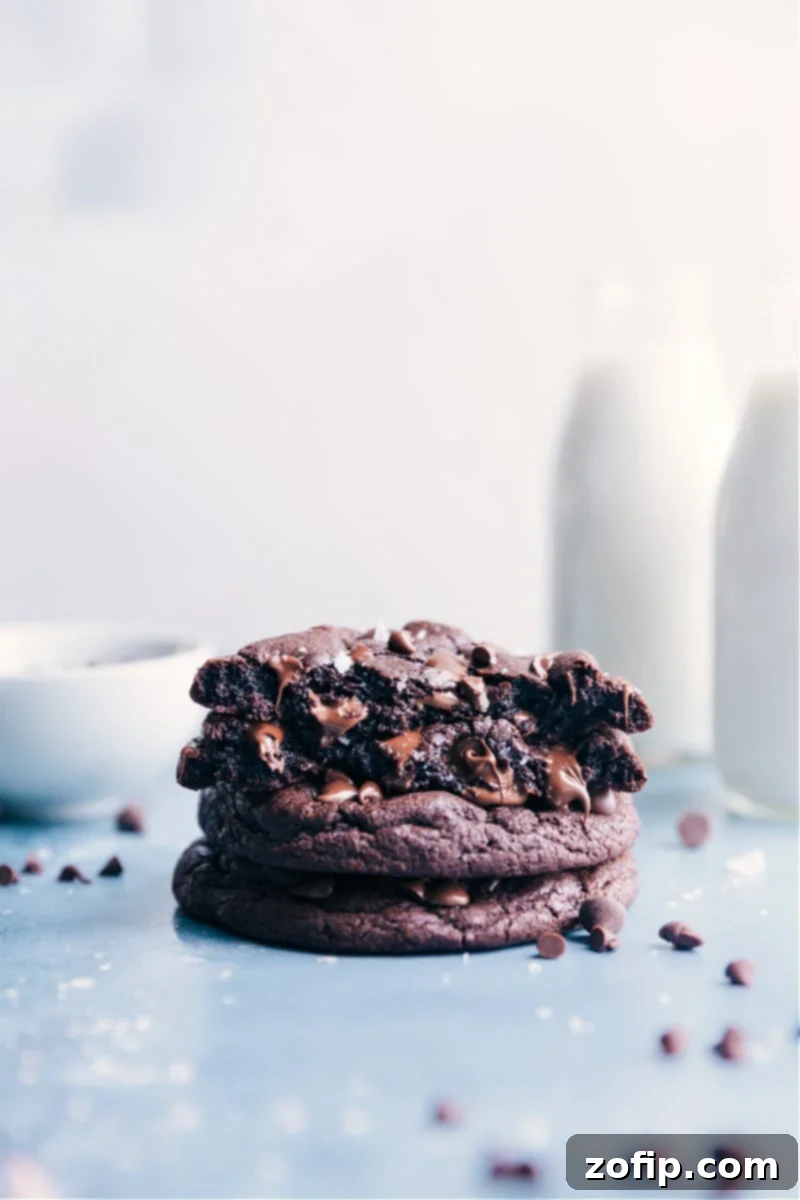
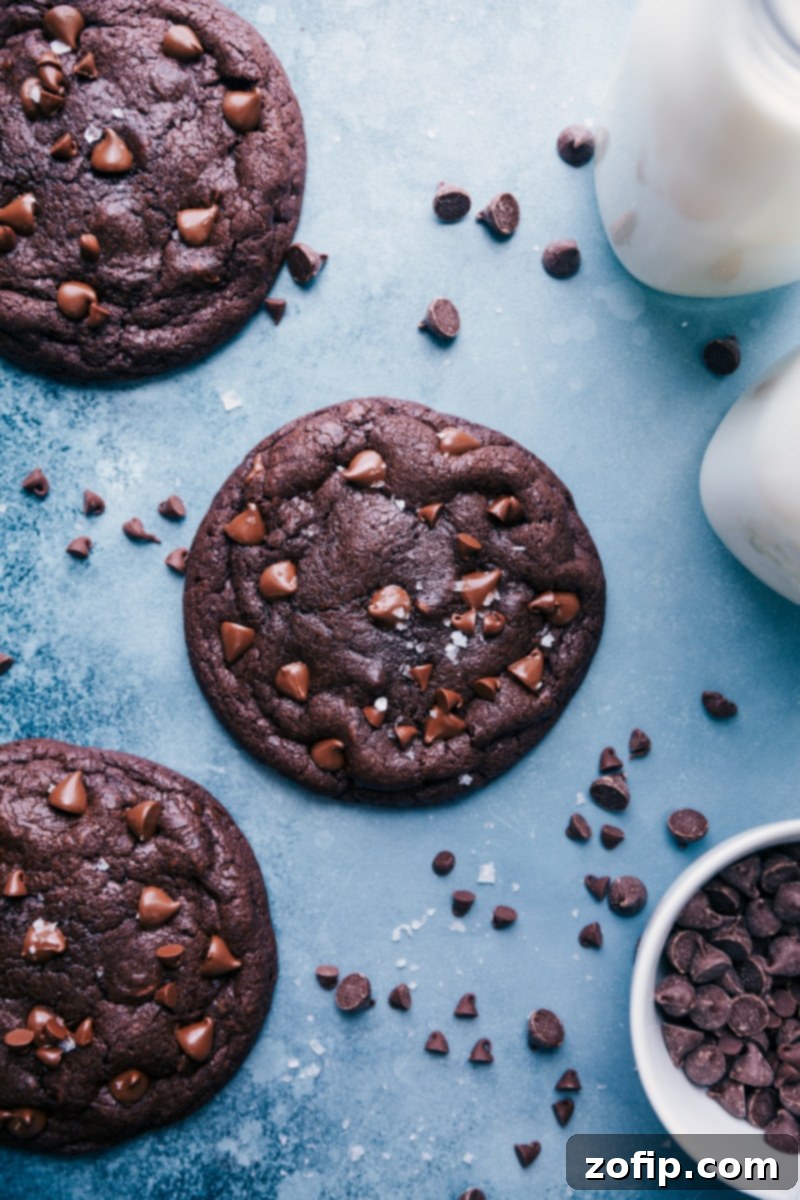
Bakery Style Chocolate Cookies are more than just a treat; they’re an experience. Imagine sinking your teeth into a colossal cookie, perfectly balancing a wonderfully soft, chewy texture with a gloriously rich chocolate flavor. These aren’t your average cookies; they boast irresistibly gooey, thick centers beautifully contrasted by slightly crisp edges, embodying everything you love about professional bakery creations. Prepare to impress with these ultimate chocolate-loaded delights.

Author’s Note
A Chocolate Lover’s Dream Come True!
As a passionate baker, I’ve spent countless hours in the kitchen, experimenting with chocolate cookie recipes. For years, I faced disappointment, encountering cookies that were either too dry, lacked depth of flavor, or simply didn’t live up to my high expectations. This journey of trial and error ultimately led me to perfect my favorite Chocolate Cookies recipe, a consistent hit in my home and a true chocolate lover’s dream.
However, that beloved recipe, while fantastic for smaller, 1-tablespoon sized cookies, didn’t quite translate to the grand, impressive scale of bakery-style cookies I craved. I envisioned giant, substantial cookies that commanded attention with their size and delivered an unparalleled texture. This sparked a new quest: to create the ultimate big, bakery-style chocolate cookie.
After extensive testing, tweaking ratios, and experimenting with various ingredients and techniques, I am thrilled to finally share the culmination of my efforts. These cookies are truly monumental – each weighing approximately 4 ounces – and are incredibly moist, intensely rich, and absolutely loaded with chocolate. They are everything a bakery-style chocolate cookie should be and more, promising a decadent experience with every single bite.
Unlocking Perfection: The Special Ingredients for Bakery Style Chocolate Cookies
Achieving that signature bakery-style texture and profound chocolate flavor isn’t just about technique; it starts with the right ingredients. Two key players in this recipe—cake flour and Dutch-process cocoa powder—are non-negotiable for success. Understanding their unique roles will elevate your baking and ensure your cookies are nothing short of spectacular.
Dutch-process Cocoa Powder: The Secret to Deep Chocolate Flavor and Color
Dutch-process cocoa powder is a game-changer for these cookies, providing a distinctly rich, deep chocolate flavor and a beautiful, darker color that is visually enticing. This type of cocoa has been treated with an alkali solution, which neutralizes its acidity (raises its pH). This process impacts not only its color but also its flavor profile, making it smoother and less bitter than natural cocoa. Furthermore, Dutch-process cocoa reacts differently with leavening agents; since it’s not acidic, it typically needs to be paired with baking soda, which is what we do in this recipe.
- Why Dutch-process? It delivers an unparalleled rich flavor, a darker, more appealing color, and contributes significantly to the softer, chewier texture characteristic of bakery-style cookies. Using regular, natural cocoa powder will result in a drier cookie with a lighter color and a slightly more acidic flavor profile, which isn’t what we’re aiming for here.
- Recommended Brands: High-quality Dutch-process cocoa is crucial. Popular and easily accessible options include Hershey’s® “Special Dark” and Ghiradelli® cocoa, both widely available at most grocery stores. These brands offer consistent quality and reliable results.
- Key Identification: Always ensure the label explicitly states “Dutch process” or “Dutched,” and that it is unsweetened. This guarantees you’re using the correct ingredient for the intended outcome.
Cake Flour: The Foundation for Unbelievably Soft and Gooey Textures
Cake flour is another crucial component that truly distinguishes these bakery-style cookies. Its unique properties are essential for achieving the delicate, tender crumb and irresistible gooeyness that makes these cookies so special. This isn’t just any flour; it’s specifically milled for fine baking.
- What makes it special? Cake flour is milled more finely than all-purpose flour and has a significantly lower protein content (typically 5-8% compared to 10-12% in all-purpose). This lower protein content means less gluten development when mixed, resulting in a remarkably softer, more tender, and gooier cookie texture. It provides the perfect delicate structure without becoming tough or dense.
- Where to find it: You can typically find cake flour in the baking aisle of most well-stocked grocery stores, often alongside other specialized flours. Look for brands like Swan’s Down or King Arthur. Do not substitute with homemade cake flour (all-purpose mixed with cornstarch), as it doesn’t yield the same precise results required for this recipe.
- Measuring Cake Flour: Proper measurement is key. Spoon the cake flour into your measuring cup until it’s overfilled, then level it off with the back of a straight edge (like a butter knife). Avoid scooping directly from the bag, as this can pack too much flour into the cup, leading to a dry cookie.
Essential Tools for Bakery Style Chocolate Cookies Success
While special ingredients lay the groundwork, having the right tools makes the baking process smoother and ensures your cookies achieve that coveted bakery-quality finish. These are not just recommendations; they are key to consistency and perfection.
- Silicone Baking Mat: This is a secret weapon for evenly baked cookies. A silicone liner, such as a Silpat, provides superior heat distribution compared to parchment paper, preventing overly crispy bottoms and promoting a consistent bake. It also ensures easy release and makes cleanup a breeze. If a silicone mat isn’t available, high-quality parchment paper is the next best alternative.
- Food Scale: Precision is paramount in baking, especially when striving for uniform, professional-looking cookies. A food scale allows you to measure dough balls to exact specifications (e.g., 4 ounces each), ensuring they bake evenly and result in perfectly sized, visually appealing bakery-style cookies every single time. This consistency is a hallmark of professional baking.
- Electric Mixer (Hand or Stand): Achieving the thick, creamy, peanut butter-like consistency for the butter and sugar mixture is crucial for the cookie’s texture. A robust electric mixer, either a handheld or a stand mixer with a paddle attachment, is indispensable for this task. A wooden spoon simply cannot provide the necessary aeration and thorough blending required to reach this critical stage, which impacts the cookie’s final softness and chewiness.
Expert Tips for Unforgettable Bakery Style Chocolate Cookies
Baking is both an art and a science, and these expert tips will guide you to bakery-quality results, ensuring every batch of your chocolate cookies is a resounding success.
- Adhere to the Recipe – No Ingredient Swaps: This recipe has been meticulously tested and refined to deliver the best possible outcome. Each ingredient plays a specific role in achieving the desired flavor, texture, and structure. Substituting key components like Dutch-process cocoa or cake flour, or altering ratios, can drastically change the final product. For truly exceptional cookies, stick to the ingredients and measurements as listed.
- Choose Your Chocolate Wisely: The type of chocolate chips you use profoundly impacts the flavor profile. While I personally love a blend of semi-sweet and milk chocolate for a balanced sweetness and deep cocoa notes, feel free to use your favorite combination. Dark chocolate chips can add an intense richness, while white chocolate chips offer a sweet contrast. Consider using a mix of mini and regular-sized chips for varied texture in each bite.
- Don’t Skip the Sea Salt Sprinkle: A light sprinkle of flaky sea salt on top of the warm cookies immediately after baking is a small detail that makes a huge difference. The salt crystals not only visually enhance the cookies but also provide a crucial balance to the sweetness and intensify the rich chocolate flavor, creating a sophisticated sweet-and-salty dynamic.
- Embrace the Chill Time: Chilling the cookie dough is not merely a suggestion; it’s a vital step for achieving thick, flavorful, and perfectly structured bakery-style cookies. As the dough chills, the fats solidify, preventing the cookies from spreading too much in the oven. More importantly, the flavors have time to meld and deepen, resulting in a more complex and satisfying taste. Aim for at least 45 minutes to 2 hours, or even overnight for the best results.
- Room Temperature Ingredients: Ensure butter and egg are at proper room temperature. Room temperature butter creams better with sugar, incorporating more air, which leads to a lighter, softer texture. A cold egg might cause the butter to seize, resulting in a lumpy batter.
- Avoid Overmixing: Once the flour is added, mix only until just combined. Overmixing develops the gluten in the flour, which can lead to tough, dense cookies instead of the desired soft and chewy texture.
- Proper Flour Measurement: As noted previously with cake flour, accurate measurement is crucial. Always spoon flour into your measuring cup and level it with a straight edge to avoid packing too much flour, which can dry out your cookies.
Storage Solutions for Your Bakery Style Chocolate Cookies
Maximizing Freshness and Enjoyment
While these Bakery Style Chocolate Cookies are truly best enjoyed on the day they are baked, their irresistible qualities mean you’ll want to savor them for as long as possible. Proper storage is key to maintaining their delicious texture and flavor.
- Storing Baked Cookies: Once completely cooled, store your Bakery Style Chocolate Cookies in an airtight container at room temperature. This helps preserve their soft, chewy texture. They will remain fresh and delightful for approximately 3-4 days. While they can last up to a week, you might notice a slight decline in texture and flavor after the initial 3-4 days. For a warm, gooey treat on subsequent days, gently rewarm them in a microwave in 10-15 second increments until they reach your desired temperature.
- Freezing Cookie Dough for Future Cravings: For ultimate convenience and to always have freshly baked cookies on hand, I highly recommend freezing the cookie dough instead of baking and then freezing the finished cookies. To do this, simply scoop your chilled cookie dough into individual balls (following the 4-ounce size for bakery-style, or smaller if preferred) and place them on a parchment-lined sheet pan. Freeze until the dough balls are completely solid. Once frozen, transfer these solid dough balls to an airtight freezer-safe bag or container. They can be stored in the freezer for up to 3 months, ready to bake whenever a craving strikes.
- Baking from Frozen: The beauty of freezing dough is that you can bake these cookies straight from frozen! There’s no need to thaw the dough, which saves considerable time. Simply preheat your oven as usual, place the frozen dough balls on a lined baking sheet, and add an additional 2-4 minutes to the recommended baking time. Watch for the edges to be lightly browned and the centers to still appear soft and slightly underbaked for that perfect fudgy interior.
Explore More Irresistible Cookie Recipes
If you’re a cookie enthusiast like me, you’ll love diving into these other fantastic recipes. From sweet and salty delights to classic comforts, there’s a cookie for every occasion and craving!
Desserts
Salted Caramel Cookies
Desserts
Copycat Gideon’s Bakehouse Cookie Recipe
Desserts
Chocolate Chip Pudding Cookies
Desserts
Circus Animal Cookies
Print Recipe
Bakery Style Chocolate Cookies
Chelsea Lords
30 minutes
15 minutes
1 hour
1 hour 45 minutes
6 cookies
Video Overview
Equipment You’ll Need
- Electric Hand Mixer or a Stand Mixer with paddle attachment
- Large Sheet Pan (approximately 15″ x 21″)
- Silicone Baking Mat or high-quality parchment paper
- Food Scale for precise dough portioning
Ingredients
These quantities are calibrated for 6 large, bakery-style cookies. Ensure all cold ingredients are at room temperature unless otherwise specified for optimal mixing.
- 1/2 cup unsalted butter (cubed and softened slightly)
- 3/4 cup light brown sugar (firmly packed)
- 1 large egg (room temperature)
- 1 teaspoon pure vanilla extract
- 1/2 teaspoon cornstarch
- 1/2 teaspoon baking soda
- 1/2 teaspoon fine sea salt (plus extra for sprinkling)
- 1/4 cup Dutch process cocoa powder (see Note 1 for brand recommendations)
- 1/2 cup cake flour (spooned and leveled, see Note 2)
- 3/4 cup all-purpose flour (spooned and leveled, see Note 3)
- 1/2 cup mini chocolate chips
- 1 cup milk chocolate chips or semi-sweet chocolate chips (your preferred blend, see Note 4)
Step-by-Step Instructions
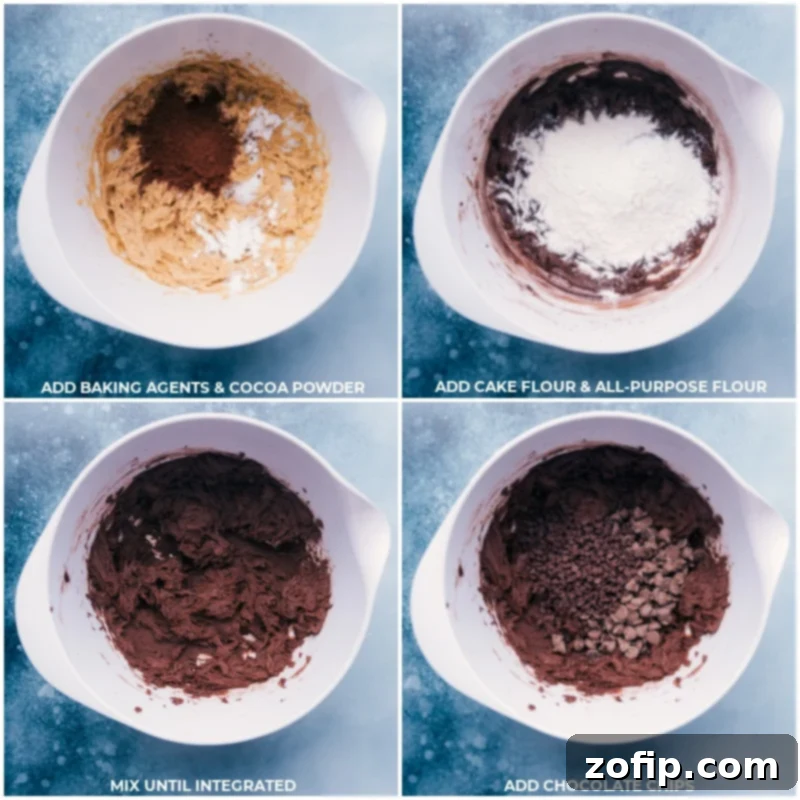
- Begin by preparing your butter: cut unsalted butter, directly from the fridge, into small cubes. In a large mixing bowl (or the bowl of a stand mixer fitted with the whisk or paddle attachment), combine the cubed butter and light brown sugar. Beat these two ingredients on medium speed until they are completely combined and creamy, typically about 3–4 minutes. The mixture should achieve a consistency that resembles smooth, thick peanut butter, light in color and fluffy.
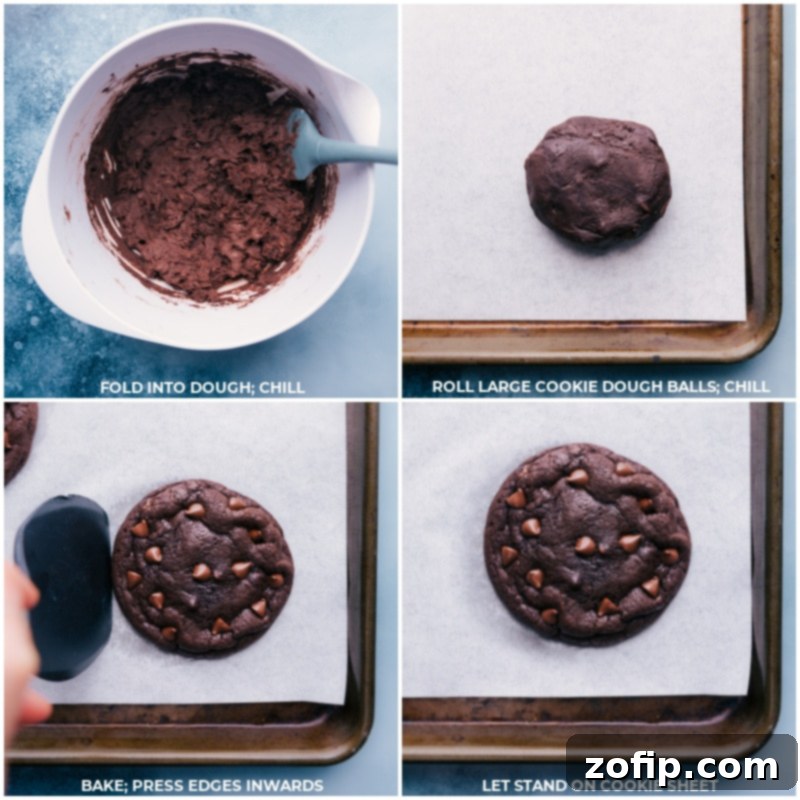
- Next, incorporate the wet ingredients: add the large egg and vanilla extract to the butter mixture and beat until just combined. Be careful not to overmix at this stage. Then, add the dry leavening and flavoring agents: cornstarch, baking soda, fine sea salt, and Dutch-process cocoa powder. Beat again until these are just incorporated into the mixture. Remember to stop and scrape down the sides of the bowl as needed to ensure all ingredients are thoroughly mixed. Finally, gently mix in the cake flour and all-purpose flour (refer to Note 3 for proper flour measurement technique) until just combined. The last step is to fold in both the mini and regular-sized chocolate chips using a spatula. Once mixed, cover the bowl tightly with plastic wrap and refrigerate the dough for a minimum of 45 minutes to 2 hours. This chilling step is crucial for flavor development and preventing spread during baking (see Note 5).
- After the dough has sufficiently chilled, remove it from the fridge. Using a food scale for accuracy, form 6 equally sized cookie balls. Each ball should weigh approximately 4 ounces (about 117 grams). Roll them into large, smooth spheres and place them on a parchment-lined sheet pan or plate. Return these formed dough balls to the fridge or freezer for an additional 15 minutes to firm them up before baking. This second chill helps maintain their shape and prevents spreading. If you prefer smaller cookies, refer to Note 7 for adjusted portion sizes and baking times.
- While the dough balls are undergoing their final chill, preheat your oven to 325°F (160°C). Line a large baking sheet with a silicone baking mat (or parchment paper). Carefully place 3 cookie dough balls on the prepared pan, ensuring ample space between each cookie to allow for generous spreading during baking. Bake for 13–18 minutes. For the ultimate fudgy, chewy cookie experience, it’s best to err on the side of underbaking; I find 15–16 minutes to be the perfect sweet spot (see Note 6 for visual cues). Immediately upon removing the cookies from the oven, use the back of a metal spatula to gently press the edges inward, shaping them into perfectly round, thick bakery-style cookies. This trick creates those beautiful crinkly edges. If desired, press a few extra chocolate chips onto the tops of the warm cookies for an even more enticing appearance. Allow the cookies to cool on the baking pan for 10–15 minutes before carefully transferring them to a wire rack to cool completely. Repeat the baking process with the remaining dough.
Recipe Notes for Ultimate Bakery Style Cookies
Note 1: Dutch-process Cocoa Powder Importance: The choice of cocoa powder truly distinguishes these cookies. Dutch-process cocoa powder, with its reduced acidity, imparts a significantly more robust, intensely deep chocolate flavor and a richer, darker color compared to natural cocoa powder. Using plain natural cocoa powder will result in a less flavorful and drier cookie, so it is strongly not recommended for this recipe. Excellent and widely available Dutch-process options include Hershey’s® “Special Dark” cocoa powder and Ghiradelli® Dutch Cocoa.
Note 2: The Magic of Cake Flour: Cake flour is fundamental to achieving the extraordinary softness and fluffiness of these cookies. Its low protein content results in minimal gluten development, yielding a tender crumb that is simply unmatched. The combination of cake flour and all-purpose flour in this recipe is meticulously balanced to create the perfect texture—soft, chewy, and slightly gooey. I highly advise against any flour substitutes or attempting to create homemade cake flour, as it will not yield the same superior results this recipe relies on.
Note 3: Accurate Flour Measurement Technique: Incorrectly measuring flour is a common pitfall that can drastically alter your cookie’s texture. If you press a measuring cup directly into a bag of cake or all-purpose flour, you will invariably pack in too much, leading to a dense, dry cookie. To measure flour accurately, first fluff the flour in its container with a spoon. Then, gently spoon the flour into your measuring cup until it overflows. Finally, use the back of a straight-edged tool, like a table knife, to level off the top. This method ensures you have the precise amount needed for soft, perfectly textured cookies. You can find a helpful video visual here.
Note 4: Chocolate Chip Selection: For a balanced and rich flavor, I prefer using a combination of regular-sized milk chocolate chips alongside mini semi-sweet chocolate chips. This blend offers varied sweetness and a wonderful textural contrast. If your preference leans towards less sweet or more intense chocolate, opt for semi-sweet or dark chocolate chips for the regular-sized portion. My go-to brands for high-quality chocolate chips are Ghirardelli and Guittard.
Note 5: The Indispensable Chilling Time: Do not be tempted to rush or skip the chilling time for the cookie dough. This step is critical for several reasons: it allows the dry ingredients to fully hydrate, enhancing the cookie’s texture, and more importantly, it solidifies the butter, which prevents the cookies from spreading excessively in the oven. Skipping this step will likely result in thin, flat cookies. Proper chilling ensures your cookies bake up thick, chewy, and rich in flavor.
Note 6: Perfect Baking for Fudgy Interiors: Overbaking these cookies is the quickest way to compromise their incredible taste and texture, turning them dry and crumbly. The goal is a slightly underbaked cookie, which guarantees a soft, gloriously chewy, and flavorful interior. Remember that cookies continue to cook for a few minutes on the hot baking pan after they’ve been removed from the oven due to residual heat. Look for visual cues such as lightly browned and firm edges, while the center should still appear soft and set but not overly gooey or wet. This ensures that ultimate fudgy texture.
Note 7: Adapting for Smaller Cookies: I’ve successfully experimented with making smaller versions of these delightful cookies, and the results are equally thrilling! If you prefer a more modest-sized cookie, after the initial dough chilling, roll evenly sized cookie dough balls, each containing a packed 2 tablespoons of dough (approximately 40 grams). Chill these smaller rolled dough balls for 30 minutes before baking. Bake them for 10–14 minutes, or until the centers are no longer glossy. Immediately out of the oven, working quickly, gently press the edges inward with a metal spatula to shape them, and optionally, press a few extra chocolate chips into their tops for visual appeal. Allow them to stand on the cookie sheet for 5 minutes before transferring to a cooling rack.
Storage for Baked Cookies: For optimal freshness, these cookies are truly at their best on the day they are baked. While they can last up to a week, their texture and flavor begin to diminish after 3–4 days. To store, ensure cookies are completely cooled before placing them in an airtight container and keeping them at room temperature. For a delightful rewarm, use a microwave in 10–15 second increments.
Freezing Cookie Dough: Instead of freezing baked cookies, freeze the dough! Drop portioned cookie dough balls (4 oz for large, 2 tbsp for smaller) onto a large sheet pan and freeze until solid. Once solid, transfer the frozen cookie dough balls to an airtight container or bag and freeze for up to three months. To bake, simply place frozen dough balls on a prepared baking sheet and bake straight from the freezer. There is no need to thaw, though you may need to add a few extra minutes to the baking time (typically 2-4 minutes more than recommended for fresh dough). Bake until the edges are lightly browned and the center is set but still soft for maximum chewiness.
Nutrition Information (Approximate Per Serving)
Calories: 665kcal |
Carbohydrates: 98g |
Protein: 10g |
Fat: 29g |
Saturated Fat: 18g |
Polyunsaturated Fat: 1g |
Monounsaturated Fat: 5g |
Trans Fat: 1g |
Cholesterol: 82mg |
Sodium: 46mg |
Potassium: 258mg |
Fiber: 5g |
Sugar: 53g |
Vitamin A: 582IU |
Vitamin C: 1mg |
Calcium: 77mg |
Iron: 4mg
Nutrition information is automatically calculated and should be used as an approximation.
Love this recipe? Share your thoughts below!
Your feedback helps us continue to create delicious content.