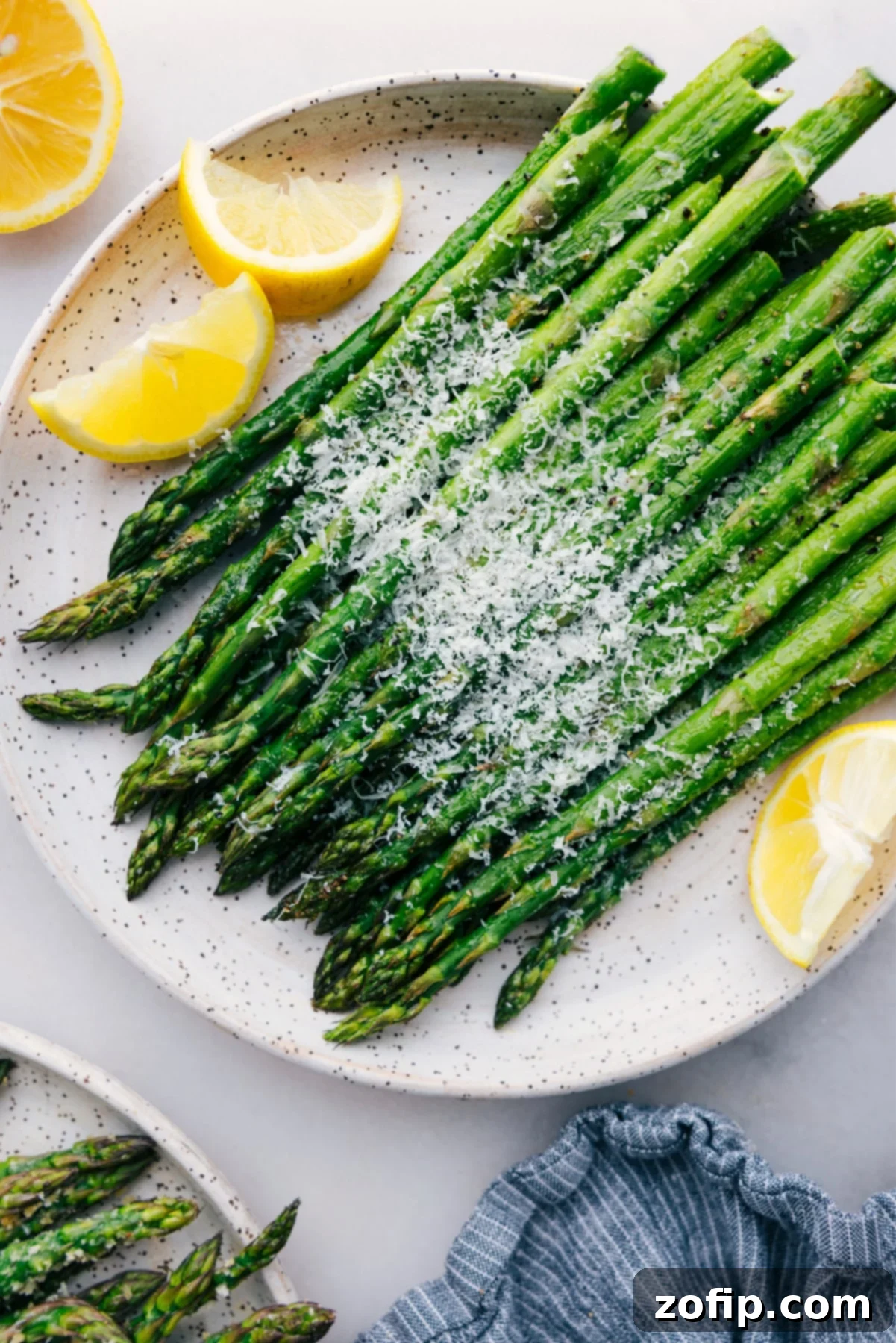
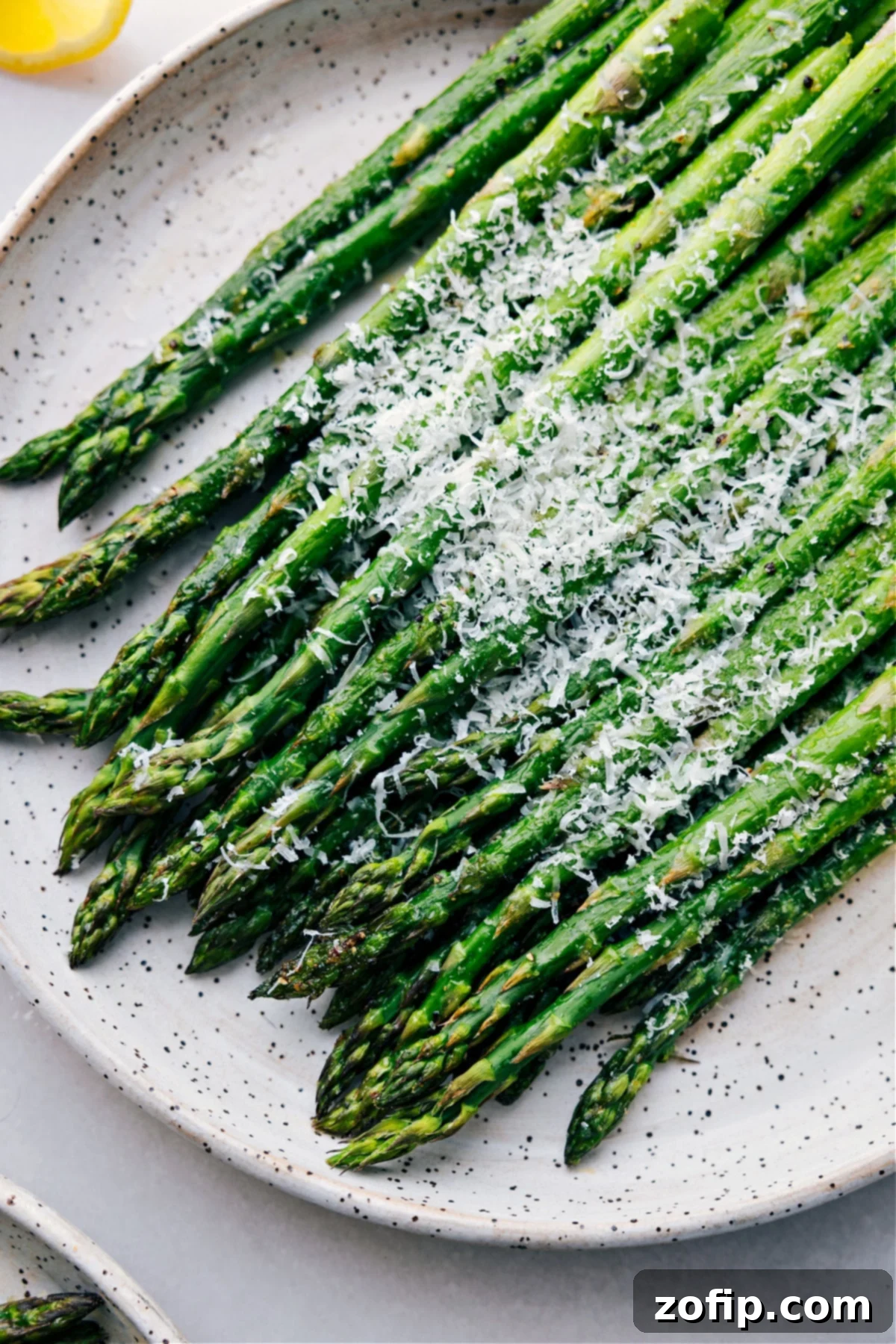
Roasted Asparagus is a simple yet incredibly flavorful side dish that can elevate any meal. This comprehensive guide will show you how to perfectly roast asparagus, offering two delicious variations: the classic tender-crisp method and a delightful crispy version with a satisfying crunch. Whether you’re a seasoned chef or a beginner, you’ll find everything you need to create an unforgettable vegetable side.
This versatile vegetable pairs wonderfully with a variety of main courses. Consider serving it alongside a vibrant Citrus Salad, rich and creamy Mashed Potatoes, or sweet and savory Roasted Carrots for a balanced and impressive meal spread. It’s the ideal addition to holiday dinners, weeknight meals, or any occasion where you want to add a touch of fresh, vibrant green to your plate.
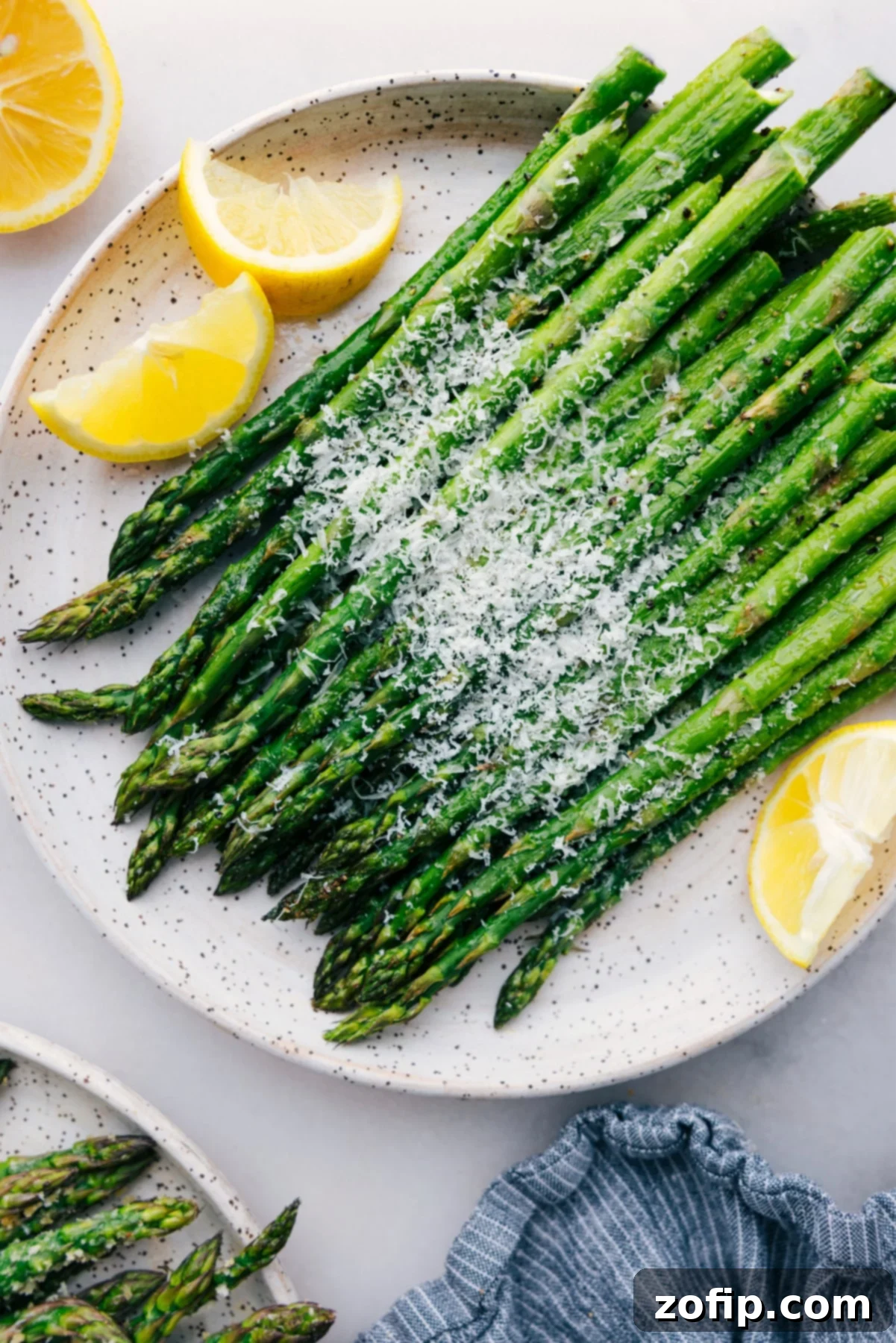
The Ultimate Roasted Asparagus Recipe
Asparagus holds a special place in my heart as a vegetable that brings both exquisite flavor and delightful texture to countless dishes. It’s a fantastic standalone side, particularly perfect for special occasions like Easter or any festive holiday dinner. When planning a hearty, meat-centric meal, roasted asparagus provides a refreshing counterpoint, adding essential nutrients and a burst of springtime freshness.
Beyond being a stellar side, roasted asparagus integrates beautifully into main courses. Some of my favorite ways to incorporate it include this satisfying One-Pan Sausage and Veggies, a light and flavorful Asparagus Salad, or a zesty One-Pan Lemon Chicken with Asparagus. The best part? Aside from its incredible taste and health benefits, it cooks incredibly fast! You can have a delicious, restaurant-quality side dish ready in about 10-15 minutes, making it perfect for even the busiest evenings.
Why Roasting is the Best Way to Cook Asparagus
When it comes to preparing asparagus, roasting stands out as the superior method for achieving optimal flavor and texture. Unlike boiling or steaming, which can often result in bland, watery spears, high-heat roasting transforms asparagus into something truly special. The dry heat of the oven allows the natural sugars within the asparagus to caramelize, intensifying its inherent sweetness and developing a richer, more complex flavor profile.
The magic of roasting lies in its ability to create a delightful contrast: a slightly crisped exterior with tender-crisp interiors. This process, often referred to as the Maillard reaction, browns the surface of the asparagus, adding depth and savory notes that cannot be achieved through other cooking techniques. Roasting at the right temperature ensures that the asparagus retains its vibrant green color and a pleasant bite, avoiding the dreaded mushy texture. It’s a simple technique that yields gourmet results, making it the preferred method for anyone seeking perfectly cooked asparagus every time.
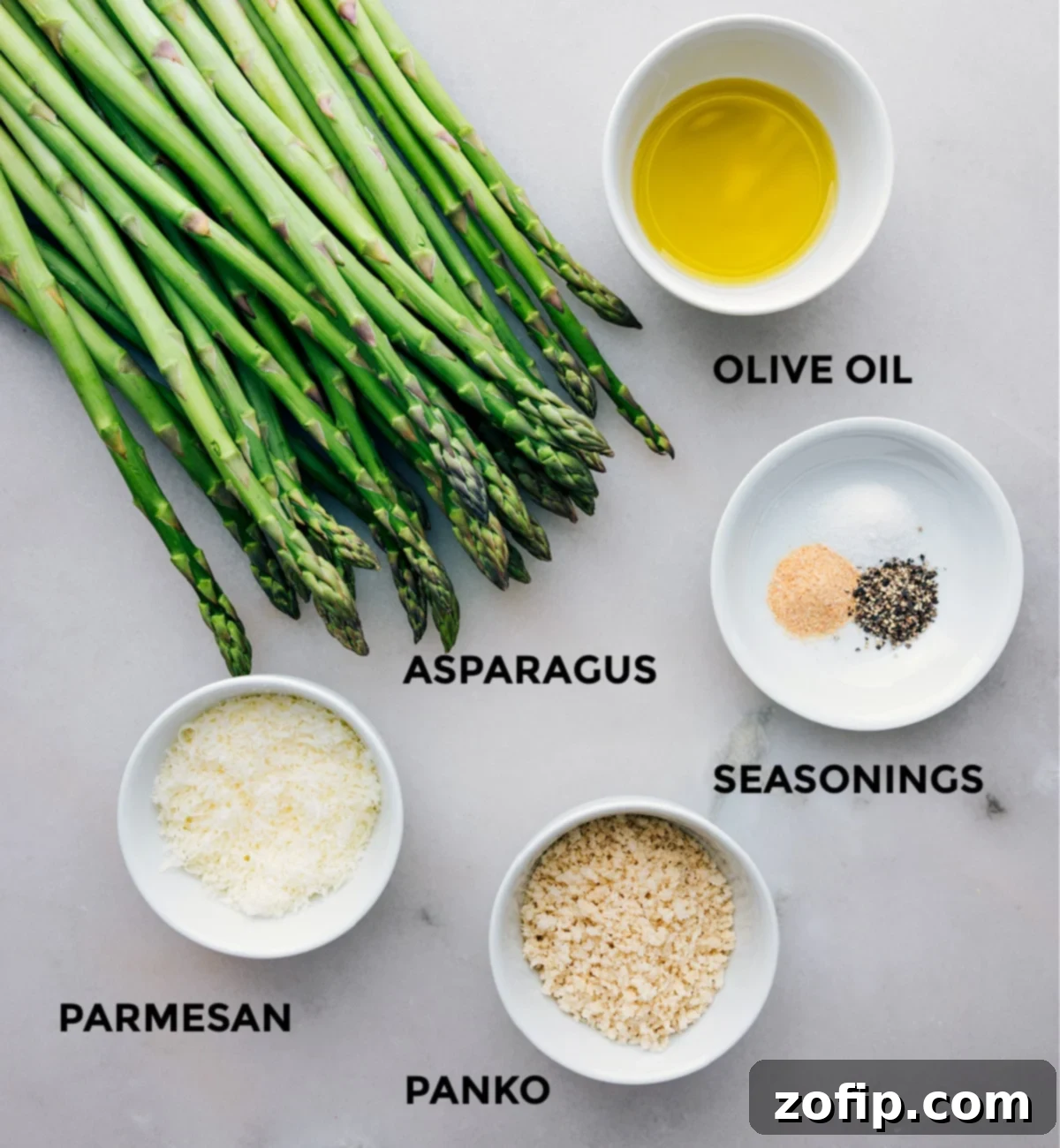
Essential Ingredients for Oven Roasted Asparagus
- Fresh Asparagus: The star of our dish! Look for firm, straight spears with closed, compact tips and moist, fresh-looking ends. Thinner stems tend to be sweeter and more delicate, while thicker spears offer a meatier bite. Both work beautifully for roasting, but adjust cooking times accordingly. Aim for bright green stalks without any signs of wilting or discoloration.
- Good Quality Olive Oil: This is crucial for achieving that perfect roasted texture and helping the seasonings adhere evenly. Olive oil facilitates the crisping process and adds a subtle richness. While extra virgin olive oil is great, a good quality regular olive oil or even avocado oil also works well, especially for high-heat cooking.
- Simple Seasonings: A basic trio of salt, freshly ground black pepper, and garlic powder is all you need to bring out the best in asparagus. These seasonings enhance its natural flavor without overpowering it. For a little extra zest, consider adding a pinch of onion powder or red pepper flakes.
- Breadcrumbs (Optional, for Crispiness): For an extra layer of texture and a delightful crunch, a sprinkle of breadcrumbs is fantastic. Panko breadcrumbs are highly recommended for their superior crispiness, but any type of plain breadcrumbs will add a nice subtle crunch.
- Parmesan Cheese (Optional, for Richness): Freshly grated Parmesan cheese melts beautifully, creating a savory, slightly salty crust on the asparagus. Always opt for fresh Parmesan and grate it yourself from a block for the best flavor and texture; pre-shredded varieties often contain anti-caking agents that can hinder proper melting. Other hard cheeses like Pecorino Romano can also be used.
- Fresh Lemon (Optional, for Brightness): A squeeze of fresh lemon juice after roasting brightens the entire dish, cutting through the richness and adding a vibrant, fresh finish. It’s a simple addition that makes a huge difference.
Quick Tip: Storing Fresh Asparagus
To keep your asparagus fresh for longer, trim about an inch off the bottom of the stalks. Stand them upright in a glass with about an inch of water, much like a bouquet of flowers. Loosely cover the tips with a plastic bag and refrigerate for up to 6 days. This method helps maintain their moisture and crispness.
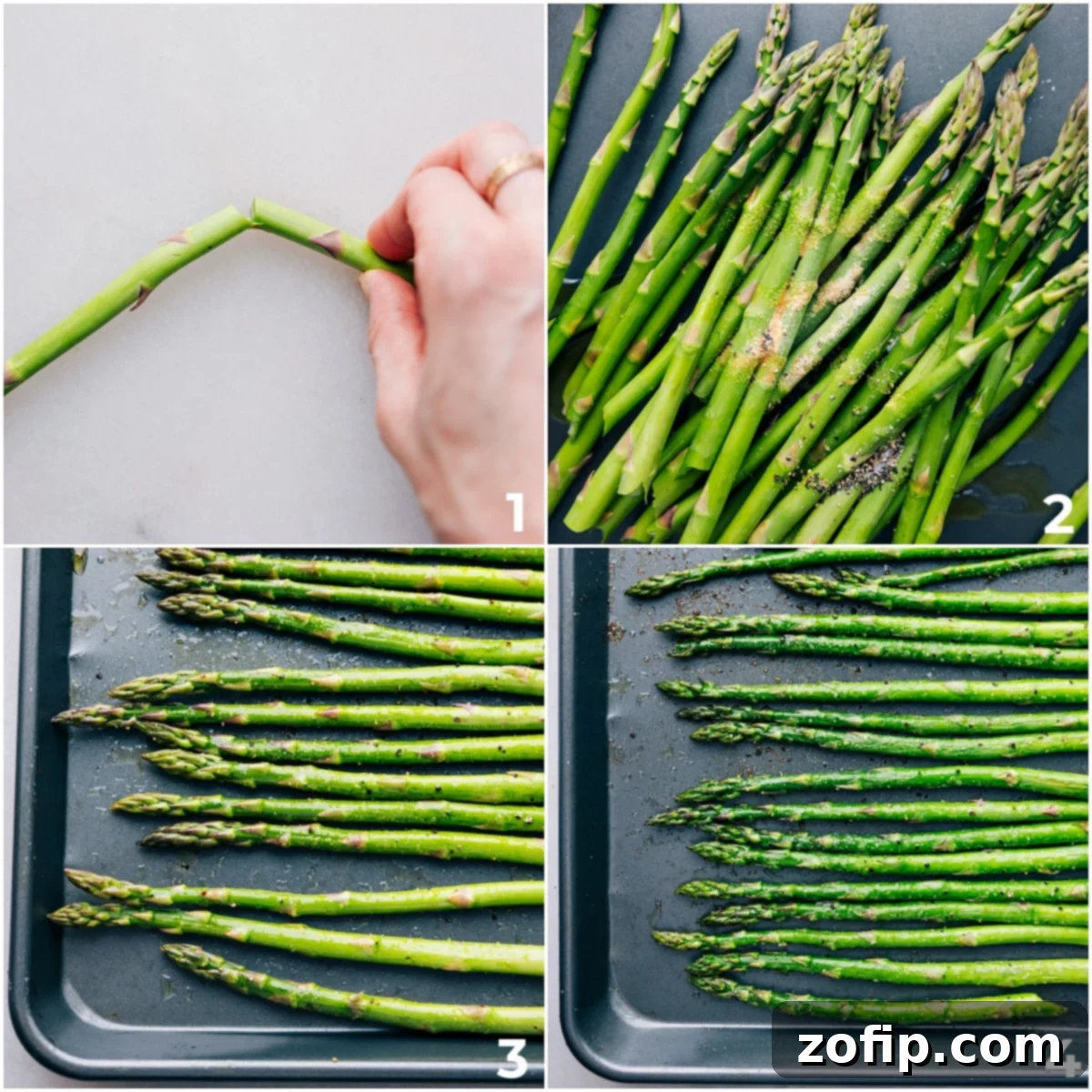
How to Prep Asparagus for Roasting
Proper preparation is key to achieving perfectly roasted asparagus. Follow these steps to ensure your spears are ready for the oven:
- Rinse and Dry Thoroughly: Begin by rinsing the asparagus spears under cold running water to remove any dirt. The most crucial step is to dry them completely. Moisture on the asparagus will cause it to steam rather than roast, preventing it from crisping up. You can dry them by rolling them gently between two clean kitchen towels or by laying them out on paper towels to air dry for a few minutes.
- Identify the Woody Ends: Working with one spear at a time, hold the bottom (cut end) with one hand and the middle of the spear with the other.
- Bend and Snap: Gently bend the asparagus spear. It will naturally snap at the point where the tough, woody end transitions to the tender, edible part. This method ensures you only discard the fibrous portion, maximizing your yield and ensuring a pleasant texture.
- Discard Tough Ends & Prepare for Roasting: Discard the woody ends. You should now have tender asparagus tops ready for cooking. For consistent roasting, try to snap them to roughly the same length.
Important Cooking Tip
Asparagus spears can vary significantly in thickness, even within the same bunch. This means cooking times will also vary. Rather than relying solely on a timer, always check for doneness by sight and feel to ensure your asparagus is perfectly cooked and not under or overdone. Thinner spears will cook faster, while thicker ones will require a few extra minutes.
How to Roast Perfect Asparagus
Roasting asparagus is incredibly straightforward and yields consistently delicious results. Here’s a step-by-step guide to achieving tender-crisp perfection:
- Preheat Your Oven: Start by preheating your oven to a high temperature of 425°F (220°C). A hot oven is essential for quick, even roasting and achieving that desirable crisp-tender texture. Don’t put the asparagus in before the oven is fully preheated.
- Prepare the Asparagus: While the oven heats, rinse and thoroughly dry your asparagus spears as described in the previous section. Snap off the woody ends to ensure every bite is tender and enjoyable.
- Season Generously: Lay the prepared asparagus in a single layer on a large baking sheet. Drizzle evenly with olive oil, then sprinkle with salt, freshly ground black pepper, and garlic powder. Use your hands to toss the asparagus, ensuring each spear is thoroughly and evenly coated with oil and seasonings.
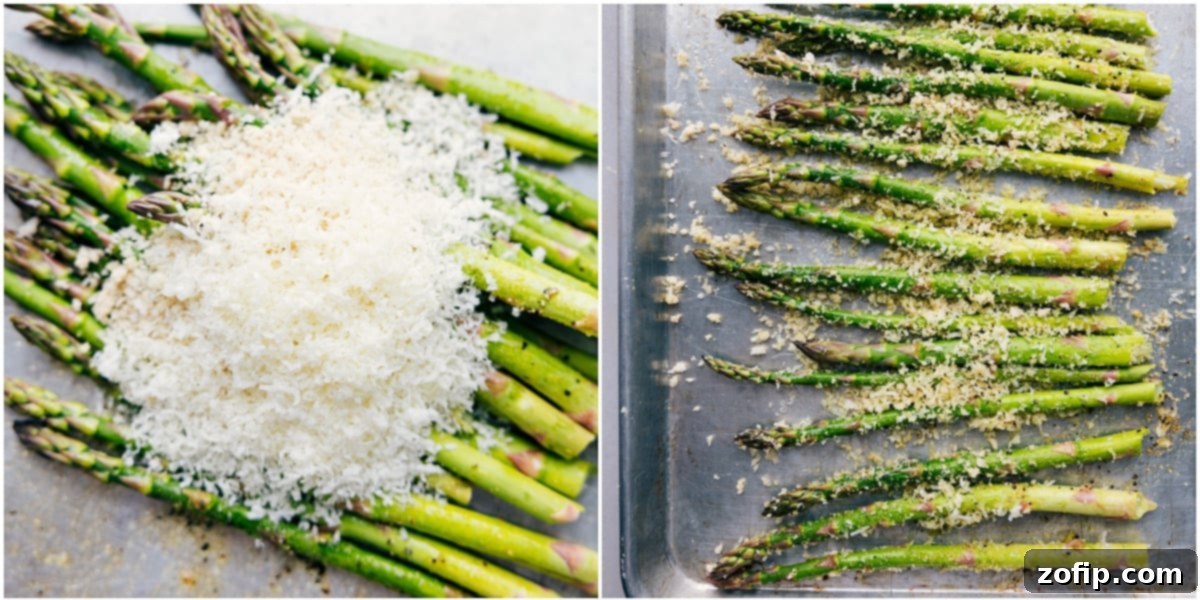
- Add Optional Toppings (if desired): If you’re opting for the crispy version, now is the time to add breadcrumbs and Parmesan cheese. Sprinkle them evenly over the asparagus, then toss gently once more to distribute the toppings.
- Arrange in a Single Layer: Spread the seasoned asparagus in a single layer on the baking sheet. It is crucial that the spears do not overlap or overcrowd the pan. Overcrowding leads to steaming, which results in soggy asparagus instead of crispy. If you have a large batch, use two baking sheets.
- Roast to Perfection: Place the baking sheet in the preheated oven and roast for 7-11 minutes. The cooking time will depend on the thickness of your asparagus spears and your oven’s specific calibration. Asparagus is done when it’s bright green, tender-crisp (you should be able to pierce it easily with a fork, but it should still have a slight bite), and lightly browned in spots.
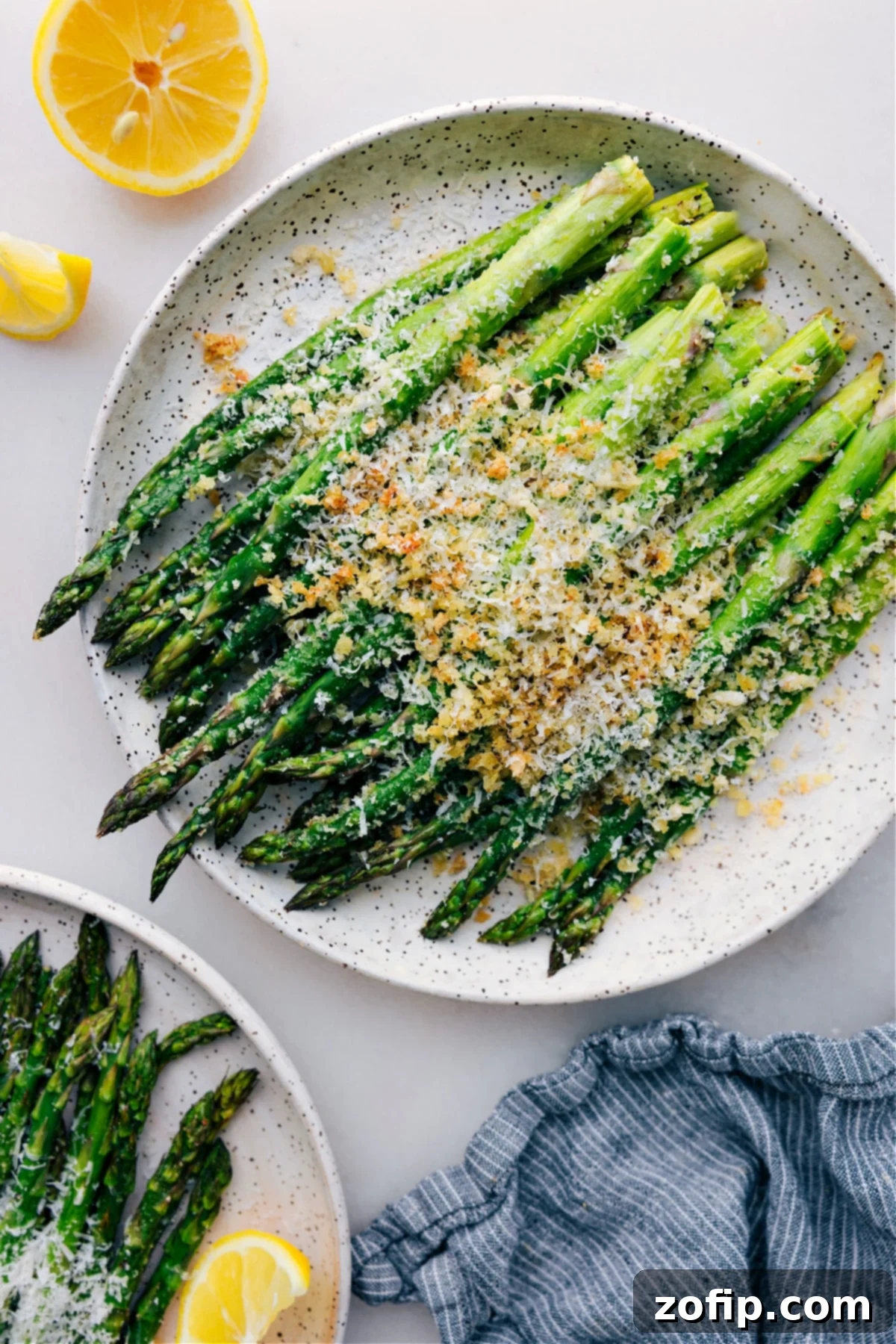
- Serve Immediately: Once roasted, transfer the asparagus to a serving plate. If you used the breadcrumb and Parmesan topping, scatter any toasted bits from the pan over the spears for extra flavor and crunch. If serving classic style, a final squeeze of fresh lemon juice is highly recommended to brighten the flavors. Enjoy your perfectly roasted asparagus hot from the oven!
Roasted Asparagus Troubleshooting: Common Issues and Solutions
When Is Asparagus Fully Cooked?
Perfectly roasted asparagus is bright green, tender-crisp, and sometimes features slightly charred edges. To check for doneness, try piercing a spear with a fork – it should slide in easily but still offer a slight resistance, indicating it retains a bit of its natural crunch. If it’s too firm, it’s undercooked. If it’s limp and floppy, it’s likely overcooked. A quick taste test is also your best guide!
Why Is My Oven Roasted Asparagus Soggy?
Soggy asparagus is a common culprit of several mistakes. This usually happens if:
- It’s Crowded: Overcrowding the baking sheet prevents air circulation, causing the asparagus to steam rather than roast. Always spread spears in a single layer with space between them. Use multiple pans if necessary.
- It’s Too Oily: While oil helps crisp, too much can make it greasy and soggy. Drizzle just enough to lightly coat each spear.
- It Was Wet: Any residual moisture on the asparagus before roasting will turn into steam, leading to a limp texture. Ensure your asparagus is completely dry after washing.
- It’s Overcooked: Cooking for too long can break down the cell walls, leading to soft, mushy asparagus. Keep a close eye on it, especially towards the end of the suggested cooking time.
- Roasted at Low Heat: A low oven temperature won’t provide the intense heat needed for proper browning and crisping. Ensure your oven is fully preheated to 425°F (220°C) before adding the asparagus.
To avoid sogginess, space them out, use the right amount of oil, cook at a high temperature, and always ensure they are thoroughly dry after washing.
Pro Tips for Success
Achieving consistently perfect roasted asparagus is easy with a few simple tricks:
- Always Preheat: Ensure your oven is fully preheated to 425°F (220°C) before placing the asparagus inside. A hot oven is key to that desirable crisp-tender texture.
- Don’t Overcrowd the Pan: Use a large sheet pan, or even two, to ensure the asparagus spears are spread in a single layer with ample space between them. This promotes roasting and browning, preventing them from steaming and becoming soggy.
- Freshly Grated Parmesan Makes a Difference: If you’re adding Parmesan, grate it yourself from a block with a fine grater or microplane. This yields a much better texture and flavor compared to pre-shredded cheese.
- Coat Evenly: Take the time to toss the asparagus thoroughly with olive oil and seasonings. Every spear should have a light, even coating for consistent flavor and browning.
- Watch Closely: Asparagus can go from perfectly cooked to overcooked quickly. Start checking for doneness a couple of minutes before the minimum suggested cooking time, especially if your spears are thin. Cooking time varies significantly with thickness.
- Consider Parchment Paper: Lining your baking sheet with parchment paper makes cleanup a breeze and helps prevent sticking, especially with cheese or breadcrumbs.
- A Touch of Acid: A squeeze of fresh lemon juice or a drizzle of balsamic glaze after roasting can significantly brighten and enhance the overall flavor profile.
Storage and Leftovers
Handling Leftovers?
Roasted asparagus is undeniably at its best when enjoyed immediately, hot from the oven, as its tender-crisp texture softens over time. However, if you happen to have any leftovers, here’s how to store and enjoy them:
- Storage: Allow the roasted asparagus to cool completely to room temperature before storing. Place it in an airtight container to prevent it from drying out or absorbing other odors in the refrigerator.
- Refrigeration: Leftover roasted asparagus can be safely refrigerated for up to 3 days. While it won’t retain its initial crispness, it will still be delicious.
- Reheating: For the best texture, avoid the microwave, as it tends to make asparagus even softer. Instead, reheat in a preheated oven at 350°F (175°C) for 5-7 minutes, or until warmed through and slightly re-crisped. A quick pan-fry in a little olive oil or a few minutes in an air fryer can also help restore some crispness.
- Creative Uses: Don’t limit yourself to just reheating! Leftover roasted asparagus is fantastic in salads, omelets, frittatas, pasta dishes, or as a topping for pizzas and quiches.
What To Serve With Roasted Asparagus
Roasted asparagus is an incredibly versatile side dish that complements a wide array of main courses. Its fresh, slightly earthy flavor and tender-crisp texture make it a perfect pairing for many proteins and other vegetables. Here are some fantastic ideas for what to serve alongside your delicious roasted asparagus:
- Shepherd’s Pie: The rich, savory meat and vegetable pie finds a lovely balance with the bright green of asparagus.
- Crock Pot Roast: A tender, slow-cooked pot roast benefits from the fresh, firm bite of roasted asparagus, offering a delightful textural contrast.
- Bruschetta Chicken: This light and fresh Spring meal, bursting with basil and tomato, is perfectly complemented by the simple elegance of roasted asparagus.
- Baked Ziti with Chicken: The hearty, comforting flavors of baked ziti are beautifully offset by a healthy serving of green vegetables.
- Stuffed Shells: Simple to make and wonderfully satisfying, stuffed shells gain a pop of color and freshness with asparagus on the side.
- Grilled Salmon or Cod: The delicate flavors of roasted asparagus pair wonderfully with flaky fish.
- Steak or Lamb Chops: A classic pairing, the green spears cut through the richness of red meat.
- Quinoa or Rice Bowls: Add healthy roasted asparagus to your grain bowls for extra nutrition and flavor.
- Eggs Benedict or Frittatas: Make it a brunch staple by serving roasted asparagus with egg-based dishes.
- Lemon Herb Chicken or Pork Tenderloin: The bright, fresh flavors of lemon and herbs in these dishes are naturally enhanced by roasted asparagus.

Print Recipe
Roasted Asparagus Recipe
Equipment
- Large sheet pan (15″ x 21″) for roasting
Ingredients
- 1 pound asparagus
- 1-1/2 tablespoons olive oil
- 1/4 teaspoon salt
- 1/4 teaspoon pepper
- 1/4 teaspoon garlic powder
- Option 1: Fresh lemon juice (2 tbsp) and freshly grated Parmesan cheese (2-4 tbsps)
- Option 2: 1/4 cup Panko breadcrumbs and 1/4 cup freshly grated Parmesan cheese
Instructions
- Preheat oven to 425°F (220°C). Prepare a large sheet pan.
- Rinse asparagus under cold water and dry completely. Break off the woody ends by bending each spear until it snaps naturally.
- Arrange asparagus on the sheet pan. Drizzle with olive oil, then add salt, pepper, and garlic powder. Toss with hands to coat evenly.
- If using Option 2 (breadcrumbs and Parmesan), evenly sprinkle the panko and Parmesan over the asparagus, then toss gently to coat.
- Spread the asparagus in a single layer on the sheet, ensuring they are not overlapping. This promotes even roasting and crispiness.
- Bake for 7-11 minutes, or until asparagus is tender-crisp, lightly browned, and cheese (if added) has melted. Cooking time may vary based on the thickness of the spears.
- Transfer asparagus to a serving plate. If using Option 2, scatter any toasted breadcrumb bits from the tray over the spears. If using Option 1, drizzle freshly squeezed lemon juice over the asparagus before serving, and add a sprinkle of fresh Parmesan if desired.
- Enjoy immediately while hot for the best flavor and texture.
Recipe Notes
Note 2: Always use freshly grated Parmesan cheese from a block for the best flavor and melting quality. Pre-shredded cheese often contains anti-caking agents that can affect how it melts and crisps.
Storage: Cooled roasted asparagus can be stored in an airtight container in the refrigerator for up to 3 days. While best enjoyed fresh, leftovers can be reheated gently in the oven or used in other dishes.
Nutrition
Nutrition information is automatically calculated, so should only be used as an approximation.