
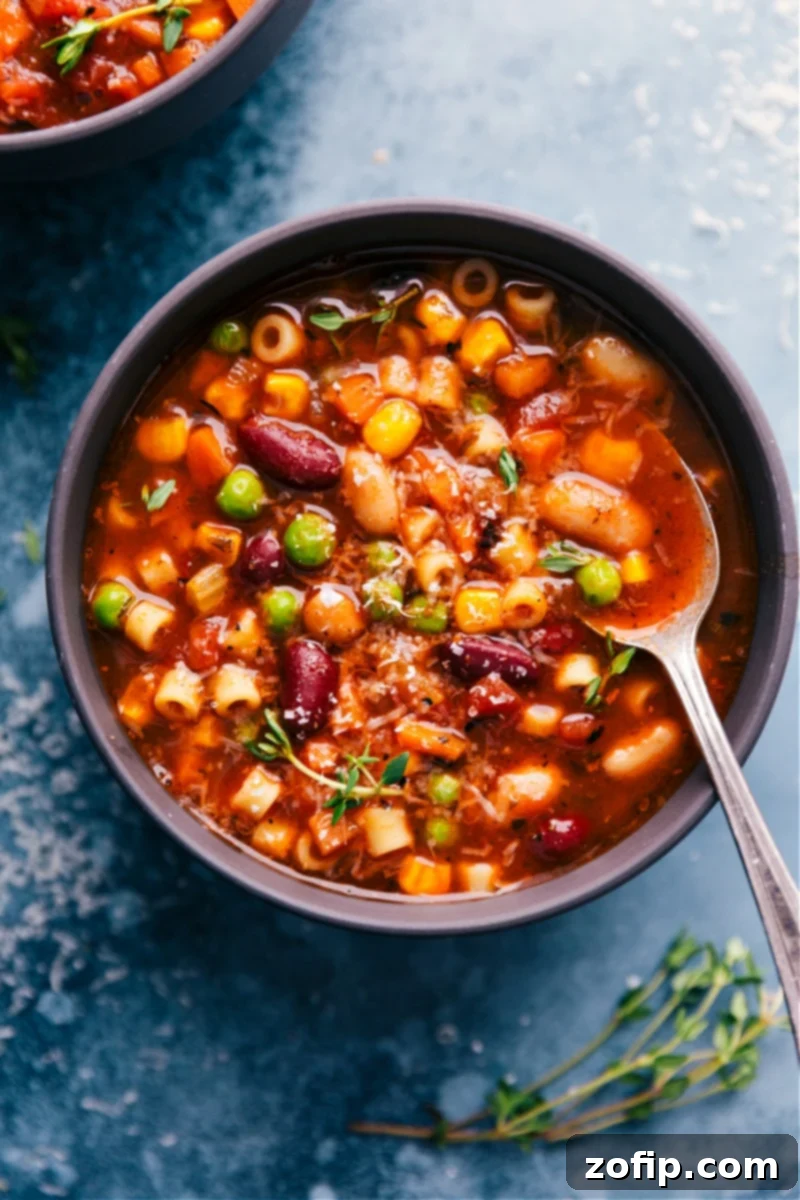
Experience the warmth and flavor of Italy right in your kitchen with this incredible Olive Garden Minestrone Soup Recipe. This cherished copycat recipe delivers a thick, hearty vegetable soup, generously packed with wholesome ingredients, tender ditalini pasta, and simmered in a rich, savory tomato broth. It’s the ultimate comfort food, perfect for a cozy evening meal or a satisfying lunch.

Author’s Culinary Journey
Skip the Trip: This Homemade Olive Garden Minestrone is Even Better!
Years ago, I discovered the magic of Olive Garden’s Minestrone soup, and it quickly became a personal obsession. My visits to the restaurant often turned into a feast of bottomless breadsticks, their famous salad, and generous bowls of minestrone. I’d frequently fill up before my main course even arrived – that’s how truly irresistible it was.
Naturally, I felt compelled to replicate that incredible flavor profile in my own kitchen. After countless attempts and adjustments, I finally cracked the code, developing a homemade version that rivals, and dare I say, surpasses the original. What’s even better? My children, who typically shy away from vegetable-packed dishes, consistently ask for second helpings of this soup! I’m convinced it’s the delightful combination of tender pasta and that exceptionally rich, flavorful tomato broth that wins them over every time. This recipe has firmly earned its place as a regular fixture in our family’s dinner rotation. I love it so much that I even created a quinoa-based twist for a lighter, healthier spin, proving its versatility and enduring appeal.
Creating this delicious Minestrone soup at home is not only satisfying but also allows you to control the freshness and quality of your ingredients. Plus, it’s often more economical than dining out. This recipe is designed to be straightforward, ensuring even novice cooks can achieve a restaurant-quality dish.
Essential Ingredients for Your Copycat Minestrone
Crafting the perfect Olive Garden Minestrone at home starts with selecting high-quality, fresh ingredients. Each component plays a vital role in achieving that authentic, rich flavor. Here’s a detailed look at what you’ll need and how you can customize it.
| Ingredient | Swap or Tip for Best Flavor |
|---|---|
| Ditalini Pasta | Ditalini is traditional, but any small pasta shape like elbow macaroni, small shells, or orzo works beautifully in this Olive Garden minestrone soup recipe. Cook pasta separately for optimal texture in leftovers. |
| Zucchini | Fresh zucchini adds a delicate texture and mild flavor. Feel free to swap with yellow squash or finely diced fresh green beans for a slight variation. |
| Canned Beans | A medley of beans provides diverse textures and nutrients. Use any combination of kidney, cannellini (white kidney beans), or garbanzo beans (chickpeas). Always remember to rinse them thoroughly before adding to remove excess sodium and improve flavor. |
| Fire-Roasted Tomatoes | This is a crucial flavor enhancer! Fire-roasted diced tomatoes are charred for a smoky, sweet depth that ordinary diced tomatoes can’t match. If unavailable, regular diced tomatoes are fine, but fire-roasted elevates the dish significantly. |
| Vegetable Stock | A high-quality vegetable stock is the backbone of this soup’s flavor. For a non-vegetarian version, chicken stock can be used as a direct swap, but ensure it’s a good quality one. |
| Tomato Paste | Don’t underestimate this ingredient! Cooking tomato paste until it darkens intensifies its flavor, adding a profound richness and umami to the broth. This step truly distinguishes the soup. |
| Aromatics (Onion, Celery, Carrots) | The classic mirepoix forms the aromatic base. Dicing them uniformly ensures they cook evenly and release their full sweetness, providing a foundational layer of flavor for the entire soup. |
| Garlic | Freshly minced garlic is key for a pungent, aromatic kick. Avoid burning it; cook just until fragrant. |
| Herbs & Spices (Rosemary, Oregano, Thyme, Red Pepper Flakes) | This blend of dried herbs provides the classic Italian flavor profile. Red pepper flakes are optional but add a subtle warmth without making the soup overly spicy. |
| Frozen Peas & Corn | These vibrant vegetables add a pop of color and sweetness, and they cook quickly, making them perfect for adding at the end of the cooking process. |
Crafting Your Homemade Olive Garden Minestrone Soup: A Step-by-Step Guide
Follow these simple steps to bring this comforting and delicious Olive Garden Minestrone Soup recipe to life in your own kitchen. Each stage is designed to build layers of flavor, resulting in a soup that tastes like it’s been simmering all day.
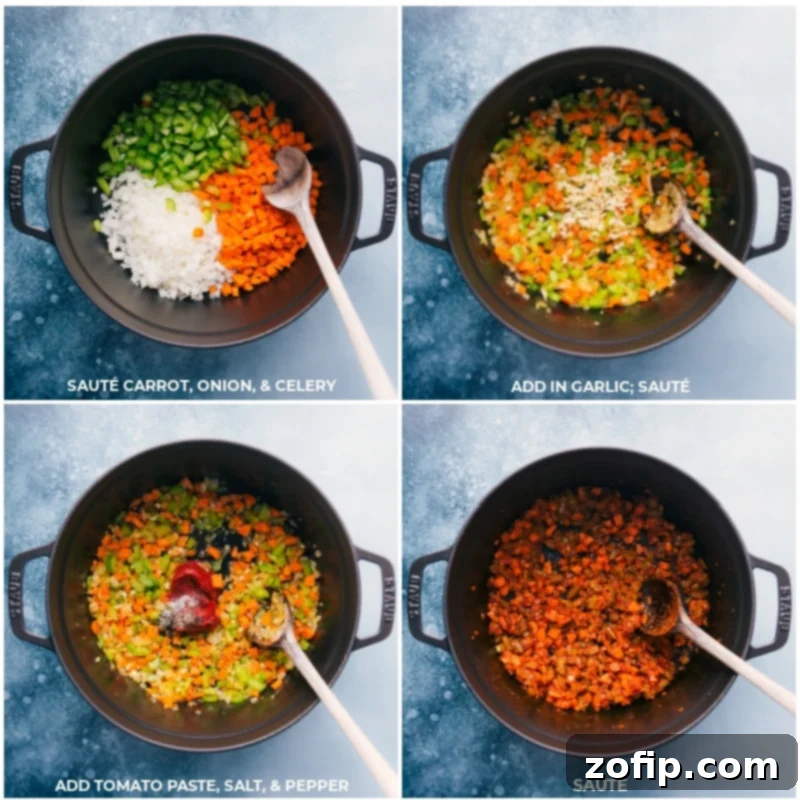
- Sauté the Aromatics (Mirepoix): Begin by heating olive oil in a large, heavy-bottomed pot or Dutch oven over medium heat. Add your diced onion, celery, and carrots. Cook, stirring frequently, for about 8-10 minutes. The goal is to soften these vegetables and allow their natural sweetness to develop, creating a flavorful foundation without browning them too much.
- Build Deep Flavors with Garlic & Tomato Paste: Once the aromatics are tender, stir in the minced garlic. Cook for just 30 seconds until it becomes fragrant, being careful not to burn it. Immediately add the tomato paste, along with a good pinch of salt and freshly ground pepper. Mix well and continue cooking, stirring often, for a crucial 8 minutes. During this step, the tomato paste will caramelize and deepen in color, unlocking a rich, umami flavor that is vital for the soup’s authentic taste.
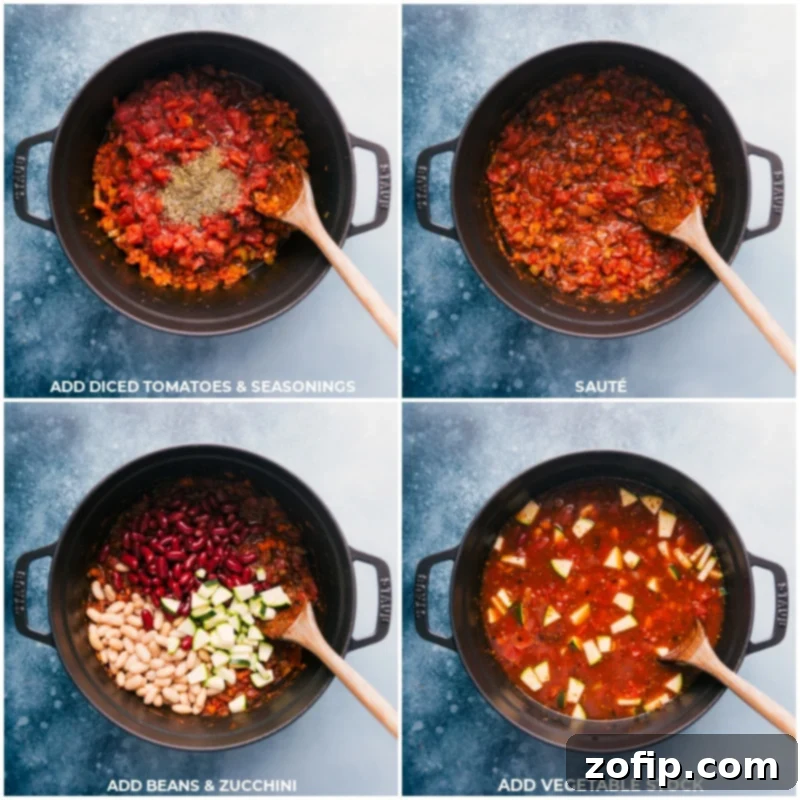
- Incorporate Tomatoes, Herbs, and Stock: Stir in the fire-roasted diced tomatoes (undrained) and the dried seasonings: rosemary, oregano, and thyme. If you’re adding a hint of warmth, include the red pepper flakes now. Cook for another 2 minutes, stirring frequently and scraping any browned bits from the bottom of the pot – this “deglazing” action adds even more flavor to your broth.
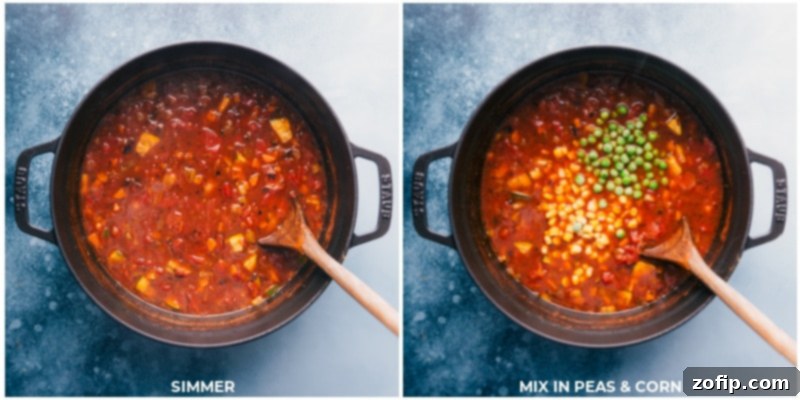
- Add Beans, Zucchini, and Simmer: Pour in the vegetable stock, followed by the drained and rinsed cannellini and kidney beans, and the diced zucchini. If using bay leaves, add them now. Bring the soup to a boil over higher heat, then reduce the heat to a gentle simmer. Partially cover the pot, leaving a small gap for steam, and let it simmer for 10-15 minutes, or until all the vegetables are tender but not mushy.
- Prepare the Pasta Separately: While the soup simmers, cook the ditalini pasta in a separate pot of salted boiling water according to package directions until al dente. This method prevents the pasta from absorbing too much broth and becoming overly soft, especially if you plan on having leftovers. Drain the pasta and set it aside.
- Finish, Season & Serve: Turn off the heat under the soup. Stir in the frozen peas and corn. Taste the soup and adjust the seasonings as needed; you’ll likely want to add another 1/2 teaspoon of salt and 1/4 teaspoon of pepper to ensure the flavors are vibrant and well-balanced. For a brighter finish, stir in a splash of lemon juice and a drizzle of olive oil (about 1 tablespoon each). Remove and discard the bay leaves. Ladle the hot soup into individual bowls, adding a few spoonfuls of the cooked ditalini pasta to each serving. Garnish with freshly grated Parmesan cheese and any fresh herbs like basil or parsley. Serve immediately with crusty artisan bread for dipping!
From Our Kitchens to Yours: A Featured Comment
“We are a family of 6. I have four children (ages 2-12). This meal is a hit with everyone! They even ask for seconds. Most weeknights I rely on crock pot meals because of activities after school and getting in at dinner time. This is an absolute keeper. Thank you so much!”
– Katie
Expert Tips for a Perfect Minestrone
Achieving that authentic Olive Garden Minestrone taste requires a few key techniques. Keep these tips in mind to ensure your soup is packed with flavor and perfectly textured every time:
- Caramelize the Tomato Paste: This step is non-negotiable for incredible depth of flavor. Cook the tomato paste for a good 8 minutes, stirring frequently, until it deepens in color to a rustic, almost brick-red hue. This process concentrates its sugars and acids, transforming its flavor from bright and raw to rich and umami-packed. It’s a game-changer for this Olive Garden Minestrone soup recipe.
- Season Thoughtfully and Continuously: The saltiness of vegetable stocks and canned beans can vary significantly. Therefore, it’s crucial to taste and season your soup at multiple stages. Add salt and pepper gradually as you build the layers of flavor, and always do a final taste test before serving, adjusting as needed.
- Finish with Fresh Herbs: While dried herbs infuse flavor during cooking, a sprinkle of fresh herbs like basil, parsley, or even a little thyme just before serving makes a huge difference. They add a vibrant freshness and aromatic brightness that elevates the entire dish.
- Introduce a Splash of Acid: A small amount of acid, such as fresh lemon juice or red wine vinegar, added at the very end, can brighten all the flavors in the soup. It cuts through the richness, making the soup taste more vibrant and well-balanced. Start with a tablespoon and add more to taste.
- Dice Vegetables Uniformly: Ensure your carrots, celery, and onions are diced to roughly the same size. This promotes even cooking, ensuring that all vegetables become tender at the same rate and contribute consistently to the soup’s texture.
Storage Solutions
Making the Most of Your Minestrone Leftovers
- Refrigerator Storage: This Olive Garden Minestrone soup recipe keeps wonderfully in the fridge for 3–5 days when stored in an airtight container.
- Reheating Instructions: To reheat, gently warm the soup on the stovetop over medium-low heat, stirring occasionally. If the soup has thickened too much overnight (which often happens as the vegetables absorb more liquid), add an extra splash of vegetable stock or water to reach your desired consistency.
- Pasta Preservation Tip: For the absolute best leftovers, especially to avoid mushy pasta, cook the ditalini pasta separately and store it apart from the soup. Then, stir freshly cooked or separately stored pasta into individual bowls just before serving.
- Freezer Considerations: Minestrone is generally not the best soup for freezing, as the pasta can become mushy and some vegetables (like zucchini) might change texture upon thawing. If you absolutely wish to freeze it, prepare the soup without the pasta. When ready to serve, thaw the soup, reheat it, and cook fresh pasta to add to individual servings. This will yield the best results.
More Delightful Veggie-Packed Soup Recipes:
Soups And Stews
Wholesome Chicken Corn Soup Recipe
One Pan / One Pot
Nourishing White Bean Soup
Soups And Stews
Quick & Easy Zuppa Toscana
Soups And Stews
Classic Tomato Basil Soup Recipe

Authentic Olive Garden Minestrone Soup Recipe
Chelsea Lords
30 minutes
30 minutes
1 hour
6
servings
Video
For a visual guide, watch how this delicious Minestrone Soup comes together!
Equipment
- Large pot or Dutch Oven
- Medium pot (for pasta)
Ingredients
- 3 tablespoons olive oil
- 1 cup carrots diced, from 2 large carrots
- 1 cup yellow onion diced, from 1 small onion
- 1 cup celery diced, from 3 stalks
- 1 heaping tablespoon minced garlic about 4 cloves
- 1/4 cup tomato paste
- Salt and pepper, to taste
- 2 (14.5-ounce) cans fire-roasted diced tomatoes undrained, see Note 1 for brands
- 1/4 teaspoon dried crushed rosemary
- 1/8 teaspoon red pepper flakes optional, for a subtle kick
- 3/4 teaspoon dried oregano
- 3/4 teaspoon dried thyme
- 1 (32-ounce) container vegetable stock about 4 cups, see Note 2 for quality tips
- 1 (15.5-ounce) can cannellini beans drained and rinsed
- 1 (15.5-ounce) can dark red kidney beans drained and rinsed
- 1/2 cup diced zucchini
- 2 bay leaves optional, for added aroma
- 1 cup uncooked ditalini pasta see Note 3 for cooking methods
- 1/2 cup frozen peas
- 1/2 cup frozen corn or use a total of 1 cup peas or corn
- Serving suggestions see Note 4 for delicious toppings
Instructions
- 1. Sauté the Base: Heat olive oil in a large pot or Dutch oven over medium heat. Add the diced onion, carrot, and celery. Cook, stirring frequently, for 8–10 minutes, or until the onion is golden and the vegetables are soft and translucent. Stir in the minced garlic and cook for another 30 seconds until fragrant, being careful not to burn it.
- 2. Develop Rich Flavors: Add the tomato paste to the pot and season to taste with salt and pepper (start with 1/2 teaspoon each). Mix well and continue to cook, stirring frequently, for an essential 8 minutes. This step is crucial: the vegetables will become very tender, and the tomato paste will significantly thicken and darken in color, developing a deep, complex flavor. Don’t rush this, as it prevents crunchy vegetables and builds the soup’s richness. Next, stir in the diced fire-roasted tomatoes and the dried seasonings: rosemary, oregano, thyme, and red pepper flakes (if using). Cook, stirring frequently, for another 2 minutes. Scrape the bottom of the pot to release any flavorful browned bits.
- 3. Simmer the Soup: Pour in the vegetable stock, followed by the drained and rinsed cannellini and kidney beans, and the diced zucchini. If using, add the bay leaves. Stir all ingredients together. Increase the heat to bring the soup to a boil, then reduce the heat to maintain a gentle simmer (just barely bubbling at the edges). Partially cover the pot, leaving about a 1-inch gap for steam to escape, and simmer for 10–15 minutes, or until all the vegetables are tender.
- 4. Cook Pasta Separately: While the soup simmers, bring a separate medium pot of water to a rolling boil. Salt the water generously and cook the ditalini pasta according to package directions until it is al dente. Drain the cooked pasta and set it aside to be added to individual servings.
- 5. Final Touches & Seasoning Adjustment: Turn off the heat on the soup. Stir in the frozen peas and corn. Taste the soup and adjust the seasonings as needed; you’ll often find that another 1/2 teaspoon of salt and 1/4 teaspoon of pepper brings out the best in the rich flavors. If desired, add a tablespoon of fresh lemon juice and drizzle in a tablespoon of good quality olive oil for brightness and extra richness. Remove and discard the bay leaves if they were used.
- 6. Serve & Garnish: Ladle the hot soup into serving bowls. Stir a few spoonfuls of the separately cooked pasta into each individual bowl. Serve generously topped with freshly grated Parmesan cheese, any fresh herbs you prefer (such as basil or parsley), and a side of crusty bread perfect for dipping into the flavorful broth!
- Slow Cooker Method: If you prefer to use a slow cooker, follow steps 1–2 either in a separate pot on the stovetop or directly in the base of your slow cooker if it has a sautéing function. Transfer all the sautéed ingredients to the slow cooker base, then add the drained and rinsed beans, zucchini, vegetable stock, and bay leaves. Stir everything well. Cook on LOW for 3–4 hours or on HIGH for 1–2 hours, or until the flavors are fully melded and the vegetables are tender. Stir in the frozen peas and corn during the last 15 minutes of cooking. Taste and adjust seasonings, adding more salt and pepper as needed. For brightness, add a tablespoon of lemon juice and a drizzle of olive oil. Remove and discard bay leaves. About 20 minutes before serving, cook the pasta separately according to package directions and stir into individual serving bowls. Serve topped with Parmesan cheese, fresh herbs, and crusty bread for dipping!
Recipe Notes
Note 2: Vegetable Stock Quality significantly impacts the final taste. Use a high-quality, flavorful stock to ensure a rich base. Many home cooks swear by Swanson’s® vegetable stock for its excellent flavor (not sponsored, just a genuine recommendation!). If you prefer a thinner soup consistency, feel free to add an extra cup of stock, but remember to adjust your seasonings accordingly to maintain flavor intensity.
Note 3: Cooking Pasta separately is advised for the best texture. This method prevents the ditalini from absorbing too much liquid from the soup, which can lead to mushy pasta, especially in leftovers. For separate storage, always keep the cooked pasta and the soup in individual containers. If you prefer the convenience of a one-pot meal, you can add the ditalini pasta directly to the soup along with the beans and zucchini, and simmer for 15–20 minutes until al dente. In this case, increase your vegetable stock to 6 cups to account for the pasta’s absorption.
Note 4: Delicious Serving Suggestions can elevate your minestrone experience. Consider adding these finishing touches: a generous drizzle of high-quality olive oil, a tablespoon of fresh lemon juice for brightness, a sprinkle of fresh chopped parsley or thyme, abundant fresh grated Parmesan cheese, and/or slices of warm, crusty artisan bread for dunking.
Storage & Freezing: Store leftover Minestrone Soup in an airtight container in the refrigerator for 3–5 days. Reheat gently over medium-low heat on the stove, stirring frequently. If it’s too thick, add a splash of vegetable stock or water. Freezing this soup is not ideal due to the pasta and some vegetables tending to become mushy after thawing. If you must freeze, it’s best to prepare the soup without the pasta and add freshly cooked pasta upon reheating.
Nutrition Information
Serving:
1
serving
|
Calories:
339
kcal
|
Carbohydrates:
56
g
|
Protein:
14
g
|
Fat:
8
g
|
Saturated Fat:
1
g
|
Polyunsaturated Fat:
1
g
|
Monounsaturated Fat:
5
g
|
Sodium:
654
mg
|
Potassium:
563
mg
|
Fiber:
11
g
|
Sugar:
8
g
|
Vitamin A:
5339
IU
|
Vitamin C:
12
mg
|
Calcium:
129
mg
|
Iron:
4
mg
Nutrition information is automatically calculated and is an approximation. Values may vary based on specific ingredients and preparation methods.
Love this recipe? Leave a comment below!
Your feedback helps us and other home cooks.
Creative Variations
Customize Your Olive Garden Minestrone Soup Recipe
This minestrone recipe is incredibly versatile! Feel free to experiment with these variations to tailor it to your preferences or whatever ingredients you have on hand:
- Adjusting Thickness: For a thinner, more brothy soup, simply add an extra cup or two of vegetable stock during the simmering stage. If you prefer a heartier, stew-like consistency, stick to the recommended liquid amount and perhaps let it simmer a little longer, uncovered, to allow some evaporation.
- Boosting Protein Content: Easily transform this vegetarian soup into a more robust meal by adding protein. Stir in shredded rotisserie chicken, browned Italian sausage (mild or spicy), or lean ground turkey during the simmering stage. For a vegetarian protein boost, consider adding chickpeas or extra cannellini beans.
- Veggie Swaps & Additions: The beauty of minestrone is its flexibility with vegetables. Feel free to use whatever fresh produce you have. Great additions include diced green beans, fresh spinach or kale (stir in at the very end until wilted), small diced potatoes (add with the stock and simmer until tender), or even bell peppers.
- Adding a Spicy Kick: If you enjoy a bit of heat, increase the amount of red pepper flakes when sautéing the garlic and tomato paste. You could also add a pinch of cayenne pepper or a dash of your favorite hot sauce at the end.
- Cheese Variations: While Parmesan is classic, consider other hard Italian cheeses like Pecorino Romano for a sharper flavor, or even a swirl of fresh mozzarella for a creamy melt.
Smart Shortcuts for Quick Prep
Even though this Olive Garden Minestrone recipe is straightforward, there are a few clever shortcuts you can use to significantly reduce your prep time, making it an even easier weeknight meal:
- Pre-Cut Mirepoix: Skip the chopping of onion, celery, and carrots by grabbing pre-cut mirepoix (the classic blend of diced carrots, celery, and onion) from your grocery store’s produce section or freezer aisle. You’ll need about 3 cups for this recipe, saving you valuable time.
- Jarred Minced Garlic: Instead of mincing fresh garlic, opt for jarred minced garlic. While fresh garlic often has a stronger flavor, the jarred version is a convenient shortcut that still delivers good results, especially when you’re in a hurry.
- Fire-Roasted Tomatoes: As highlighted in our ingredient section, choosing fire-roasted diced tomatoes is not just a flavor upgrade, it’s also a shortcut! They come pre-charred and add a deep, smoky sweetness that would otherwise require roasting tomatoes yourself.
- Frozen Pre-Chopped Zucchini: If fresh zucchini isn’t readily available or you want to save more chopping time, frozen diced zucchini can be a handy substitute. Just add it directly to the soup with the other vegetables.