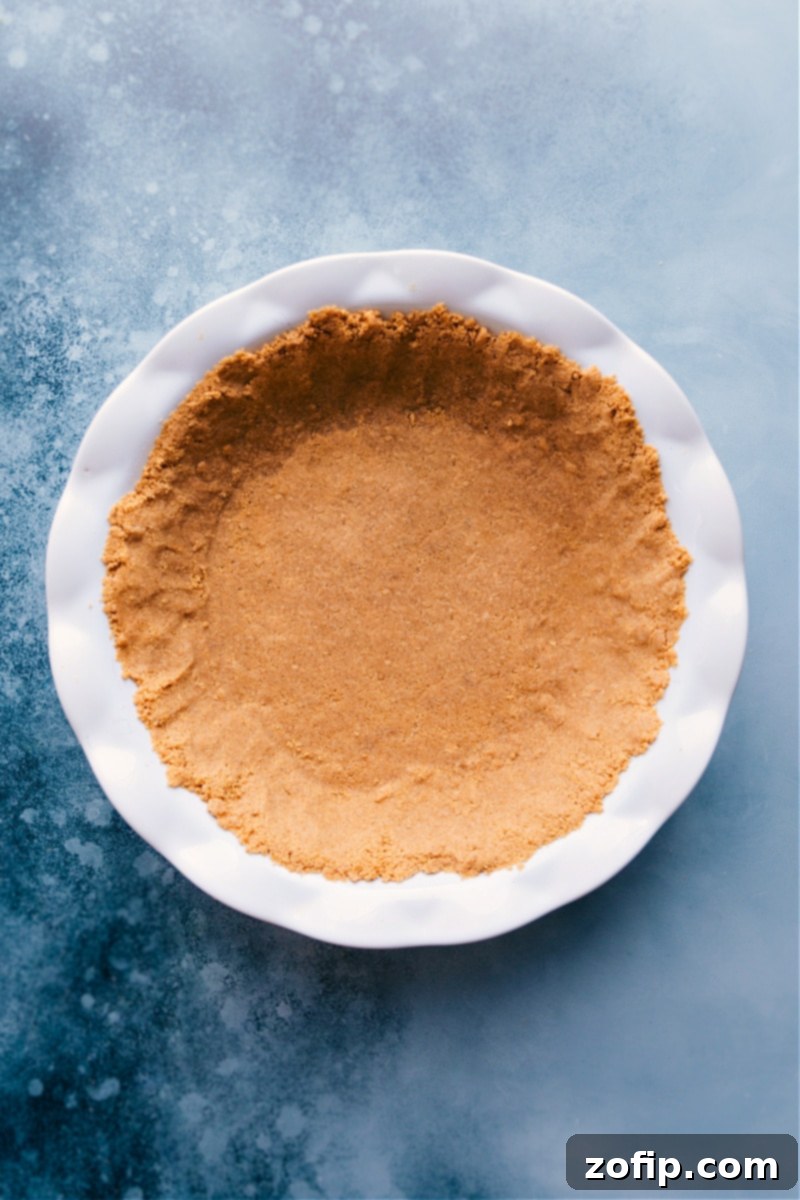
Welcome to the definitive guide for crafting a Homemade Graham Cracker Pie Crust that consistently delivers. Forget crumbly messes or bland bases; this foolproof recipe guarantees a sweet, sturdy, and buttery foundation with an impeccable ratio of ingredients. We’re excited to share all the essential tips, tricks, and detailed instructions to ensure your crust is absolutely flawless, every single time.

Author’s Insight
Why a Homemade Graham Cracker Crust is Always Superior: Golden, Buttery, and Irresistibly Delicious!
My culinary journey to perfecting the graham cracker crust began with a childhood favorite: my mom’s legendary ice cream pie. For many years, she would often reach for convenient store-bought crusts. And, to be completely honest, I found myself eating around them. They were typically dry, lacked a distinct flavor, and contributed little to the overall enjoyment of the dessert.
Then, one transformative day, my mom decided to try her hand at a homemade graham cracker crust. That very first bite was an absolute revelation. It was sweet, rich, and boasted an incredible texture that melted in my mouth. I was utterly captivated and instantly hooked. The difference was night and day; there was no comparison to the bland, pre-made alternatives.
Ever since that moment, a reliable, easy-to-follow Homemade Graham Cracker Crust Recipe has become an indispensable staple in my kitchen. It’s astonishingly quick to prepare, typically taking just minutes from start to finish. More importantly, the superior taste and quality achieved at home far surpass any store-bought option. This specific version has been meticulously developed to achieve the absolute ideal butter-to-crumb ratio, ensuring a crust that’s not only intensely flavorful and buttery but also remarkably sturdy. This sturdiness is key, allowing it to slice cleanly without crumbling into a mess – a common complaint with many crusts.
Its incredible versatility is another major benefit, making it the perfect foundational layer for an endless array of desserts. Whether you’re dreaming of a classic cheesecake, a refreshing key lime pie, a creamy pudding dessert, or even individual tarts, this graham cracker crust will elevate your creation. Once you experience the golden, buttery perfection of this homemade version, you’ll undoubtedly find yourself saying goodbye to store-bought crusts forever.

Essential Ingredients for Your Perfect Graham Cracker Pie Crust
Crafting the perfect graham cracker crust begins with understanding each ingredient’s unique contribution. Here’s a detailed look at what you’ll need and how to optimize each component, along with some fantastic substitution ideas to customize your crust to perfection.
| Ingredient | Why It’s Important & Expert Tips / Swaps |
|---|---|
| Graham Cracker Crumbs | These form the very foundation and flavor profile of your crust. For a cohesive crust that won’t crumble into pieces when sliced, it’s absolutely crucial to achieve very fine, uniform crumbs. This can be easily done using a blender or food processor, pulsing until no large chunks remain. Measuring accurately *after* crushing is vital, as the number of whole cracker sheets can vary significantly between brands. For dietary needs, gluten-free graham crackers are an excellent alternative, or you can use digestive biscuits for a slightly denser, rich, and equally delicious European-inspired flavor. |
| Granulated Sugar | This ingredient provides the necessary sweetness, creating a beautiful balance with the rich butter and cracker base. For a deeper, more complex flavor with delightful caramel notes, consider opting for light brown sugar. While coconut sugar can also be used as a less refined alternative, be aware that it will result in a noticeably darker crust. Feel free to adjust the amount of sugar slightly to match your personal preference for sweetness, but avoid omitting it entirely, as it also contributes to the crust’s overall texture and stability. |
| Fine Sea Salt | While optional, a tiny pinch of fine sea salt is a secret ingredient that truly elevates the crust. It doesn’t make the crust salty; instead, it deftly brightens and enhances the inherent sweetness of the graham crackers and sugar, creating a more nuanced and balanced flavor profile. Use fine sea salt to ensure it dissolves and distributes evenly throughout the mixture. |
| Ground Cinnamon | This is another optional but highly recommended addition, especially if your pie filling boasts complementary spices or autumnal flavors. Ground cinnamon introduces a warm, aromatic spice that pairs exceptionally well with classic fillings such as pumpkin, apple, or even rich chocolate-based desserts. Begin with a quarter teaspoon and adjust to your taste for a subtle, inviting spiced note. |
| Unsalted Butter, Melted and Cooled | The indispensable binding agent that brings all the ingredients together, while also imparting that signature rich, buttery flavor and tender texture. Crucially, it is imperative to let your melted butter cool to room temperature before combining it with the crumbs. Hot butter will “fry” the graham cracker crumbs, leading to a greasy, oily crust that struggles to bind properly and often results in a soggy texture. When the butter is cooled, it perfectly coats each crumb, creating a mixture that resembles damp sand – this is the ideal consistency for pressing into a firm, wonderfully sturdy crust. Using unsalted butter allows you complete control over the salt content in your recipe. |
Crafting the Perfect Graham Cracker Pie Crust: A Detailed Step-by-Step Guide
Creating a truly flawless graham cracker crust is far simpler than you might imagine, especially when you follow these detailed steps and incorporate our expert tips. This guide will help you achieve a perfectly golden, sturdy, and utterly delicious base for all your favorite pies, tarts, and cheesecakes.
Step 1: Crush Your Grahams to Perfection
The first and arguably most critical step is to prepare your graham crackers. Place them in a blender or food processor and pulse until they are transformed into very fine, uniform crumbs. This consistency is paramount; any lingering large chunks will compromise the crust’s ability to bind properly, inevitably leading to a crumbly texture that falls apart upon slicing. Be diligent in re-pulsing any larger pieces until the mixture is consistently fine and smooth. This meticulous crushing ensures an even, cohesive base that will slice beautifully and hold its shape.
Step 2: Thoughtfully Combine Dry and Wet Ingredients
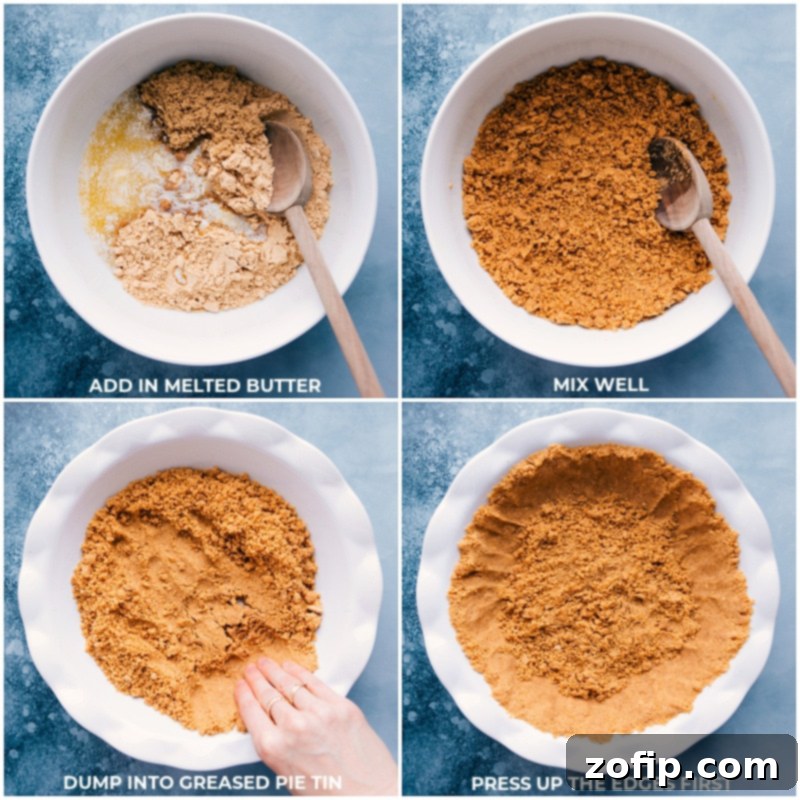
In a medium-sized mixing bowl, combine your finely crushed graham cracker crumbs, granulated sugar (or light brown sugar for an added depth of flavor), and the optional pinch of fine sea salt and ground cinnamon. Stir these dry ingredients together thoroughly with a spoon or whisk to ensure they are evenly distributed. Next, it’s time to incorporate your cooled melted butter. It is absolutely vital that the butter has cooled to room temperature; hot butter will “fry” the crumbs, resulting in a greasy, soggy crust that won’t set correctly. Gradually add the cooled butter, stirring until the mixture is uniformly moistened and resembles damp sand. When you press a small handful between your fingers, it should hold its shape. This consistency indicates the perfect butter-to-crumb ratio has been achieved.
Step 3: Press and Form for Unyielding Sturdiness
Once your perfectly moistened mixture is ready, transfer it into your chosen pie pan. Begin by using your fingers to press the crumbs firmly and evenly into the bottom of the pan. The goal here is to create a compact, uniform layer. After establishing the base, carefully work your way up the sides of the pan, pressing the crumbs against the edges to form a consistent wall. For ultimate sturdiness, a professional finish, and to prevent crumbling, grab the bottom of a flat 1-cup measuring cup or a clean, flat-bottomed glass. Use it to firmly pack and compress the crumbs across the entire bottom and up the sides of the pan. Don’t shy away from applying good pressure – the tighter you compress the crust, the less likely it is to fall apart when you cut into your delicious dessert. This firm compression is the single most important step for a well-formed, unyielding crust.
Step 4: Set for Optimal Texture: Bake or Chill
With your crust firmly pressed into the pan, you now have two excellent options for setting it, depending on your recipe’s requirements and your personal preference:
- Option A: Baking for a Crisper Finish: For a wonderfully golden, crispier crust that provides robust support for wetter fillings, preheat your oven to 350°F (175°C). Place the formed crust in the oven and bake for approximately 8-10 minutes, or until you notice the edges are lightly golden and the crust emits a fragrant, toasty aroma. Once baked, remove it from the oven and allow it to cool completely to room temperature before adding any filling. This cooling period is crucial to prevent the crust from becoming soggy.
- Option B: Chilling for No-Bake Desserts: If your dessert recipe is a no-bake creation (like a no-bake cheesecake or a creamy pudding pie), simply cover the pressed crust tightly with plastic wrap and transfer it to the refrigerator for at least 20 minutes, or to the freezer for 10 minutes. This chilling period allows the butter to re-solidify thoroughly, resulting in a firm, stable base without the need for baking. Ensure it remains chilled until you’re ready to fill it.
Step 5: Fill and Enjoy Your Culinary Masterpiece
Once your graham cracker crust is perfectly set and fully cooled (if baked), it is ready to be filled with your chosen deliciousness. Whether you’re preparing a luscious creamy cheesecake, a tangy and refreshing key lime pie, a rich chocolate silk pie, or a delicate custard tart, your expertly crafted homemade graham cracker crust will provide the ideal, delicious foundation. For no-bake crusts, remember to keep them chilled until the very last moment before serving to maintain their firm and satisfying texture.
Pro Tip: For Effortless Removal and Perfectly Clean Slices
To make serving your pie incredibly easy and ensure you get picture-perfect, clean slices every single time, consider a clever trick: line your pie pan with parchment paper before you add the graham cracker crumbs. Make sure to leave a slight overhang of parchment paper on the sides of the pan. Once your crust is completely set (whether it’s been baked or chilled), you can simply use the parchment paper overhang to gently lift the entire crust out of the pie pan. This allows for effortless transfer to a cutting board, where you can then slice it with precision, guaranteeing beautiful, pristine pieces without any sticking or crumbling at the bottom. This small step makes a huge difference in presentation and ease of serving!

Optimizing Storage for Your Graham Cracker Crust
Proper storage is paramount to maintaining the freshness, texture, and structural integrity of your homemade graham cracker crust. While the crust is always at its absolute best when used the same day it’s prepared, you certainly have the option to make it ahead of time. A baked crust can be stored, tightly covered with plastic wrap or foil, at room temperature for up to 2 days. For longer storage, or if you’ve prepared a no-bake crust, it can be kept in the refrigerator, again, tightly wrapped, for up to a week. To prevent the crust from drying out, absorbing unwanted refrigerator odors, or losing its delicate flavor, it is crucial to ensure it is completely covered and sealed, whether in an airtight container or thoroughly wrapped. Avoid leaving an unbaked crust uncovered for more than a few hours, as it will quickly lose moisture and become less pliable and more difficult to work with.
Delicious Desserts Perfectly Paired with Graham Cracker Crust:
Desserts
Coconut Cream Pie Recipe
Desserts
Key Lime Pie
Desserts
Bright & Zesty Lemon Pie Recipe
Pies
Classic Banoffee Pie Recipe
Print Recipe
Homemade Graham Cracker Pie Crust
Recipe Video Guide
Equipment Needed
- Blender or a food processor, essential for efficiently crushing graham crackers into very fine crumbs.
- Pie pan A standard 9-inch pie pan is ideal for this recipe.
- Mixing bowl and Spatula For combining your ingredients thoroughly.
- Measuring cups and spoons For accurate and precise ingredient measurement.
Ingredients List
- 1-3/4 cups graham cracker crumbs (approximately 12–13 full graham cracker sheets once crushed—refer to note 1 for best measurement practice)
- 6 tablespoons unsalted butter (melted and crucially cooled to room temperature)
- 1/4 cup granulated sugar (or light brown sugar for a richer, toasty note)
- 1/8 teaspoon fine sea salt (optional, but highly recommended as it brightens and enhances sweetness)
- 1/4 teaspoon ground cinnamon (optional, an excellent addition for pumpkin or apple fillings)
Detailed Instructions
- Melt and Cool the Butter: In a microwave-safe bowl, gently melt the unsalted butter. Once completely melted, set it aside and allow it to cool for at least 5 minutes, or until it reaches room temperature. This step is critical for a non-greasy crust; hot butter will result in a soggy and crumbly texture. If your recipe calls for a baked crust, preheat your oven to 350°F (175°C) now.
- Prepare Graham Cracker Crumbs: Using a blender or food processor, process the graham crackers until they are finely ground into even crumbs. It’s important to re-blend any larger pieces to ensure a uniform consistency. Measure out precisely 1 and 3/4 cups of these fine graham cracker crumbs (refer to Note 2 in the Recipe Notes section for accurate measuring tips) and transfer them into a large mixing bowl.
- Combine Ingredients: Add the granulated sugar (or light brown sugar), fine sea salt, and ground cinnamon (if using) to the bowl with the graham cracker crumbs. Stir these dry ingredients thoroughly to ensure even distribution. Next, pour the cooled melted butter into the bowl, using a spatula to scrape out every last bit. Gently stir with a wooden spoon or spatula until the mixture is uniformly moistened and resembles damp sand. When you press a handful of the mixture between your fingers, it should hold its shape.
- Form the Crust: Spread the graham cracker mixture evenly into your prepared 9-inch pie pan. Begin by using your fingers to press the crumbs firmly into the bottom of the pan, creating a compact and even layer. Then, work your way up the sides of the pan, pressing the crumbs against the edges to form a consistent wall. For ultimate compactness and a professional, sturdy finish, use the bottom of a flat 1-cup measuring cup or the back of a spoon to thoroughly compress the entire crust, focusing especially on the bottom. This firm compression is crucial for preventing a crumbly crust when sliced.
- Bake or Chill to Set: Choose your preferred method to set the crust:
- To Bake: Place the formed crust in the preheated 350°F (175°C) oven and bake for 8 minutes, or until the edges are lightly golden and the crust is fragrant. Remove from the oven and allow it to cool completely to room temperature before adding any filling.
- To Chill (No-Bake): If your recipe is no-bake, cover the formed crust tightly with plastic wrap and transfer it to the refrigerator for at least 20 minutes, or to the freezer for 10 minutes. This chilling period allows the butter to solidify, creating a firm and stable crust. Keep the no-bake crust chilled until you are ready to fill it.
Recipe Notes & Expert Tips
Note 2: Perfecting Your Crumb Measurement: To achieve an exact 1-3/4 cups of crumbs, slightly overfill your dry measuring cup and then use the flat back of a table knife or a straight edge to level off the top. This technique eliminates air pockets and guarantees an accurate, consistent measurement every time, preventing your crust from being too crumbly or too buttery.
Note 3: Scaling the Recipe for Different Pan Sizes: The beauty of this graham cracker crust recipe is its remarkable adaptability. The fundamental method for preparing the crust remains consistent regardless of the dessert; only the quantities of ingredients and the decision to bake or chill will change based on your pan size. Here’s a handy guide for effortlessly adjusting the recipe:
- For an 8×8-inch Square Pan: Double the entire recipe to ensure adequate coverage for both the bottom and slightly up the sides.
- For a 9×9-inch Square Pan: Similar to the 8×8-inch pan, you will need to double the recipe for proper coverage and thickness.
- For a 9×13-inch Rectangular Pan (Standard Casserole Size): To generously cover this larger surface area, triple the entire recipe.
- For a Jelly Roll Pan (approximately 10.5×15.5 inches): This larger pan requires a more substantial crust, so quadruple the entire recipe.
- For a Half-Sheet Pan (approximately 18×13 inches): For an extra-large crust, you will also need to quadruple the entire recipe.
- For Muffin Tin Crumb Crusts (Miniature): Lightly grease or line the cavities of a miniature muffin tin with paper liners. Add about 1 tablespoon of the prepared crust mixture into each cavity. Press the mixture firmly against the base and barely up the sides. For a truly compact bottom, use the top of a milk bottle cap or a small, flat tamper to press down. Chill the filled muffin tin for 15–20 minutes, then bake at 350°F (175°C) for 10 minutes until lightly golden. Allow them to cool fully before using an off-set spatula to carefully remove the individual crust shells. These are perfect for mini cheesecakes or tarts!
Storage: To maintain optimal freshness and texture, store any leftover Graham Cracker Crust (whether baked or unbaked) in an airtight container at room temperature for up to 2 days. For extended preservation, you can refrigerate the crust for up to a week. Always ensure it is tightly covered to prevent drying out and to protect it from absorbing other refrigerator odors.
Nutrition Information (Approximate)
Calories: 212kcal |
Carbohydrates: 26.3g |
Protein: 1.9g |
Fat: 11.3g |
Cholesterol: 22.9mg |
Sodium: 174.2mg |
Fiber: 0.9g |
Sugar: 12.3g
Nutrition information is automatically calculated and should be considered an approximation. It’s provided for informational purposes only and may vary based on ingredients used and preparation methods.
Loved this recipe? Share your thoughts below!
Creative Variations to Explore
Switch Things Up: Customize Your Crust!
While the classic graham cracker crust is a timeless and beloved favorite, don’t hesitate to experiment with these exciting variations to perfectly match and enhance your dessert creations:
- Mini Individual Crusts: These are absolutely perfect for elegant dessert bars, adorable mini cheesecakes, or charming single-serving tarts. To make them, generously grease or line the cavities of a miniature muffin tin with paper liners. Press about 1 tablespoon of the prepared crust mixture into each cavity, gently working it up the sides slightly to form a small cup. Use the top of a milk bottle cap or a small, flat tamper to firmly press the bottom for a compact, sturdy base. Chill the filled muffin tin for 15–20 minutes, then bake at 350°F (175°C) for 10 minutes, or until they are lightly golden. Allow them to cool completely before carefully removing the individual crust shells with an off-set spatula.
- Effortless No-Bake Crust: For those hot summer days when turning on the oven is unthinkable, or simply when you desire a quick preparation, this crust works beautifully as a no-bake option. After firmly pressing the mixture into your chosen pie pan, simply freeze it for 10 minutes or chill in the refrigerator for 20 minutes. This essential chilling period allows the butter to solidify and the crust to firm up completely, making it perfectly ready for your favorite no-bake fillings like creamy puddings, luscious custards, or refreshing ice cream.
- Decadent Chocolate Crust: Elevate your chocolate-based desserts by swapping out regular graham crackers for richly flavored chocolate graham crackers. Alternatively, for a subtle hint of spice, you can opt for cinnamon graham crackers. For a truly deep, dark, and robust chocolate experience, you might also consider an Oreo cookie crust, which offers a distinct chocolate flavor and a slightly different, wonderfully crumbly texture, ideal for dense, creamy fillings that benefit from a strong base.
- Nutty Graham Crust: Introduce a delightful textural contrast and an extra layer of flavor by adding 1/4 cup of finely ground nuts (such as pecans, walnuts, or almonds) to your graham cracker crumbs before mixing with the butter and sugar. This variation imparts a wonderful depth of flavor and a slightly different mouthfeel, proving especially fantastic for fall-themed pies or nutty cheesecake fillings.
- Spiced Ginger Snap Crust: For a festive, more robust, and warming flavor profile, consider replacing the graham cracker crumbs entirely with crushed ginger snap cookies. This provides a wonderfully spicy and aromatic base that pairs exceptionally well with seasonal fillings like pumpkin, apple, or even rich chocolate creations. Be mindful to slightly adjust the sugar content in the recipe, as ginger snaps are typically sweeter than graham crackers.
Graham Cracker Pie Crust Recipe: Frequently Asked Questions
Got questions about making the perfect graham cracker crust? Here are comprehensive answers to some of the most common queries, ensuring your baking experience is smooth, successful, and yields consistently delicious results.
A crumbly graham cracker crust is a common frustration that can mar an otherwise perfect pie. To achieve a sturdy crust that slices cleanly every time, focus on these critical steps:
1. Thoroughly Crush the Graham Crackers: The most important factor is the consistency of your crumbs. Ensure your graham crackers are crushed into very fine, uniform crumbs. Any larger pieces or uneven textures will create weak points in the crust, making it prone to crumbling. A food processor or high-speed blender is your best tool for achieving this ideal fine consistency.
2. Use Cooled Melted Butter: The melted butter acts as the primary binder for your crust. It’s essential that the butter is not only melted but also cooled to room temperature before you mix it with the crumbs. This allows the butter to evenly coat each crumb without “frying” them, creating a stronger and more consistent bond when it re-solidifies.
3. Compress Tightly and Uniformly: This is arguably the most crucial step for a sturdy crust. After combining all ingredients, press the crumb mixture into the pie pan as firmly and evenly as possible. We highly recommend using the flat bottom of a 1-cup measuring cup or a clean, sturdy glass to really compact the crumbs into a dense, solid layer on both the bottom and up the sides of the pan. The more compressed your crust, the less likely it is to crumble when you cut into it.
4. Allow Proper Setting Time: Whether you choose to bake or chill your crust, ensuring it has adequate time to set is vital. Baking allows the butter and sugar to caramelize slightly, creating a more cohesive and crisp structure. Chilling provides sufficient time for the butter to fully re-solidify and lock the crumbs into place. Do not rush this setting period!
A soggy graham cracker crust can be disappointing and detract from an otherwise delicious pie. This unfortunate outcome typically stems from one of two primary reasons:
1. Using Hot Butter: As mentioned in the instructions, mixing hot melted butter with the graham cracker crumbs can prematurely “cook” them. This can lead to a greasy, rather than properly bound, texture that is more susceptible to becoming soggy. Always let your melted butter cool to room temperature before incorporating it into the dry ingredients.
2. Excess Moisture from Filling: For pies or desserts with very wet fillings (such as some custards, fresh fruit pies, or creamy no-bake concoctions), an unbaked or insufficiently baked crust can easily absorb moisture from the filling. This absorption is the main culprit behind sogginess. To combat this, we strongly recommend pre-baking your crust first until it’s a beautiful golden brown and visibly set. After baking, allow it to cool completely to room temperature before adding any wet filling. This crucial step creates a protective barrier that helps prevent the crust from absorbing excessive liquid. For an even more robust moisture barrier, you can optionally brush the baked and cooled crust with a thin layer of egg white and then bake it again briefly until the egg white is set.
Making a graham cracker crust for a cheesecake follows the same fundamental principles and recipe as a pie crust. However, the amounts will naturally vary depending on the pan size you’re using, and notably, cheesecake crusts are almost always baked to provide a sturdy base for the rich filling. The core method remains consistent: use finely crushed crumbs, cooled melted butter, sugar, and ensure firm compression into the pan.
Here’s a quick reference guide for adjusting the recipe for different pan sizes commonly used for cheesecakes:
– For an 8×8-inch Square Pan: You’ll need to double the base recipe to ensure adequate coverage for both the bottom and to create a slight rise up the sides of the pan.
– For a 9×9-inch Square Pan: Similar to the 8×8-inch pan, double the recipe for proper coverage and a good crust thickness.
– For a Standard 9-inch Round Springform Pan (most common for cheesecakes): The base recipe (1 and 3/4 cups crumbs, 6 tbsp butter, 1/4 cup sugar) is generally sufficient for the bottom of a 9-inch springform pan, with enough to go a small way up the sides if desired. If you prefer a noticeably thicker crust that extends higher up the sides for a more dramatic look, consider increasing the recipe by about 50% (e.g., approximately 2.5 cups crumbs, 9 tbsp butter, 6 tbsp sugar).
– For a 9×13-inch Rectangular Pan (ideal for cheesecake bars): To generously cover this larger surface area with a substantial crust, you will need to triple the entire recipe.
– For a Jelly Roll Pan (approximately 10.5×15.5 inches) or a Half-Sheet Pan (approximately 18×13 inches): For these very large pans, typically used for large batches of cheesecake bars or layered desserts, you should quadruple the entire recipe to ensure a robust and even crust that can fully support your decadent cheesecake.
Always remember to press the crust very firmly into the pan for stability, and for cheesecakes, the crust is almost always pre-baked for about 8-10 minutes (or until lightly golden) before adding the filling. This pre-baking ensures the crust is set, slightly crisp, and less prone to becoming soggy under the weight and moisture of the cheesecake filling.
We truly hope this comprehensive guide empowers you to create the most delicious and reliable homemade graham cracker pie crust for all your baking adventures. Experiment with variations, enjoy the process, and delight in the flawless results. Happy baking!