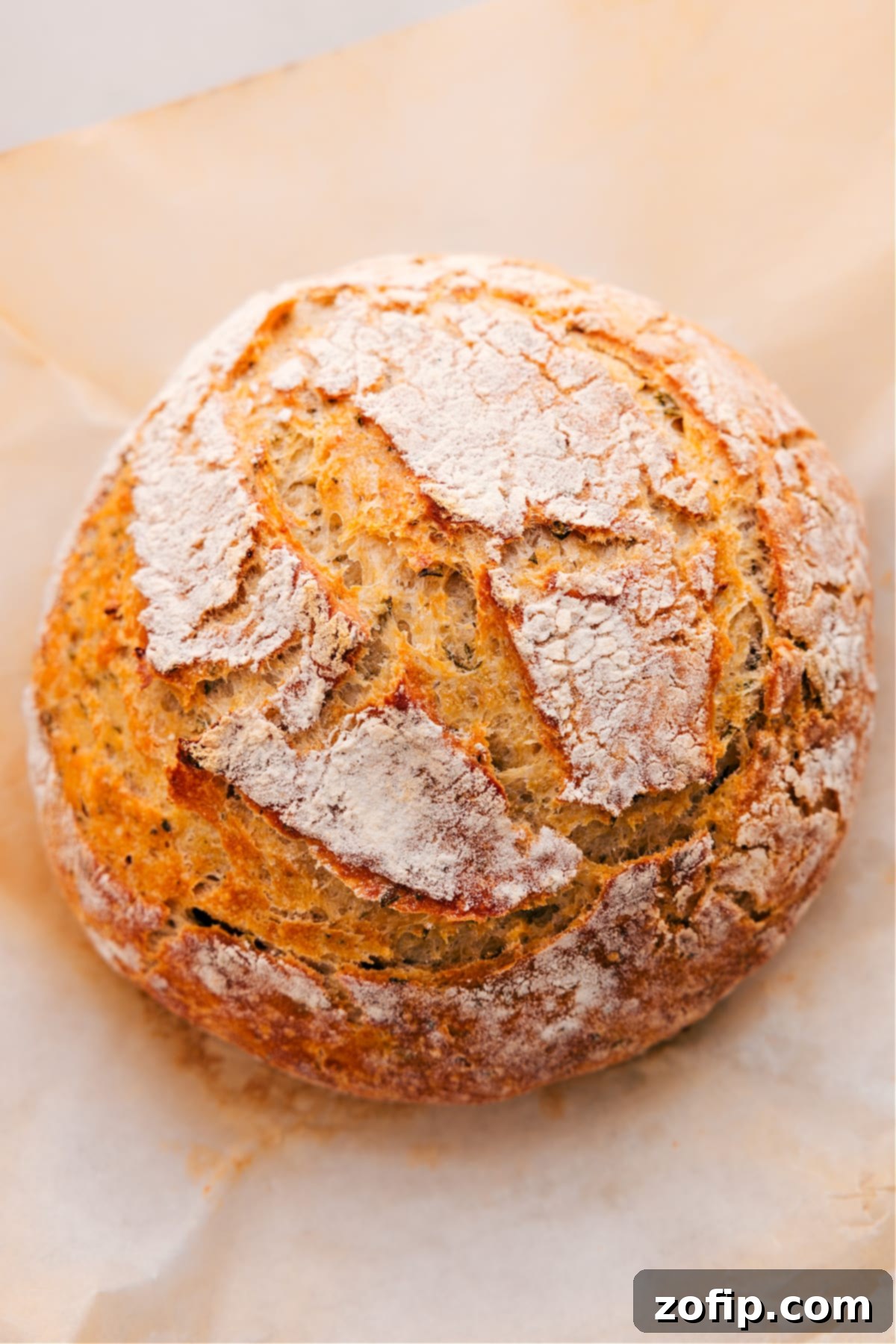
Effortless No-Knead Herb Bread: A Simple Recipe for Ultimate Flavor
Discover the joy of baking artisan-quality bread right in your own kitchen with this incredibly easy No-Knead Herb Bread recipe. Infused with the aromatic essence of fresh rosemary, vibrant thyme, and pungent garlic, this bread delivers an unforgettable flavor that will transform any meal. Forget complex techniques or expensive equipment—this recipe is designed for simplicity. Just a few minutes of mixing, an overnight rest to let the magic happen, and a quick bake the next day are all it takes to achieve a warm, crusty loaf that tastes like it came from a professional bakery. Perfect for novice bakers and seasoned pros alike, this is your new go-to recipe for homemade bread.
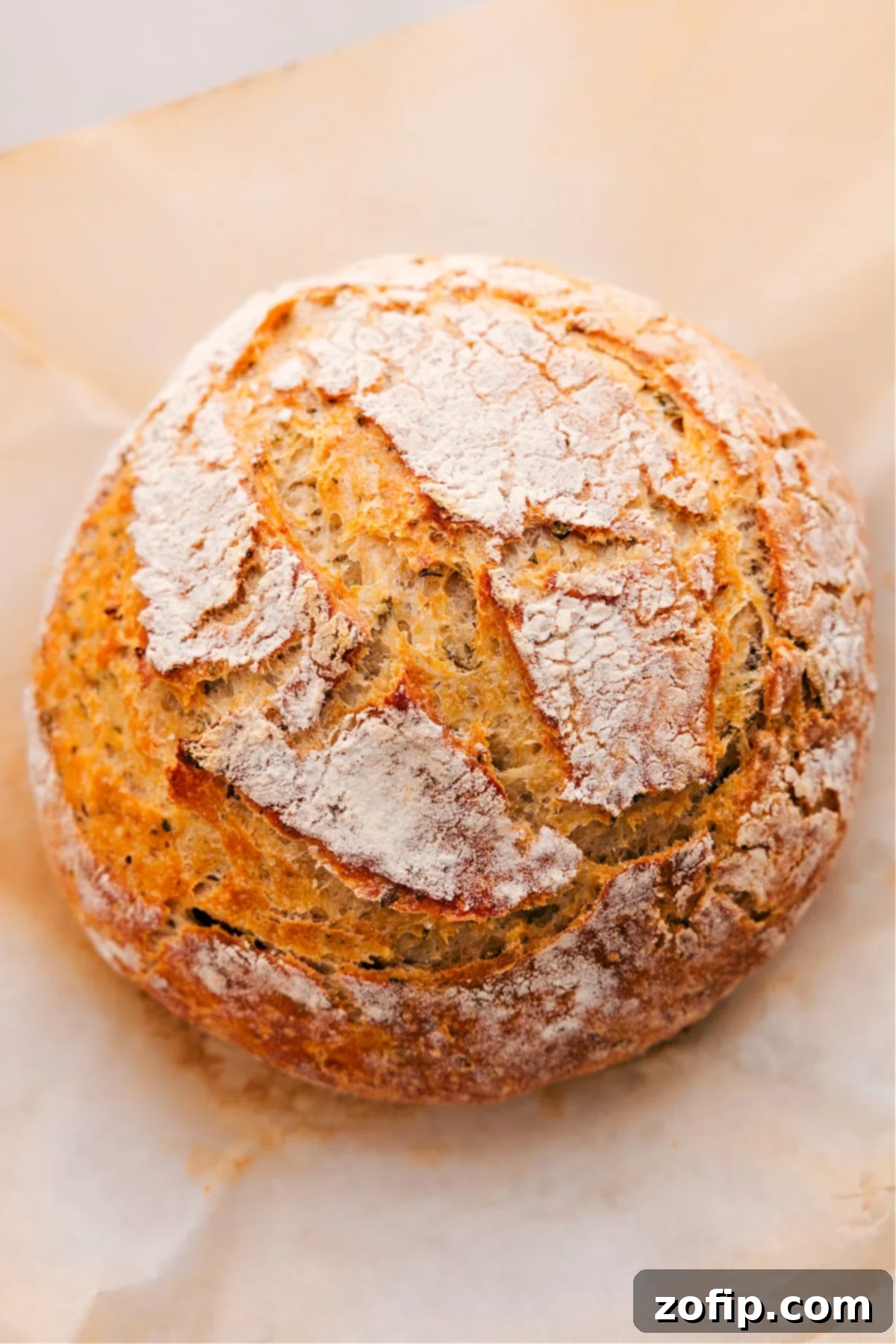
Bake Irresistible Herb Bread with Minimal Effort
Imagine a loaf of bread so delicious, so aromatic, and so satisfying that it becomes the star of your dinner table. This easy herb bread recipe promises exactly that! Each bite offers a delightful blend of warm, crusty exterior and a tender, airy interior, bursting with savory herbs. It’s the perfect accompaniment to almost any meal, transforming a simple bowl of your favorite soup or stew into the ultimate comfort food experience. From casual weeknight dinners to special gatherings, this bread is sure to impress without demanding hours of your time.
Why This No-Knead Herb Bread Will Become Your Favorite Recipe:
If you’ve been hesitant to try baking bread from scratch, this recipe is designed to change your mind. It simplifies the entire process, making homemade bread accessible to everyone. Here are just a few reasons why you’ll fall in love with this incredible herb bread:
- Effortless Preparation – No Kneading Required: Say goodbye to strenuous kneading, sticky countertops, and specialized bread makers or stand mixers. This recipe relies on a simple mix-and-rest method, allowing time to do the work of developing gluten and flavor. It’s perfect for busy schedules, requiring only a few minutes of active preparation.
- Unmatched Flavor and Texture: The long, slow fermentation process is the secret to this bread’s incredible depth of flavor and signature chewy interior with a wonderfully crisp crust. The herbs infuse throughout the dough, creating a truly aromatic and delicious loaf that far surpasses anything store-bought.
- Flexible Baking Schedule: Life can be unpredictable, but your baking doesn’t have to be. The dough can rest for 8 to 18 hours, giving you the freedom to mix it up in the evening and bake it at your convenience the next day. This flexibility makes fresh, homemade bread a reality, even on busy days.
- Simple, Wholesome Ingredients: You likely already have most of what you need in your pantry! This recipe calls for basic kitchen staples—flour, water, yeast, salt, honey, and fresh herbs—proving that the most delicious foods often come from the simplest ingredients.
- Impressive Results with Minimal Skill: Despite its professional appearance and delightful taste, this bread requires no advanced baking skills. Follow the straightforward steps, and you’ll achieve a stunning, bakery-quality loaf every single time, ready to impress family and friends.
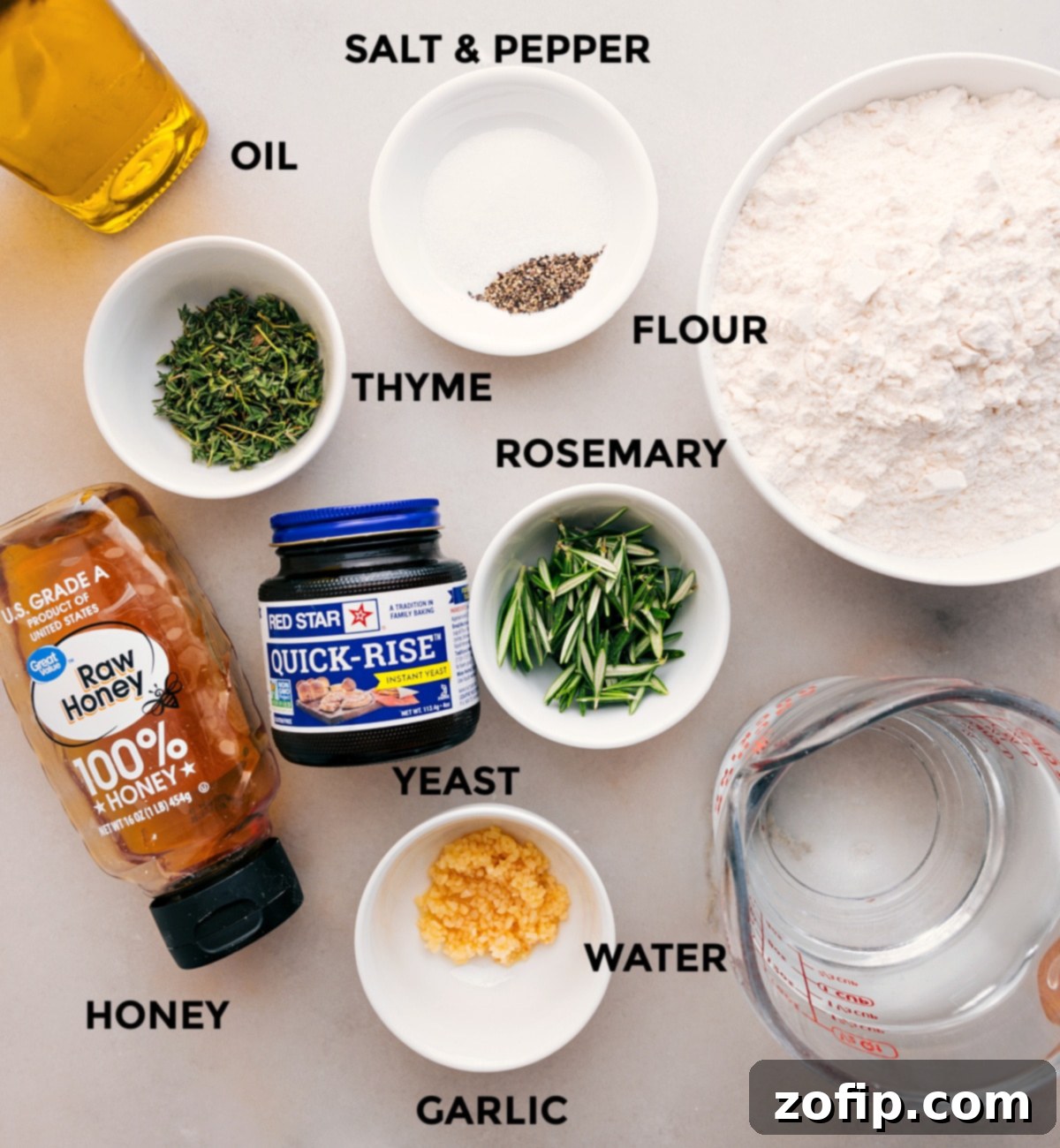
Essential Ingredients for Your Flavorful Herb Bread
Creating this delicious no-knead herb bread starts with a handful of accessible ingredients. Each plays a crucial role in developing the perfect texture and the rich, aromatic flavor profile you’ll come to love. Here’s a closer look at what you’ll need and why:
- Instant or Quick-Rise Yeast: This type of yeast is fantastic for no-knead recipes because it doesn’t require prior proofing and can be mixed directly with dry ingredients. It’s incredibly reliable and works quickly. While active dry yeast can also be used, you might need to proof it first in the warm water and honey to ensure it’s active before combining with the dry ingredients. A good quality yeast is fundamental for a well-risen, airy loaf.
- Honey: More than just a touch of sweetness, honey serves as food for the yeast, helping it activate and thrive, which is crucial for the dough’s rise. It also contributes to the beautiful golden-brown color of the crust and adds a subtle depth of flavor that complements the savory herbs.
- Warm Water: The temperature of your water is vital. It should feel comfortably warm to the touch, similar to a baby’s bathwater (around 105-115°F or 40-46°C). Water that’s too hot can kill the yeast, while water that’s too cold won’t activate it effectively, leading to a flat loaf. This warm environment awakens the yeast, allowing it to begin its work of fermentation.
- All-Purpose Flour: For this recipe, all-purpose flour is an excellent choice, yielding a bread with a soft, tender crumb and a delightfully crisp crust. Its moderate protein content provides enough structure without making the bread overly dense. If you desire a chewier texture, bread flour (with its higher protein content) can be substituted, which will develop even more gluten.
- Salt: Never underestimate the power of salt in bread baking! It’s not just for flavor; salt also helps control the yeast’s activity, preventing it from rising too quickly and ensuring a more balanced fermentation. It also strengthens the gluten structure, contributing to a better crumb and crust. Don’t skimp on the salt, as it truly brings out the savory notes of the herbs.
- Fresh Minced Garlic: Garlic is a key player in the robust flavor of this herb bread. Freshly minced garlic offers the most vibrant and aromatic punch. If fresh isn’t available, jarred minced garlic is a convenient alternative. In a pinch, garlic powder can be used, but adjust the quantity and expect a slightly mellower flavor.
- Fresh Rosemary & Thyme: These two herbs are a match made in heaven for bread. Fresh herbs provide the most intense and fragrant flavor, permeating the entire loaf. Rosemary offers a distinctive piney, slightly peppery aroma, while thyme is subtly earthy with a delicate lemony hint. If fresh herbs are unavailable, dried herbs can be used, but remember that dried herbs are more concentrated, so use about one-third of the amount specified for fresh.
- Black Pepper: A dash of freshly ground black pepper adds a subtle kick and an extra layer of warmth and depth to the flavor profile. It’s optional, but highly recommended for those who enjoy a little extra complexity in their savory bakes.
- Olive Oil: A touch of olive oil in the dough contributes to a smoother, more tender crumb and enhances the richness of the bread. Drizzled on top before baking, it also helps achieve a beautifully golden and crisp crust, adding to the overall sensory experience.
Customizing Your Loaf: Beyond Rosemary and Thyme for Unique Herb Bread Flavors
While rosemary and thyme create a classic and incredibly delicious combination, the beauty of this no-knead herb bread lies in its versatility. Don’t hesitate to experiment with different herbs and flavorful add-ins to make each loaf uniquely yours. Here’s a guide to expanding your flavor horizons:
A World of Herbs for Your Bread:
Beyond the classic duo, many other herbs can elevate your bread. Remember that fresh herbs always offer the most vibrant flavor, but dried herbs are a perfectly acceptable substitute (use about one-third the amount of fresh).
- Rosemary: Known for its strong, savory, and piney notes, rosemary adds a sophisticated, aromatic depth. It pairs wonderfully with garlic and rich meats.
- Thyme: Lightly lemony, earthy, and highly versatile, thyme is a gentle herb that complements almost any savory dish. It’s excellent on its own or blended with other herbs.
- Oregano: Bold, slightly bitter, and deeply aromatic, oregano brings a Mediterranean flair to your bread. Fantastic with tomato-based dishes or a sprinkle of feta.
- Basil: Sweet and highly fragrant, fresh basil is a classic in Italian cuisine. It’s particularly good in bread destined to be served with pasta or as a base for bruschetta.
- Sage: Earthy, with a distinct, mild bitterness and a peppery undertone, sage is a warming herb perfect for autumnal or winter breads. It complements roasted vegetables and poultry well.
- Marjoram: Often confused with oregano, marjoram is sweeter and more floral, with a delicate citrusy note. It’s milder than oregano and can be used to add a subtle herbaceousness.
- Dill: Offering a subtle anise or licorice-like flavor, dill is surprisingly versatile. It pairs exceptionally well with lighter ingredients like salmon, cream cheese, or a tangy yogurt dip.
- Chives: With their delicate, mild oniony flavor, chives add a fresh, bright note without overpowering. They are a fantastic addition, especially if you plan to enjoy your bread with grilled cheese or a simple butter spread.
- Parsley: Fresh and slightly peppery, parsley (flat-leaf or curly) brightens the flavor of your bread. It acts as a wonderful fresh counterbalance to stronger herbs.
- Cilantro: Bright, citrusy, and distinctive, cilantro is perfect if you’re aiming for a bread with a bolder, more exotic flavor profile. It pairs beautifully with chili, lime, and other vibrant spices.
- Tarragon: Possessing a unique licorice or anise-like flavor, tarragon offers a sophisticated taste. Use it sparingly, as its flavor is quite potent, often complementing fish or chicken dishes.
Add-Ins and Toppings for Extra Flair:
- Extra Herbs: Don’t be shy! For an even more intense herbal flavor, increase the quantity of your chosen fresh herbs. The more, the merrier for true herb lovers.
- Olive Oil & Flaky Sea Salt: Before baking, a generous drizzle of good quality olive oil over the shaped dough, followed by a sprinkle of flaky sea salt, creates an incredibly crispy, golden crust and adds a delightful textural crunch with every bite.
- Cheese: Fold in shredded cheddar, Gruyère, Parmesan, or a medley of your favorite cheeses during the final mixing stage for a rich, savory, and undeniably decadent bread.
- Sun-Dried Tomatoes or Olives: For a Mediterranean twist, chop sun-dried tomatoes (oil-packed, drained) or Kalamata olives and gently fold them into the dough. They add bursts of tangy, salty flavor and a wonderful chewiness.
- Spices: Beyond salt and pepper, consider a pinch of red pepper flakes for heat, onion powder for more savory depth, or even a touch of smoked paprika for a smoky aroma.
- Nuts & Seeds: Mix in pepitas (pumpkin seeds), poppy seeds, sesame seeds, sunflower seeds, or chopped walnuts for added texture, nutritional value, and a lovely nutty flavor. These can be folded into the dough or sprinkled on top before baking.
Achieving Perfection: Key Tips for Your No-Knead Herb Bread
While this recipe is remarkably forgiving, following a few best practices will ensure your homemade herb bread turns out perfectly every time – with a magnificent crust, tender crumb, and incredible flavor. These simple guidelines will elevate your baking experience:
- Select the Right Baking Vessel: The success of no-knead bread largely depends on the right pot. A heavy, oven-safe pot (at least 6 quarts or 5.7 liters) with a tight-fitting lid is essential. Cast iron Dutch ovens are ideal because they retain and distribute heat exceptionally well, creating a steamy environment that mimics a professional baker’s oven. This steam is crucial for developing that beautiful, crispy crust and allowing the bread to rise fully.
- Embrace the Long Rise: Patience is truly a virtue in no-knead bread baking. For the most developed flavor, best texture, and optimal gluten structure, allow your dough to rise for a minimum of 8 hours, and ideally up to 18 hours. This slow, cool fermentation allows the yeast to work its magic, breaking down starches and producing complex flavors that simply can’t be rushed. The longer the rise, the richer the taste!
- Preheat Your Pot Thoroughly: Don’t skip this critical step! Placing your empty pot and its lid in the oven while it preheats for at least 30 minutes ensures it reaches a scorching hot temperature. When the dough is transferred to this hot pot, the immediate burst of heat (known as “oven spring”) causes the bread to rapidly expand, contributing to a lofty loaf. The hot lid traps steam, which keeps the crust soft initially, allowing the bread to fully expand before crisping up beautifully.
- Cool Completely Before Slicing: This might be the hardest tip to follow, especially when the aroma of fresh bread fills your kitchen, but it’s absolutely crucial. As the bread cools, residual heat continues to cook the interior, setting the crumb and preventing it from becoming gummy or mushy. Slicing too early can release steam prematurely, leading to a dense, wet texture. Let the loaf cool for at least 30 minutes, or even an hour, on a wire rack for the best possible result. A wire rack allows air circulation on all sides, preventing a soggy bottom.
- Handle the Dough Gently: After its long rise, your dough will be bubbly and delicate. When transferring it to your floured surface and shaping it into a ball, use a light touch. Overworking the dough at this stage can deflate it and prevent a good rise in the oven. A dough scraper can be a very helpful tool for this.
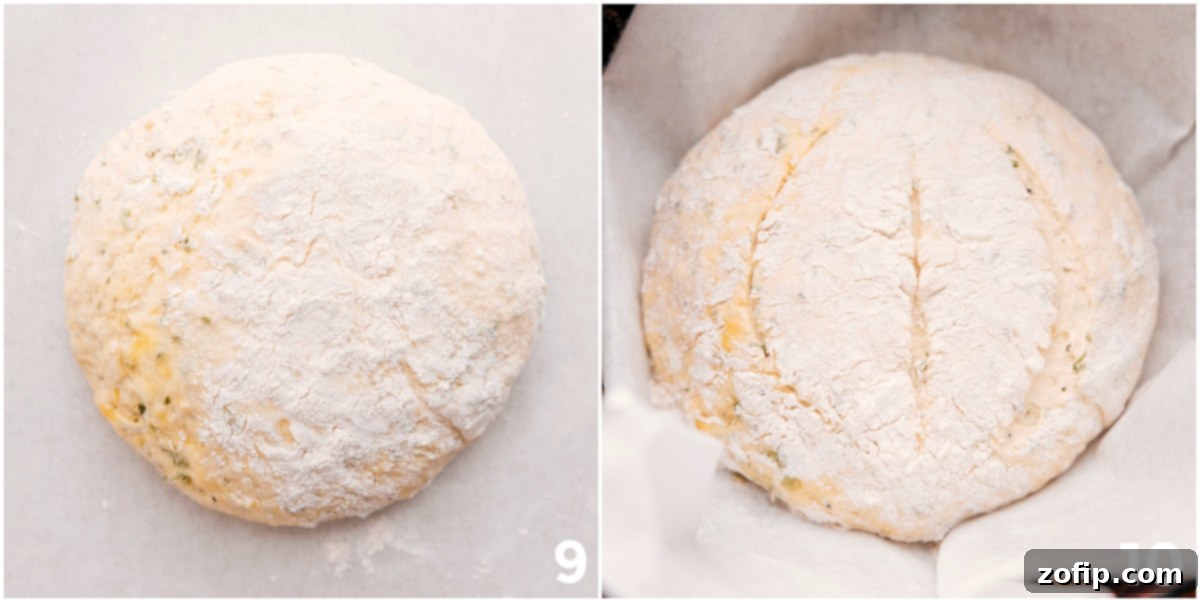
- Score for Aesthetics and Better Rise (Optional): If you have a bread lame or a very sharp knife, you can score the top of your dough with 3-5 slashes just before baking. This isn’t strictly necessary but helps control where the bread expands, creates a beautiful pattern, and prevents uncontrolled tearing of the crust.
Serving Suggestions: Enjoying Your Homemade Herb Bread
The beauty of this no-knead herb bread lies not only in its ease of preparation but also in its incredible versatility. Once you’ve pulled a warm, fragrant loaf from the oven, the possibilities for enjoyment are endless. Here are some delicious ways to serve your freshly baked herb bread:
- Perfect for Dunking: There’s nothing quite like tearing off a piece of warm, crusty bread and dunking it into a hearty dish. This herb bread is an ideal companion for robust stews and creamy soups. Try it with a rich Vegetable Beef Soup, a comforting Crockpot Chicken Stew, or a rustic lentil soup. The herbs complement savory broths beautifully.
- An Exquisite Side Dish: Serve thick slices alongside any main course to elevate the meal. It pairs wonderfully with roasted chicken, grilled fish, pasta dishes, or a simple steak. It’s also fantastic with fresh salads, offering a satisfying crunch and herbaceous aroma that balances fresh greens.
- Butter or Your Favorite Spread: Sometimes, simplicity is best. A generous slather of softened butter, perhaps infused with a little extra garlic or honey, is all this flavorful bread needs for a quick, satisfying snack or a delightful appetizer. Consider a touch of gourmet olive oil for dipping as well.
- Elevate Your Sandwiches: Move beyond basic sandwich bread. Use hearty slices of this herb bread for gourmet sandwiches, paninis, or open-faced toasts. Imagine a grilled cheese sandwich made with this bread – pure heaven!
- Creative Toppings and Appetizers:
- Avocado Toast: Toast slices lightly and top with mashed avocado, a squeeze of lemon, red pepper flakes, and a sprinkle of flaky sea salt for a gourmet breakfast or light lunch.
- Hummus Delight: Spread your favorite hummus on toasted slices for a quick, protein-packed snack. Add some roasted vegetables for extra flavor.
- Crostini or Bruschetta: Slice the bread thinly, toast until crisp, then top with classic bruschetta ingredients like diced tomatoes, fresh basil, and balsamic glaze, or get creative with goat cheese and figs, or olive tapenade.
- Garlic Bread: Slice the loaf, spread with garlic butter, and bake until golden for the ultimate homemade garlic bread experience.
Storing and Reviving Your Homemade Herb Bread
Proper storage ensures your delicious herb bread stays fresh for as long as possible. Here’s how to keep it at its best and even bring it back to life:
- Day 1 Freshness: For the crispiest crust on the day it’s baked, leave the bread uncovered, cut-side down, on a cutting board. This allows air to circulate and prevents the crust from softening.
- Beyond Day 1: After the first day, to maintain freshness and prevent staleness, store the bread in an airtight container or a large resealable plastic bag at room temperature. The crust may lose some of its initial crispness, but the interior will remain soft and flavorful. You can easily bring back the crispness by toasting slices or warming the whole loaf briefly in the oven.
- Freezing for Long-Term Enjoyment: This bread freezes beautifully! To freeze, allow the loaf to cool completely. You can freeze it whole, halved, or (most conveniently) sliced. Wrap each piece tightly in plastic wrap, then place them in a freezer-safe airtight bag or container. It will keep well for up to 3 months. When ready to enjoy, simply toast slices directly from the freezer, or thaw a whole loaf at room temperature and refresh in a warm oven.
Quick Baking Tip: No Dutch Oven? No Problem!
While a cast iron Dutch oven is highly recommended for achieving the signature crust of this no-knead bread, you can still bake a fantastic loaf without one. For an excellent alternative method, check out this informative post by The Kitchn, which details how to create a steamy environment in your regular oven to achieve a similar crusty result.

Print Recipe
No-Knead Herb Bread
Equipment
- Large cast-iron pot see note 1
- Parchment paper see note 2
Ingredients
- 2 teaspoons instant yeast
- 2 teaspoons honey
- 1-1/2 cups warm water see note 3
- 3 cups flour
- 1-3/4 teaspoons salt
- 2 teaspoons minced garlic
- 1-1/2 tablespoons finely chopped fresh rosemary or 1 teaspoon dried
- 1-1/2 tablespoons finely chopped fresh thyme or 1 teaspoon dried
- 1/4 teaspoon pepper optional
- 1 tablespoon + 1 teaspoon olive oil divided
- Butter optional, for serving
- Flaky sea salt optional, for serving
Instructions
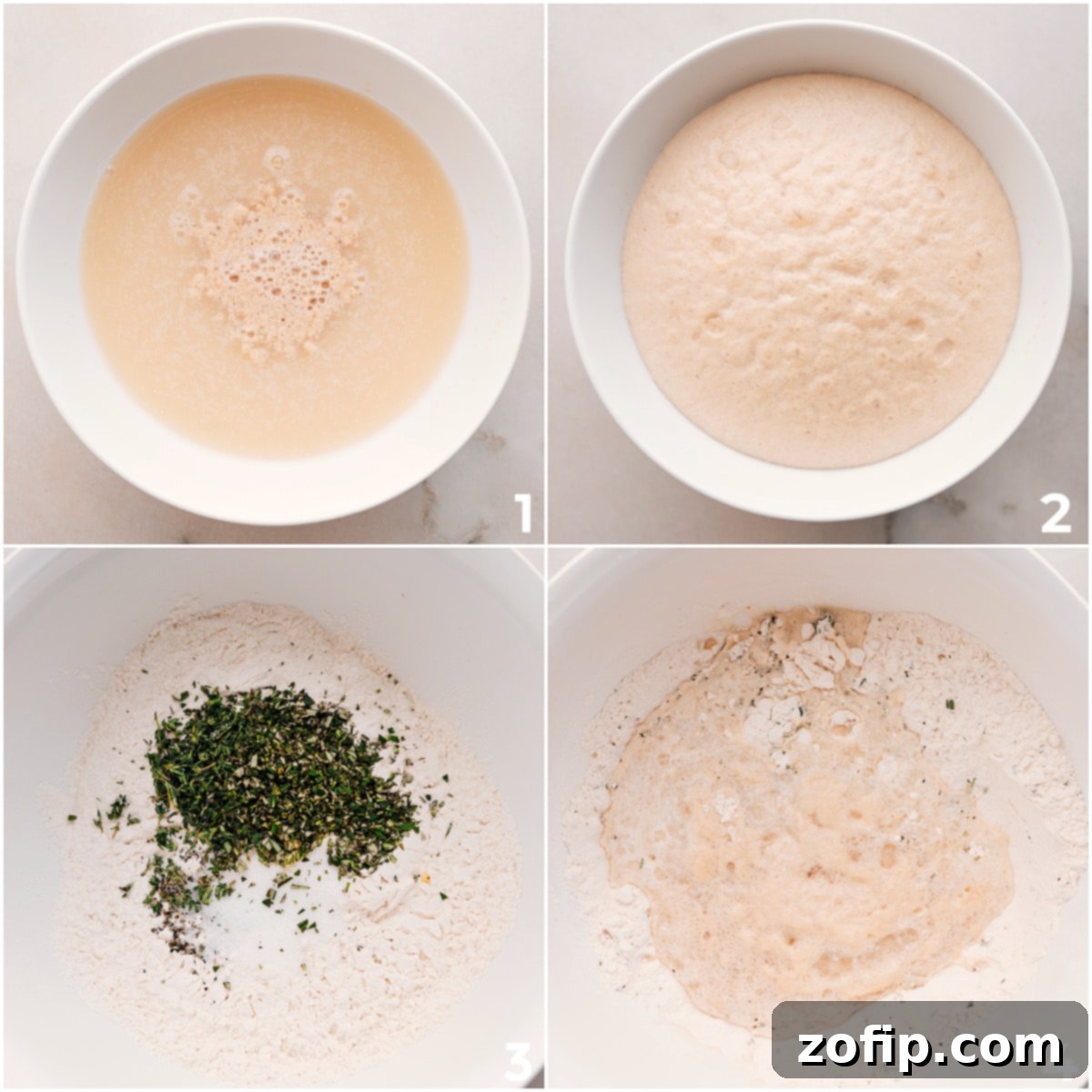
- In a medium bowl, whisk together the yeast, honey, and warm water. Let it sit for 5 minutes until creamy or foamy. If the mixture doesn’t foam, the yeast may be dead, or the water might have been too hot. Start again if this happens.
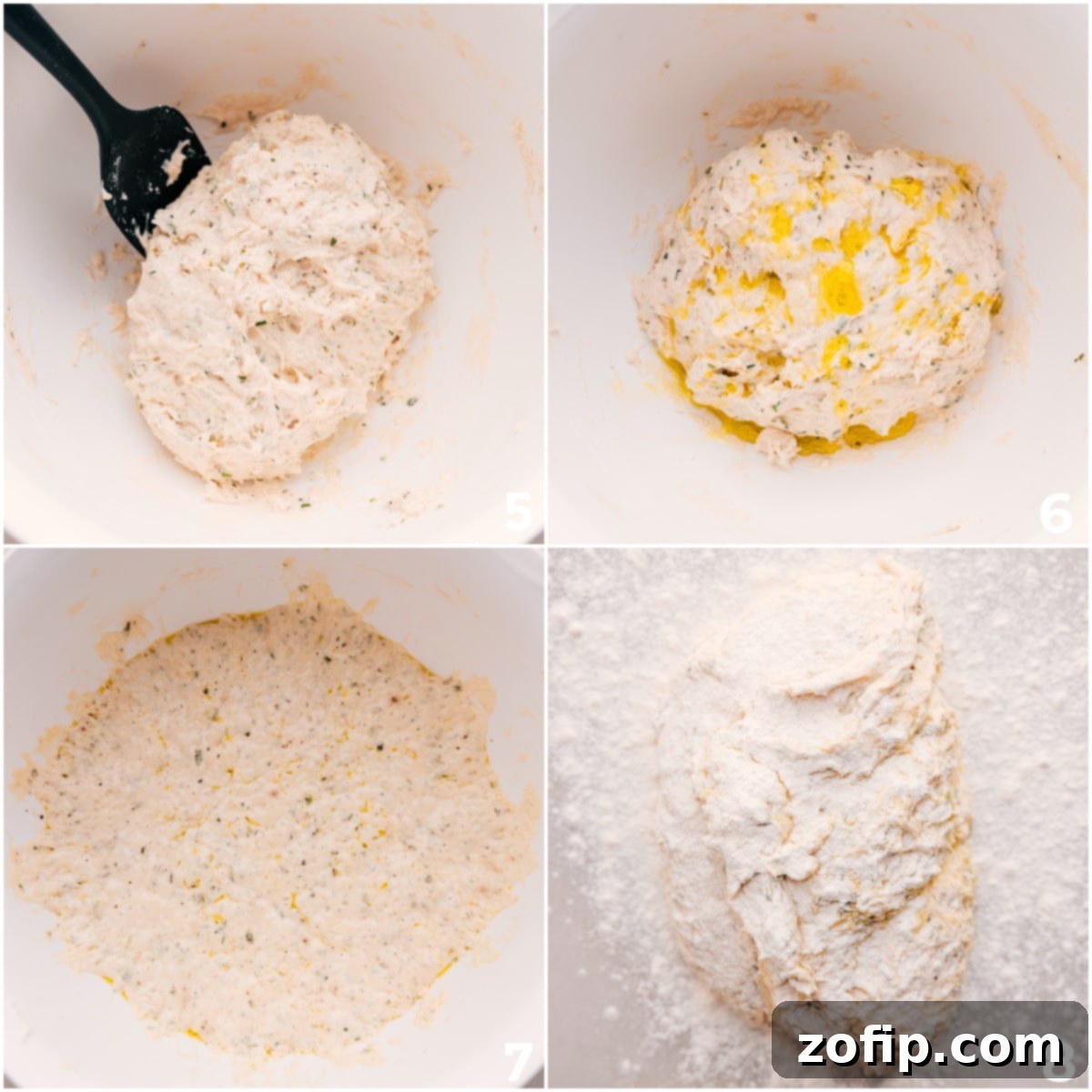
- In a large mixing bowl, mix together flour, salt, garlic, rosemary, thyme, and pepper using a rubber spatula. Add the yeast mixture to the flour mixture and stir until a shaggy dough forms with no dry flour streaks. Use the spatula to pull the dough to one side and drizzle in 1 tablespoon olive oil. Turn the dough to coat it in the oil (it will be sticky). Cover the bowl fully with plastic wrap.
- Let the dough rest overnight at room temperature (around 70°F / 21°C) for 10–18 hours. For a quicker option, see recipe note 4.
- Move an oven rack to the center position and preheat the oven to 450°F (230°C). Place the cast-iron pot (with lid) in the oven to heat for 30 minutes.
- Sprinkle 1 tablespoon of flour on a clean work surface. Use a spatula to scrape the dough out of the bowl onto the floured surface. Sprinkle 1 more tablespoon of flour on top. Gently fold the sides inward with a spatula or dough scraper, making 6 folds to form a rough ball. Transfer the dough ball onto a large piece of parchment paper, flipping it upside down so the seam side is down. Gently shape it into a rough ball. (Optional: Score the top with 3–5 slashes if you have a lamé).
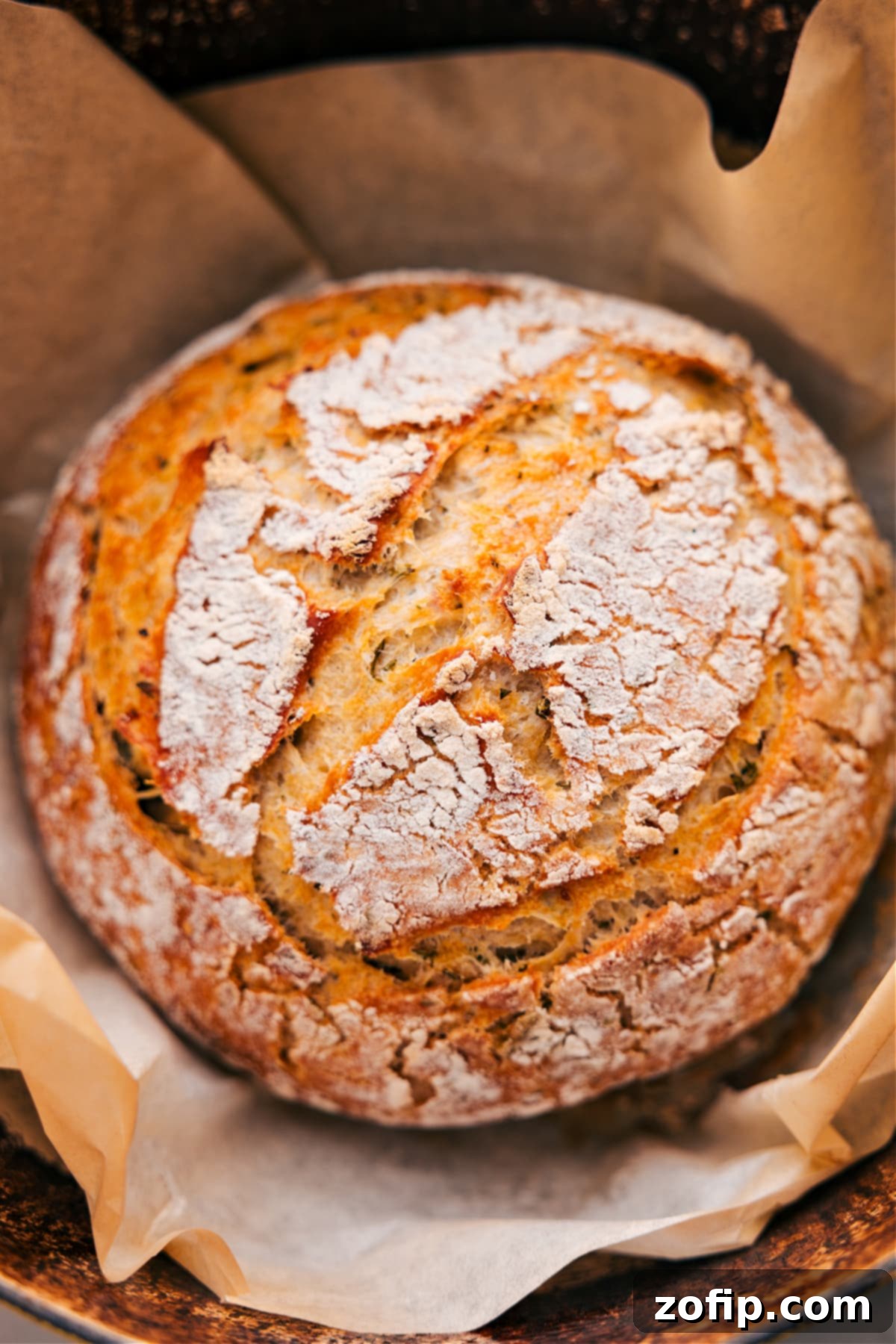
- Carefully remove the heated pot from the oven, lift the parchment paper with the dough, and place it into the pot. Drizzle remaining 1 teaspoon oil on top. Cover with the lid and bake for 30 minutes. Then, remove the lid and bake for an additional 13–20 minutes, until the bread sounds hollow when tapped in the center and the top is a deep golden brown.
- Carefully remove the bread from the pot using the parchment paper, and slide it onto a wire cooling rack. Let it cool for a full 30 minutes before slicing with a sharp serrated knife (see recipe note 5).
Recipe Notes
Note 2: Ensure you use parchment paper, not foil or wax paper, as wax paper will melt in the oven.
Note 3: Test the water temperature by drizzling a few drops on your wrist. It should feel warm and comfortable, not hot.
Note 4: No-Knead Bread In a Hurry: After 2–3 hours, you can bake the bread immediately. The flavor and texture won’t be as developed as after a long rest but will still be tasty.
Note 5: Allowing the bread to cool is crucial to ensure it’s fully baked inside. Cutting too early can result in a mushy interior.
Storage: This bread is best on days 1 and 2. On the first day, leave it out uncovered with the cut side down on a cutting board to keep the crust crisp. After that, store it in an airtight container or bag. The crust may lose its crispness, but the bread will still be great toasted.
Nutrition
Nutrition information is automatically calculated, so should only be used as an approximation.
Like this? Leave a comment below!