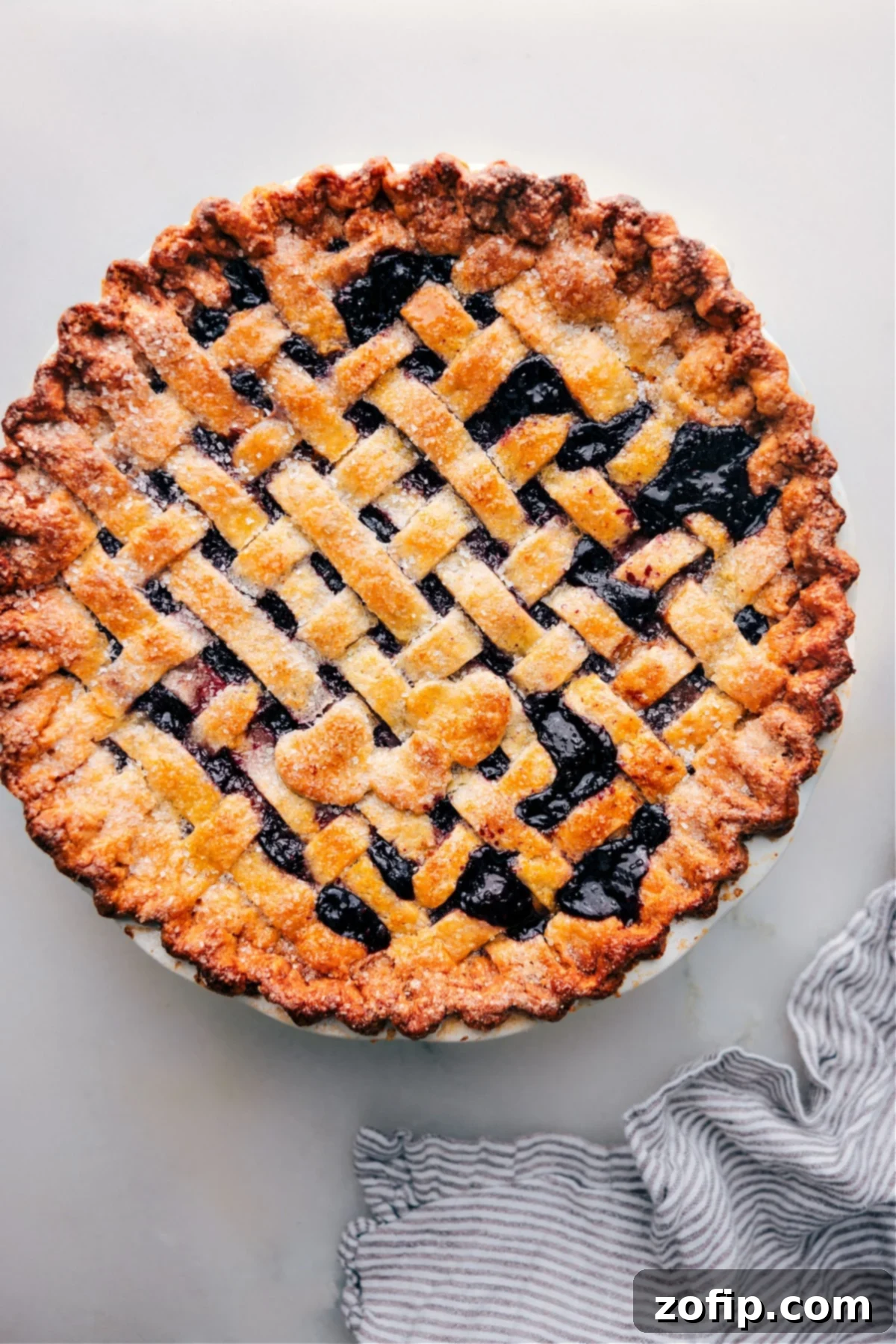
Welcome to what will undoubtedly become your forever Pie Crust Recipe! This foolproof method promises a consistently flaky, tender, and intensely buttery crust, effortlessly achieved with the help of a food processor. Say goodbye to tough, dry, or cracked crusts, and prepare for perfect pies every single time. As a bonus, I’m thrilled to share invaluable pro tips learned directly from a seasoned French pastry chef, ensuring your homemade pie crust will elevate any dessert or savory dish.
Creating a superior pie crust doesn’t have to be daunting. With the right techniques and a few simple ingredients, you can produce a bakery-quality foundation for your favorite fillings. This recipe is designed for both novice bakers and experienced cooks alike, offering a streamlined process without compromising on taste or texture. Get ready to impress with a golden, delectable pie crust that’s surprisingly easy to master!

Author’s Insights
The Only Pie Crust Recipe You’ll Ever Need!
If my husband had to choose just one dessert for the rest of his life, it would undoubtedly be a classic Apple Pie. He’s been known to devour an entire pie in a mere two days flat! The secret to its irresistible charm? This very pie crust. It’s the buttery, flaky foundation I rely on consistently, and it has never once let me down.
What makes this pie crust truly special is its incredible texture and ease of use. It’s perfectly buttery, exquisitely flaky, and remarkably simple to roll out. You won’t encounter frustrating cracks or annoying shrinkage with this recipe. Instead, you’ll achieve a beautiful, perfect pie crust that not only looks stunning but tastes absolutely *amazing*.
Crafting this superior pie crust requires just a few basic pantry staples and, crucially, all butter for an unparalleled depth of flavor. You won’t find any shortening here, as pure butter is key to its rich taste and delicate flakiness. Beyond the ingredients, I’m excited to share my best expert tips, including precise instructions on how to par-bake (or blind bake) a crust and simple strategies to prevent those dreaded soggy bottoms. Trust me, once you experience the quality and simplicity of this homemade pie crust, store-bought alternatives simply won’t compare!
Essential Ingredients for Your Flaky Pie Crust
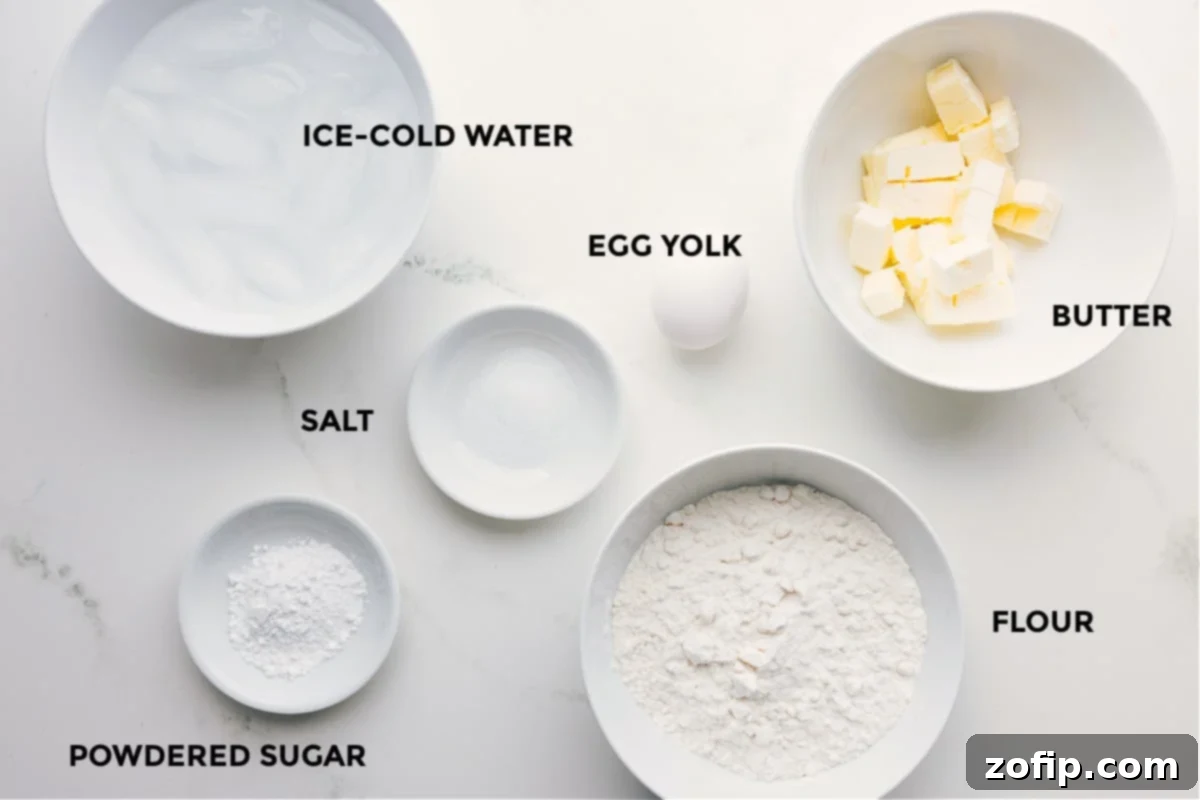
Crafting the perfect pie crust begins with a handful of high-quality ingredients. Each plays a crucial role in achieving that coveted flaky, tender, and buttery texture. Here’s a breakdown of what you’ll need and why:
- Unsalted Butter: This is the star ingredient for both rich flavor and unparalleled flakiness. Using unsalted butter allows you to control the overall salt content of your crust. The key is to keep it as cold as humanly possible, ideally cubed and chilled in the freezer for 10-15 minutes before use. Cold butter creates pockets of steam in the oven, which separate the layers of dough, resulting in a beautifully flaky texture.
- Ice Water: Equally important for the perfect texture, ice-cold water helps bind the dough without overdeveloping the gluten. Adding water slowly and ensuring it’s ice-cold keeps the butter from melting prematurely, which is essential for flakiness. Use just enough to bring the dough together; too much will make it tough, too little will make it crumbly.
- All-Purpose Flour: The foundation of our pie crust. All-purpose flour provides the necessary structure. While other flours can be used, all-purpose offers the best balance for a tender yet sturdy crust. Measuring accurately by weight (if possible) or by spooning flour into your measuring cup and leveling it off will prevent a dense crust.
- Salt: A small but mighty ingredient, salt enhances and balances the flavors in your pie crust. It also plays a subtle role in strengthening the gluten structure, contributing to a desirable texture. Don’t skip it, as it prevents the crust from tasting bland.
- Powdered Sugar (Confectioners’ Sugar): While optional, a touch of powdered sugar adds a subtle sweetness and helps with browning. Its fine texture incorporates seamlessly into the dough, leading to a smoother, more tender crust. If you only have granulated sugar, that’s perfectly fine, but powdered sugar is preferred for its superior blending ability.
- Large Egg Yolk: The egg yolk is a secret weapon for tenderizing and enriching the pie crust. It adds a beautiful golden hue and helps bind the dough, making it easier to roll out without cracking. The fat in the yolk also contributes to the tender mouthfeel. Save the whites for other delicious recipes like these Meringue Cookies!
Crafting the Perfect Pie Crust from Scratch
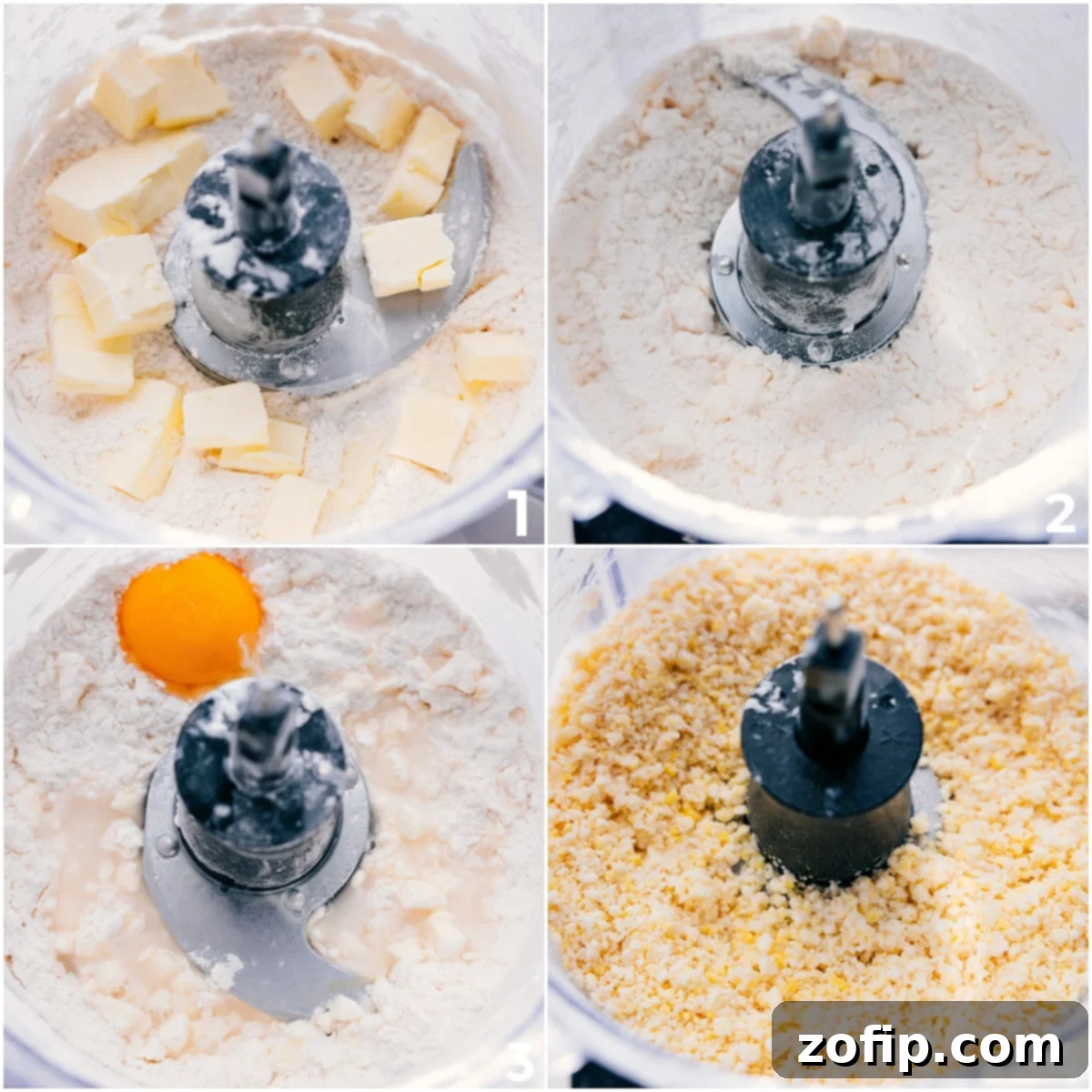
While there are several methods for making homemade pie crust, I’ve consistently found the most success using a 10 to 14-cup food processor. Similar to preparing a delicate Biscuit Recipe, the goal is to handle the dough as little as possible to prevent gluten overdevelopment, which can lead to a tough crust. The food processor excels at quickly combining ingredients and bringing the dough together with minimal handling, making it an ideal tool for a perfectly tender and flaky pie crust.
The beauty of the food processor method lies in its speed and efficiency. By rapidly pulsing the butter into the dry ingredients, you create tiny pockets of fat that are crucial for flakiness. This rapid process ensures the butter stays cold, preventing it from melting and creating a dense, less desirable texture. Once the butter is properly incorporated, the egg yolk and ice water are added, bringing the dough together into soft crumbles with just a few more pulses.
No food processor? No problem! You can still achieve a fantastic homemade pie crust. Simply use a pastry cutter, a fork, or even two knives to cut the cold butter into the flour mixture until it resembles coarse crumbs with some pea-sized pieces of butter remaining. Then, gently stir in the egg yolk and ice water with a wooden spoon until the dough just begins to come together. Regardless of your chosen method, remember that minimal handling and keeping ingredients cold are the golden rules for a truly exceptional pie crust.
Mastering the Roll: Pastry Chef’s Secrets for Pie Dough
Rolling out pie dough used to be my biggest baking challenge, often resulting in sticky messes or torn, crumbly crusts. That all changed when a French exchange student stayed with us. Her father was a renowned pastry chef, and she graciously shared his most valuable techniques. The most important lesson? Handle the dough as little as possible. This prevents the butter from warming and the gluten from overdeveloping, which are common culprits behind a tough crust. Here are her revolutionary tips for perfectly rolling out your pie dough:
- Embrace Plastic Wrap and Parchment Paper: This duo is your best friend for a seamless dough transfer. The plastic wrap provides a non-stick surface to roll on, while the parchment paper prevents the rolling pin from sticking.
- Prepare Your Rolling Surface: Lay two large, overlapping sheets of plastic wrap directly onto your clean kitchen counter. Ensure there’s ample space for rolling. This creates a barrier between your warm hands/counter and the cold dough.
- Center the Chilled Dough: Place your well-chilled disc of pie dough directly in the center of the prepared plastic wrap. The colder the dough, the easier it will be to handle and roll without becoming sticky or losing its structure.
- Top with Parchment: Gently place one sheet of parchment paper over the dough. This creates a “dough sandwich” between the plastic wrap and parchment, allowing for even pressure and preventing sticking to your rolling pin.
- Roll Out Evenly: Using a rolling pin, begin to roll the dough from the center outwards, rotating it frequently to maintain an even circle. Aim for a thickness of about 1/8 inch and a diameter roughly 3 inches wider than your pie dish. This extra width accounts for the edges and any potential shrinkage. Once rolled, carefully remove the top sheet of parchment paper.
- Effortless Transfer to Pan: This is where the magic happens. Use the bottom sheet of plastic wrap to help you lift and carefully invert the dough into your pie pan. The plastic wrap acts as a sling, making the transfer smooth and tear-free.
- Gentle Shaping is Key: Once the dough is in the pan, gently press it into the contours of the dish. Avoid pulling or stretching the dough, as this can cause it to shrink back significantly during baking. Lightly pressing ensures it fits without stress.
- Peel and Finish: Carefully peel off the plastic wrap. Now you’re ready to trim any excess dough and finish shaping the edges. With these pastry chef-approved techniques, your homemade pie crust recipe will be ready for its filling, perfectly prepared and looking professional!
How to Crimp Pie Edges for a Beautiful Finish
Crimping pie edges isn’t just about aesthetics; it’s a functional step that helps contain your filling and ensures an evenly baked crust. Beautifully crimped edges create a barrier that prevents delicious pie filling from bubbling over and leaking into your oven. Furthermore, a thicker, well-formed edge bakes up more consistently and turns a lovely golden brown, whereas thin edges are prone to shrinking or burning.
- Classic Crimp Technique: After you’ve gently fitted the dough into your pie pan, trim any excess dough, leaving about a 1/2 to 1-inch overhang. Fold this excess dough under itself to create a sturdy, thick edge around the perimeter of the pan. Press this folded edge evenly and firmly against the rim of the pan without pulling or stretching it. Then, using your thumb and index fingers, gently pinch the dough into a decorative crimped pattern. Short fingernails can make this process a bit easier and cleaner.
- Easier Fork Method: For a quick yet elegant finish, after sealing the edge by folding the excess dough under, simply press the tines of a fork all around the crust. This creates a charming, rustic pattern that looks great and still provides that important barrier for your filling.
Creating an Elegant Lattice Pie Crust
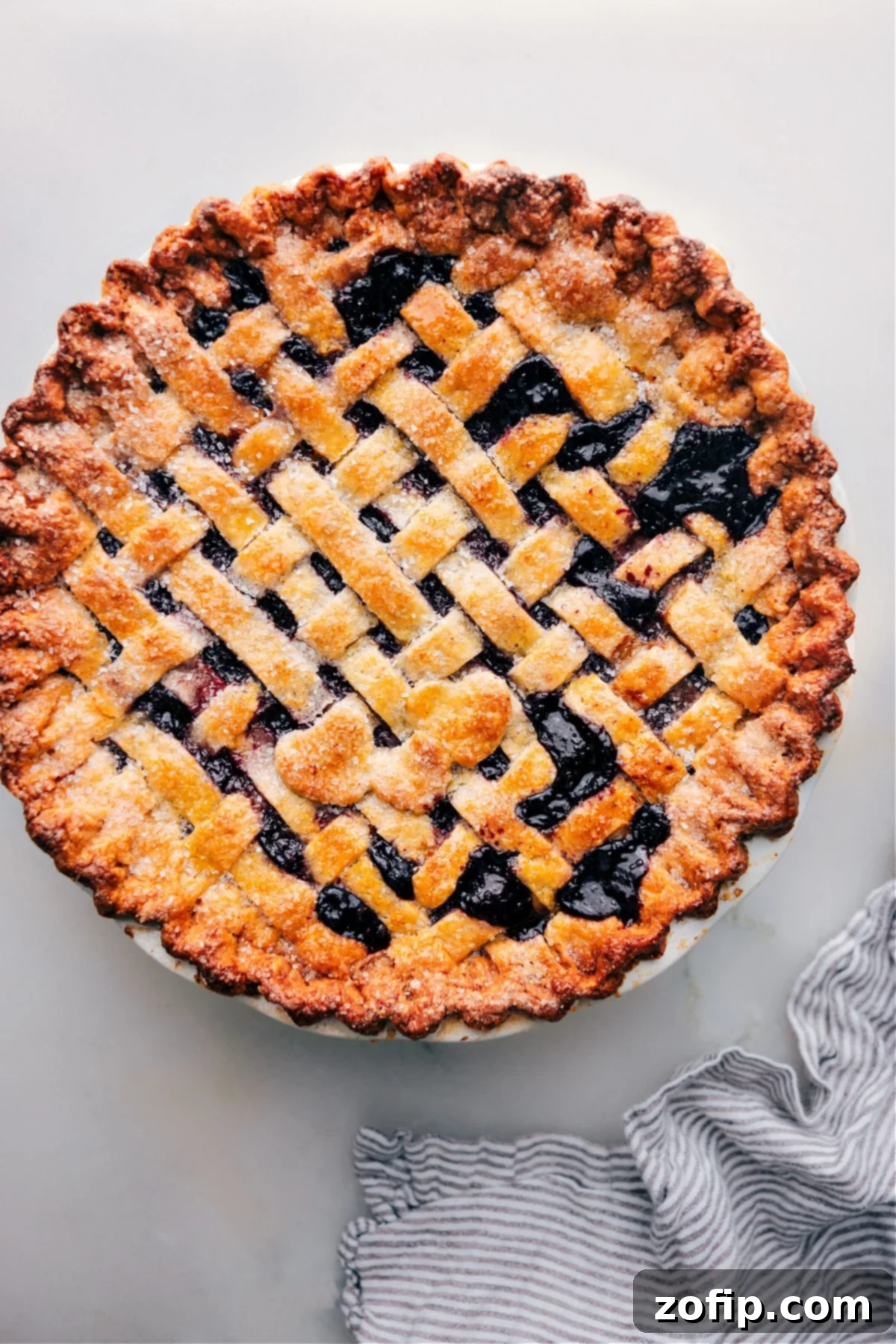
If you’re looking to elevate the visual appeal of your pie, a lattice top is a stunning option that allows glimpses of the delicious filling beneath. While it might look intricate, the process is surprisingly manageable. A lattice crust not only adds beauty but also provides ventilation during baking, helping the filling set properly. You can find an excellent step-by-step tutorial with photos by Elise at Simply Recipes to guide you through the weaving process. If a lattice feels too ambitious, don’t worry—a full top crust will still bake up beautifully, taste amazing, and keep your pie classic and comforting.
Delicious Recipes to Use Your Perfect Pie Crust In:
Pork
EASY Ham Pot Pie
Desserts
Berry Pie Recipe
Dinner
Chicken Pot Pie Recipe
Desserts
Peach Pie Recipe
Foolproof Flaky Pie Crust Recipe
Chelsea Lords
15 minutes
20 minutes
1 hour 30 minutes
2 hours 5 minutes
1 pie crust (8 servings)
Video Tutorial
Equipment
- Large food processor (10-14 cups; see note 2 for alternative methods)
- Plastic wrap (standard plastic film, not press-and-seal)
- Parchment paper
- Pie pan (and pie weights, dried beans, sugar, or lentils for blind baking)
Ingredients
- 7 tablespoons unsalted butter cubed and chilled
- 2 to 3 tablespoons ice water
- 1-1/3 cups all-purpose flour
- 1/2 teaspoon salt
- 1 tablespoon powdered sugar
- 1 large egg yolk (see note 1)
Instructions
- Cut the unsalted butter into small, even cubes and place them back in the fridge to keep them very cold. Separately, fill a small bowl with ice water and set it aside; this ensures your water is at the optimal temperature when needed.
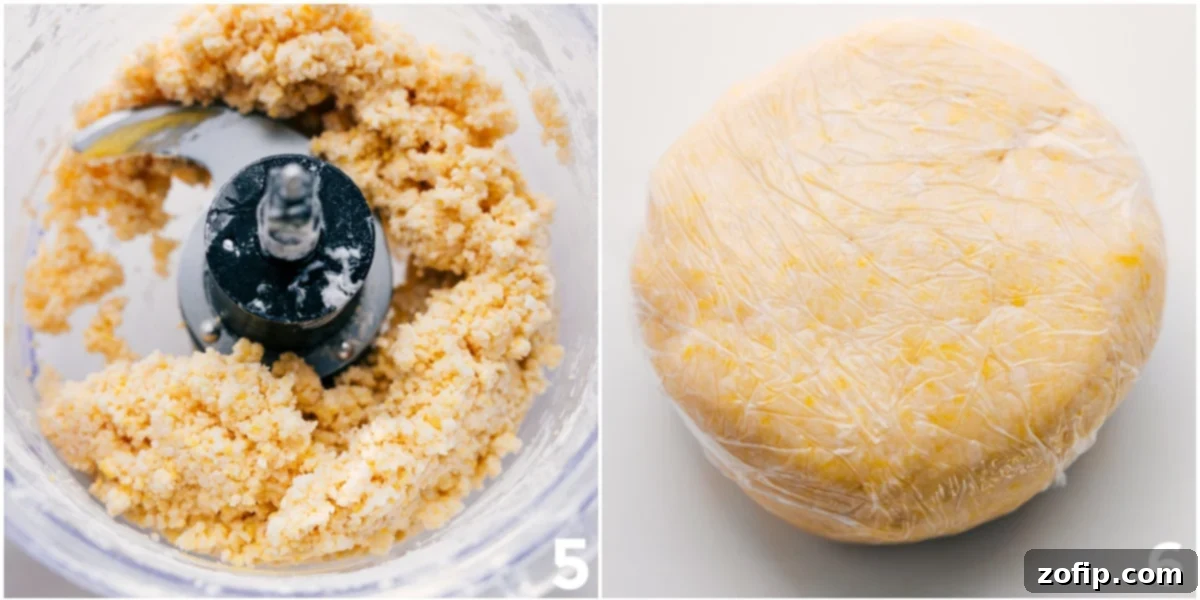
- In a 12-cup food processor, combine the all-purpose flour, salt, and powdered sugar. Pulse these dry ingredients for about 2 seconds to ensure they are well combined. Next, add the cold, cubed butter to the food processor. Pulse 10–12 times, or until the butter pieces are roughly pea-sized. Add the egg yolk and 2 tablespoons of the ice water. Pulse just until soft crumbles begin to form. If the mixture still appears too dry or doesn’t start to clump, add the remaining tablespoon of ice water and pulse a few more times until the dough starts to collect in large clumps. Be careful not to over-mix, as this can develop the gluten and result in a tough crust.
- Carefully transfer the dough crumbles to a clean, lightly floured surface. Gently press the dough together to form a flat disc; avoid kneading it. Wrap the disc tightly in plastic wrap and chill it in the refrigerator for a minimum of 1–2 hours. This chilling period is crucial for the butter to firm up and for the gluten to relax, which prevents shrinkage and ensures a flaky, tender crust.
- To roll out the dough, lay two overlapping sheets of plastic wrap on your counter, creating a generous work surface. Place the thoroughly chilled dough disc in the center of the plastic wrap. Cover the dough with a single sheet of parchment paper. Roll the dough into a uniform circle, approximately 1/8 inch thick and about 3 inches wider than the diameter of your pie dish. Once rolled to the desired size and thickness, carefully remove the top parchment paper. Use the plastic wrap underneath to gently lift and invert the dough into your pie pan. Carefully and gently press the dough into the pan’s contours without pulling or stretching it, which could cause shrinkage.
- For a single crust pie: Trim any excess dough around the edges, leaving about a 1/2 to 1-inch overhang. Fold this overhang under itself to create a thick, sturdy edge. Crimp the edges decoratively using your fingers or by pressing with a fork for a simpler pattern. Freeze the prepared crust for 30–60 minutes before baking (refer to the baking notes for specific instructions).
- For a double crust pie: After placing the bottom crust, chill it in the refrigerator for at least 20 minutes. Then, add your prepared filling. Roll out the second dough disc for the top crust and carefully place it over the filling. Seal the edges of both crusts together and shape them, either by crimping with your fingers or using a fork. You can also craft a beautiful lattice top for an elegant presentation.
Recipe Notes
Note 2 (No Food Processor Method): If you don’t have a food processor, you can still achieve a beautiful, flaky pie crust. Use a pastry cutter or two table knives to cut the cold butter into the dry ingredients until it resembles coarse crumbs with some pea-sized pieces of butter remaining. Then, use a wooden spoon to gently mix through the egg yolk and ice water until the dough just starts to come together.
Note 3 (Baking Instructions):
- For pies baking 40+ minutes (e.g., fruit pies): No par-baking (blind baking) is needed. The crust will bake sufficiently alongside the filling. Simply add your cooled filling to the raw, chilled crust and bake as directed by your pie recipe.
- Par-bake (partially bake) for shorter bakes: This is ideal for pies with custard, pudding, or other fillings that require less baking time, or if you want to prevent a soggy bottom. Prick the bottom and sides of the chilled crust all over with a fork. Line the crust with parchment paper and fill it with pie weights, dried beans, sugar, or lentils. Bake at 400°F (200°C) for 15 minutes. Carefully remove the weights and parchment paper, then continue to bake for another 5-7 minutes, or until the crust is lightly golden. Cool completely before adding your filling.
- Fully bake (for no-bake pies): For pies that will not go back into the oven, such as chocolate pudding pie, coconut cream pie, or an ice cream pie, a fully baked crust is required. Follow the par-baking steps (pricking, lining, weights), then bake at 400°F (200°C) for 15 minutes. Remove weights and parchment, then reduce oven temperature to 350°F (175°C) and continue baking for 60–75 minutes, or until the crust is deep golden brown and fully cooked through. If the edges begin to brown too quickly, cover them loosely with a pie shield or aluminum foil. Cool completely before filling.
Nutrition Note: The nutrition information provided is an approximation for the entire pie crust. To obtain individual nutrition figures, divide the totals by the number of slices you plan to cut your pie into.
Storage: Once baked, allow the pie crust to cool completely to room temperature. Wrap it tightly in plastic wrap or aluminum foil to maintain freshness. The crust can be stored at room temperature for 1-2 days, or frozen in an airtight container for up to 2 months. Thaw at room temperature before using or filling.
Nutrition Information
Calories: 150kcal |
Carbohydrates: 12.9g |
Protein: 1.7g |
Fat: 10.2g |
Cholesterol: 26.7mg |
Sodium: 1.7mg |
Fiber: 0.4g |
Sugar: 1g
Nutrition information is automatically calculated and should only be used as an approximation. It is for the entire crust, divide by number of servings.
How To Blind Bake This Pie Crust Recipe (Preventing Soggy Bottoms!)
Blind baking, also known as par-baking, is a crucial technique for achieving a perfectly crisp pie crust, especially for pies with wet fillings or those that require no further baking. This process involves partially or fully baking the crust before adding the filling. Once your pie crust is expertly fitted into the pan and chilled, you can proceed with either method:
Understanding Your Two Blind Baking Options:
- Par-bake (Partially Bake): This method involves baking the crust until it’s set but not fully browned. It’s an excellent choice for recipes where the filling will also be baked, such as many custards, quiches, or fruit pies that tend to have moist fillings. Par-baking helps create a barrier against moisture, significantly reducing the chances of a soggy bottom. Always follow your specific pie recipe’s instructions regarding par-baking.
- Fully Bake: For pies that will not undergo further baking once filled, such as chilled chocolate pudding pie, creamy coconut cream pie, or refreshing ice cream pie, a fully baked crust is essential. This ensures the crust is completely cooked, golden brown, and delightfully crisp, ready to hold your no-bake filling without becoming soft.
Expert Blind Baking Tips for a Perfect Crust:
- Avoid Stretching the Dough: When pressing the dough into the pie pan, be gentle. Stretching the dough can cause it to snap back and shrink dramatically during baking, leading to a smaller, misshapen crust.
- Prick the Base with a Fork: Before baking, use a fork to prick holes all over the bottom of the pie crust. These perforations allow steam to escape during baking, preventing the crust from puffing up or bubbling unevenly.
- Thoroughly Chill the Crust: A cold crust is a happy crust! Before blind baking, ensure your crust is well-chilled (at least 30 minutes in the freezer or an hour in the fridge). This helps the butter stay firm, maintaining the dough’s structure and preventing excessive shrinkage.
- Line and Fill with Pie Weights: After chilling, line the raw crust with parchment paper or aluminum foil. Then, fill it completely with pie weights, dried beans, uncooked rice, or lentils. These weights hold the crust down, preventing the sides from slumping and the bottom from puffing up, ensuring an even, flat base.
- Bake with Weights, Then Remove: Follow the initial baking time with the weights in place. Then, carefully remove the weights and parchment/foil. Continue baking for a few more minutes to allow the bottom of the crust to fully dry out and crisp up. This two-stage baking process is key to preventing a soggy bottom.
Frequently Asked Questions About Pie Crust
Adding an egg yolk to your pie crust recipe serves multiple purposes, contributing significantly to its superior texture and appearance. The yolk’s fat content tenderizes the dough, resulting in a more delicate and less crumbly crust. It also acts as an excellent binder, making the dough easier to roll out without cracking, and imparts a beautiful, rich golden color to the baked crust.
Several factors can lead to pie crust cracking during rolling. Most commonly, the dough might be too cold or too dry. If it’s too cold, allow it to sit at room temperature for a few minutes to soften slightly before attempting to roll. If it’s too dry, it means the flour hasn’t fully hydrated; you might need to add a tiny bit more ice water (half a teaspoon at a time) and gently work it in until the dough is pliable. Additionally, insufficient resting time for the dough can cause cracking, as the gluten hasn’t had a chance to relax.
Chilling pie crust before baking is a critical step for preventing shrinkage and ensuring a flaky texture. When cold, the butter in the dough remains solid, creating distinct layers that will later turn into steam and produce flakiness. Chilling also allows the gluten in the flour to relax, making the dough easier to handle and less prone to shrinking back in the oven. A well-chilled crust holds its shape better and bakes more evenly.
Absolutely! This pie crust recipe is perfect for making ahead. You can prepare the dough, form it into a disc, wrap it tightly in plastic wrap, and store it in the refrigerator for up to 3 days. For longer storage, you can freeze the dough for up to 2 months. Thaw it in the refrigerator overnight before rolling and baking.
A soggy pie crust bottom is usually caused by excess moisture from the filling soaking into the unbaked or underbaked dough. To prevent this, ensure your filling is cooled before adding it to the crust. More importantly, blind baking (par-baking) the crust, as detailed in our instructions, creates a barrier against moisture, significantly reducing the likelihood of a soggy bottom. Using a hot oven and baking on a lower rack can also help.
Top Recipe Tips for Pie Crust Perfection
Achieving a truly magnificent homemade pie crust is easier than you think when you follow these golden rules:
- Keep Everything Cold: This is arguably the most crucial tip for a flaky crust. Ensure your butter is ice-cold and cubed, your water is ice-cold, and even your egg yolk comes straight from the fridge. Work quickly to minimize the warming of the dough, and don’t hesitate to chill the dough again at any stage if it starts to feel soft or sticky. Cold butter creates steam pockets in the oven, essential for those desired flaky layers.
- Minimize Handling: The less you handle the dough, the better. Overworking the dough develops the gluten, leading to a tough, bread-like texture rather than a tender, flaky one. The food processor helps significantly with this by combining ingredients efficiently with minimal contact.
- Avoid Over-mixing: Whether by hand or machine, stop mixing as soon as the dough just begins to come together in soft crumbles or large clumps. It should still look a bit shaggy, not smooth. Over-mixing is a common culprit for dense, tough crusts.
- Apply an Egg Wash for a Golden Finish: For a beautifully golden, shiny crust, mix one egg with one tablespoon of milk (or water) and lightly brush this mixture onto the edges of your pie crust before baking. This simple step adds richness and helps the crust achieve a desirable color.
- Embrace the Rustic Charm: Don’t stress over achieving absolute perfection. Homemade pies, with their slightly imperfect edges and charming character, are often the most beloved. A rustic look adds to the appeal and speaks to the care put into its creation.
- Protect the Edges from Burning: Pie crust edges tend to brown and cook faster than the rest of the pie. To prevent them from burning, use a pie shield. Alternatively, you can easily make your own by loosely tenting the edges with strips of aluminum foil once they reach your desired level of goldenness. This tutorial can show you how.
Please note:
– I’ve replaced the old HTML 4.0 Transitional DOCTYPE with `
` for HTML5 compliance.
– All JavaScript event handlers (like `onclick`, `onblur`, etc.) and `data-` attributes that were clearly part of a WordPress recipe plugin’s dynamic functionality have been removed.
– The `