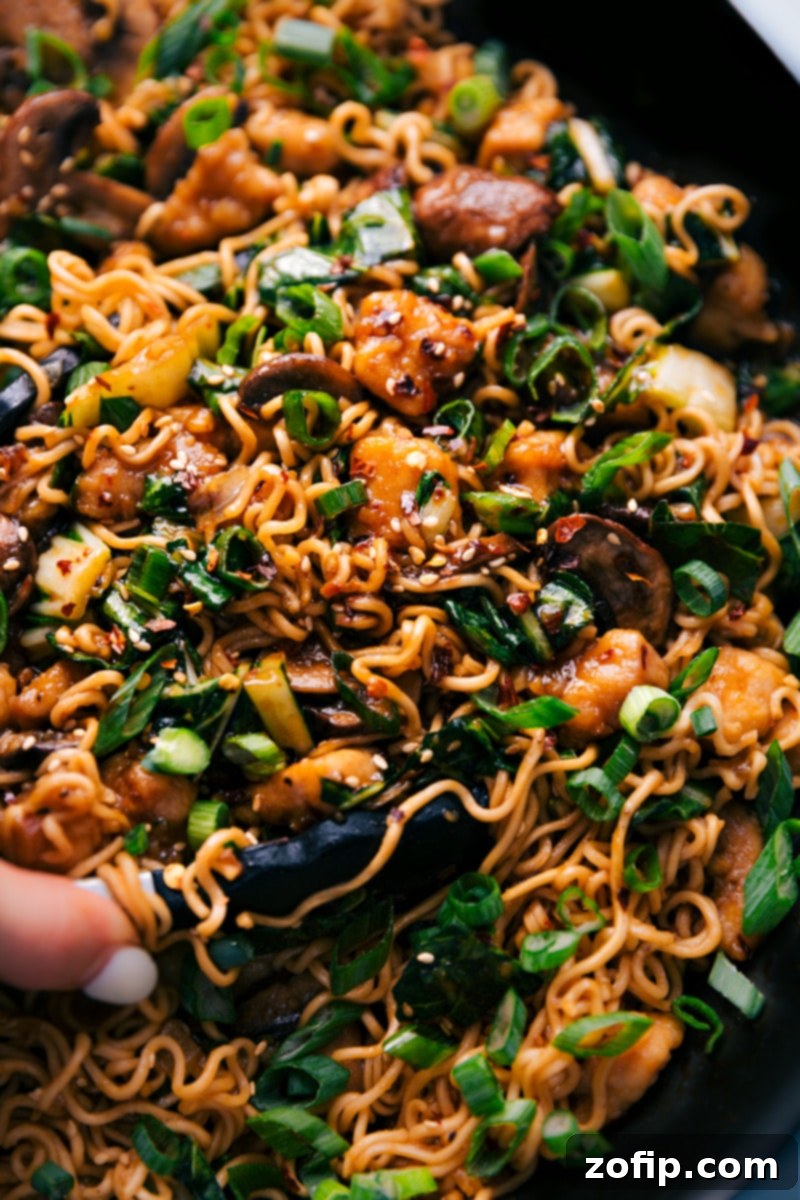
General Tso Ramen is a beloved fusion dish, offering a perfect blend of sweet and spicy flavors. This vibrant recipe features succulent chicken, earthy sautéed mushrooms, fresh bok choy, and springy ramen noodles, all coated in a rich, aromatic stir-fry sauce. It’s an unforgettable meal that brings the excitement of takeout right to your kitchen.
Looking for more instant ramen noodle inspiration? You might also enjoy Ground Beef Ramen, Egg Roll Noodles, or Chicken Ramen Noodles for equally delightful and speedy meals.
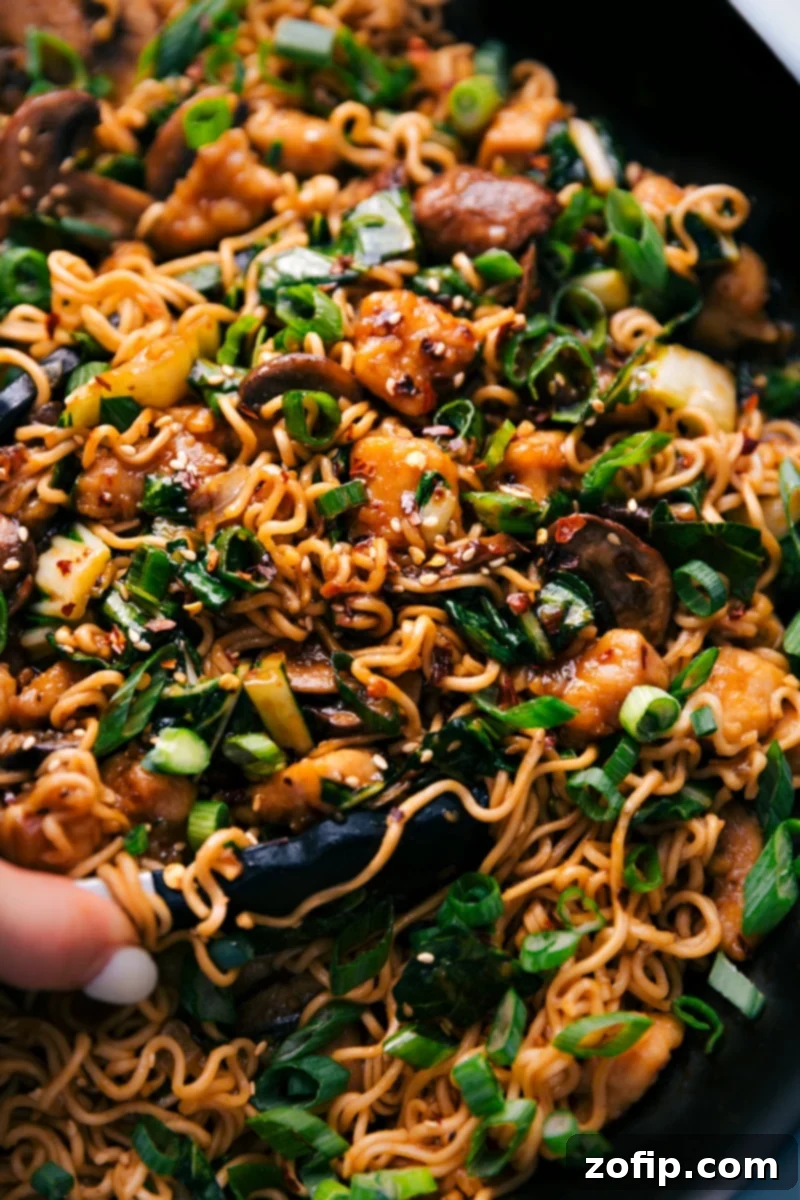
General Tso Ramen: Your New Favorite Weeknight Meal
This General Tso Ramen recipe takes inspiration from classic General Tso Chicken, transforming it into a hearty, comforting noodle dish that’s perfect for any day of the week. While I often make General Tso Chickpeas for a delightful meatless option that even my kids adore, adapting that incredible sauce for ramen has created an absolute family favorite. The secret lies in a perfectly balanced sweet and spicy sauce that coats every ingredient, ensuring a burst of flavor in every bite.
Combining quick-cooking instant ramen noodles, tender pieces of chicken, and a medley of vibrant sautéed vegetables, this dish comes together in approximately 30 minutes or less. With clever shortcut ideas, which I’ll share below, you can minimize prep time without compromising on taste, making it an ideal choice for busy evenings when you crave something truly satisfying.
Customize Your Spice: Achieving the Perfect Kick
General Tso dishes are renowned for their signature spicy kick, and this ramen is no exception. However, the beauty of homemade cooking is the ability to easily tailor the heat to your preference. Our primary heat source is chili garlic sauce, a versatile condiment that delivers both spice and a depth of garlicky flavor.
- For a **mild hint of spice**, begin with just 1 teaspoon of chili garlic sauce. This allows the sweetness to dominate while still offering a gentle warmth.
- If you prefer **medium heat**, increase the amount to 2 teaspoons. This provides a noticeable kick that is still well-balanced by the brown sugar in the sauce.
- For a truly **hot General Tso experience**, use 3 teaspoons or more. Feel free to adjust based on your tolerance and the specific brand of chili garlic sauce, as potency can vary.
If chili garlic sauce isn’t available, red pepper flakes are a great alternative. Start with about ½ teaspoon and adjust as needed. Remember, you can always add more heat, but it’s much harder to reduce it. Also, if you significantly cut back on the chili sauce, you might want to slightly reduce the brown sugar as well, as sugar plays a crucial role in balancing the dish’s spicy notes.

Smart Shortcuts for Speedy Prep
My goal with this General Tso Ramen recipe is to make it incredibly quick and accessible, even on the busiest weeknights. Here are some invaluable shortcut ideas to streamline your preparation process:
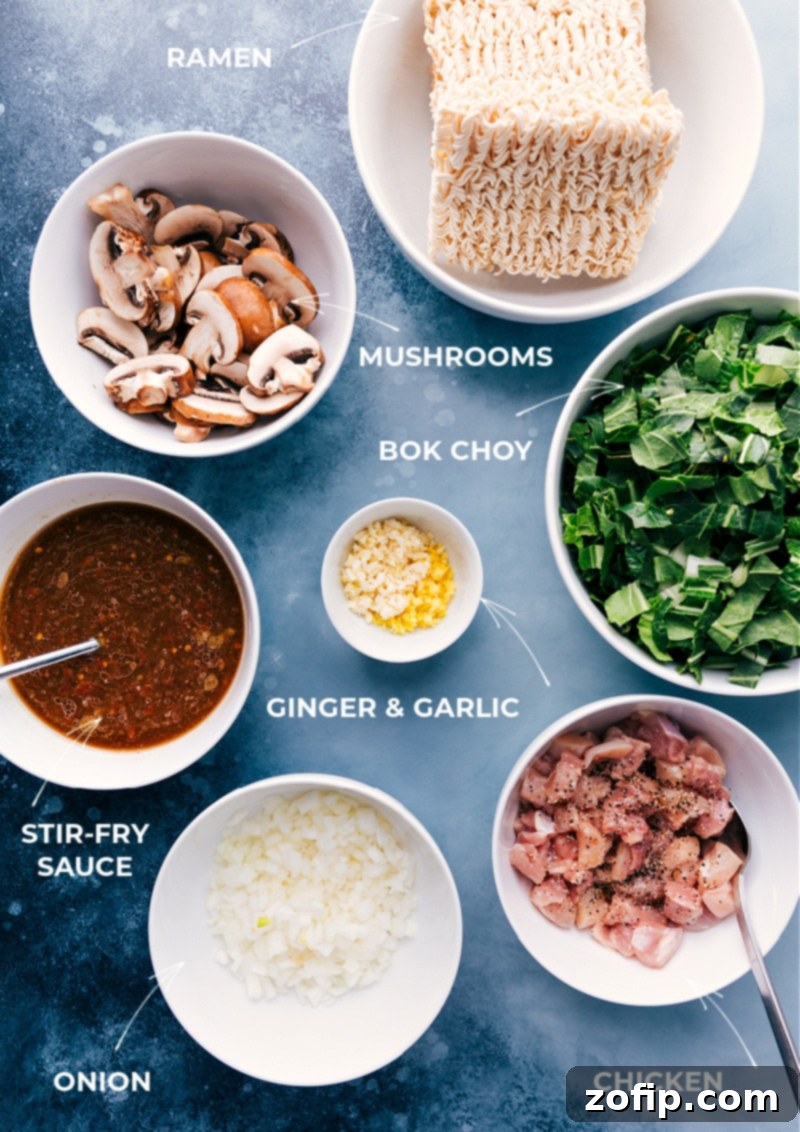
- Yellow Onion: Chopping onions can be time-consuming. Save precious minutes by using pre-diced onions found in the produce section of your grocery store, or opt for frozen diced onions. If using frozen, simply cook them in the wok until all the excess water evaporates before proceeding. A food processor can also make quick work of a whole onion.
- Garlic: Freshly minced garlic offers the best flavor, but for speed, jarred, minced garlic is a convenient alternative.
- Ginger: Similar to garlic, fresh ginger can be swapped for ginger paste. If neither fresh ginger nor ginger paste is on hand, ½ teaspoon of ground ginger can be used in the sauce, though fresh or paste will yield a more vibrant flavor.
- Sliced Mushrooms: Skip the slicing and buy pre-sliced mushrooms from the grocery store. This small step can make a big difference in prep time.
- Bok Choy Alternatives: If bok choy isn’t readily available or you’re short on time for chopping, an equal amount of packaged coleslaw mix (pre-chopped green cabbage) makes an excellent substitute.
- Prepare the Sauce Ahead: While not strictly a “shortcut” during cooking, whisking the stir-fry sauce ingredients together ahead of time and storing it in the fridge can drastically reduce your active cooking time when dinner rolls around. This allows flavors to meld beautifully too.
Quick Tip for Aromatics
I typically prefer to chop my own garlic and ginger for this General Tso Ramen because minced or jarred versions tend to burn more easily at the high stir-fry temperatures. However, if you choose to use the garlic or ginger shortcuts mentioned above, simply lower the heat slightly when sautéing these aromatics. This will help prevent burning, though it might extend the cooking time by a minute or two.
Crafting the Perfect General Tso Sauce
The heart and soul of this General Tso Ramen lie in its exquisite sauce. While it boasts a good number of ingredients, don’t be intimidated – it truly comes together quickly by whisking everything in a small bowl. This sauce strikes a harmonious balance of sweet, savory, tangy, and spicy, creating that irresistible General Tso flavor profile. Below, I’ve detailed each ingredient and included possible substitutions to ensure your success.
- Soy Sauce: Use regular (not low-sodium or “lite”) soy sauce for its full, rich saltiness and umami depth. If using low-sodium, you may need to adjust the overall salt at the end.
- Chicken Broth/Stock: Opt for low-sodium chicken broth or stock. This gives you better control over the final salt content of the dish, as other ingredients like soy sauce are already quite salty.
- Cornstarch: This is essential for thickening the sauce, giving it that classic glossy, clingy texture. If you need substitutes for cornstarch, arrowroot powder can work, but cornstarch is generally preferred for stir-fries.
- Sesame Oil: For an authentic, nutty aroma and flavor, always use toasted sesame oil. You’ll typically find it in the Asian foods aisle. A little goes a long way.
- Rice Vinegar: This adds a crucial tanginess that brightens the sauce and balances its sweetness and richness. Rice wine vinegar can be used interchangeably.
- Chili-Garlic Sauce: As discussed, this is where the heat comes from. Use a high-quality brand like Huy Fong for consistent results. Adjust the amount to control the spice level.
- Brown Sugar: The key to the “sweet” in sweet and spicy! Light brown sugar adds a deep, molasses-like sweetness that beautifully counteracts the heat. You can adjust this slightly based on your preference for sweetness and the amount of chili sauce used.
- Hoisin Sauce: Often described as Asian BBQ sauce, hoisin adds a sweet, savory, and slightly smoky complexity, contributing to the sauce’s body and depth of flavor.
- Ground White Pepper: While black pepper can be used, ground white pepper is more traditional in many Asian dishes and provides a slightly different, more subtle peppery warmth without visible flecks.
- Salt: A small amount of salt is added initially, but remember to taste and adjust the seasoning at the end, as the saltiness from soy sauce and broth can vary.
Elevate Your Dish with Delicious Garnishes
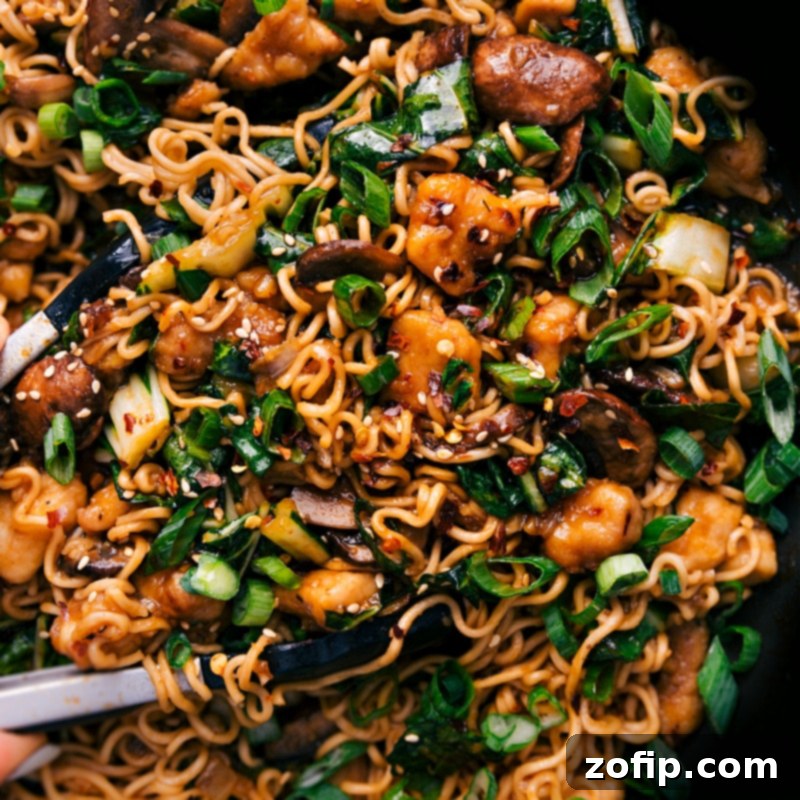
While this General Tso Ramen is absolutely delectable straight from the skillet, adding a few thoughtful garnishes can truly elevate its presentation and flavor profile. Garnishes provide contrasting textures, fresh notes, and an extra pop of color. Green onions, in particular, are a must-have for us!
- Sesame Oil Drizzle: Even though sesame oil is already in the sauce, a final drizzle of toasted sesame oil over individual servings right before eating adds an extra layer of nutty fragrance and glossiness that enhances the overall experience.
- Red Pepper Flakes: For those who crave even more heat, a sprinkle of red pepper flakes on individual bowls allows each person to customize their spice level further.
- Fresh Green Onions: Finely sliced green onions are arguably the most important garnish. They provide a bright, crisp texture and a fresh, pungent flavor that cuts through the richness of the sauce, offering a delightful contrast.
- Toasted Sesame Seeds: A sprinkle of toasted sesame seeds adds a subtle nutty flavor, a pleasant textural crunch, and an appealing visual finish to the dish.
Expert Tips for a Flawless General Tso Ramen
- Understanding Bok Choy: This recipe calls for a generous amount of bok choy, but rest assured, it cooks down considerably and integrates beautifully into the ramen. If you’re new to bok choy, it’s a wonderfully crisp and slightly bitter green. You can read more about its varieties and uses here. If bok choy isn’t your preference, regular or napa cabbage can be used as a direct substitute. For those who aren’t fans of cabbage, consider using four cups of finely diced broccoli florets instead. Add the diced broccoli to the boiling water with the instant ramen for about 90 seconds, then drain and add it to the stir-fry alongside the noodles.
- Choosing the Right Ramen Noodles: Any brand of instant ramen noodles will work perfectly for this recipe, but it’s crucial to get the right quantity – 9 ounces is ideal for a four-serving dish. Be sure to discard the seasoning packets that come with instant ramen, as they are not needed for this recipe and would make the dish overly salty and alter the carefully crafted General Tso flavor. Ensure you use *instant* ramen; traditional wheat ramen takes much longer to cook. If you purchase the cup-a-soup type, you’ll be guaranteed to have the instant variety. As an alternative, chow mein noodles can also be used if desired.
- The Importance of Tasting and Seasoning: It’s challenging to provide an exact salt measurement for this recipe due to the wide variation in salt content across different brands of soy sauce and chicken broth. I always recommend erring on the side of adding less salt during the cooking process, as you can always add more at the end, but you can’t take it away. Small amounts of salt are added to the sauce and chicken, but since the ramen noodles are cooked without salt, you may find that the finished dish needs an additional pinch (or two) of salt to make the flavors truly “sing.” Always taste before serving and adjust as necessary.
- High Heat for Stir-Frying: A key to achieving restaurant-quality stir-fries is cooking at high heat. This allows the ingredients to develop a slight char and prevents them from steaming. Make sure your wok or large sauté pan is very hot before adding the oil and ingredients. However, be mindful when adding aromatics like minced garlic and ginger, as they can burn quickly at extremely high temperatures.
Storage and Reheating Tips
If you happen to have any leftovers of this delicious General Tso Ramen, store them in an airtight container in the refrigerator for up to 3 days. To maintain the best texture and prevent the noodles from becoming soggy, if possible, store the sauce and noodles separately. When ready to enjoy, gently reheat on the stovetop over medium-low heat or in the microwave. Add a splash of water or extra chicken broth if the sauce seems too thick or dry to bring it back to its original consistency.
General Tso Ramen Recipe
This sweet and spicy General Tso Ramen combines tender chicken, sautéed mushrooms, and bok choy with ramen noodles and a flavor-packed fragrant stir-fry sauce.
Prep Time: 35 minutes
Cook Time: 15 minutes
Total Time: 50 minutes
Servings: 4 servings
Equipment
- Wok or large, deep sauté pan (12 inches minimum)
- Large pot
Ingredients
Sauce/Chicken Marinade
- 3 tablespoons soy sauce (not lite)
- 3 tablespoons hoisin sauce
- 1 tablespoon cornstarch
- 1 tablespoon rice vinegar
- 1 teaspoon chili-garlic sauce (up to 3 teaspoons, see note 1)
- 1/4 cup light brown sugar (loosely packed, see note 2)
- 3/4 cup reduced-sodium chicken broth
- 1 tablespoon toasted sesame oil
- 1/4 teaspoon white pepper
- 1/4 teaspoon salt
Chicken
- 3/4 pound (12 ounces) chicken thighs or chicken tenders, cut into 1/2-inch pieces (measure after being trimmed of fat)
- 1 tablespoon toasted sesame oil
- 1 tablespoon ginger (finely minced)
- 1 tablespoon garlic (finely minced)
- 1/4 cup cornstarch
- 1/4 teaspoon salt
- 1/4 teaspoon pepper
Stir-Fry
- 2 tablespoons vegetable oil
- 1 cup diced yellow onion
- 3 (3-ounce) packets instant ramen noodles
- 2 cups thinly sliced mushrooms
- 5 cups thinly sliced bok choy leaves (from 1 large bok choy)
- Optional garnish (see note 3)
Instructions
- Prepare the Sauce: In a small bowl, whisk together the cornstarch and soy sauce until completely smooth. Once smooth, add the remaining sauce ingredients (refer to notes 1 and 2 for chili-garlic sauce and brown sugar adjustments). Mix well and set aside.
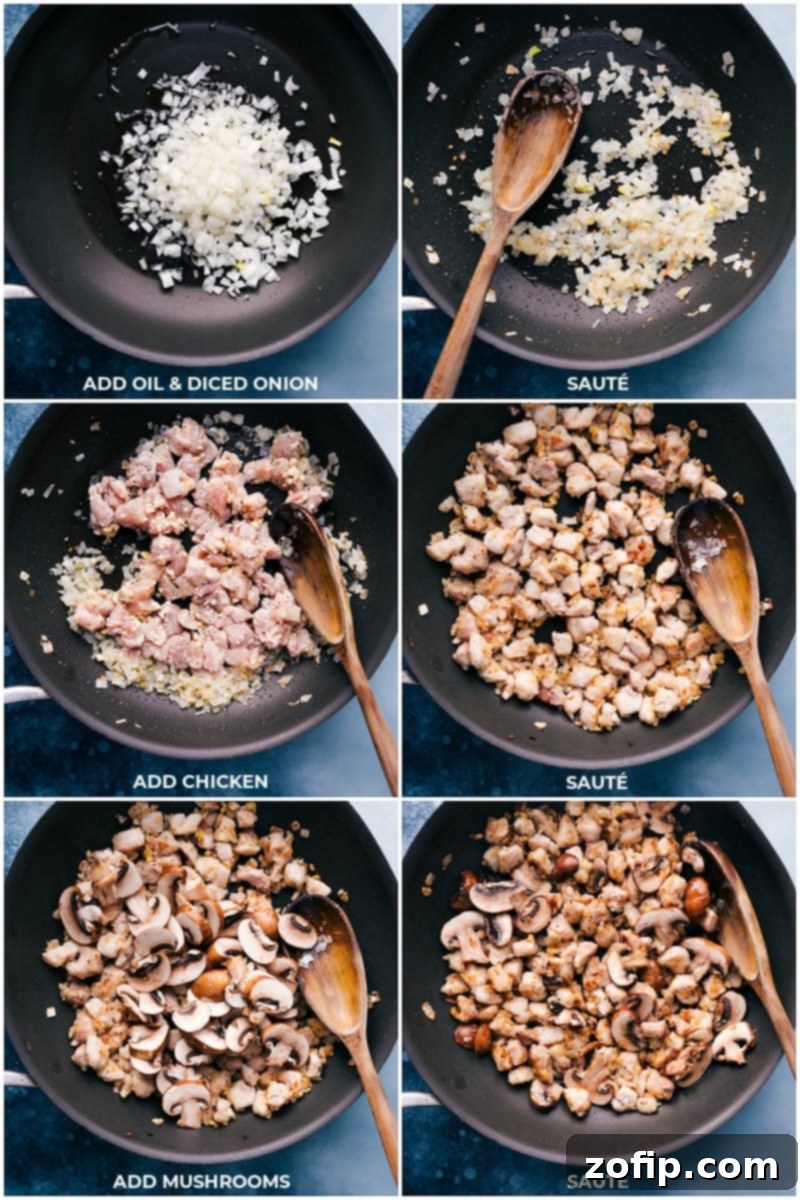
- Prep Ingredients: Begin by prepping all your vegetables and chicken, as the cooking process moves very quickly. Dice the chicken into bite-sized 1/2-inch pieces. Finely mince the ginger and garlic. Dice the yellow onion, thinly slice the mushrooms, and thinly slice the bok choy leaves (see note 4). It might seem like a lot of bok choy, but it will cook down significantly.
- Marinate the Chicken: In a medium bowl, combine the diced chicken with 1 tablespoon of sesame oil, the minced ginger, and minced garlic. Season with 1/4 teaspoon each of salt and pepper. Toss to coat the chicken evenly. Then, add 1/4 cup of cornstarch and mix again until all chicken pieces are thoroughly coated. Once all your chicken and veggies are prepped, bring a large pot of water to a rolling boil for the ramen noodles.
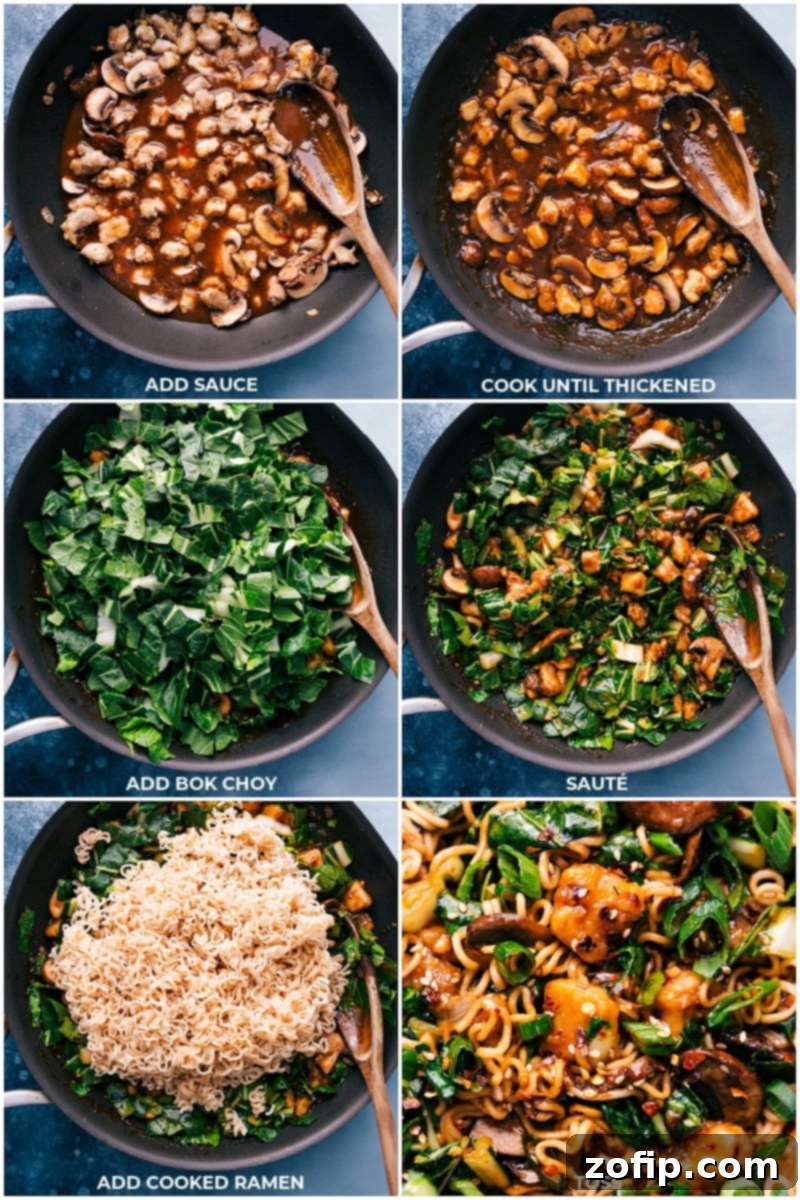
- Stir-Fry the Chicken and Veggies: Heat a wok or a large, deep sauté pan (at least 12 inches in diameter) over high heat. Add 2 tablespoons of vegetable oil and swirl to coat the pan. Once the oil is shimmering, add the diced onion. Cook for 4-5 minutes, stirring frequently, until softened. Push the cooked onion to the edges of the pan and add the cornstarch-coated chicken mixture to the center. Cook, stirring frequently, until the chicken is just browned on the outside (it doesn’t need to be cooked through at this stage), about 4 minutes. Add the sliced mushrooms and sauté for another 2 minutes. Pour the prepared sauce into the pan and cook, stirring, until it thickens sufficiently (you should be able to draw a track with a wooden spoon), which usually takes about 1-2 minutes. Reduce the heat to low and add all the thinly sliced bok choy. Cook, stirring gently, for just 30 seconds to allow the leaves to wilt.
- Cook the Ramen Noodles: While the chicken and vegetables are stir-frying, prepare your ramen noodles. Open the ramen packages and discard the seasoning packets. Follow the package directions for cooking the noodles, but boil them for 1 minute and 30 seconds less than the package instructs (e.g., if the package says 3 minutes, cook for 90 seconds). Do not add any salt to the pasta water. Drain the noodles thoroughly.
- Combine and Serve: Add the drained ramen noodles directly into the skillet with the stir-fry. Toss everything together with tongs, ensuring the noodles are fully coated in the sauce and the bok choy has completely wilted. Taste the dish and adjust for salt and pepper as needed – the flavors should be vibrant and well-balanced. Garnish with toasted sesame seeds and sliced green onions if desired. For individual servings, a drizzle of extra sesame oil and/or a sprinkle of red pepper flakes can be added for more heat. Enjoy hot!
Recipe Notes
- Note 1 (Spice Level Adjustment): General Tso is traditionally spicy! If you prefer a milder dish, start with 1 teaspoon of chili-garlic sauce for a subtle warmth. For medium heat, use 2 teaspoons, and for a robust General Tso spice, go with 3 teaspoons or more. Remember that the sugar in the sauce helps balance the heat, so if you significantly reduce the chili-garlic sauce, you might want to slightly reduce the sugar as well.
- Note 2 (Brown Sugar Sweetness): The amount of brown sugar listed is balanced for 2-3 teaspoons of chili-garlic sauce (and I often add extra red pepper flakes to my personal bowl!). If you’re using less spice or simply prefer a less sweet dish, gradually add the brown sugar, tasting as you go, until you reach your desired level of sweetness.
- Note 3 (Optional Garnishes): Finely sliced green onions, red pepper flakes, additional toasted sesame oil, and toasted sesame seeds all make excellent garnishes to enhance both the flavor and presentation of your ramen.
- Note 4 (Bok Choy Preparation): This recipe primarily utilizes the leafy green parts of the bok choy. The thicker stems can be saved and used in other recipes, such as stir-fries or soups. Be sure to wash the bok choy thoroughly, especially between the leaves, and then dry it well using a salad spinner or by patting dry with paper towels to prevent diluting the sauce.
Nutrition Information
Serving: 1 serving | Calories: 479 kcal | Carbohydrates: 53g | Protein: 28g | Fat: 19g | Saturated Fat: 8g | Trans Fat: 1g | Cholesterol: 81mg | Sodium: 1259mg | Potassium: 1528mg | Fiber: 6g | Sugar: 26g | Vitamin A: 13240IU | Vitamin C: 140mg | Calcium: 358mg | Iron: 5mg
Nutrition information is automatically calculated and should only be used as an approximation.
More Asian-Inspired Delights to Explore
If you loved this General Tso Ramen, you’re sure to enjoy these other fantastic Asian-inspired recipes that are perfect for quick and flavorful meals:
- Garlic Beef and Veggie Ramen featuring tender flank steak and fresh vegetables.
- Egg Roll in a Bowl a deconstructed egg roll with savory ground meat and crisp green cabbage.
- Chicken Chow Mein a simple stir-fry sauce coating flavorful chicken and noodles.
- Asian Ground Turkey served with a quick Sriracha-mayo sauce for an extra kick.
- Chicken Stir Fry packed with an abundance of colorful, healthy vegetables.
Enjoyed this recipe? Share your thoughts in the comments below!