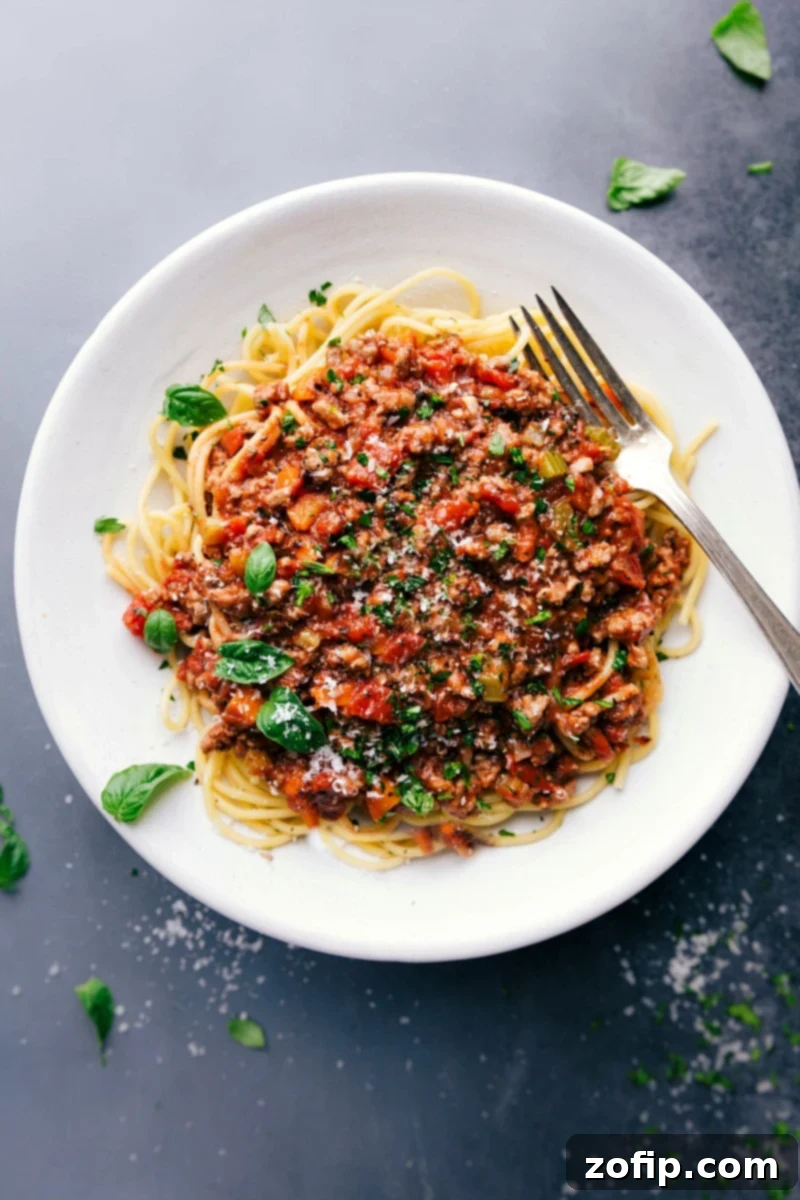
Turkey Bolognese is a game-changer for anyone seeking a hearty, flavorful, and healthier alternative to traditional beef Bolognese. This recipe is packed with an abundance of fresh vegetables, ensuring a nutritious meal without compromising on taste. It’s designed to be super easy to prepare, making it the perfect solution for busy weeknights when you crave something savory and filling but are short on time. Forget bland ground turkey – with our special touches, this dish promises to be a vibrant explosion of flavor that will quickly become a household favorite.
To complete your meal, consider pairing this rich Turkey Bolognese with a crisp garden salad, a refreshing Olive Garden-inspired salad, or a delightful grilled corn salad. These light sides perfectly complement the robust flavors of the sauce.
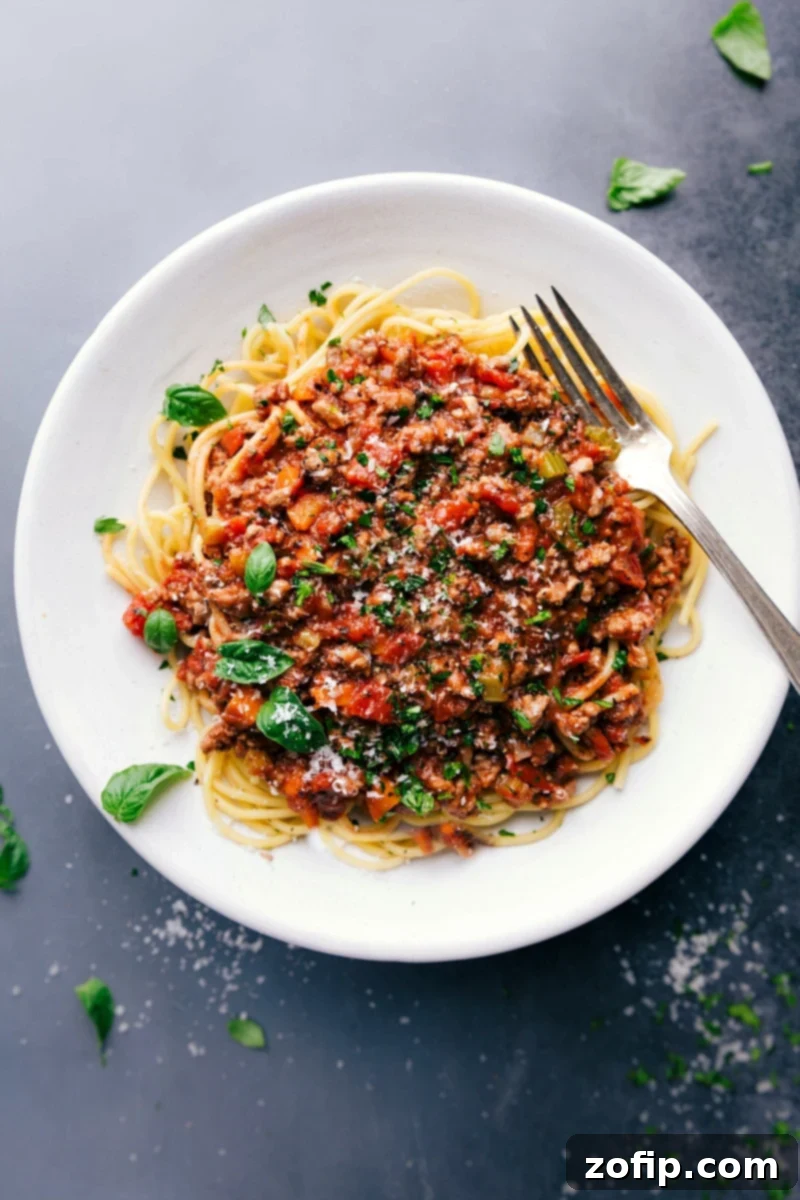
The Best Turkey Bolognese Recipe You’ll Ever Make
Many home cooks shy away from ground turkey, often labeling it as bland or dry. However, when seasoned thoughtfully and cooked correctly, ground turkey can deliver just as much savory depth and satisfaction as its beef counterpart. This Turkey Bolognese recipe defies expectations, proving that lean meat can be incredibly succulent and rich. With the inclusion of a few “secret” ingredients, this version stands shoulder-to-shoulder with any classic beef or pork Bolognese, offering a delightfully tempting experience. And for those nights when a meatless option is desired, a robust Lentil Bolognese always hits the spot.
Unlocking Deep Flavor: The Secret Ingredients
The magic behind this turkey Bolognese lies in two unassuming yet incredibly powerful ingredients that transform plain ground turkey into a deeply savory and rich sauce:
- Beef Bouillon Powder: This might seem counterintuitive for a turkey dish, but trust us – it’s a game-changer. Adding a touch of beef bouillon powder significantly boosts the umami and ‘meatiness’ of the turkey, creating an illusion of beef without actually using it. For years, I’ve incorporated this trick, and my husband consistently believes he’s enjoying a rich beef Bolognese. It’s the ultimate secret weapon for depth of flavor.
- Worcestershire Sauce: This fermented condiment is a powerhouse of savory notes. Its complex profile, including hints of anchovy, tamarind, and various spices, enhances the turkey’s natural flavors and contributes to that deeply satisfying, meaty taste. Just a small amount can make a profound difference, rounding out the sauce and adding another layer of complexity that elevates the entire dish.
Featured Comment
“This was the best ground turkey recipe I’ve ever made! It’s a keeper! Thanks for the tips.”
– Pamela
Key Ingredients for a Perfectly Flavorful Turkey Bolognese
Crafting the perfect Turkey Bolognese begins with selecting high-quality ingredients and understanding how each one contributes to the final masterpiece. Here’s a detailed look at what you’ll need and expert tips for the best results:
| Ingredient | Tips or Swaps for Best Flavor & Texture |
|---|---|
| Ground Turkey (93/7) | Opt for 93% lean / 7% fat ground turkey. The small amount of fat prevents the turkey from drying out and enhances flavor. Avoid 99% lean for this recipe, as it can lead to a less satisfying texture. If possible, ground turkey thigh meat or turkey from a carton (not a cylindrical chub) often yields superior flavor and moisture. |
| Grape Juice / Broth / Wine | This ingredient is crucial for deglazing the pan and adding depth. For a touch of sweetness and richness, 100% grape juice works wonders. Beef broth will amplify the savory notes, while a medium-bodied red wine (like Pinot Noir or Merlot) adds traditional Italian complexity. Choose based on your preference. |
| Fire-Roasted Crushed Tomatoes | These tomatoes bring a smoky depth that elevates the sauce beyond standard crushed tomatoes. Brands like Muir Glen or Cento are highly recommended for their robust flavor. If fire-roasted isn’t available, regular crushed tomatoes will work in a pinch, though the flavor profile will be slightly different. |
| Tomato Paste | A small but mighty ingredient, tomato paste adds concentrated tomato flavor and helps thicken the sauce. Sautéing it briefly before adding liquids unlocks its full potential. Any leftover paste can be frozen in tablespoon portions for future use, preventing waste. |
| Beef Bouillon Powder | As one of our “secret” ingredients, this powder is vital for adding a beefy umami richness to the turkey. If you only have bouillon cubes, dissolve one in a small amount of hot water before adding to the sauce. |
| Worcestershire Sauce | The second “secret” ingredient, Worcestershire sauce provides an extra layer of savory depth and complexity. In a pinch, soy sauce or a good balsamic vinegar can offer similar umami and acidity, though the flavor will differ slightly. |
| Bay Leaves | Don’t underestimate the subtle yet significant contribution of bay leaves. They infuse the sauce with a delicate, herbaceous aroma during simmering. Remember to remove them before serving. |
| Pasta Water | This starchy, salty liquid is an Italian chef’s best friend. Reserve some before draining your cooked pasta. It’s essential for emulsifying the sauce and helping it beautifully cling to every strand of pasta, creating a rich, cohesive dish. |
| Aromatics (Onion, Carrot, Celery, Garlic) | The classic “soffritto” base is the foundation of any great Bolognese. Finely dicing these vegetables allows them to melt into the sauce, providing a sweet and savory base. Don’t rush the sautéing process – patience here builds deep flavor. |
| Dried Herbs (Thyme, Basil, Oregano) | These Mediterranean herbs are fundamental to Italian cuisine. Dried herbs are best added early in the cooking process to allow their flavors to bloom and integrate fully into the sauce. |
Pro Tip: Emulsifying Your Pasta for a Restaurant-Quality Finish
Achieving a truly luxurious, restaurant-quality pasta dish involves a simple yet transformative technique known as emulsification. Instead of simply spooning sauce over your noodles, toss the cooked pasta directly into the turkey Bolognese sauce with a splash of reserved pasta water. The starch from the pasta water helps the sauce bind and thicken, creating a velvety coating that clings perfectly to every strand. While merely adding sauce to noodles is certainly edible, taking this extra step will yield a noticeably richer, more cohesive, and undeniably delicious result. It’s a hallmark of authentic Italian cooking and makes all the difference.
Step-by-Step Guide: Crafting Your Delicious Turkey Bolognese
Making this flavorful Turkey Bolognese is straightforward. Follow these steps for a rich and satisfying meal:
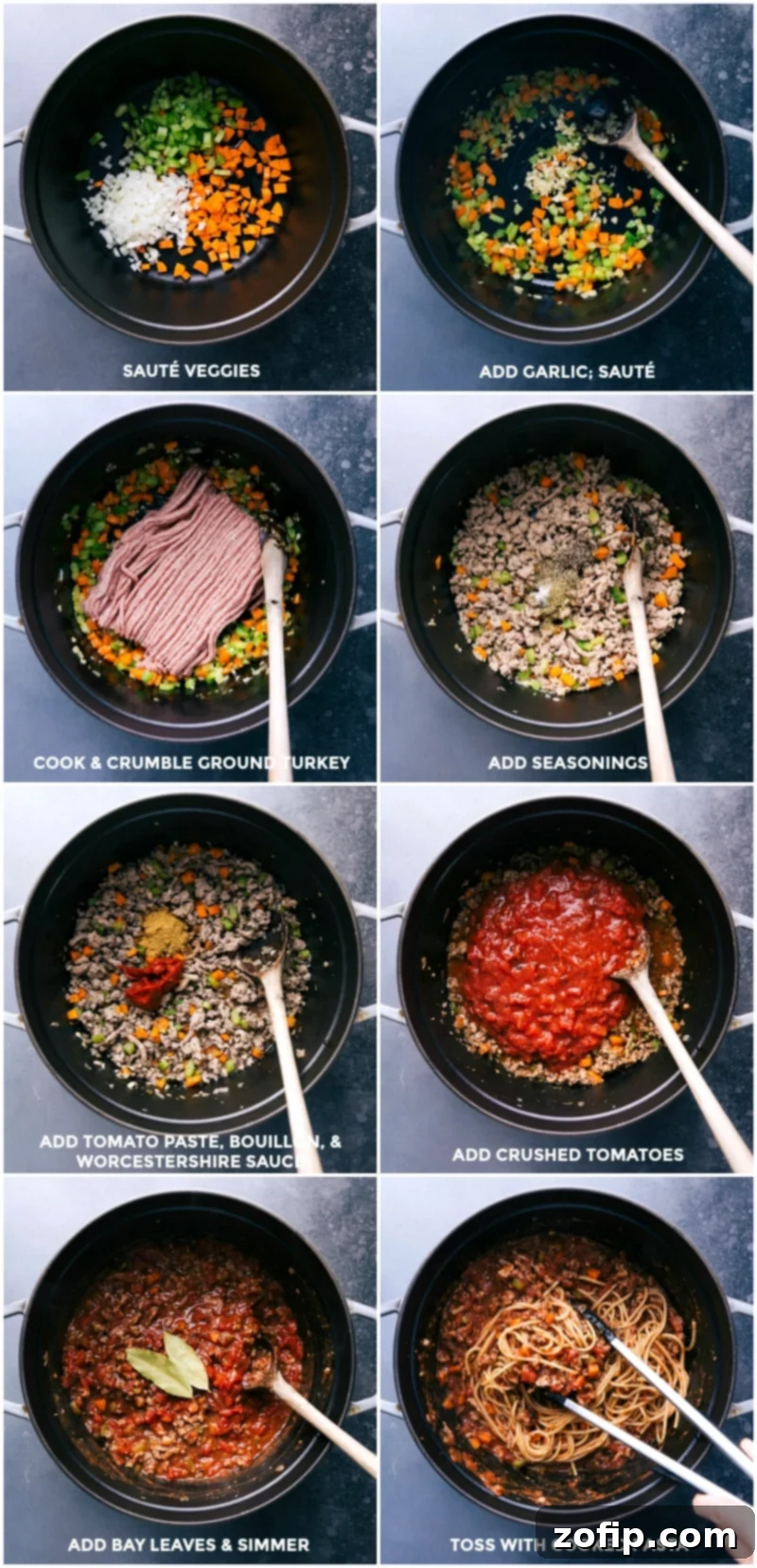
- Prepare Your Aromatics: Begin by heating olive oil in a large, deep pot – ensure it’s spacious enough to later accommodate all the pasta. Add your finely diced yellow onion, carrots, and celery. Sauté these “soffritto” vegetables over medium-low heat, stirring occasionally, for 5-7 minutes until they soften and turn a pale straw color. Next, add the minced garlic and continue to cook for another 3-5 minutes, stirring constantly. Be careful not to let the garlic brown; reduce the heat if necessary. This patient sautéing forms the crucial flavor base.
- Brown the Turkey: Gently push the softened vegetables to the sides of the pot, then increase the heat to medium-high. Add the ground turkey to the center of the pot. Break it up with a spoon and brown it thoroughly, stirring for 5-7 minutes until it’s mostly cooked through. If any excess liquid accumulates, drain it off. Stir in the dried thyme, dried basil, and dried oregano. Season generously with salt and freshly ground black pepper (approximately 1/2 teaspoon of each to start, then adjust later). Stir to combine the seasonings with the turkey and veggies.
- Deglaze and Develop Flavor: Immediately pour in the grape juice (or beef broth/red wine, as per your preference). Use a wooden spoon to vigorously scrape up any browned bits that have stuck to the bottom of the pan. This process, called deglazing, incorporates those caramelized flavors back into the sauce, adding immense depth. Continue to cook, stirring, until the liquid has reduced by about half, which should take 1-2 minutes.
- Simmer the Sauce to Perfection: Reduce the heat to medium. Stir in the tomato paste, beef bouillon powder, and Worcestershire sauce. Add the fire-roasted crushed tomatoes and the bay leaves, stirring everything until well combined. Bring the sauce to a gentle simmer. Allow it to simmer, uncovered, for 10-15 minutes, or until the sauce has thickened to your desired consistency and is wonderfully fragrant. Stir occasionally to prevent sticking. Taste the sauce and adjust the seasoning as needed, adding more salt and pepper to suit your palate. If the tomatoes are particularly acidic, a pinch or two of granulated sugar can help balance the flavors.
- Cook the Pasta and Emulsify: While the sauce simmers, cook your spaghetti according to package directions to al dente. Remember to generously salt the pasta water (about 1 teaspoon of salt per 4 cups of water) for maximum flavor. Crucially, before draining the spaghetti, scoop out about 1 cup of the starchy pasta water and set it aside for emulsification.
- To Emulsify (The Authentic Way): Once the pasta is cooked and you’ve reserved the water, drain the spaghetti. Return the empty pasta pot to the stove. Add about half of your prepared Bolognese sauce to the pot. Immediately add the hot, drained spaghetti on top of the sauce. Toss the pasta and sauce gently for a couple of minutes, gradually adding the reserved pasta water (starting with 1/4 to 1/2 cup) until the sauce thickens and beautifully coats every strand of pasta. The exact amount of pasta water needed can vary, so add just enough to achieve a thick, rich coating.
- Alternatively (Simpler Method): If you prefer, simply spoon the rich Bolognese sauce generously over individual servings of cooked spaghetti.
- Garnish and Serve: Serve your delicious Turkey Bolognese hot, garnished with a generous sprinkle of freshly grated Parmesan cheese. For an extra touch of freshness and color, add some freshly chopped parsley or basil, if desired. Enjoy immediately!
Make Ahead & Storage Tips
One of the best qualities of this Turkey Bolognese recipe is that its flavors deepen and meld beautifully overnight. You can easily prepare this dish up to 5 days in advance and store it in an airtight container in the refrigerator. Simply reheat on low heat when ready to serve; you’ll find it tastes even better the next day!
Any leftover sauce is incredibly versatile. It makes a fantastic topping for baked potatoes, a filling for Stuffed Shells, or a base for a hearty lasagna.
For Freezing: This Turkey Bolognese sauce freezes exceptionally well. Allow the sauce to cool completely to room temperature before transferring it to a freezer-safe container or heavy-duty freezer bags. Freeze for up to 3 months. When you’re ready to enjoy it, thaw the sauce in the refrigerator overnight, then reheat gently on the stovetop or in the microwave until warmed through.
Serving Suggestions & Variations
Perfect Pairings:
- Classic Pasta: While spaghetti is traditional, this sauce is divine with tagliatelle, penne, or rigatoni.
- Low-Carb Options: Serve over zucchini noodles, cauliflower rice, or spaghetti squash for a lighter meal.
- Beyond Pasta: Use as a topping for polenta, a filling for bell peppers, or as the base for a hearty shepherd’s pie.
- Bread: A side of crusty garlic bread or a fresh baguette is perfect for soaking up every last drop of sauce.
Customization Ideas:
- Add More Veggies: Feel free to incorporate finely chopped mushrooms, bell peppers, or even spinach for extra nutrients and texture.
- Spice It Up: A pinch of red pepper flakes added with the dried herbs can give your Bolognese a pleasant kick.
- Creamier Texture: For a richer, creamier sauce, stir in a splash of heavy cream or a dollop of mascarpone cheese at the end of cooking.
- Cheese Variations: Beyond Parmesan, try a sprinkle of Pecorino Romano or a dollop of fresh ricotta for added richness.
Frequently Asked Questions (FAQ)
- Can I use 99% lean ground turkey?
- While you can, we highly recommend 93/7 lean ground turkey. The extra fat content significantly contributes to moisture and flavor, preventing the sauce from tasting dry or bland. If you must use 99% lean, consider adding a tablespoon of olive oil or butter when browning the turkey to compensate.
- How long does Turkey Bolognese last in the refrigerator?
- Stored in an airtight container, your Turkey Bolognese sauce will keep well in the refrigerator for up to 5 days. Its flavor often improves after a day or two!
- Can I make this recipe gluten-free?
- Absolutely! This sauce is naturally gluten-free. Simply serve it with your favorite gluten-free pasta or a vegetable-based alternative like zucchini noodles or spaghetti squash.
- What’s the best way to reheat frozen Bolognese sauce?
- Thaw the sauce in the refrigerator overnight. Then, gently reheat it on the stovetop over medium-low heat, stirring occasionally, until it’s warmed through. You might need to add a splash of water or broth to loosen it up if it’s too thick.
More Delicious Ground Turkey Recipes to Explore:
Dinner
Easy Turkey Taco Recipe
Dinner
Hearty Mini Turkey Meatloaf
Dinner
Quick Ground Turkey Stir Fry
Salads
Zesty Turkey Taco Salad
Turkey Bolognese Recipe Overview
This Turkey Bolognese Recipe is a veggie-packed, savory, and filling dish that’s easy to make, nutritious, and perfect for weeknight dinners!
- Author: Chelsea Lords
- Prep Time: 25 minutes
- Cook Time: 20 minutes
- Total Time: 45 minutes
- Servings: 4 servings
Equipment
- Large pot
Ingredients
- 1 tablespoon olive oil
- 1/2 cup finely diced yellow onion
- 1/2 cup finely diced carrot
- 1/2 cup finely diced celery
- 1 tablespoon finely minced garlic (3 to 4 cloves)
- 1/2 teaspoon dried thyme
- 1/2 teaspoon dried basil
- 1/2 teaspoon dried oregano
- Salt and pepper, to taste
- 1 pound lean ground turkey (93/7, see note 1)
- 1/2 cup 100% grape juice, or beef broth, or red wine (see note 2)
- 1 (28-ounce) can fire-roasted crushed tomatoes (Muir Glen or Cento recommended)
- 2 tablespoons tomato paste
- 1/2 tablespoon Worcestershire sauce
- 2 bay leaves
- 2 teaspoons beef bouillon powder
- 12 ounces spaghetti
- Freshly grated Parmesan cheese, for garnish
- Freshly chopped parsley or basil, optional, for garnish
Instructions
- Add olive oil to a large, deep pot. Heat to medium-low, and add finely diced onion, carrot, and celery. Cook, stirring occasionally, for 5–7 minutes until softened. Add garlic and continue to cook and stir for an additional 3–5 minutes until vegetables are very soft and straw colored (reduce heat if they start browning). Move veggies to the sides of the pot and increase heat to medium-high.
- Add ground turkey to the center. Brown the turkey, crumbling and breaking it up as you stir. Cook for 5–7 minutes or until mostly browned through. Drain any accumulated liquid if needed. Add in dried thyme, dried basil, and dried oregano. Season to taste with salt and pepper (start with 1/2 teaspoon of each). Stir well. Immediately pour in grape juice (or chosen liquid) and scrape up any browned bits from the bottom of the skillet. Cook, stirring until the liquid is reduced by half, about 1–2 minutes.
- Reduce heat to medium. Stir in tomato paste, bouillon powder, and Worcestershire sauce. Add crushed tomatoes and stir. Add bay leaves and bring to a simmer. Simmer, uncovered, for 10–15 minutes or until thickened and fragrant, stirring occasionally. Taste and adjust seasoning to personal preference, adding more salt and pepper as needed. If the sauce tastes too sour, a teaspoon or so of granulated sugar can help balance the acidity.
- Serving Options: You can either spoon the sauce over cooked pasta or emulsify the pasta directly with the sauce (authentic way; follow the instructions below in step 7).
- Meanwhile, follow package directions to cook the spaghetti to al dente. (Don’t forget to salt the water generously – about 1 teaspoon salt to every 4 cups of water.) Reserve about 1 cup of the pasta water before draining the spaghetti if you plan to emulsify.
- Garnish with fresh chopped parsley or basil and freshly grated Parmesan cheese as desired before serving.
- To Emulsify (for a Richer Sauce): Bring a large pot of salted water to boil and cook pasta according to package directions, but do not drain it completely yet. Scoop out a cup of pasta cooking water and set aside. Now, drain the pasta. Add half of the prepared Bolognese sauce to the pot used to cook the pasta. Add the hot drained pasta right on top. Toss the pasta and sauce gently for a couple of minutes, slowly adding the reserved pasta water as needed until the sauce thickens and generously coats the pasta. (Typically, 1/4 to 1/2 cup of reserved pasta water is enough, but adjust until you achieve a thick, rich sauce coating.)
Recipe Notes
Note 1: Ground Turkey Selection
For the best texture and flavor, we highly recommend using lean ground turkey (93% lean / 7% fat) instead of 99% lean ground turkey, which tends to dry out and lack significant flavor. Ground turkey thigh meat is an excellent choice if available, offering even more richness. Additionally, look for ground turkey sold in a carton rather than a cylindrical chub, as carton turkey often has better flavor and less excess water.
Note 2: Liquid Options
Traditional Bolognese recipes often feature red wine. If you wish to use wine, substitute the grape juice or beef broth with a medium-bodied red wine like Pinot Noir or Merlot. Keep in mind that wine can add acidity, so you might need a pinch or two of sugar to balance the flavors.
Storage & Freezing
This Turkey Bolognese tastes even better the next day! You can prepare it up to 5 days in advance and store it in an airtight container in the refrigerator, reheating on low heat. Leftover sauce is fantastic over Stuffed Shells. To freeze the sauce, ensure it has cooled completely, then transfer it to a freezer-safe container and freeze for up to 3 months. Thaw in the fridge before reheating.
Nutrition Information
Nutrition information is automatically calculated, so should only be used as an approximation.
- Serving: 1 serving
- Calories: 546 kcal
- Carbohydrates: 70 g
- Protein: 34 g
- Fat: 15 g
- Saturated Fat: 3 g
- Cholesterol: 84 mg
- Sodium: 541 mg
- Potassium: 589 mg
- Fiber: 4 g
- Sugar: 5 g
- Vitamin A: 205 IU
- Vitamin C: 5 mg
- Calcium: 65 mg
- Iron: 3 mg
Enjoyed this recipe? Share your thoughts below!
Your feedback helps us create more delicious recipes for you.