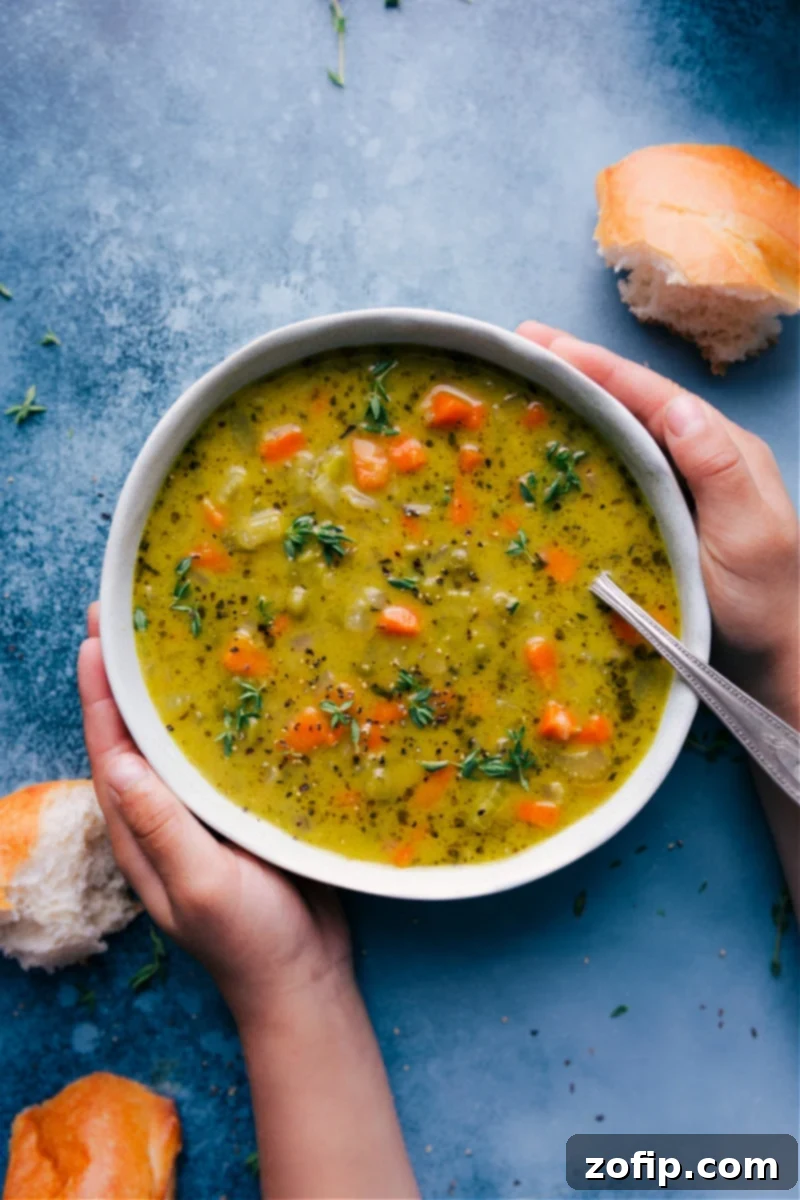
This **Vegetarian Split Pea Soup Recipe** is robustly seasoned and richly flavored — trust us, you won’t be missing the ham! With loads of wholesome veggies and tender, creamy green split peas, this soup is the perfect canvas for dipping a hunk of crusty bread.
Craving the classic version? If you prefer Split Pea Soup with ham, explore our original Split Pea Soup recipe, which utilizes a leftover ham bone or ham hocks for a traditional touch.
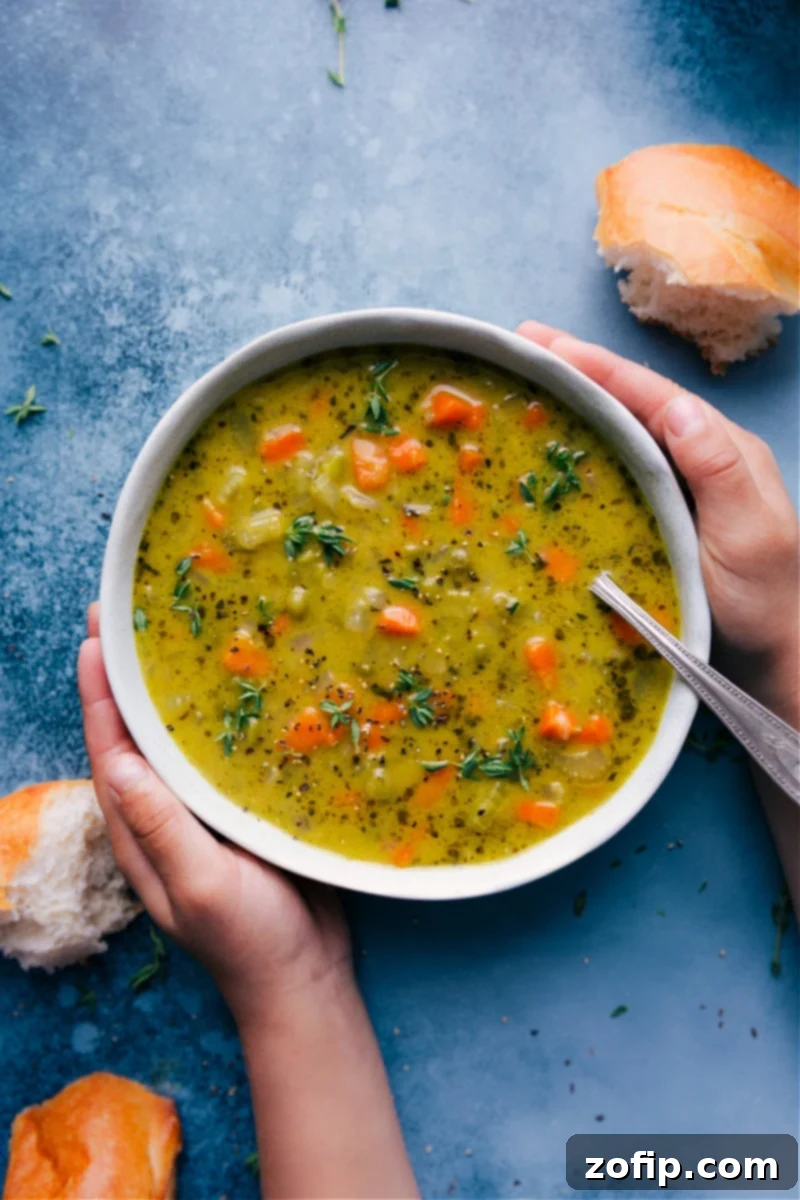
Hearty & Flavorful Vegetarian Split Pea Soup: A Ham-Free Delight
Split pea soup is traditionally celebrated for its deep, savory flavor, often attributed to a ham bone simmering slowly in the broth and generous shreds of ham in every spoonful. However, we believe a truly exceptional split pea soup can be crafted without meat, offering a vibrant, wholesome, and equally satisfying experience. This recipe was born from a challenge: to create a vegetarian split pea soup so rich and indulgent that even the most dedicated ham lovers wouldn’t miss it.
The journey to perfecting this meat-free version revealed a few crucial secrets to unlocking unparalleled flavor. Foremost among them is salt – a surprisingly simple yet profoundly impactful ingredient. Ham contributes a significant amount of salt to traditional recipes, and its absence demands a thoughtful adjustment. In this recipe, we not only incorporate a generous amount of salt directly into the soup but also leverage a robustly salted vegetable stock. These two elements work in harmony to elevate the flavors, making them so bright and complex that the memory of ham fades away.
Beyond strategic seasoning, we boost the soup’s richness with an extra touch of olive oil, mimicking the luxurious mouthfeel that a ham bone would typically impart to the broth. A vibrant kick of lemon zest and juice adds essential acidity and a refreshing brightness, cutting through the richness and awakening the palate. Finally, a unique blend of carefully selected seasonings, often absent in standard split pea soup recipes, truly seals the deal, transforming this dish into what we proudly call the best vegetarian split pea soup you’ll ever taste. Prepare for a heartwarming bowl that defies expectations and delivers pure comfort.
A Protein Powerhouse!
Don’t let the lack of meat fool you into thinking this soup is light on protein. Split peas are an incredible source of plant-based protein! In just 1 cup of uncooked split peas, you’ll find an astonishing 48 grams of protein — a fantastic boost for any diet!
Understanding Split Peas: Your Plant-Based Powerhouse
Often confused with lentils or whole peas, green split peas are a distinct legume with unique qualities that make them perfect for hearty soups. Simply put, they are dried peas that have been deliberately hulled and split in half. This “splitting” process is key to their culinary appeal: it significantly reduces their cooking time and eliminates the need for troublesome overnight soaking, making them a convenient choice for busy home cooks.
Naturally, green peas have two cotyledons (halves), and the drying process, combined with mechanical splitting, makes them readily available in this convenient form. When cooked, split peas are renowned for their ability to absorb the rich flavors of a dish, acting as an excellent canvas for spices and aromatics. They possess a subtle earthy flavor, often accompanied by a delicate sweetness, similar to fresh green peas. What truly sets them apart in soup-making is their incredible ability to break down during prolonged cooking, yielding a wonderfully creamy, naturally thickened texture without the need for additional dairy or flour.
Beyond their delicious taste and creamy texture, split peas are a nutritional powerhouse. As highlighted earlier, they are exceptionally rich in plant-based protein, making this soup incredibly filling and satisfying. Furthermore, they are an excellent source of dietary fiber, which supports digestive health, helps regulate blood sugar levels, and contributes to a feeling of fullness. Split peas also provide a good array of essential vitamins and minerals, including folate, potassium, iron, and B vitamins, all contributing to overall well-being. Incorporating them into your diet is a smart and tasty way to boost your nutrient intake.
Choosing Your Split Peas
While most green split peas will yield delicious results, we found that Bob’s Red Mill® Green Split Peas consistently delivered excellent results in our testing. (This is not a sponsored recommendation, just a genuine preference!)
Perfect Pairings: Serving Your Vegetarian Split Pea Soup
A bowl of this comforting vegetarian split pea soup is fantastic on its own, but pairing it with the right accompaniments can elevate it into an unforgettable meal. There’s truly nothing quite like a piece of warm, crusty bread to dunk into this rich, creamy soup. Spread a generous amount of softened butter on warmed bread slices and savor every bite as it soaks up the flavorful broth. Alternatively, a sprinkle of homemade or store-bought croutons on top adds a delightful crunch and extra texture.
For a more complete meal, consider serving this soup alongside a fresh, crisp salad. A classic Caesar Salad, a vibrant Garden Salad, or a zesty Italian Salad would all provide a wonderful counterpoint to the soup’s richness. The fresh greens and tangy dressing offer a refreshing contrast that brightens the entire meal.
If you’re looking to boost the protein content even further or simply enjoy a different texture, consider serving some crispy roasted chickpeas on the side or sprinkled directly into the soup. Their savory crunch and nutty flavor are a perfect match. A sprinkle of freshly grated Parmesan cheese (or a vegan alternative) in individual bowls just before serving adds another layer of umami and richness that is absolutely divine. Finally, a garnish of fresh parsley or thyme not only adds a beautiful pop of color but also a burst of fresh, aromatic flavor.
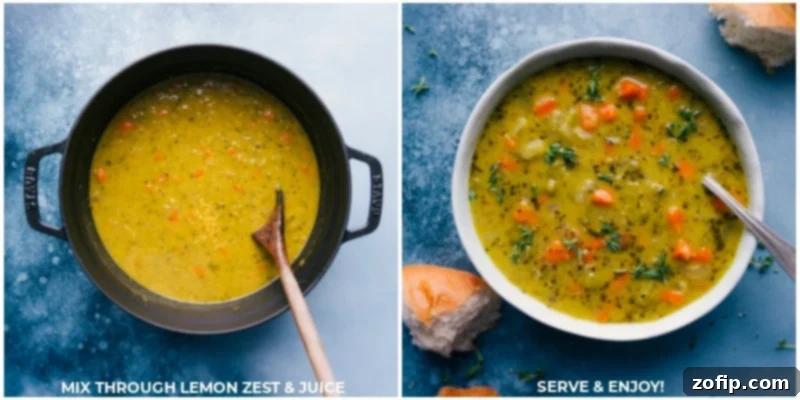
Expert Tips for the Best Vegetarian Split Pea Soup
Achieving the perfect consistency and flavor for your vegetarian split pea soup is easier with a few insights. Keep these expert tips in mind to ensure a delicious outcome every time:
- **Cooking Time Varies:** The actual cooking time for split peas can fluctuate significantly. Factors like the type and age of your split peas, the heat retention of your pot, and your stovetop’s temperature all play a role. Even personal preference for texture matters! If you prefer peas with a slight bite, lean towards the shorter end of the cooking spectrum. For that ultra-creamy, almost “disintegrated” pea texture, you’ll need to cook them longer. Always monitor your soup and adjust heat as needed.
- **Ideal Pea Tenderness:** The peas only need to be cooked until they are tender when tasted. However, if you desire a truly creamy and smooth soup, continue simmering until the peas begin to soften and break apart naturally. This process helps thicken the soup without needing additional thickeners. If the soup becomes too thick for your liking during or after cooking, simply thin it out with a splash of hot water or vegetable broth. You can always return it to the heat if you decide you want it thicker or the peas more tender.
- **Choose a Heavy-Bottomed Pot:** Split peas have a tendency to stick and scorch on the bottom of a pot, especially as the soup thickens. Using a pot with a heavy, thick bottom—such as a Dutch oven—distributes heat more evenly, significantly reducing the risk of burning and ensuring a more consistent cook. Stirring occasionally is still recommended, but a heavy-bottomed pot provides a crucial layer of protection.
- **The Importance of Fresh Split Peas:** Unfortunately, split peas do not have an indefinite shelf life. Older split peas tend to dry out over time, making them incredibly difficult to soften properly, even with extended cooking times and additional liquid. For the best results, always use relatively fresh split peas. You can often check their freshness by their color; pale, dull peas might be old, whereas vibrant green peas are typically fresher. Before cooking, always rinse your split peas thoroughly in a mesh sieve and inspect them for any small debris or discolored peas.
Beware of Old Split Peas
Old split peas can be notoriously stubborn! As they age, they dry out, requiring significantly more cooking time and liquid to soften, and sometimes never quite reaching that desirable creamy texture. Ensure your split peas are relatively fresh for the best soup results!
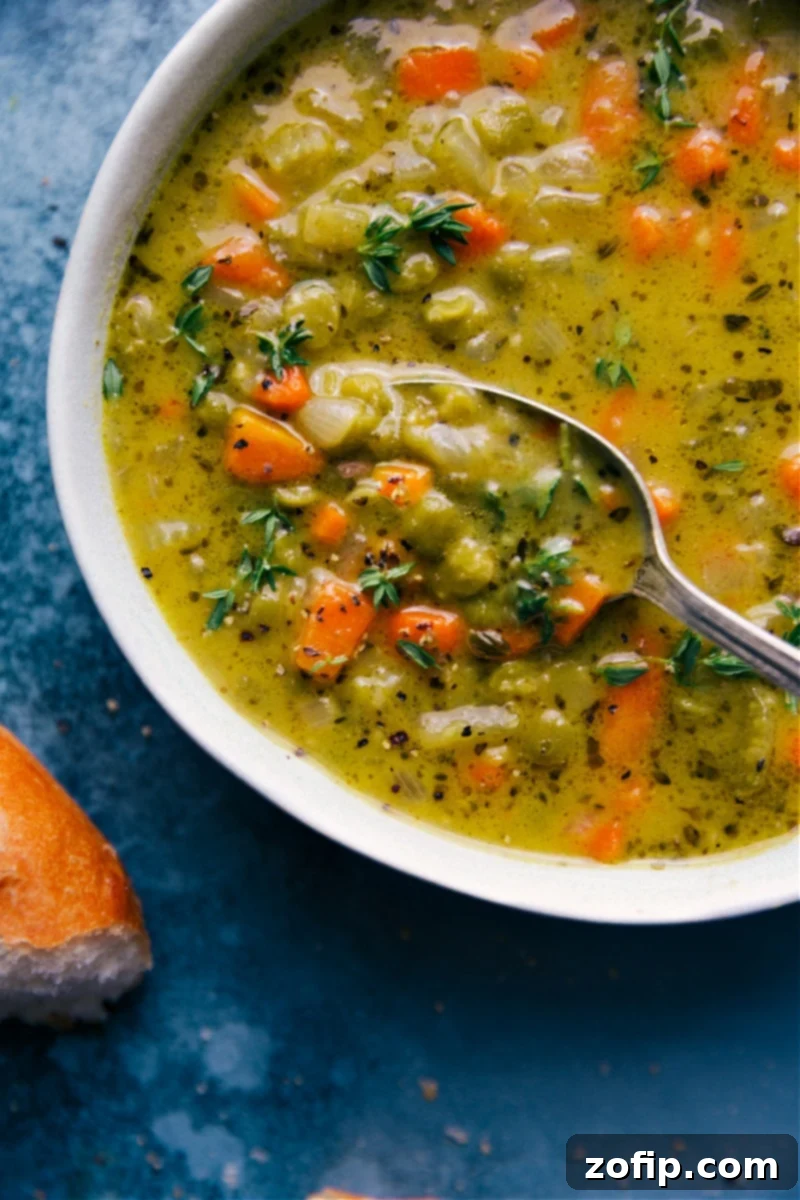
Storage & Reheating Instructions
This vegetarian split pea soup is not only delicious but also stores wonderfully, making it an excellent meal prep option for busy weeks. Here’s how to keep it fresh and enjoy it again:
Storage and Freezing
- **Refrigeration:** The soup keeps beautifully in an airtight container in the fridge for up to **3 days**. Its flavors tend to deepen overnight, often tasting even better the next day!
- **Reheating:** To reheat, transfer the desired amount of soup to a small pot and warm gently over low heat, stirring occasionally, until it reaches your preferred temperature. Alternatively, you can reheat it in the microwave; just be sure to cover the bowl to prevent splatters. Note that the soup will naturally thicken as it cools and stores. You’ll likely need to add a splash of additional vegetable stock or water when reheating to achieve your desired consistency.
- **Freezing:** This Vegetarian Split Pea Soup freezes exceptionally well, allowing you to enjoy homemade comfort food whenever you like. Store it in freezer-safe containers or heavy-duty freezer bags for up to **2 to 3 months**. Label with the date for best practice. For detailed guidance on thawing frozen soup safely and effectively, you can find excellent methods here.
Creative Variations & Customizations
While this recipe stands strong on its own, it also offers a fantastic base for customization. Feel free to experiment with different ingredients to tailor the soup to your taste preferences or what you have on hand:
- **Smoky Flavor (Ham-Free):** To replicate a smoky depth without ham, consider adding a teaspoon of smoked paprika or a few drops of liquid smoke (start with a tiny amount and add more to taste) when you add the other spices. A vegetarian smoked sausage, if available, could also be diced and added.
- **Spice It Up:** If you love a little heat, increase the red pepper flakes or add a pinch of cayenne pepper. For a different kind of warmth, a dash of curry powder or garam masala could transform the flavor profile.
- **Additional Vegetables:** Feel free to incorporate other vegetables. Diced potatoes or sweet potatoes can add extra heartiness and a slightly different texture. Spinach or kale stirred in during the last 5-10 minutes of cooking will add nutrients and a fresh green element.
- **Herb Power:** While Italian seasoning and thyme are included, fresh herbs like rosemary or sage could also complement the split peas beautifully. Add them along with the bay leaves for a deeper infusion.
- **Umami Boost:** A tablespoon of tomato paste, added with the garlic and spices, can deepen the soup’s umami profile. A dash of soy sauce or tamari (for gluten-free) or even a spoonful of nutritional yeast can also add a savory, cheesy depth.
The Health Benefits of Plant-Based Split Pea Soup
Beyond its incredible flavor and comforting warmth, this vegetarian split pea soup offers significant health advantages, making it a smart choice for any meal:
- **Rich in Plant-Based Protein:** As mentioned, split peas are a protein powerhouse, essential for muscle repair, growth, and overall bodily functions, making this soup incredibly satisfying without meat.
- **High in Fiber:** The substantial fiber content in split peas aids digestion, promotes gut health, helps regulate blood sugar levels, and contributes to prolonged feelings of fullness, which can support weight management.
- **Nutrient-Dense:** This soup is packed with essential vitamins and minerals, including iron, folate (crucial for cell growth and DNA formation), potassium (important for blood pressure regulation), and various B vitamins, supporting energy metabolism and nerve function.
- **Heart-Healthy:** Being naturally low in saturated fat and cholesterol-free, and rich in fiber and potassium, this soup is an excellent choice for supporting cardiovascular health.
- **Supports Healthy Digestion:** The soluble and insoluble fibers in split peas help maintain a healthy digestive system, preventing constipation and promoting regularity.
- **Naturally Gluten-Free:** For those with gluten sensitivities or celiac disease, this soup offers a delicious and safe meal option.
Incorporating this hearty, plant-based soup into your diet is a simple yet effective way to boost your nutrient intake and enjoy a truly wholesome, delicious meal.
Vegetarian Split Pea Soup Recipe
Chelsea Lords
30 minutes
1 hour
30 minutes
2 hours
6
servings
Video
Equipment
- Large pot
5.5 quart or larger
Ingredients
-
1/4
cup
olive oil -
2
cups
finely diced yellow onion
2 medium onions -
1-1/2
cups
finely diced carrot
4 carrots -
1-1/2
cups
finely diced celery
4 stalks -
1
tablespoon
minced garlic
4 cloves -
Salt and
pepper
-
1
tablespoon
Italian seasoning -
1-1/2
teaspoon
ground cumin -
1
teaspoon
dried thyme -
1/8
teaspoon
red pepper flakes -
2
(32-ounce) containers
vegetable stock
I love Swanson’s; 8 cups -
1-1/2
cups
green split peas
see note 1 -
2
bay leaves
dry -
1
lemon
optional, for juice and zest -
Serving suggestions
see note 2
Instructions
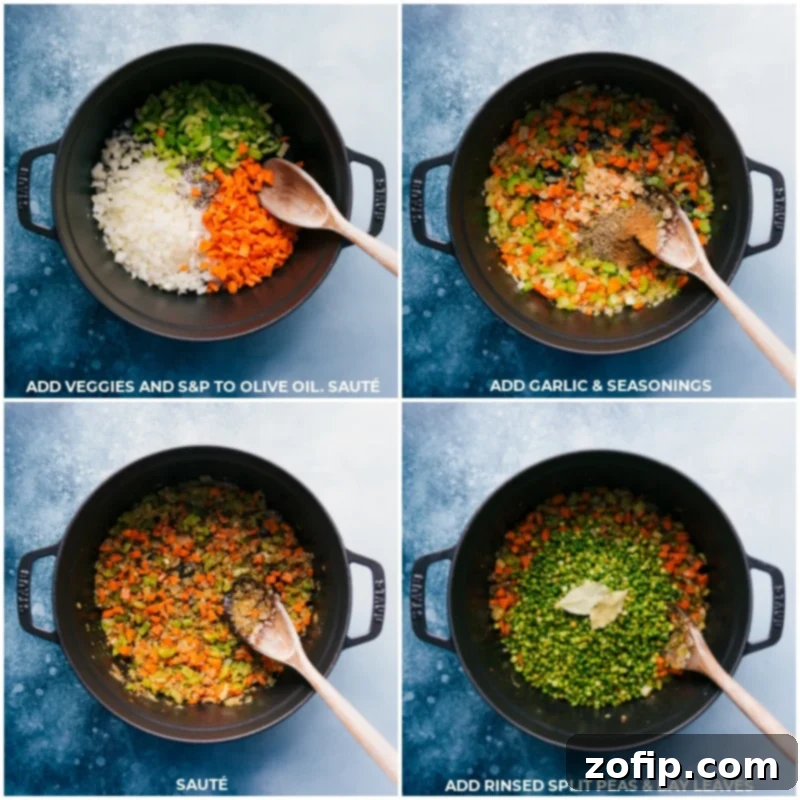
- In a large (5.5 quart or larger) heavy-bottomed pot, over medium heat, add olive oil. Add onion, carrot, celery, and salt/pepper to taste (we recommend starting with 2 teaspoons salt and 1 teaspoon pepper). Cook until vegetables are soft and the onion begins to turn golden, about 7–9 minutes. Add minced garlic, Italian seasoning, cumin, thyme, and red pepper flakes, then cook, stirring constantly, for 1 minute until fragrant.
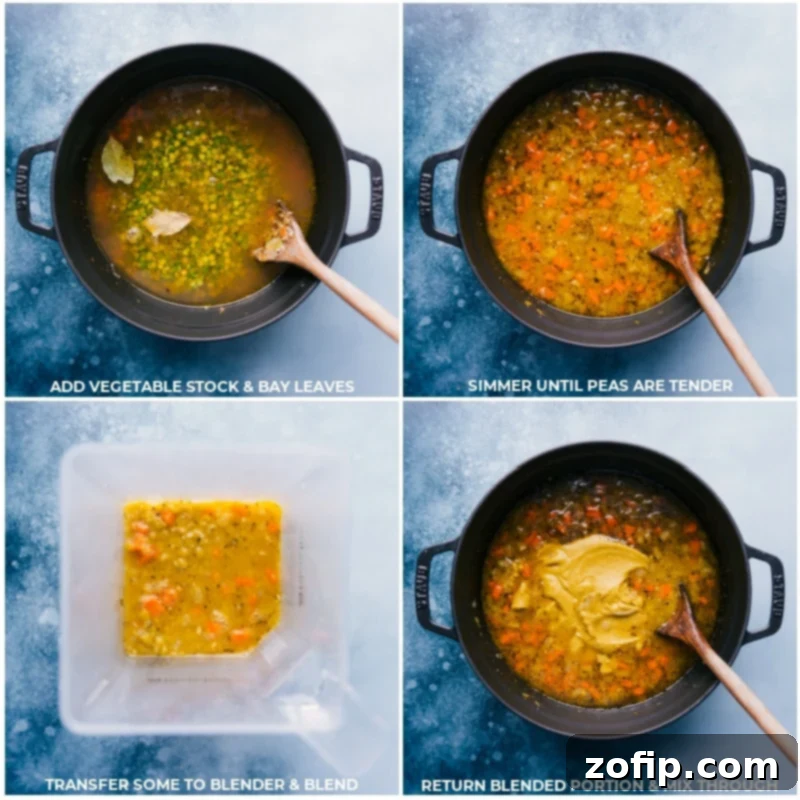
- Add the rinsed split peas, bay leaves, and vegetable stock to the pot. Stir to combine, then bring the mixture to a boil. Once boiling, reduce the heat to low and let the soup simmer, uncovered, for 60–90 minutes (refer to note 3 for guidance on cooking time). Stir occasionally to prevent the peas from sticking to the bottom of the pot. The soup should maintain a gentle, slight bubble around the edges, not a rapid boil. Continue cooking until the split peas have broken down and the soup has thickened to your desired consistency. (You’ll need to stir more frequently as the soup thickens. If it becomes too thick, add a splash more stock.)
- Carefully remove and discard the bay leaves. Scoop out about 2 cups of the soup and transfer it to a blender. Blend until completely smooth (see note 4 for blending safety). Return the blended puree to the pot of soup and stir it through. If using, zest and juice one lemon to yield about 1 teaspoon of zest and 2 tablespoons of juice; add these to the soup. Taste and adjust seasoning as needed, adding additional salt and pepper (we typically add another 1/2 teaspoon salt and 1/4 teaspoon pepper at this stage).
- Ladle the rich, creamy soup into bowls. Serve immediately with hearty buttered bread for dipping, a sprinkle of fresh pepper, and fresh parsley or thyme if desired. You can also offer freshly grated Parmesan cheese (or a vegan alternative) for individual bowls. Enjoy!
Recipe Notes
**Note 2: Recommended Serving Suggestions.** While delicious on its own, consider these optional but highly recommended additions: a vibrant kick of zest and juice from 1 lemon, crusty bread for dipping, freshly grated Parmesan cheese (or a dairy-free alternative), and fresh parsley or thyme for garnish.
**Note 3: Variable Cooking Time.** The cooking time for split peas can vary significantly based on factors such as the type of pot you’re using, your stovetop’s temperature, the specific brand and age of your split peas, and your personal preference for texture. Cook until the split peas are tender to the bite. If you prefer an extra creamy or smoother texture, continue cooking until the peas further soften and begin to fall apart. If the soup appears too thick, you can add a little more water or broth and remove it from the heat. (You can always return the pot to the heat if you decide you want the peas more tender or the soup thicker). If the peas aren’t softening, you may need to increase the heat slightly, ensuring it doesn’t rapidly boil.
**Note 4: Blending Safety.** When blending hot soup, it’s crucial to exercise caution to prevent steam buildup and potential splatters. Never fill your blender more than halfway. Remove the center knob from the blender lid and replace it with a clean kitchen towel. This allows steam to escape while still preventing splatters, ensuring a safe blending process.
**Storage:** This soup stores wonderfully in an airtight container in the fridge for up to 3 days. To reheat, transfer the soup to a small pot and warm over low heat until it reaches your desired temperature. Alternatively, reheat in the microwave, making sure to cover it to prevent splattering. The soup will thicken as it cools and stores, so you may need to add additional vegetable stock or water to thin it to your preferred consistency. For longer storage, this soup freezes exceptionally well for up to 2–3 months. Here are some best methods for thawing frozen soup.
Nutrition
Serving:
1
serving
|
Calories:
206
kcal
|
Carbohydrates:
24
g
|
Protein:
6
g
|
Fat:
10
g
|
Saturated Fat:
1
g
|
Polyunsaturated Fat:
1
g
|
Monounsaturated Fat:
7
g
|
Sodium:
340
mg
|
Potassium:
444
mg
|
Fiber:
8
g
|
Sugar:
7
g
|
Vitamin A:
3611
IU
|
Vitamin C:
9
mg
|
Calcium:
64
mg
|
Iron:
2
mg
Nutrition information is automatically calculated, so should only be used as an approximation.
Explore More Vegetarian Soup Recipes
If you loved this hearty vegetarian split pea soup, you’ll be delighted by these other delicious plant-based soup recipes:
- White Bean Soup with fresh basil pesto
- Healthy Minestrone Soup with quinoa
- Creamy Vegetable Soup with loads of veggies
- Vegetarian Chili with beans and veggies
- Broccoli Cheddar Soup with shredded carrots
Love this recipe? Leave a comment below!
Your feedback helps us create more delicious recipes.