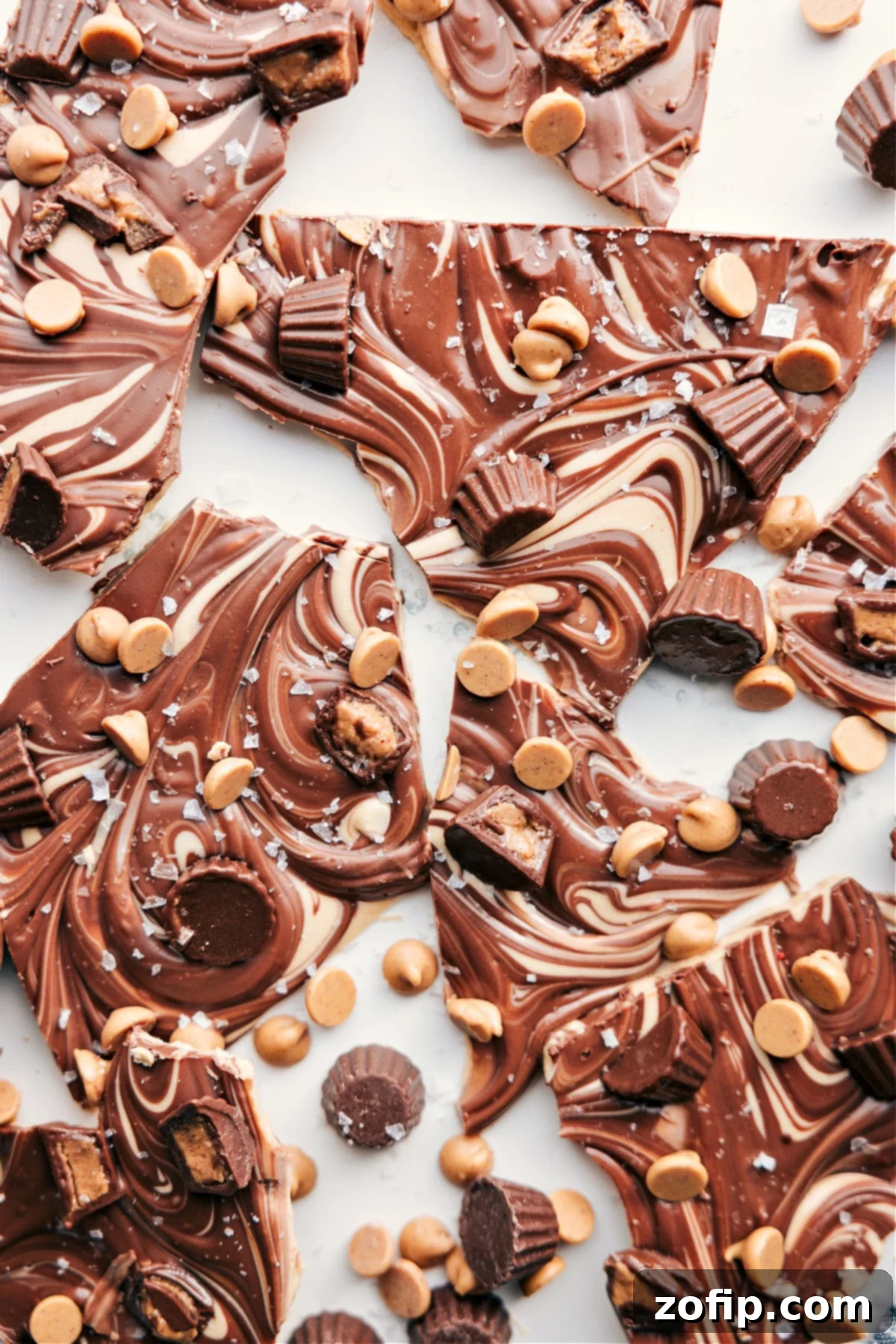
Peanut Butter Bark: The Quickest and Best No-Bake Treat You’ll Ever Make
Peanut Butter Bark is the ultimate easy dessert. This no-bake treat combines creamy, swirled chocolate, rich peanut butter, and a delightful array of toppings, making it perfect for any occasion. Whether you need a quick dessert for a party, a sweet treat for a movie night, or a simple homemade gift, this bark is sure to impress.
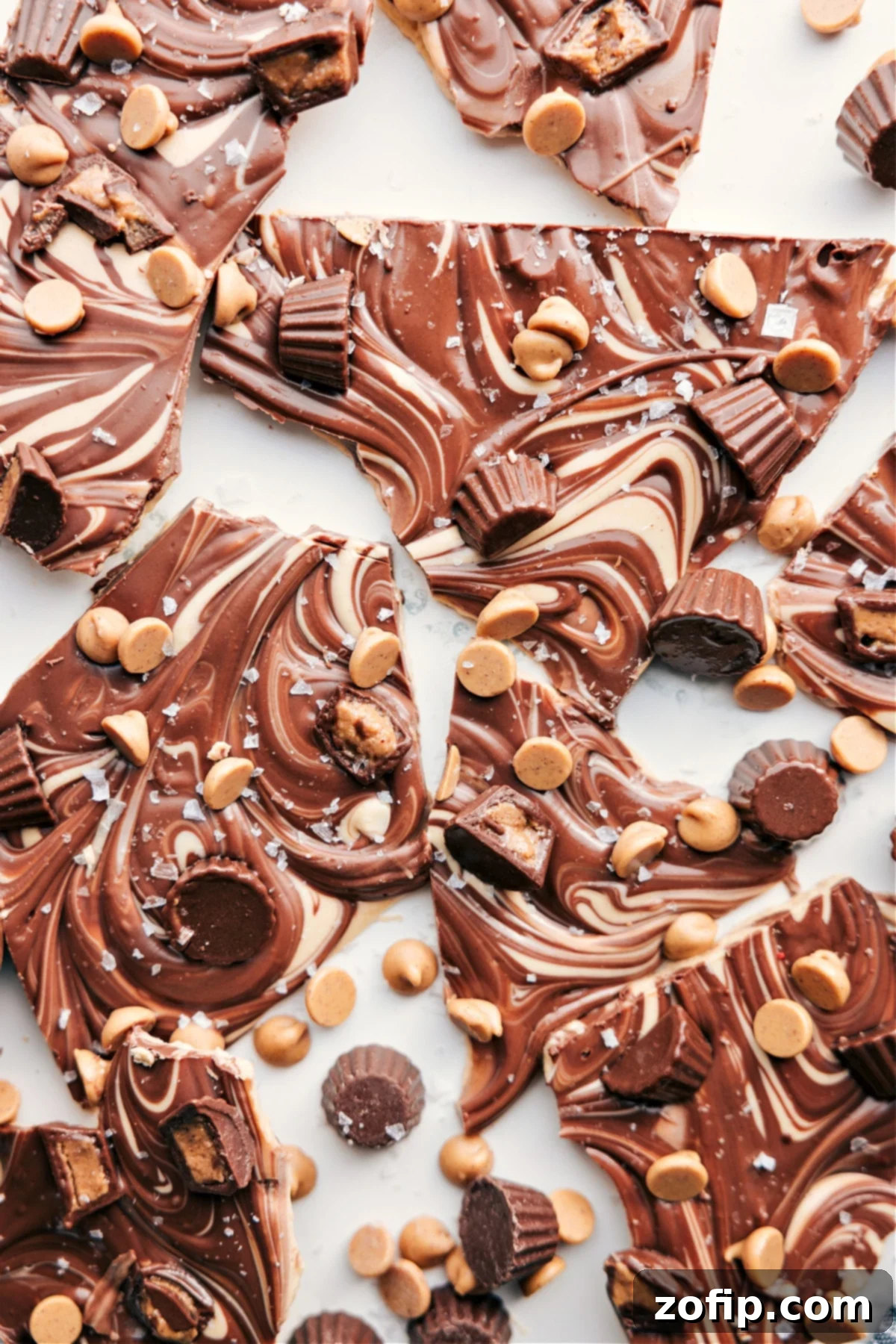
A Note from the Author: My Peanut Butter and Chocolate Obsession
Peanut butter and chocolate – it’s a flavor combination that I simply can’t resist! This year, I’ve been on a mission to create as many variations of this classic pairing as possible. It all started with my Buckeye Candies, those delectable peanut butter balls dipped in chocolate. From there, I took it a step further by smashing those candies onto graham crackers to create Buckeye Grahams. And just when I thought I’d reached peak peanut butter and chocolate perfection, I came up with Buckeye Brownie Cookies – a must-try if you’re a fan of this flavor combination!
So, while I haven’t officially named this recipe “Buckeye Bark,” it probably should be to keep the theme going! Honestly, this Peanut Butter Bark might just be my new favorite no-bake dessert. It’s incredibly creamy, perfectly sweet, and loaded with all sorts of fun and exciting toppings. Plus, it’s so easy to make that anyone can whip it up in minutes.
This recipe is perfect for those times when you need a quick and easy dessert without turning on the oven. The combination of smooth chocolate and peanut butter creates a rich, satisfying flavor that is hard to resist. Plus, with endless topping possibilities, you can customize it to suit your taste preferences and create a unique treat every time.
Whether you’re a seasoned baker or a beginner in the kitchen, this Peanut Butter Bark recipe is designed to be foolproof. It requires minimal ingredients and simple steps, making it a great option for kids to help with as well. Get ready to impress your friends and family with this delightful and effortless dessert.
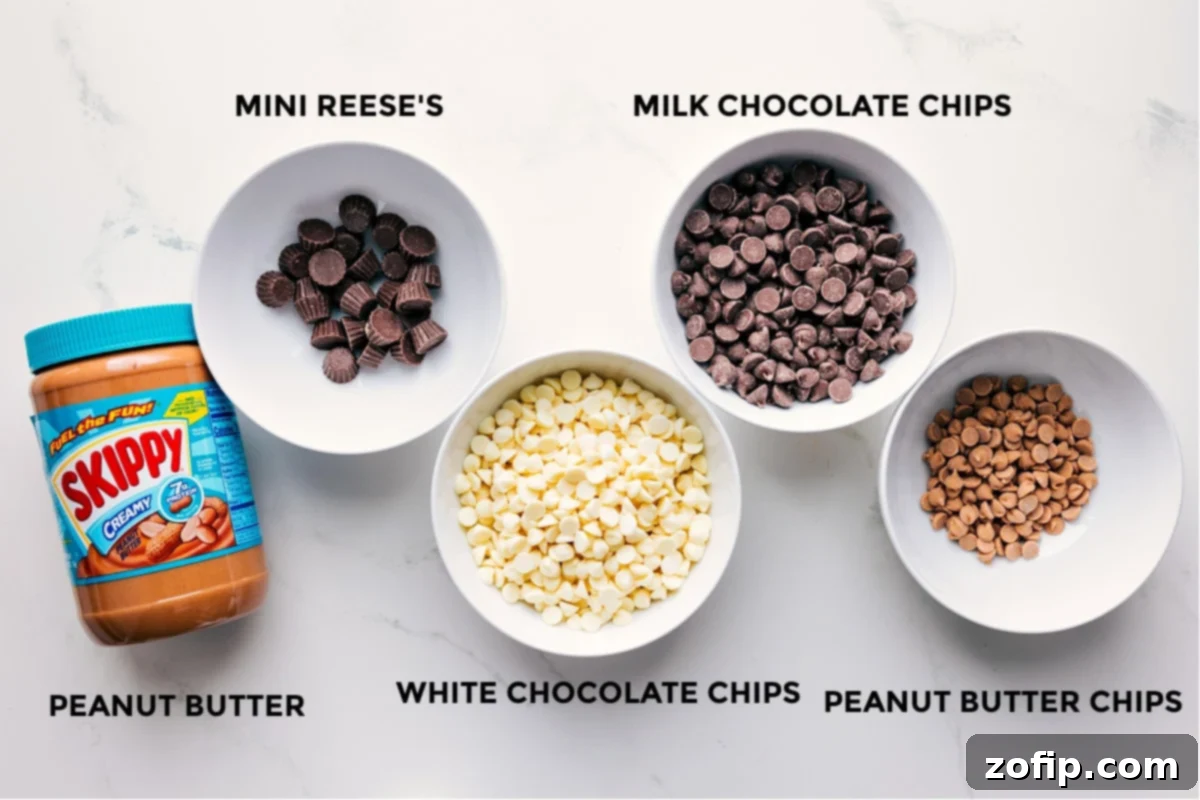
Peanut Butter Bark Ingredients: The Key to Perfection
The quality of your ingredients will greatly impact the final taste of your Peanut Butter Bark. Opt for high-quality chocolate and creamy peanut butter for the best results. Here’s a breakdown of what you’ll need:
| Ingredient | Helpful Tip |
|---|---|
| White Chocolate Chips and Peanut Butter | Melt slowly and stir often to ensure a smooth and creamy mixture. Avoid overheating to prevent the chocolate from seizing. |
| Milk Chocolate Chips and Peanut Butter | The better the chocolate, the better the bark! Use regular creamy peanut butter instead of natural or no-stir versions for the right consistency. |
| Mini Reese’s Cups | Gently press them into the warm bark so they adhere well. Cutting them in half reveals pops of peanut butter goodness that are both visually appealing and delicious. |
| Peanut Butter Baking Chips | Scatter these over the top for an extra burst of peanut butter flavor in every bite. They add a delightful texture and enhance the overall taste. |
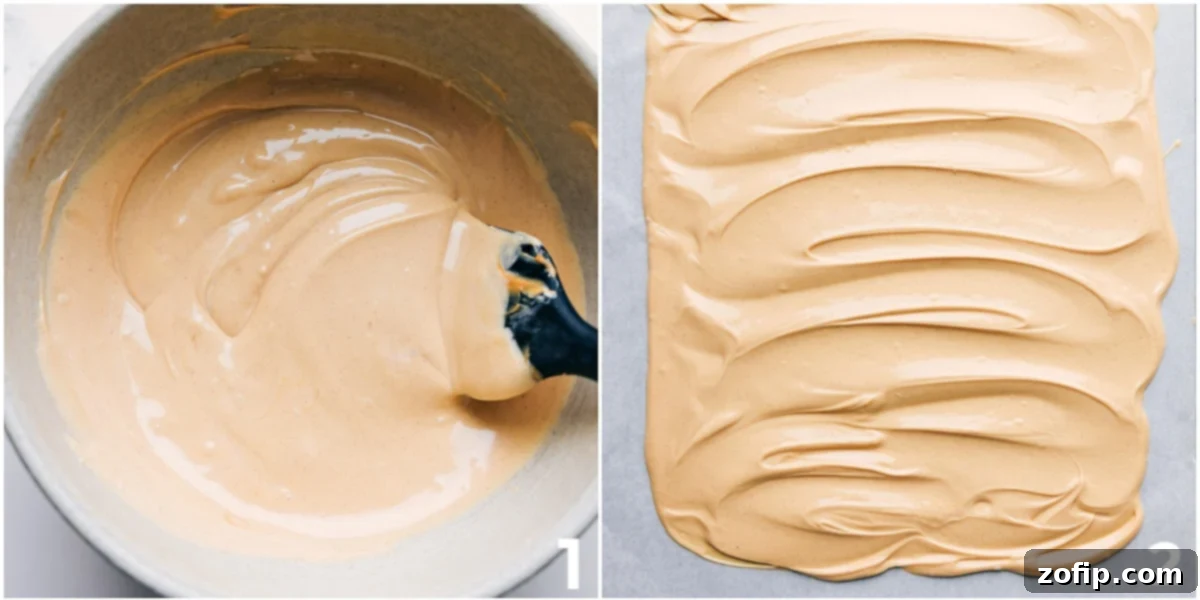
How to Make Peanut Butter Bark: A Step-by-Step Guide
Making Peanut Butter Bark is incredibly easy, and these simple steps will guide you through the process:
- Prep the Pan: Line a sheet pan with parchment paper or a silicone mat. This will prevent the bark from sticking and make it easy to remove once it’s set.
- Melt the White Chocolate: Microwave the white chocolate chips in short bursts, typically 30 seconds at a time, stirring well between each interval. This prevents overheating and ensures a smooth, melted consistency. Spread the melted white chocolate in a thin, even layer across the prepared sheet pan.
- Melt the Milk Chocolate: Melt the milk chocolate chips in the same way as the white chocolate, using short microwave bursts and frequent stirring.
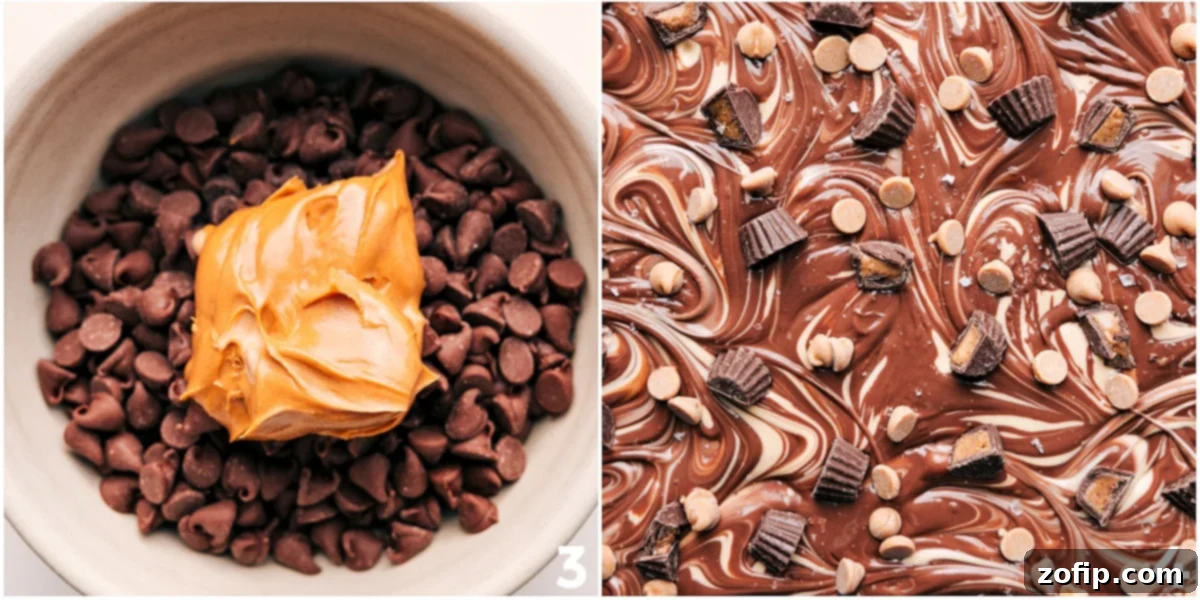
- Swirl and Top: Drizzle the melted milk chocolate over the white chocolate layer. Use a knife or skewer to gently swirl the two chocolates together, creating a beautiful marbled effect. Immediately press your desired toppings into the warm chocolate, ensuring they adhere well.
- Chill and Cut: Refrigerate the bark until it is firm and fully set, usually for about an hour. Once set, remove the bark from the refrigerator and cut or break it into pieces.
Following these steps ensures that your Peanut Butter Bark turns out perfectly every time, with a beautiful swirl of chocolate and a delightful combination of flavors and textures.
Storage Tips for Your Peanut Butter Bark
To maintain the quality and flavor of your Peanut Butter Bark, proper storage is essential. Here are some tips to keep your bark fresh and delicious:
- Refrigeration: Store the bark in an airtight container in the refrigerator for up to one week. The cool temperature will help the bark stay firm and prevent the chocolate from melting. Be sure to separate the layers with parchment paper to prevent sticking.
- Freezing: For longer storage, you can freeze the Peanut Butter Bark. Place the bark in a freezer-safe bag or container and store it in the freezer for up to three months. When ready to eat, let it sit at room temperature for a few minutes before enjoying.
Quick Tip for Melting Chocolate
When melting chocolate in the microwave, remember that much of the melting occurs from residual heat. Stir the chocolate well (for about 30 seconds) between each microwave burst to allow the heat to distribute evenly and melt the chocolate gently. This prevents overheating and ensures a smooth, glossy finish. Start with 30-second intervals, then reduce to 15-second intervals as the chocolate begins to melt. Patience is key to achieving perfectly melted chocolate!
More No-Bake Treats to Love: Expand Your Dessert Repertoire
If you enjoyed making Peanut Butter Bark, you might also love these other no-bake treats:
Peanut Butter Bark Recipe
Here’s the detailed recipe for making the most delicious Peanut Butter Bark:
Ingredients
- 2 cups white chocolate chips
- 6 tablespoons creamy peanut butter, divided (like Skippy)
- 1 cup milk chocolate chips (semi-sweet or dark chocolate chips for a less sweet bark)
- Mini Reese’s cups, cut in half
- Peanut butter baking chips
Equipment
- Rimmed sheet pan
- Parchment paper or silicone liner
- Microwave-safe bowls
- Knife or skewer for swirling
Instructions
- Line a sheet pan with parchment paper or a silicone liner.
- Add the white chocolate chips and 5 tablespoons peanut butter to a large microwave-safe bowl. Microwave for 30 seconds, then stir for 30 seconds. Continue microwaving in 15-second bursts, stirring after each, until the chocolate is mostly melted. Once it is mostly melted, stop microwaving and stir until completely smooth. Pour onto the lined pan and spread into a thin even layer.
- Add the milk chocolate chips and the remaining 1 tablespoon peanut butter to another microwave-safe bowl. Melt the same way, heating until mostly melted and stirring until smooth.
- Drizzle the melted milk chocolate over the white chocolate layer. Use a knife to swirl the two together. Press mini Reese’s cups and peanut butter baking chips evenly across the top. Add as many or as few as you like.
- Transfer the pan to the fridge until the bark is fully set. Remove and cut into pieces with a sharp knife or break apart with your hands. Store in an airtight container in the fridge, separating layers with parchment. This bark softens quickly at room temperature, so keep it chilled.
Recipe Notes
- Note 1: For a less sweet bark, use semi-sweet or dark chocolate chips. Higher-quality chips give the best flavor.
- Note 2: If you cannot find mini peanut butter cups, use regular ones and coarsely chop them.
- Storage: Keep the bark in an airtight container in the fridge, separating layers with parchment. It softens quickly, so keep it chilled.
Nutrition Information (Approximate)
Serving: 1 serving | Calories: 281kcal | Carbohydrates: 25g | Protein: 4g | Fat: 18g | Saturated Fat: 9g | Polyunsaturated Fat: 1g | Monounsaturated Fat: 6g | Cholesterol: 3mg | Sodium: 68mg | Potassium: 98mg | Fiber: 1g | Sugar: 22g | Vitamin A: 109IU | Calcium: 88mg | Iron: 0.1mg
Nutrition information is automatically calculated and should only be used as an approximation.