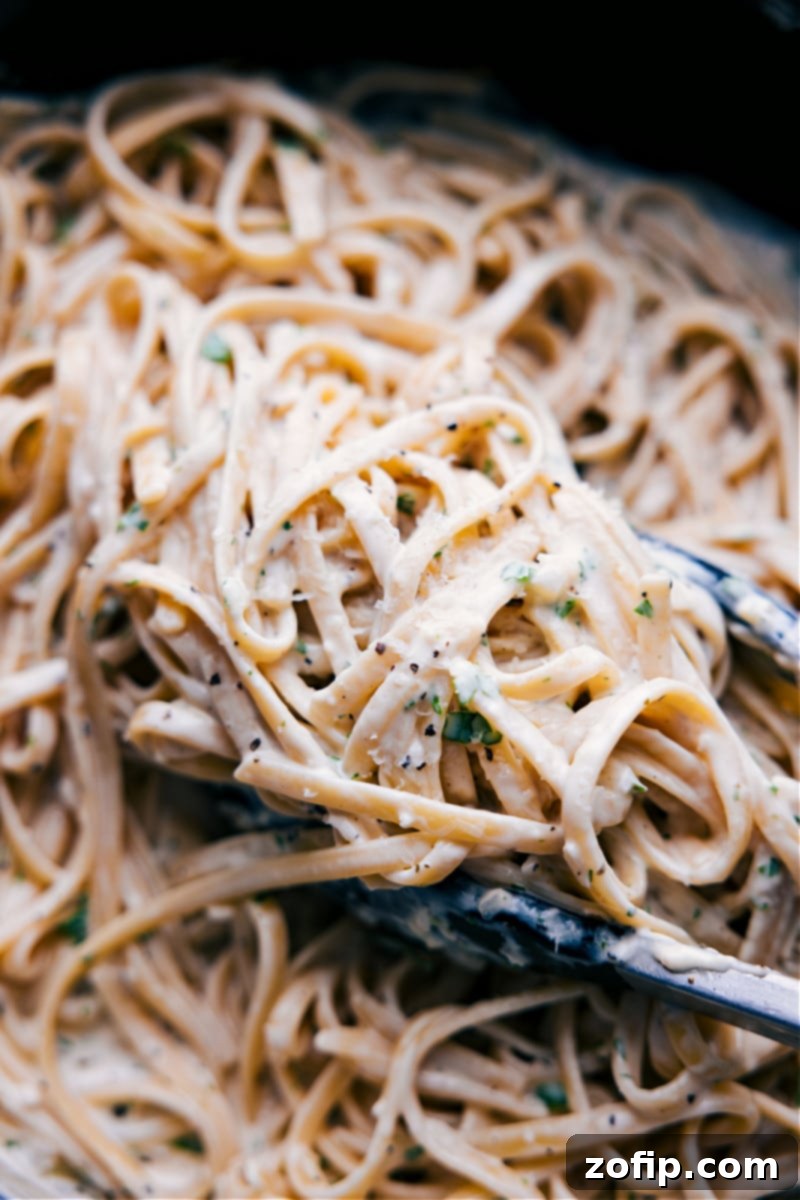
Indulge in the ultimate comfort food with this **Fettuccine Alfredo Recipe**, a truly rich, velvety, and incredibly flavorful pasta dish. Forget complicated techniques or long hours in the kitchen; this classic Italian-American favorite comes together in just 30 minutes, bringing restaurant-quality taste directly to your home dining table.
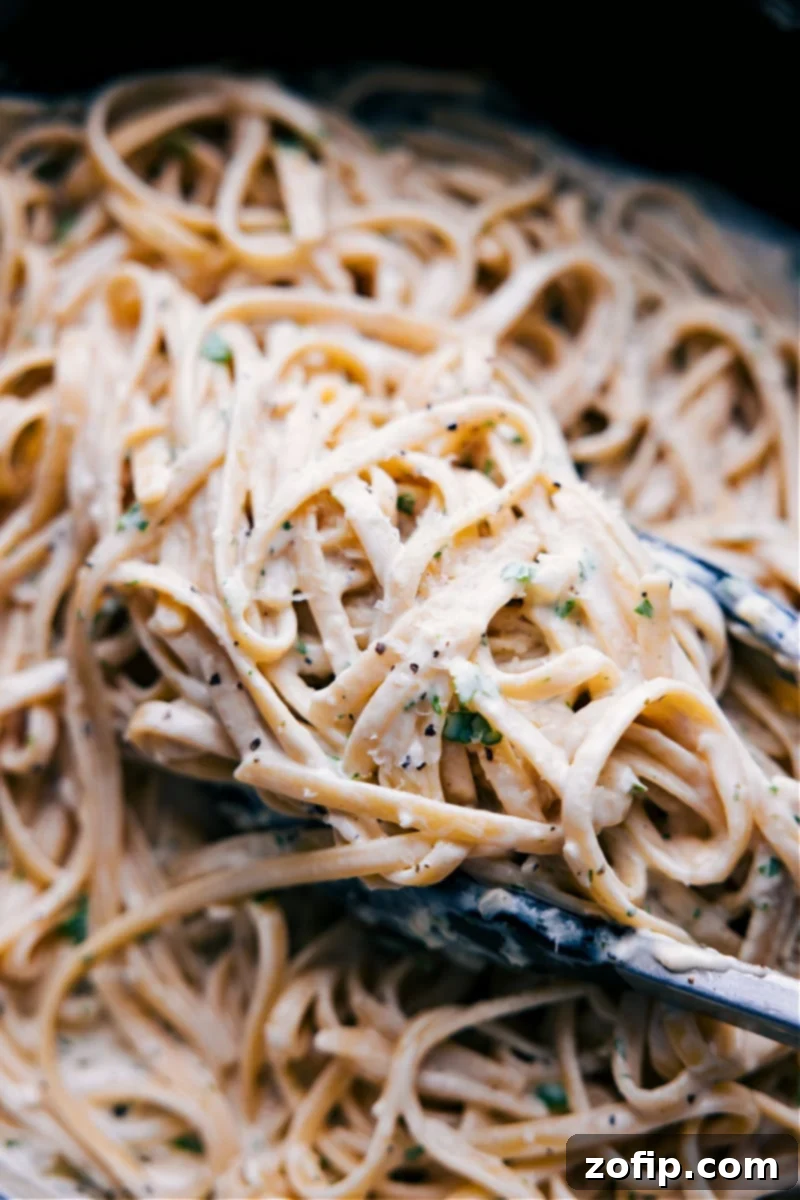
Mastering the Classic Fettuccine Alfredo Recipe
While there’s certainly a place for creative twists on Fettuccine Alfredo, featuring various vegetables, proteins, or adventurous flavor combinations, this recipe focuses on the timeless, simple perfection of a *classic* Alfredo. We’re going back to the foundational elements: tender fettuccine pasta enveloped in a luxuriously rich cream sauce. This isn’t a recipe to be underestimated by its simplicity; instead, its straightforward nature allows the high-quality ingredients to truly shine, delivering an unforgettable dining experience.
Don’t be fooled into thinking a simple recipe means boring flavors. The magic of this dish lies in its profound richness and depth. Each strand of pasta is coated in a wonderfully savory sauce, subtly perfumed with aromatic garlic, the sharp tang of freshly grated Parmesan, and a hint of fragrant Italian seasoning. The result is a delightfully indulgent and utterly delicious meal that tastes far more complex than its preparation suggests.
The secret to achieving that coveted restaurant-quality Alfredo at home lies primarily in one key ingredient: heavy cream. However, unlike many recipes that call for excessive amounts, our method uses significantly less cream – about half of what you might find elsewhere. This efficiency is thanks to a clever Italian technique involving reserved pasta water. This starchy liquid acts as a natural emulsifier and thickener, stretching the sauce further while adding incredible body and helping it cling beautifully to every piece of fettuccine. It’s an essential step for an authentic and satisfying Alfredo experience.
Quick Tip: Lighter Alternatives
If you’re conscious about fat or calorie intake, there are fantastic alternatives. Consider exploring a lightened-up, no-heavy-cream version of Chicken Alfredo or a healthy Cajun Sausage Pasta. However, for the authentic, uncompromised excellence of this classic Fettuccine Alfredo recipe, using heavy cream truly is indispensable.
Fettuccine Alfredo: Your Questions Answered
Is heavy cream or milk better for Alfredo?
For an authentic and truly luxurious Alfredo sauce, heavy cream is absolutely essential. Its high fat content is what gives the sauce its signature thickness, richness, and velvety mouthfeel that milk simply cannot replicate. While milk might offer a lighter alternative, it will result in a much thinner, less decadent sauce that lacks the classic Alfredo texture and depth of flavor. Stick with heavy cream for the best possible results.
How can I enhance the flavor of my Fettuccine Alfredo?
While this classic recipe is perfect as is, there are several ways to customize and amplify its delicious flavor:
- Incorporate Vegetables: Add sautéed baby spinach (coarsely chopped), drained and coarsely chopped sun-dried tomatoes packed in oil, sliced sautéed mushrooms, or colorful sautéed bell peppers for added texture and nutrients.
- Season Thoughtfully: A tiny pinch more of salt and freshly cracked black pepper can surprisingly elevate the entire dish, balancing the richness. Taste and adjust as you go!
- Boost Aromatics: Increase the quantity of garlic powder or Italian seasoning, or consider adding a pinch of red pepper flakes for a subtle kick.
- Quality Cheese Matters: The single biggest impact on flavor comes from using superior cheese. Always opt for freshly grated Parmesan or, even better, authentic Parmigiano Reggiano.
Crafting Your Homemade Fettuccine Alfredo: A Step-by-Step Guide
Creating this magnificent pasta dish is surprisingly simple when you follow a few key steps. Here’s a breakdown of the process to ensure a perfect, creamy result every time:
- Perfectly Seasoned Pasta Water: This step is crucial and often overlooked. Generously salting your pasta water is your only opportunity to season the pasta itself. Without properly salted water, even the most flavorful sauce will result in an under-seasoned dish. Aim for water that tastes like the sea. Cook the fettuccine until it’s al dente, meaning it’s firm to the bite but not hard. Remember to reserve some of this starchy water before draining!
- Whip Up the Quick Sauce: While your fettuccine boils, focus on the sauce. It’s a rapid process, taking mere minutes to sauté the aromatics, incorporate the heavy cream and seasonings, and bring it to a gentle simmer for thickening. This parallel cooking strategy is key to the recipe’s speed.
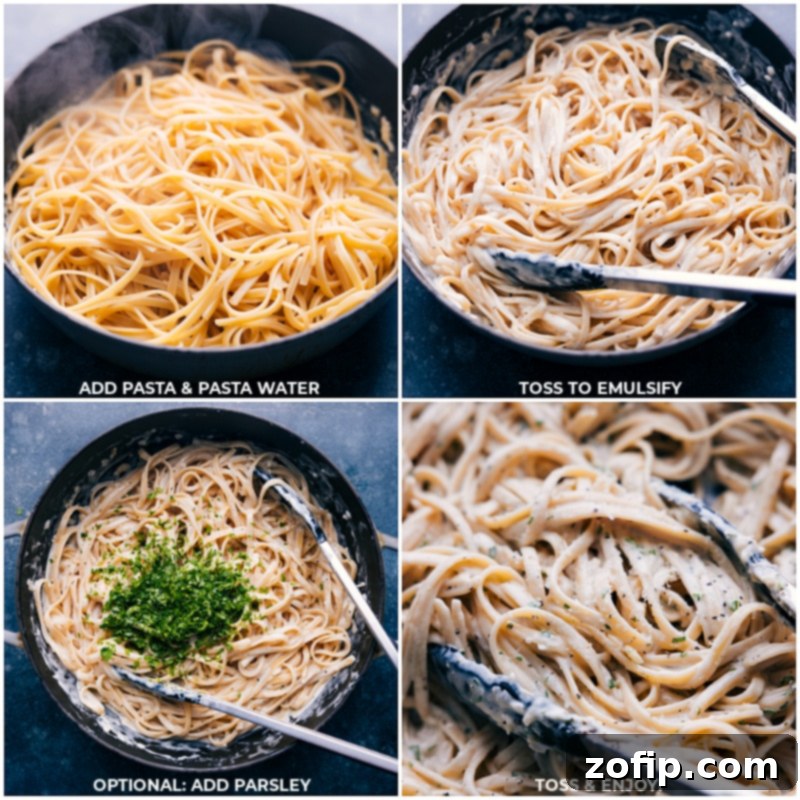
- The Art of Emulsification: This is the secret technique cherished in Italian kitchens for achieving superior pasta dishes. Emulsifying means combining the hot, drained pasta with the rich Alfredo sauce and a portion of your reserved pasta water. This vigorous tossing creates a beautifully smooth, cohesive sauce that gracefully clings to every strand of fettuccine, rather than pooling at the bottom of the serving dish. The starch from the pasta water helps bind the fats and liquids, creating that desirable velvety texture.
Understanding Emulsification
An emulsified sauce is a stable mixture where ingredients that usually don’t mix (like oil and water) are evenly dispersed throughout, creating a smooth, homogenous blend. If a sauce separates into distinct layers, much like an unmixed salad dressing, it has lost its emulsification and needs to be reincorporated.
Secrets to the Perfect Fettuccine Alfredo: Expert Tips
Elevate your homemade Fettuccine Alfredo from good to truly exceptional with these invaluable tips and tricks:
- Invest in Quality Cheese: The Parmesan cheese is a star player in this recipe, profoundly influencing the overall flavor. While this recipe prioritizes speed and ease, resist the temptation to cut corners on your cheese. Avoid canned or pre-shredded/grated Parmesan, as these often contain anti-caking agents that prevent smooth melting, leading to a clumpy, undesirable sauce. Instead, always opt for a block of high-quality Parmesan or Parmigiano Reggiano and grate it freshly on the small side of a box grater or with a microplane for the best texture and melt.
- Choose the Right Cookware: To effectively emulsify the pasta and sauce, you’ll need a generously sized skillet or pot. A cramped pan makes tossing difficult, hinders proper emulsification, and can prolong the process, leading to less consistent results. Ensure you have ample space for seamless mixing.
- Adjust Sauce Consistency with Pasta Water: The ideal Alfredo sauce should be silky, smooth, and beautifully cling to the pasta. If, at any point, your sauce appears too thick, stodgy, or even slightly grainy, don’t hesitate to drizzle in an additional splash of the reserved pasta water while tossing. This starchy liquid is a miracle worker, smoothing out the sauce and achieving that perfect consistency.
- Finely Dice the Onion: If using fresh onion, ensure it is minced as finely as possible. This allows it to sauté quickly, soften thoroughly, and seamlessly integrate into the sauce without overpowering the dish. Larger pieces of onion can be unpleasantly crunchy and too dominant in flavor. If you’re not a fan of onion, feel free to omit it entirely or use onion powder as an alternative.
The Parmigiano Reggiano Difference
For an unparalleled Alfredo experience, consider upgrading to Parmigiano Reggiano. This exquisite cheese, exclusively produced in Italy and labeled “made in” or “from” Italy, boasts a stronger, deeper, and more nuanced flavor with a subtle sweetness. While it is more expensive than standard Parmesan, once you taste the difference it makes in this recipe, you may find it impossible to go back!
Storage & Reheating Tips for Alfredo
How To Reheat Fettuccine Alfredo
This homemade Fettuccine Alfredo is undeniably at its peak of perfection the moment the sauce is freshly emulsified and served. Like most pasta dishes, its texture and creaminess are best enjoyed immediately after preparation.
While you can certainly store leftovers, a little effort is required to restore its glory. Store any remaining pasta in an airtight container in the refrigerator for up to 4 days. When reheating, the sauce will likely have thickened considerably. To loosen it back to a creamy consistency, gently warm the pasta over low heat, gradually adding a splash of heavy cream or chicken broth (or even a little more reserved pasta water if you have it) and stirring frequently until smooth. The pasta itself will be softer than when fresh, but the flavors will still be wonderfully rich and satisfying. Due to its dairy content and pasta structure, Fettuccine Alfredo is not an ideal candidate for freezing and thawing, as this can severely compromise the sauce’s texture.
Perfect Pairings: What to Serve with Fettuccine Alfredo
Complement the rich creaminess of your Fettuccine Alfredo with these delightful side dishes and appetizers, creating a well-rounded and impressive meal:
Appetizers
Classic Bruschetta Recipe
Salads
Fresh Olive Garden Salad Copycat
Fruit Salads
Refreshing Fruit Salad With Yogurt
Side Dishes
Simple Roasted Broccoli Recipe
Fettuccine Alfredo Recipe
Chelsea Lords
15 minutes
15 minutes
30 minutes
4 servings
Video
Equipment
- Large skillet (or pot, see note 1)
Ingredients
- 1 (16-ounce) package fettuccine
- 6 tablespoons unsalted butter (cut into tablespoons)
- heaping 1/2 cup finely minced onion (or use 1 teaspoon onion powder—see note 2)
- 1-1/2 teaspoon minced garlic (or use 1 teaspoon garlic powder)
- 1/2 teaspoon Italian seasoning
- 1 cup heavy cream
- 1-1/2 cups freshly grated Parmesan cheese (or Parmigiano Reggiano, see note 3)
- Salt and pepper (to taste)
- Fresh parsley (optional, for garnish)
Instructions
- Prepare the Pasta: You’ll need to save some pasta water before draining! Bring a large pot of water to a rolling boil. Once boiling, add in 1 tablespoon of fine sea salt (the water should taste like the ocean). Add all the fettuccine and boil, stirring occasionally, until the pasta is al dente according to package directions. Use the lowest time indicated on the package, as the pasta will continue to cook slightly in the sauce later. Before draining, remove and reserve 1 cup of the starchy pasta water. Drain the fettuccine, but do not rinse it in cold water, as the starch is vital for the sauce.
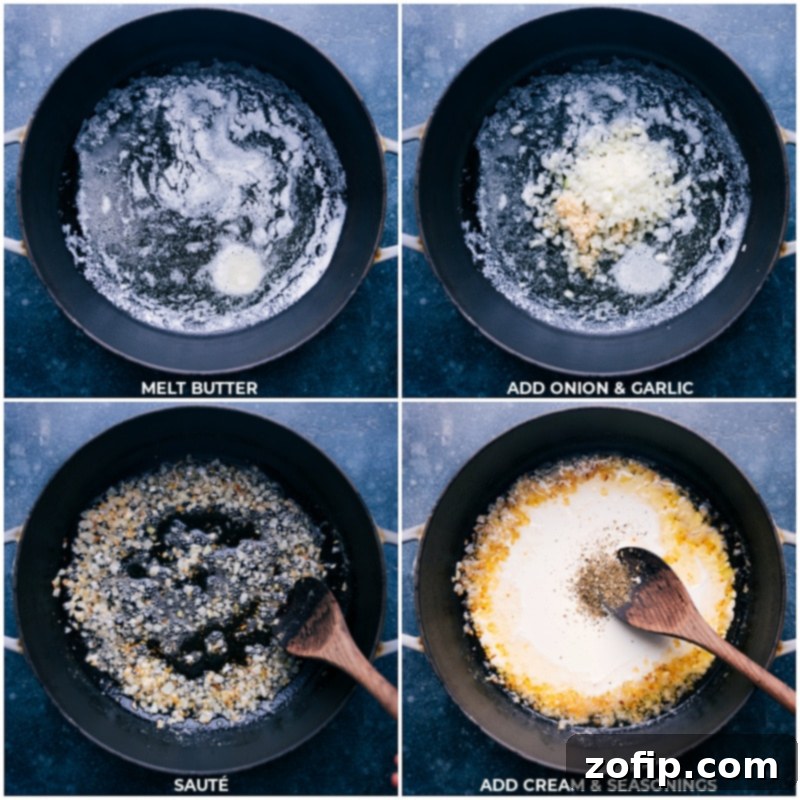
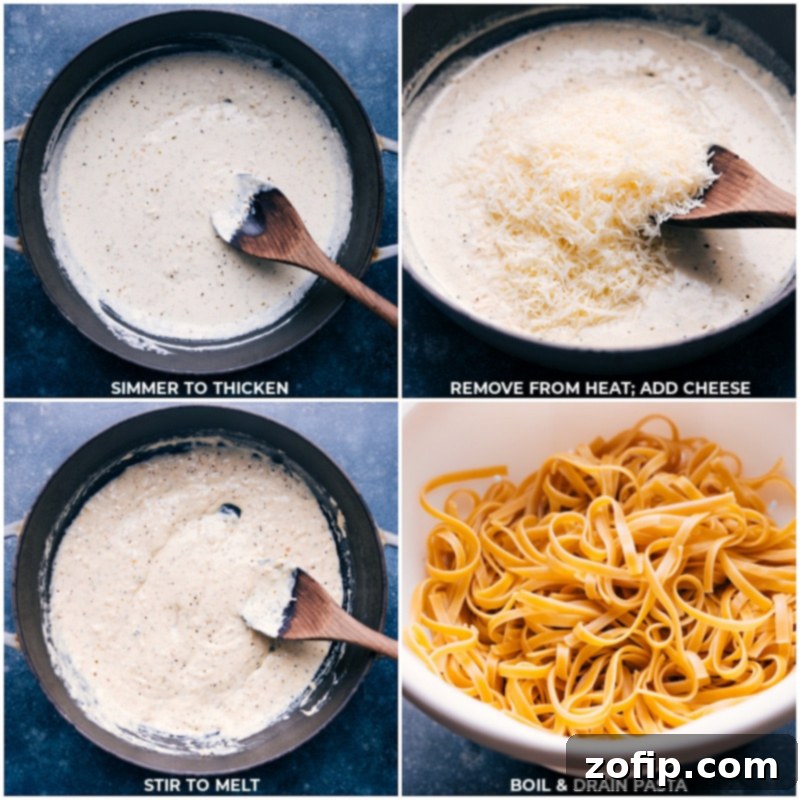
- Start the Sauce: Meanwhile, as the pasta cooks, melt the cut pieces of unsalted butter in a very large cast-iron or heavy-bottom pan/pot over medium-high heat. Ensure your pan is large enough to comfortably hold all the pasta later. Once the butter is melted and sizzling, add the finely minced onion and garlic. Sauté for 2–3 minutes, or until the onion is golden and tender and the garlic is fragrant. Pour in the heavy cream and Italian seasoning, then season with salt and pepper (start with about 1/4 teaspoon of each). As soon as the mixture comes to a gentle boil, reduce the heat to medium-low. Simmer, stirring occasionally, until the sauce has thickened, which should take approximately 1–3 minutes (refer to note 4 for testing consistency).
- Emulsify the Pasta and Sauce: Once the sauce has thickened, immediately remove the pan from the heat. Stir in the freshly grated Parmesan cheese until it has completely melted and the sauce is mostly smooth. Dump the hot, drained pasta directly on top of the sauce, along with 1/2 cup of the reserved pasta water. Return the pan to medium heat. Using tongs, gently and continuously toss the pasta with the sauce until they are beautifully emulsified. This crucial step usually takes about 1 minute, creating a smooth, velvety sauce that clings perfectly to every strand. If at any point the sauce appears dry, too thick, or grainy, drizzle in a little more reserved pasta water and continue tossing (see note 5 for guidance).
- Serve Immediately: Remove the pan from the heat as soon as the sauce is perfectly emulsified. Serve the Fettuccine Alfredo right away, ensuring you capture its ideal texture and warmth. Garnish individual plates with fresh parsley and an additional sprinkle of Parmesan cheese and freshly cracked black pepper, if desired. Enjoy your restaurant-quality meal at home!
Recipe Notes
Note 2: Finely Chopped Onion: When using fresh onion, ensure it is minced as finely as possible. This ensures it sautés quickly and integrates seamlessly into the sauce without leaving large, crunchy, or overpowering pieces. If you prefer, or don’t have fresh onion, you can substitute with 1 teaspoon of onion powder. If you’re not an onion fan at all, feel free to omit it completely from the recipe.
Note 3: Quality Parmesan Cheese: The quality of your Parmesan cheese significantly impacts the overall flavor of this recipe. For the best results, avoid canned or pre-shredded/grated Parmesan, as these products often contain additives that prevent smooth melting, leading to a clumpy sauce. Instead, use a block of fresh Parmesan and grate it finely yourself using the small holes of a grater or a microplane. For an even more exceptional flavor, try authentic Parmigiano Reggiano; its rich, nutty profile is incredible in this dish.
Note 4: Testing Sauce Thickness: To check if your sauce is thick enough, lift a wooden spoon from the pan and immediately draw a line across the back of the spoon with your fingertip. If the line holds a clear track and doesn’t run back together, your sauce has reached the ideal thickness. If the line fills in, the sauce needs to simmer for a little longer.
Note 5: Adjusting Sauce Consistency: The goal is a silky-smooth Alfredo sauce that beautifully clings to the pasta without being overly thick or runny. If your sauce ever becomes stodgy, too thick, or develops a grainy texture after adding the pasta, simply drizzle in an additional tablespoon or two of the reserved pasta water while tossing. This will help smooth it out nicely and restore the perfect consistency.
Storage: Store any leftover Fettuccine Alfredo in an airtight container in the refrigerator for up to 4 days. When reheating, gently warm it on the stovetop or in the microwave with a splash of milk or broth to help restore its original creaminess and loosen the sauce.
Nutrition Information (Approximate per Serving)
| Calories: 957 kcal
| Carbohydrates: 90g
| Protein: 29g
| Fat: 54g
| Saturated Fat: 32g
| Polyunsaturated Fat: 4g
| Monounsaturated Fat: 14g
| Trans Fat: 1g
| Cholesterol: 240mg
| Sodium: 699mg
| Potassium: 444mg
| Fiber: 4g
| Sugar: 5g
| Vitamin A: 1799 IU
| Vitamin C: 2mg
| Calcium: 426mg
| Iron: 3mg
Nutrition information is automatically calculated and should only be used as an approximation. Actual values may vary based on specific ingredients and preparation methods.
Love this recipe? Share your thoughts below!
Creative Variations to Explore
Customize Your Fettuccine Alfredo
While the classic recipe is a masterpiece on its own, Fettuccine Alfredo is incredibly versatile and lends itself beautifully to various additions and substitutions:
- Fettuccine Alfredo with Shrimp: Elevate your meal by adding seasoned and sautéed shrimp. To prepare, heat 1 tablespoon of oil and 1 tablespoon of butter in a large pan. While the butter melts, season 1 lb of shrimp with salt (1/4 to 1/2 teaspoon). Once the butter is melted and shimmering, add the shrimp in a single, non-overlapping layer (avoid crowding the pan, which causes steaming). Cook for 1 minute per side, then transfer the cooked shrimp to a clean plate. Stir the shrimp back into the Alfredo at the very end, just before serving, to prevent overcooking.
- Fettuccine Alfredo with Broccoli: This is a simple and healthy addition! Approximately two minutes before your pasta is al dente, add fresh or frozen broccoli florets (cut into bite-sized pieces) directly into the boiling pasta water. Drain the broccoli alongside the pasta and toss it into the Alfredo sauce. The broccoli adds a lovely texture and a touch of vibrant color.
- Chicken Fettuccine Alfredo: For a heartier meal, incorporate seasoned and sautéed chicken. You can follow a simple chicken preparation, such as cubing chicken breast or thighs, seasoning them with salt, pepper, and garlic powder, and sautéing until fully cooked and lightly golden. For detailed instructions, refer to a reliable Chicken Pasta recipe, then add the cooked chicken to your Alfredo sauce with the pasta.
- Pasta Alternatives: No fettuccine on hand? No problem! This creamy sauce is delightful with almost any pasta shape. Use 16 ounces of linguine, spaghetti, penne, or even rigatoni. The principle of emulsification applies to all pasta, ensuring the sauce coats beautifully.