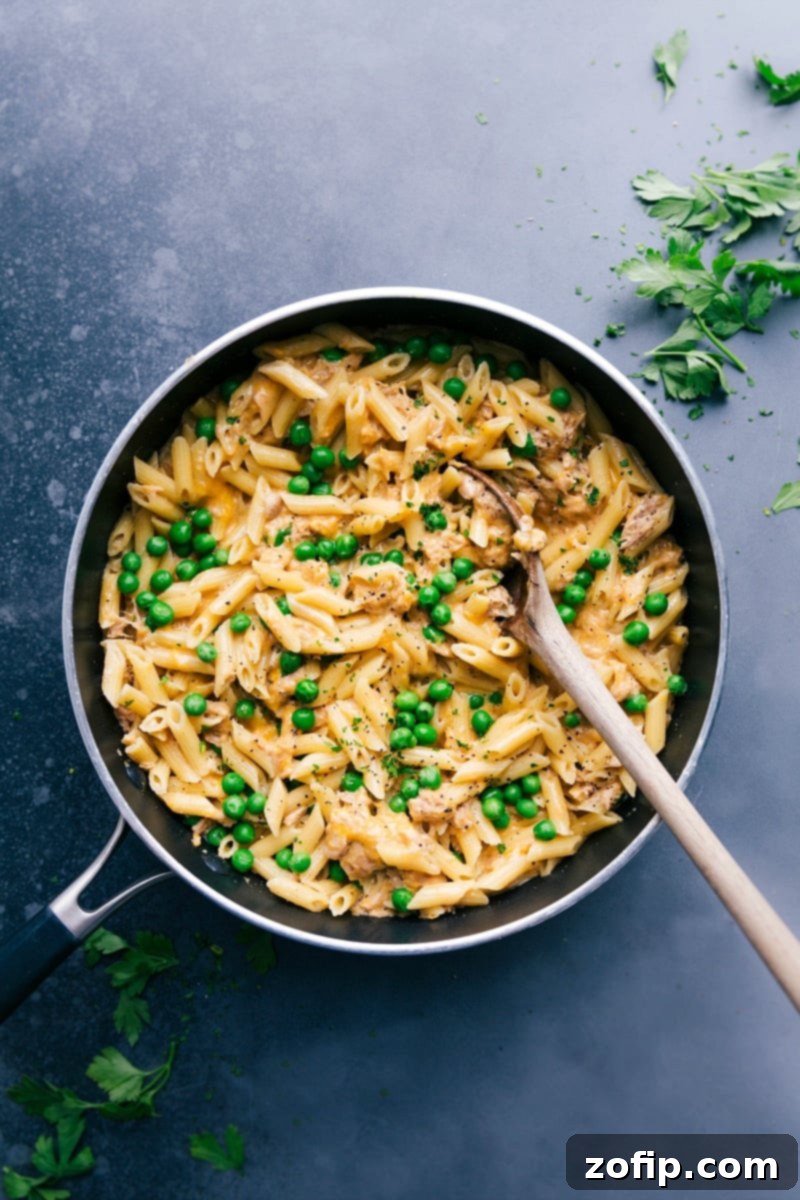
This **One-Skillet Cheesy Tuna Pasta Recipe** with tender peas is the epitome of comfort food – rich, creamy, packed with flavor, and incredibly easy to make. In just 30 minutes or less, you can have a hearty, satisfying meal on the table, perfect for busy weeknights when time is of the essence but you crave something truly delicious and homemade.
While your delightful tuna pasta simmers to perfection, you can effortlessly whip up a complementary side dish to complete your meal. Consider a refreshing crisp garden salad, a vibrant Kale Avocado Salad, or even some simple steamed green beans to add a touch of freshness and balance.
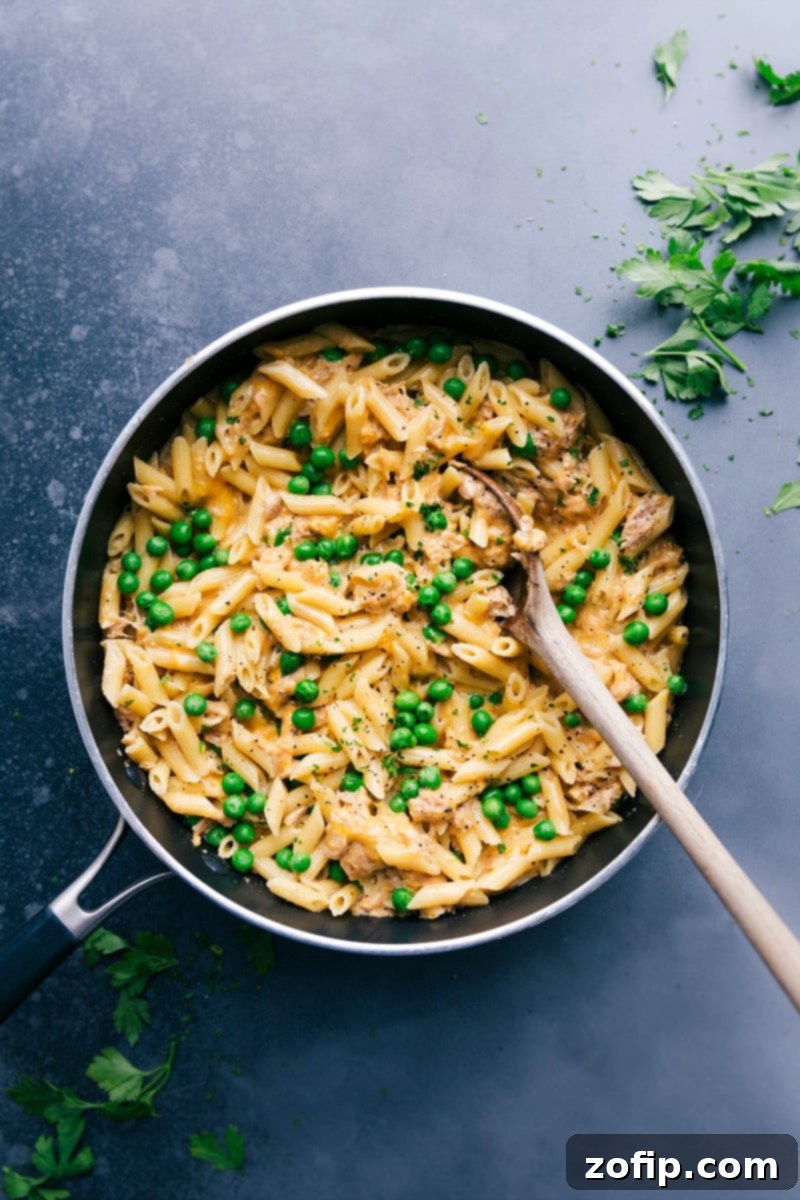
Ultimate One-Skillet Cheesy Tuna Pasta: Your Go-To Weeknight Meal
There’s a special place in everyone’s heart for classic comfort food, and for me, that nostalgia often leads back to my mom’s creamy tuna casserole. Growing up, it was a frequent star at our dinner table, a dish I always looked forward to. Her version, a testament to simpler times, relied on cream of mushroom soup as its hearty base and was often served alongside fluffy rice. It was undeniably comforting, a true taste of home, but as my culinary journey evolved, I found myself yearning to recreate that familiar warmth with a more wholesome, streamlined approach.
My goal was to capture the essence of that beloved dish – the rich creaminess, the satisfying pasta, and the undeniable cheesy goodness – but without the canned soup and with an even greater emphasis on ease and fresh ingredients. I wanted a recipe that felt homemade and nutritious, yet was so simple it could be made on the busiest of weeknights. The result is this fantastic One-Skillet Cheesy Tuna Pasta. It’s a game-changer for anyone seeking a flavorful, protein-packed meal that demands minimal preparation and even less cleanup. No endless chopping, no multiple pots boiling; just one skillet from start to finish. It’s truly the perfect solution for those hectic evenings when you need dinner on the table fast, but absolutely refuse to compromise on taste or quality.
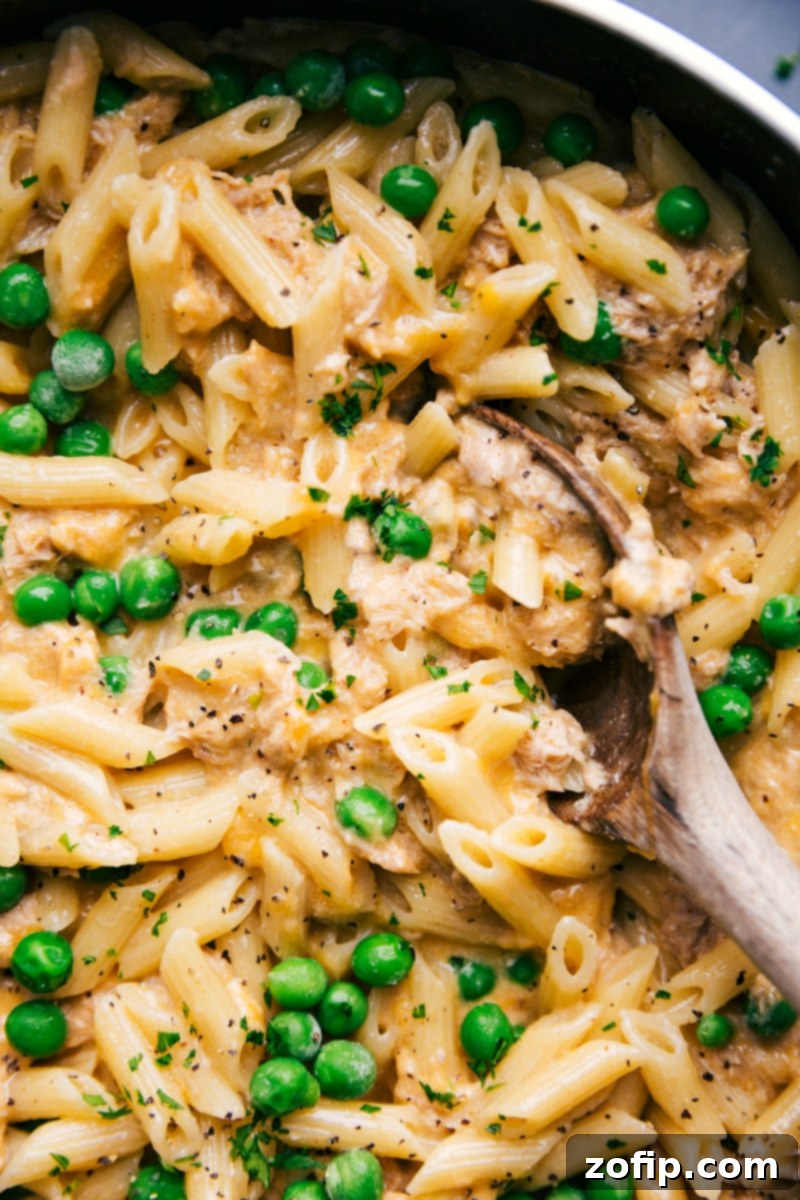
Why You’ll Fall in Love with This Easy Tuna Pasta Recipe
This cheesy tuna pasta isn’t just another dinner recipe; it’s a culinary hack for busy lives, delivering maximum flavor with minimum effort. Here’s why it’s destined to become a staple in your kitchen:
- **Effortless One-Skillet Preparation:** The greatest appeal of this dish lies in its simplicity. Everything, from cooking the pasta to melting the cheese and warming the peas, happens in a single pan. This significantly cuts down on cleanup time, leaving you more moments to relax and less time scrubbing dishes. It’s the ultimate solution for stress-free cooking.
- **Rapid 30-Minute Meal:** In today’s fast-paced world, time is precious. This recipe is meticulously designed for speed, moving from prep to plate in less than half an hour. It’s ideal for those evenings when unexpected plans arise or when you simply don’t want to spend hours cooking but still crave a homemade, wholesome dinner.
- **Unrivaled Comforting & Cheesy Flavor:** This dish is a true ode to classic comfort food. The rich, creamy sauce generously coats every piece of pasta and flake of tuna, while a generous helping of sharp cheddar cheese melts into a dreamy, satisfying finish. Each bite is a warm embrace of savory, cheesy goodness.
- **Wholesome & Satisfying:** Unlike traditional cream-soup-based casseroles that can feel heavy, this recipe uses real whole milk and butter, along with lean protein from high-quality tuna and vibrant peas. It offers a more balanced and fresh meal, proving that comforting food can also be wholesome without compromising on that essential cozy feeling.
- **Highly Customizable & Versatile:** This recipe provides a fantastic foundational base, inviting you to experiment and personalize it to your heart’s content. Easily adjust the seasonings to match your palate, incorporate additional quick-cooking vegetables, or try different cheese blends to suit your family’s preferences. It’s a forgiving recipe that truly encourages culinary creativity.
- **Pantry Staple Friendly:** One of the best aspects of this recipe is that most of the ingredients are likely already stocked in your pantry or refrigerator. This makes it an incredibly convenient, go-to option when you need a quick, delicious meal without the need for a special trip to the grocery store.
Essential Ingredients for Your Perfect Cheesy Tuna Pasta
Crafting this simple yet spectacular tuna pasta requires a handful of common ingredients. The quality of these components truly shines through, contributing to the overall depth and deliciousness of the dish, so choose wisely!
- Mini Penne Pasta: The cornerstone of this dish is a quick-cooking pasta. While miniature penne is an excellent choice for its perfect bite-sized shape and its ability to cook evenly in the sauce, any small pasta variety that cooks in 6–8 minutes will work beautifully. Consider options like ditalini, small shells, or even elbow macaroni. The key is ensuring the pasta cooks thoroughly and absorbs the creamy sauce perfectly without becoming mushy or undercooked.
- Tuna Packed in Olive Oil: For a superior flavor profile and a richer, more luxurious texture, always opt for tuna packed in olive oil rather than water. The olive oil infuses the tuna with a subtle depth and mouthfeel that plain tuna simply cannot replicate. Before adding it to your skillet, remember to drain it thoroughly, then gently fluff it with a fork. This ensures the tuna is evenly distributed throughout the dish, guaranteeing that delightful tuna presence in every single bite.
- Whole Milk and Water: This liquid duo forms the crucial base for achieving that signature creamy sauce. Whole milk provides unparalleled richness and helps the sauce emulsify beautifully, creating a silky-smooth texture. It is vital to stick to dairy milk for this recipe; non-dairy alternatives like almond milk, soy milk, or even skim milk often do not yield the same creamy consistency and can sometimes curdle or separate when heated with cheese, leading to a less satisfying result. The addition of water ensures there’s enough liquid to perfectly cook the pasta while maintaining the ideal sauce thickness.
- Unsalted Butter: Butter serves as a foundational element, adding a deep richness and facilitating the “blooming” of the spices, which significantly enhances their aromatic flavors. Using unsalted butter is a deliberate choice, allowing you complete control over the salt level of your dish. This precision ensures your tuna pasta is seasoned perfectly to your exact preference, avoiding any unwanted over-salting.
- Carefully Selected Seasonings (Ground Mustard, Paprika, Roasted Garlic Powder): These spices are far from mere background notes; they are absolutely vital for building a complex, irresistible, and comforting flavor profile in your tuna pasta.
- **Ground Mustard:** This is often a secret weapon in cheese-based sauces. Though subtle, ground mustard powder beautifully enhances the savory, tangy notes of the cheddar, making the cheese taste even more profoundly cheesy without imparting a distinct mustard flavor itself.
- **Paprika:** Adds a lovely touch of warmth, a hint of smoky sweetness, and contributes to the comforting color and depth of the dish, making it visually and tastefully appealing.
- **Roasted Garlic Powder:** Provides a mellow, deeply aromatic garlic flavor that is much less harsh and more integrated than raw garlic, complementing the creamy sauce without overpowering it. These seasonings are designed to infuse into the butter and liquid as they cook, creating a deeply flavorful and aromatic base, so definitely don’t skip them!
- Sharp Cheddar Cheese: This is undoubtedly the star ingredient for achieving that glorious cheesy factor! Sharp or extra-sharp cheddar delivers a robust, tangy flavor that beautifully cuts through the richness of the milk and butter, creating a perfectly balanced taste. For the absolute best melt and an irresistibly smooth texture, it is imperative to always grate your cheese fresh from the block. Pre-shredded cheeses often contain anti-caking agents (like cellulose) that can inhibit them from melting smoothly, sometimes resulting in a grainy or waxy texture that detracts from the dish’s creaminess.
- Frozen Peas: These bright green gems are not just for color; they add a delightful pop of freshness, a subtle touch of sweetness, and a lovely tender texture that contrasts beautifully with the creamy pasta. For best results, they are best stirred in *after* the cheese has completely melted and the pasta is cooked. This ensures they warm through gently, retaining their vibrant color and delicate, tender-crisp bite. Overcooking peas can lead to a mushy texture and a dull, faded color.
Pro Tip: Choosing Your Tuna Wisely
The quality of your tuna makes a noticeable difference in this dish. For the best possible flavor and texture, I highly recommend using a good quality, **olive oil-packed** tuna fish. Brands like Genova® (this is a personal favorite, not a sponsored endorsement!) often offer exceptional flavor and a tender texture that truly elevates the entire meal. Beyond just picking the right type, ensure you thoroughly drain the tuna before adding it to the skillet. I find a fine mesh sieve or strainer works perfectly to remove any excess oil, preventing the dish from becoming greasy while retaining all the rich, desirable tuna flavor.
Step-by-Step Guide: How To Make This Quick & Easy Tuna Pasta
Making this creamy one-skillet tuna pasta is incredibly straightforward and designed for efficiency. Follow these simple steps for a delicious meal on your table in mere minutes:
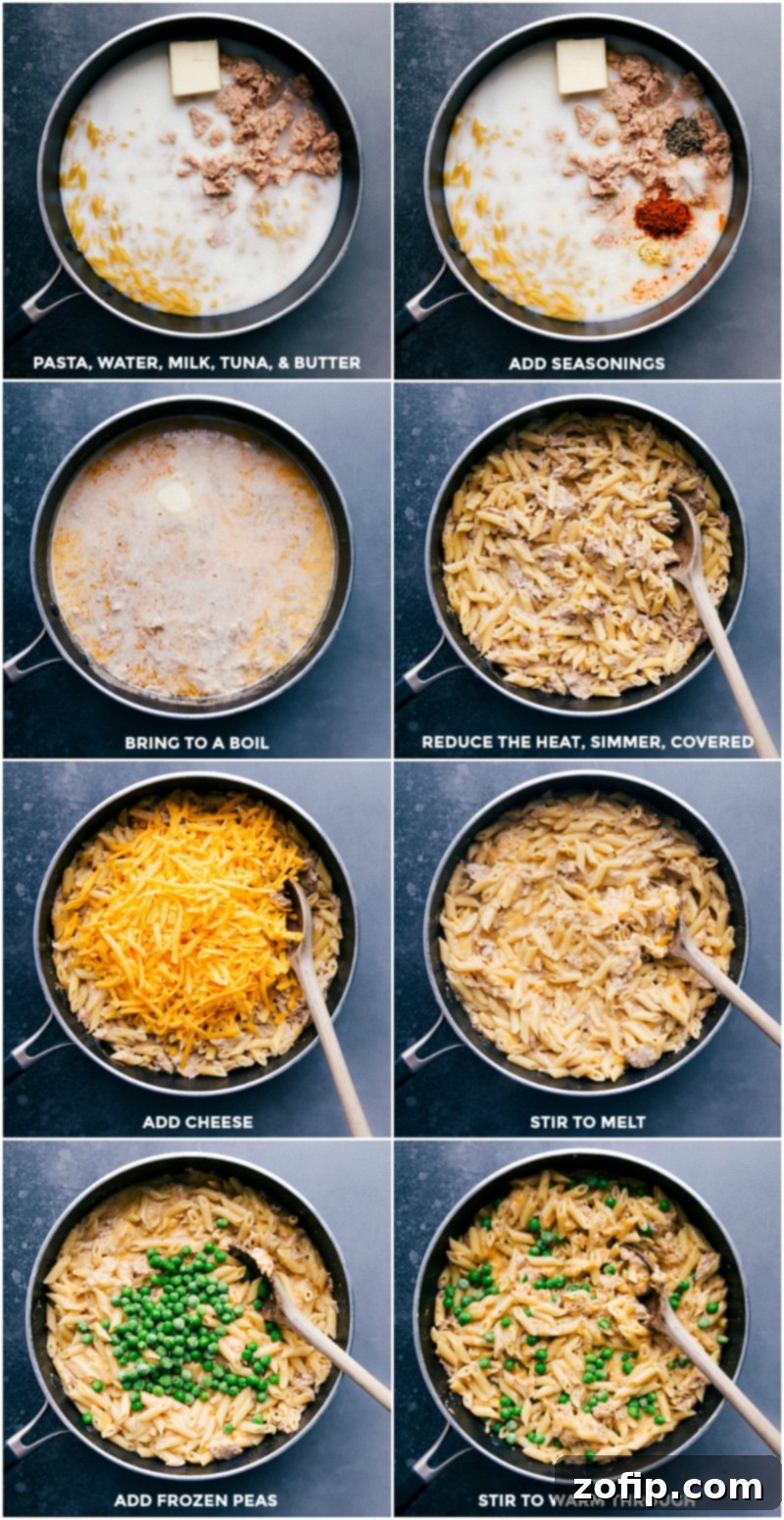
- Prepare Tuna: Begin by opening your can of tuna. Drain it very thoroughly, squeezing out any excess olive oil using a fine mesh sieve or strainer. Once drained, use a fork to gently fluff the tuna, breaking up any large chunks so it disperses evenly in the pasta. Set this prepared tuna aside.
- Combine Ingredients in Skillet: In a large 10-inch nonstick pan (ideally a 3-quart / 2.8-liter size with a tightly fitted lid), combine the uncooked miniature penne pasta, the thoroughly drained and fluffed tuna, whole milk, water, unsalted butter, ground mustard powder, paprika, and roasted garlic powder. Season generously with salt and pepper to taste; a good starting point is 1 teaspoon of salt and 1/4 teaspoon of freshly ground black pepper. Give all the ingredients a good stir to ensure they are well combined.
- Cook Pasta to Perfection: Place the skillet over high heat and bring the mixture to a rolling boil, stirring occasionally to prevent the pasta from sticking to the bottom. Once it reaches a boil, give it one final good stir, then immediately cover the pan with its lid. Reduce the heat to low (or just a few notches above low) to maintain a gentle simmer, ensuring it’s not at a vigorous rolling boil. Allow the pasta to simmer, covered, until it is completely cooked through and most of the liquid has been absorbed. This typically takes about 10–15 minutes, but it’s always wise to check for doneness around the 10-minute mark. During the simmering time, make sure to stir the ingredients every 5–7 minutes to prevent the pasta from sticking to the bottom of the pan and to promote even cooking. While the pasta is simmering, take this valuable time to grate your sharp cheddar cheese if you haven’t already prepared it.
- Finish with Cheese and Peas: Once the liquid has been absorbed and the pasta is tender and cooked al dente, remove the skillet from the heat. Immediately stir in the freshly grated sharp cheddar cheese until it has completely melted into a smooth, luxurious, and creamy sauce. Once the cheese is fully integrated, add the frozen peas and stir them into the hot pasta mixture. The residual heat from the dish will gently warm the peas through, ensuring they remain bright green and deliciously tender, not overcooked and mushy.
- Serve & Enjoy: Taste the dish and adjust the seasonings as needed. This is your chance to add more salt, pepper, or any other spices (like an extra pinch of garlic powder or paprika) if you feel the flavor needs a boost. Serve your cheesy tuna pasta piping hot. For an extra touch of freshness and vibrant flavor, consider garnishing individual servings with freshly chopped flat-leaf parsley. If you enjoy a bit of heat, a drizzle of your favorite hot sauce can add a fantastic kick.
Expert Tips for the Best One-Skillet Tuna Pasta
While this recipe is incredibly simple, a few expert tips can elevate your cheesy tuna pasta from good to absolutely outstanding:
- **Don’t Rush the Simmer:** Although this is a quick recipe, patience during the simmering phase is key. Resist the urge to keep the heat too high once the mixture comes to a boil. A gentle, consistent simmer ensures that the pasta cooks evenly and, crucially, absorbs the flavorful liquid properly. This process is what creates that wonderfully creamy, cohesive sauce rather than just boiled pasta sitting in a thin, watery liquid.
- **Stir Frequently:** This tip is especially important for any one-skillet pasta dish. Stirring the ingredients every 5-7 minutes prevents the pasta from sticking to the bottom of the pan, which can quickly lead to burning. Regular stirring also ensures all the ingredients are well-combined and cooking evenly, distributing the flavors and heat throughout the dish.
- **Always Adjust Seasonings to Taste:** This is perhaps the most vital step in any cooking process. Always taste your dish before serving! While the recipe provides a good starting point for salt and pepper, individual preferences vary, and the saltiness of your tuna or cheese can differ. Don’t hesitate to add a pinch more garlic powder, paprika, or even a touch of onion powder if you feel the flavor needs a boost.
- **Consider Adding More Veggies:** This recipe is a fantastic base for incorporating additional vegetables. Beyond the peas, feel free to add other quick-cooking options like finely diced bell peppers or carrots (add these along with the uncooked pasta) for extra flavor, color, and nutrients. A handful of fresh spinach or chopped kale can be stirred in with the frozen peas, allowing them to wilt gently in the residual heat. Frozen mixed vegetables can also be a quick and convenient addition.
- **Spice It Up (Optional):** For those who appreciate a bit of heat in their comfort food, this tuna pasta can easily be spiced up. A pinch of red pepper flakes added along with the other seasonings will infuse a subtle warmth throughout the dish. Alternatively, a dash of your favorite hot sauce drizzled over individual servings (as suggested in the serving step) can provide a more direct and customizable kick.
Perfect Pairings: Serving Suggestions for Your Tuna Pasta
This cheesy tuna pasta is a wonderfully hearty and complete meal on its own, but it pairs beautifully with a few simple sides to create a well-rounded and delightful dinner experience:
- **Fresh Green Salad:** A crisp, vibrant green salad with a light vinaigrette dressing offers a refreshing contrast to the rich, creamy pasta. Think a classic Olive Garden-style salad or a nutrient-packed Kale Avocado Salad.
- **Garlic Bread or Crusty Baguette:** There’s nothing quite like a warm, crusty slice of garlic bread or a fresh baguette for soaking up every last bit of that delicious creamy sauce. It’s the ultimate comfort food accompaniment.
- **Steamed or Roasted Vegetables:** For an extra boost of nutrients and a light, fresh element, consider serving your tuna pasta with simple steamed vegetables like tender broccoli florets, asparagus spears, or green beans. A light drizzle of olive oil and a sprinkle of salt and pepper is all they need.
Storing & Reheating Your Leftovers
This tuna pasta is just as delicious, if not more so, as leftovers, making it an excellent candidate for meal prep or a convenient lunch the next day!
- **Storage:** Allow any leftover cheesy tuna pasta to cool completely to room temperature before transferring it to an airtight container. This helps prevent bacterial growth and maintains freshness. Store it securely sealed in the refrigerator for up to 3 days.
- **Reheating:** To reheat, you can gently warm the pasta on the stovetop over low heat or in the microwave. During refrigeration, the sauce may naturally thicken considerably as it cools. To restore its original creamy consistency, I highly recommend adding a splash of water or milk (starting with 1-2 tablespoons per serving) while reheating. Stir occasionally until the pasta is heated through and the sauce has returned to your desired consistency.
Frequently Asked Questions (FAQs) About Tuna Pasta
Can I use different types of pasta for this recipe?
Absolutely! The crucial factor is to choose a small pasta shape that cooks relatively quickly, ideally within the 6-8 minute range. Excellent alternatives include ditalini, small shell pasta, elbow macaroni, or even small rotini. Just be mindful of the specific cooking time indicated on your pasta package and adjust the simmering duration as needed to ensure it’s tender but not mushy.
What if I don’t have whole milk? Can I use a different kind?
While whole milk is highly recommended for achieving the richest, creamiest sauce, you can certainly use 1% or 2% dairy milk. However, it’s very important to avoid skim milk and non-dairy milks (such as almond milk, soy milk, or oat milk). These alternatives tend to separate or curdle when heated in this recipe and will not achieve the desired smooth, creamy texture. The fat content in whole dairy milk is essential for proper emulsification and a luxurious sauce.
Can I add more vegetables to this dish?
Yes, this recipe is wonderfully adaptable for adding more vegetables! For heartier additions, finely diced bell peppers or carrots can be incorporated into the skillet along with the uncooked pasta, giving them time to soften. For quicker-cooking greens, fresh spinach or chopped kale can be stirred in with the frozen peas; they will wilt beautifully in the residual heat. You can also experiment with frozen mixed vegetables for a convenient and colorful boost.
Is this recipe suitable for freezing?
While tuna pasta, especially with dairy-based sauces, can sometimes experience changes in texture (like becoming slightly grainy or having the sauce separate) when frozen and thawed, it is possible. It’s generally best enjoyed fresh or from refrigeration. However, if you wish to freeze it, transfer cooled leftovers to an airtight, freezer-safe container and store for up to 1 month. Thaw it overnight in the refrigerator before reheating gently, and be sure to add extra milk or water to help restore its creamy consistency.
How can I make this tuna pasta spicier?
If you enjoy a bit of heat, there are several delicious ways to spice up this tuna pasta! You can add a generous pinch of red pepper flakes along with the other seasonings in step 2 to infuse a gentle warmth throughout the entire dish. Alternatively, stirring in a dash of your favorite hot sauce at the end, or even including a small amount of finely diced jalapeño (seeds removed for less heat) with the initial ingredients, will provide a more direct and noticeable kick.
More Delightful One-Pot Dinner Recipes:
Dinner
One-Pan Lemon Chicken and Potatoes
Pasta And Pizza
One Pan Cheesy Sausage Pasta
Dinner
One-Skillet Southwest Quinoa Chili
Dinner
One-Pan Pesto Chicken Tortellini
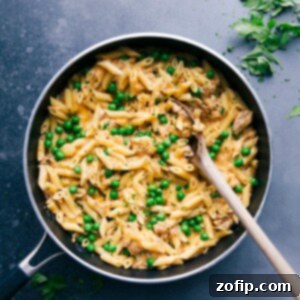
Creamy Cheesy Tuna Pasta Recipe
By: Chelsea Lords
This cheesy Tuna Pasta Recipe with peas is ready in 30 minutes or less! Made in one pan, it’s packed with creamy, cheesy goodness and tender peas—the perfect weeknight meal when you want something quick, easy, and totally satisfying.
Prep Time: 7 minutes
Cook Time: 15 minutes
Total Time: 22 minutes
Servings: 4 servings
Rating: 4.92 from 24 votes
Equipment
- Large 10-inch pan (nonstick, with fitted lid)
Ingredients
- 2 cups miniature penne pasta (see Note 1)
- 1 (5-ounce) can tuna in olive oil, thoroughly drained
- 2 cups whole milk (see Note 2)
- 1 cup water
- 4 tablespoons unsalted butter
- 1/2 teaspoon ground mustard
- 1/2 teaspoon paprika
- 1/2 teaspoon roasted garlic powder
- 2 cups sharp Cheddar cheese, freshly grated (see Note 3)
- 1/2 cup frozen peas
- Salt and pepper, to taste
- Fresh flat-leaf parsley, chopped (optional, for garnish)
- Hot sauce (optional, for serving)
Instructions
- **Prepare Tuna:** Open the tuna can and drain the tuna thoroughly, squeezing out any excess olive oil. Fluff the tuna with a fork and set it aside.
- **Combine & Cook:** In a large 10-inch nonstick pan (approx. 3-quart / 2.8-liter capacity), combine the uncooked miniature penne pasta, the drained and fluffed tuna, whole milk, water, unsalted butter, ground mustard powder, paprika, and roasted garlic powder. Season with salt and pepper to taste; a good starting point is 1 teaspoon of salt and 1/4 teaspoon of pepper.
- **Simmer Pasta:** Bring the mixture to a boil over high heat, stirring well. Once boiling, cover the pan with a fitted lid and reduce the heat to low (or slightly above low) to maintain a gentle simmer. Allow it to simmer until the pasta is completely cooked through and most of the liquid has evaporated, which typically takes about 10–15 minutes (check for doneness at 10 minutes). Stir the ingredients every 5–7 minutes during cooking to prevent sticking and ensure even cooking. While the pasta simmers, grate your cheese if it isn’t already.
- **Finish the Dish:** Once the liquid is absorbed and the pasta is tender, remove the pan from the heat. Stir in the freshly grated sharp cheddar cheese until it has fully melted and created a smooth, creamy sauce. Then, add the frozen peas and stir them into the hot pasta mixture until they are warmed through.
- **Serve:** Taste and adjust the seasonings as needed, adding more salt, pepper, or other spices to your preference. Serve hot. If desired, garnish individual servings with freshly chopped flat-leaf parsley and/or a drizzle of hot sauce for an added layer of flavor.
Recipe Notes
Note 1 – Pasta Choice: For optimal results, ensure the pasta you choose is a small variety that cooks quickly, ideally in 6–8 minutes. This ensures it cooks perfectly in the single skillet without becoming overcooked or undercooked.
Note 2 – Milk Preference: For the best creamy texture and flavor, it is crucial to use cow’s milk, specifically whole milk. While 1% or 2% milk can work, skim milk and non-dairy alternatives (such as soy milk, almond milk, or oat milk) were not successful in recipe testing, often leading to a less creamy consistency or separation of the sauce. The fat content in whole dairy milk is key to achieving that rich, emulsified sauce.
Note 3 – Cheese Selection: The cheese is a cornerstone of this dish, so select a flavorful variety you genuinely love. Sharp or extra-sharp Cheddar cheese is highly recommended for its robust taste and excellent melting qualities. For the smoothest, creamiest melt and to avoid a waxy texture, I strongly advise grating your cheddar cheese fresh from the block, rather than using pre-shredded varieties which often contain anti-caking agents.
Storage: Let any leftovers cool completely before transferring them to an airtight container. Store in the refrigerator for up to 3 days. When reheating, do so gently on the stove or in the microwave, adding a splash of water or milk to help the sauce return to its original creamy consistency.
Nutrition Information
Nutrition information is automatically calculated, so should only be used as an approximation. Per serving (based on 4 servings):
- **Calories:** 692 kcal
- **Carbohydrates:** 51g
- **Protein:** 36g
- **Fat:** 38g
- **Saturated Fat:** 21g
- **Polyunsaturated Fat:** 3g
- **Monounsaturated Fat:** 9g
- **Trans Fat:** 0.5g
- **Cholesterol:** 108mg
- **Sodium:** 585mg
- **Potassium:** 463mg
- **Fiber:** 2g
- **Sugar:** 8g
- **Vitamin A:** 2803 IU
- **Vitamin C:** 2mg
- **Calcium:** 576mg
- **Iron:** 2mg
Enjoy this delightful one-skillet cheesy tuna pasta with peas – a truly simple, satisfying, and speedy meal perfect for any night of the week! We hope it brings a comforting warmth to your table and becomes a new family favorite.