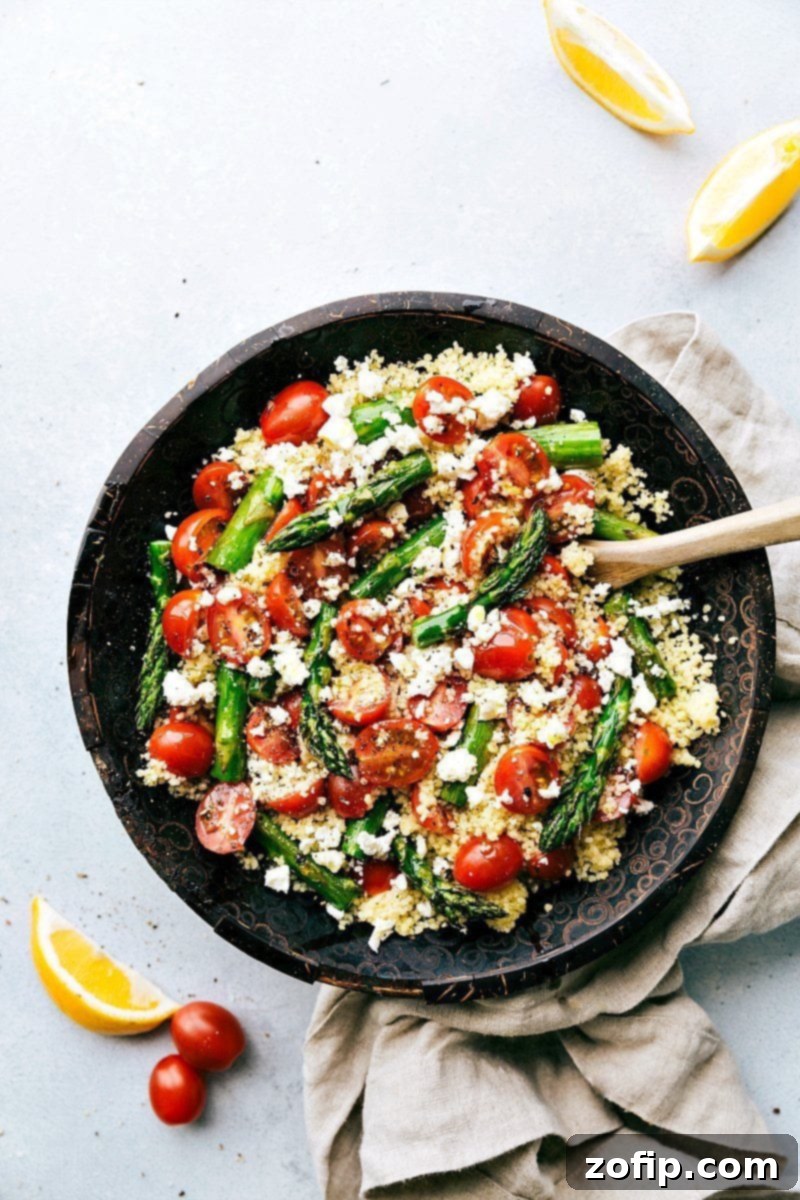
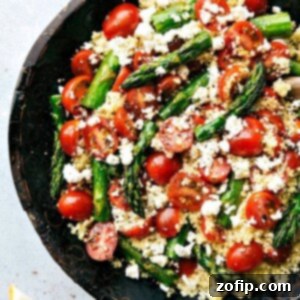
Asparagus Salad is a vibrant and incredibly flavorful spring dish, featuring perfectly roasted asparagus, sweet cherry tomatoes, savory garlicky couscous, and creamy feta cheese, all harmoniously brought together with a tangy balsamic vinaigrette. This delightful salad is not just a treat for the palate but also a feast for the eyes, making it an absolute favorite for any occasion, especially as a highlight of your Easter dinner table or a refreshing side throughout the spring season.
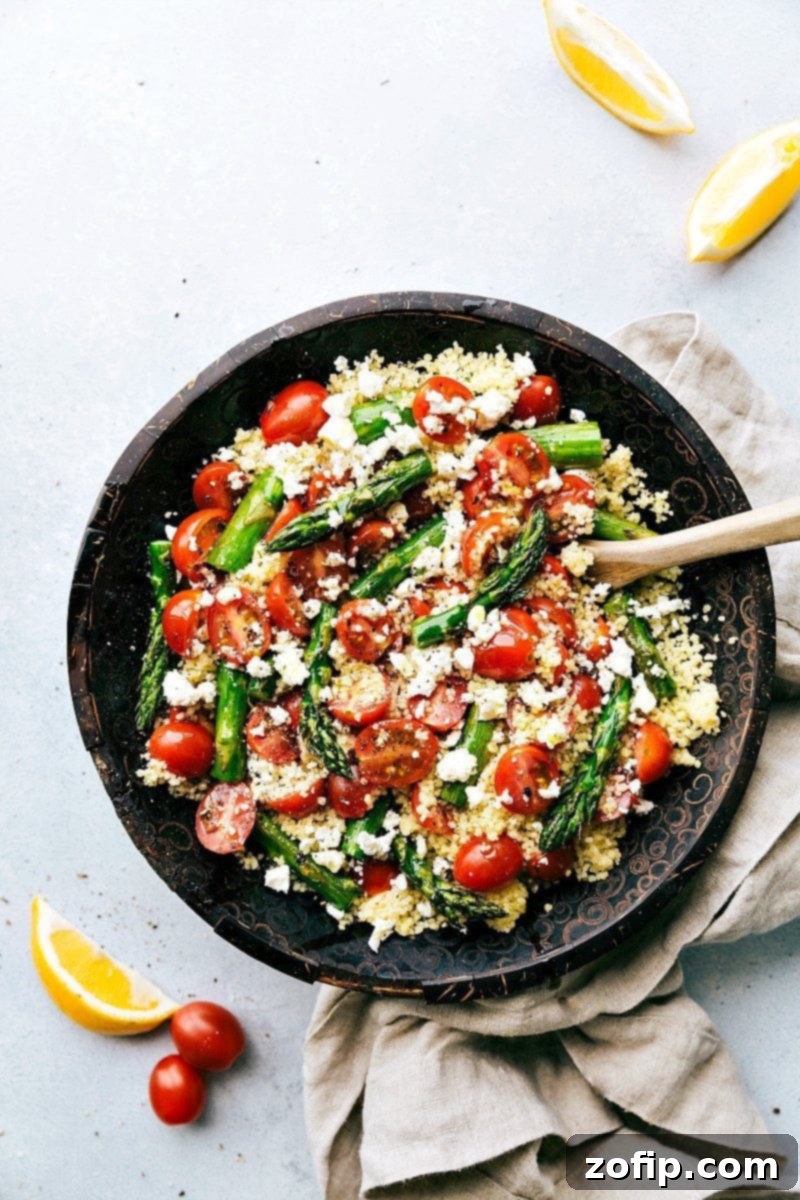
The Best Asparagus Salad: A Quintessential Spring Delicacy
As spring emerges, bringing with it a bounty of fresh produce, asparagus stands out as a true harbinger of the season. Our Asparagus Salad recipe captures the essence of spring in every bite, transforming simple ingredients into an extraordinary culinary experience. This isn’t just any salad; it’s a celebration of fresh flavors and textures, designed to be easy to prepare while leaving a lasting impression. From its vibrant colors to its incredible taste, this salad has all the hallmarks of a dish that will become a cherished tradition in your home, just as a similar recipe did in my family, especially around Easter.
The star of this salad, the roasted asparagus, undergoes a magical transformation in the oven. Roasting coaxes out its natural sweetness, intensifying its earthy notes and giving it a tender-crisp texture that steamed or boiled asparagus simply can’t match. A light coating of olive oil and a sprinkle of essential seasonings ensure each spear achieves golden perfection, developing a rich, slightly caramelized flavor that forms the foundation of this exquisite salad.
But the roasted asparagus is only the beginning. This salad is elevated by the addition of fluffy, garlicky couscous, bursting with savory notes that complement the asparagus beautifully. Tangy, crumbled feta cheese introduces a delightful saltiness and creamy counterpoint, while vibrant cherry tomatoes add a juicy, sweet pop of freshness. All these elements are then brought together with a homemade balsamic vinaigrette, creating a symphony of flavors that is truly hard to beat. It’s a versatile dish that shines whether served as a sophisticated side or a light main course. Consider pairing it with other Easter favorites like Grape Salad, warm Dinner Rolls, and savory Roasted Brussels Sprouts for a complete and memorable feast.

Mastering Couscous for Your Asparagus Salad: Quick and Flavorful
Couscous is a fantastic addition to any salad, offering a light, fluffy texture that soaks up flavors beautifully. Its appeal is further enhanced by its incredibly quick preparation time – often ready in 10 minutes or less! For this Asparagus Salad, we’ve opted for a convenient and flavorful approach: using a boxed, pre-seasoned couscous mix. My personal go-to is the “Roasted Garlic & Olive Oil” variety, as pictured above, which infuses the salad with an instant depth of savory garlic and aromatic olive oil without any extra effort. This choice significantly reduces prep time and guarantees a consistent, delicious flavor profile every time.
However, if you prefer to have more control over the seasoning or simply have plain couscous on hand, that works wonderfully too! When substituting, make sure to use small (Moroccan) couscous. This type cooks quickly and has the ideal light texture that blends seamlessly with the other ingredients in the salad, preventing it from becoming too heavy. Whether seasoned or plain, the key is to allow the couscous to cool slightly before combining it with the other components, ensuring the salad remains fresh and vibrant.
Preparing couscous is straightforward. Simply follow the package directions, typically involving boiling water or broth, adding the couscous, covering, and letting it steam until tender and fluffy. Once cooked, gently fluff it with a fork and spread it out on a plate or shallow bowl to cool down quickly. This step is crucial to prevent the salad from becoming warm or soggy, which can compromise the overall freshness and texture of your finished Asparagus Salad. The versatility of couscous makes it an excellent base, ready to absorb the rich flavors of the roasted asparagus, fresh tomatoes, and the zesty balsamic vinaigrette.

Achieving Perfection with Roasted Asparagus
Roasted asparagus is the undeniable star of this salad, bringing a depth of flavor and a delightful texture that elevates the entire dish. The roasting process caramelizes the natural sugars in the asparagus, resulting in a slightly sweet, earthy taste and a tender-crisp bite that is far superior to boiling or steaming. Here’s how to ensure your asparagus is perfectly prepared every time:
- Selecting the Best Asparagus: When shopping, look for spears that are firm to the touch, with vibrant green or purple hues. The tips should be tightly closed, and the ends should not appear dry, cracked, or slimy. Fresh asparagus is key to a truly delicious salad. Aim to use your purchased asparagus within 1-2 days for optimal freshness and flavor.
- Proper Preparation is Key: Before roasting, gently rinse the asparagus under cold water and pat it thoroughly dry with a clean towel. This step helps prevent steaming and encourages crisping during roasting. Next, you’ll need to remove the tough, woody ends. A simple and effective method is to snap each spear; it will naturally break where the tender part begins. Alternatively, you can line up the spears and cut off the bottom inch or two.
- The Roasting Process: Arrange your prepped asparagus on a large sheet pan. Drizzle generously with high-quality olive oil, then season evenly with salt and freshly ground black pepper. Ensure the asparagus spears are spread out in a single layer, giving them ample space on the pan. Overcrowding can lead to steaming instead of roasting, resulting in soft instead of crisp asparagus. Roast in a preheated oven at 425°F (220°C) until they are tender-crisp and slightly golden-brown, typically 7-15 minutes depending on thickness. Thinner spears will cook faster, so keep a close eye on them.
Quick Tip: Asparagus Thickness Matters!
The thickness of your asparagus spears significantly impacts both their cooking time and flavor profile. Thinner spears tend to be milder in taste and cook very quickly, resulting in a softer texture. Thicker spears, on the other hand, offer a more robust asparagus flavor and a satisfyingly chewy bite. Adjust your roasting time accordingly to achieve your desired tenderness.

Crafting the Perfect Balsamic Vinaigrette for Asparagus Salad
A truly outstanding salad is defined by its dressing, and our homemade balsamic vinaigrette is no exception. It’s simple yet sophisticated, perfectly balancing the richness of olive oil with the tang of reduced balsamic vinegar, a hint of garlic, and a touch of sweetness from honey. Here are some essential tips for making a vinaigrette that elevates your Asparagus Salad from great to unforgettable:
- Chill for Optimal Flavor and Consistency: Since this recipe involves reducing balsamic vinegar, it’s crucial to allow the dressing to chill thoroughly before tossing it with the salad. Cooling thickens the reduced balsamic, allowing the flavors to meld beautifully and providing a better coating for your ingredients. Prepare it ahead of time for the best results.
- Make Ahead for Convenience: This balsamic vinaigrette is an excellent candidate for meal prep! You can easily prepare it 1-2 days in advance and store it in a sealed mason jar in the refrigerator. If you notice any separation of ingredients (which is natural with homemade dressings), simply let it sit at room temperature for 20-30 minutes before serving, then give it a vigorous shake to re-emulsify.
- Garlic: Customize to Your Liking: Garlic plays a prominent role in this Asparagus Salad, appearing in both the couscous (if using the flavored variety) and the dressing. Feel free to adjust the amount of minced garlic in the vinaigrette to suit your personal preference. If you love a bold garlic flavor, follow the recipe; if you prefer a subtler hint, reduce the quantity or omit it entirely if your couscous is already quite garlicky.
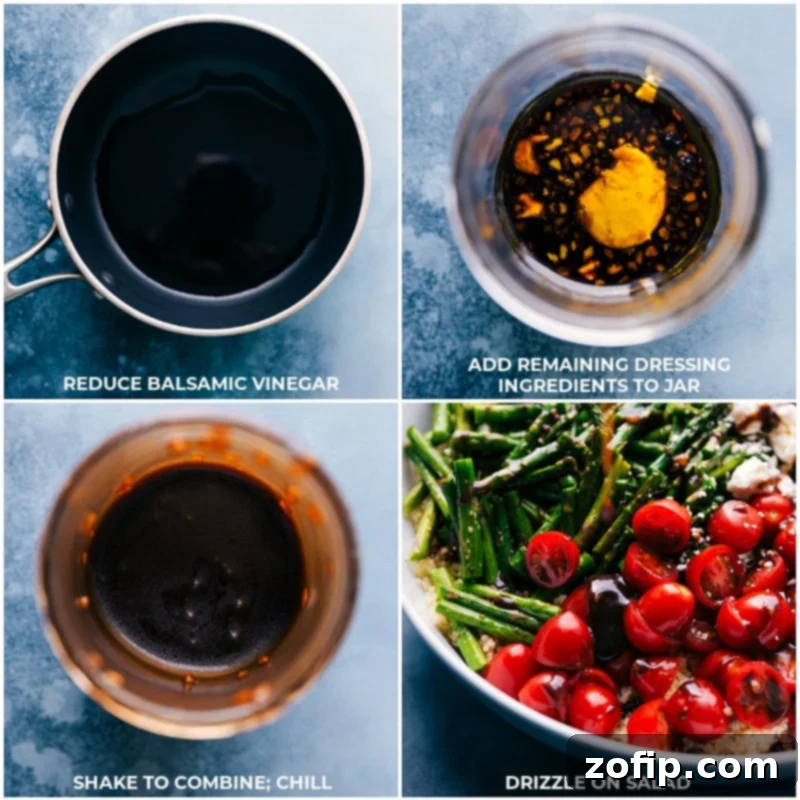
- The Art of Balsamic Reduction: The secret to this vinaigrette’s depth of flavor is reducing the balsamic vinegar. Pour the balsamic into a small pot and simmer it over medium heat until it has visibly thickened and reduced by half. This process concentrates its sugars and flavors, transforming it into a richer, slightly sweeter, and less acidic syrup. Be vigilant during this step; balsamic vinegar can reduce very quickly and burn if left unattended. Stay by the stovetop and remove it as soon as it reaches the desired consistency.
Once your balsamic is reduced and cooled, combine it with quality olive oil, minced garlic, Dijon mustard for a bit of tang and emulsification, and a touch of honey for balanced sweetness. This harmonious blend creates a dressing that perfectly complements the fresh and roasted elements of the Asparagus Salad.
Elevate Your Asparagus Salad: Expert Tips and Variations
Creating a truly memorable Asparagus Salad goes beyond just following a recipe; it’s about understanding how to optimize flavors and textures, and how to adapt it to your preferences. Here are some expert tips and exciting variations to ensure your salad is always a showstopper:
- Cheese, Please! Exploring Your Options: While crumbled feta cheese is a classic and highly recommended choice for its salty, tangy profile that perfectly cuts through the richness of the other ingredients, don’t hesitate to experiment! Goat cheese offers a delightful creaminess and a more pungent, earthy flavor that pairs exceptionally well with roasted vegetables. If you’re not a fan of either, freshly grated Parmesan cheese can provide a lovely nutty, umami depth, adding another layer of complexity to the salad.
- Timing is Everything for Cheese: For the best texture and visual appeal, always add your crumbled cheese right before serving. This prevents it from becoming soggy or dissolving into the dressing, ensuring each bite offers that distinct cheesy pop.
- Season to Perfection: A Balancing Act: This salad features several components that contribute saltiness – from the seasoned roasted asparagus to the flavorful dressing and, of course, the salty feta cheese. It’s easy for the salt level to accumulate, so it’s crucial to season incrementally. Taste as you go, and add a little salt at a time, especially if you’re sensitive to sodium or using ingredients that are already quite savory. Remember, you can always add more salt, but you can’t take it away!
- The Brightening Power of Fresh Lemon: The recipe already incorporates lemon juice into the roasted asparagus, which adds a lovely brightness. However, an extra squeeze of fresh lemon juice just before serving can truly awaken all the flavors, providing a refreshing zest that enhances the entire salad. It’s a simple yet impactful finishing touch that makes all the difference.
- Customization Ideas: Feel free to get creative!
- Add Nuts: Toasted pine nuts, slivered almonds, or chopped walnuts can add a wonderful crunch and nutty flavor.
- Additional Vegetables: Thinly sliced red onion, cucumber, bell peppers, or even roasted bell peppers can introduce more texture, color, and flavor.
- Protein Boost: Grilled chicken, pan-seared shrimp, or roasted chickpeas can transform this vibrant side salad into a satisfying and complete meal.
- Fresh Herbs: A scattering of fresh mint, parsley, or dill can add an extra layer of aromatic freshness and complexity.
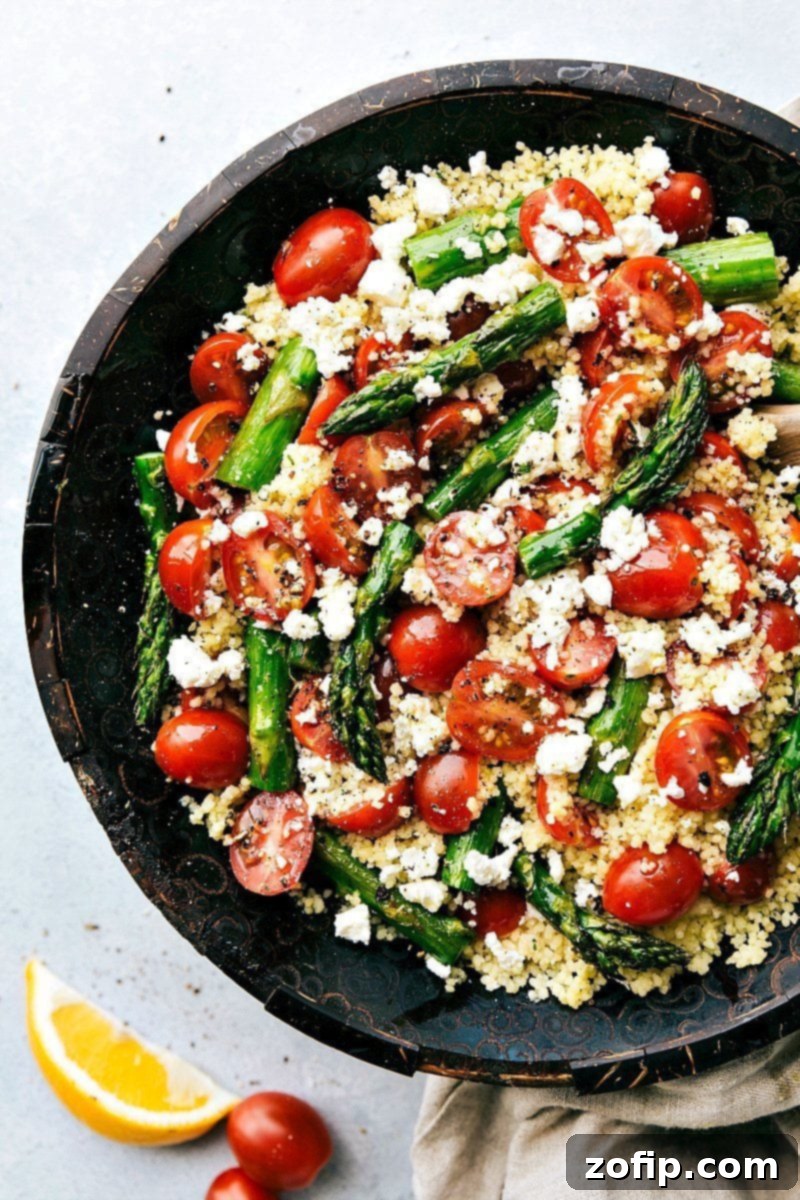
Make Ahead and Storage Tips for Asparagus Salad
While Asparagus Salad is undeniably best enjoyed fresh, there are smart strategies to prepare components in advance and store any leftovers effectively, ensuring you can savor its deliciousness without compromising quality.
Storage Best Practices
For optimal taste and texture, this Asparagus Salad truly shines when consumed soon after it’s assembled. The dressing, while incredibly flavorful, can soften the couscous and vegetables if left mixed for an extended period. Therefore, if you don’t anticipate serving the entire salad at once, a key tip is to only dress the portion you plan to eat immediately. Keep the undressed salad components and the vinaigrette stored separately.
Make Ahead Strategy: To streamline your meal prep, you can prepare all the individual ingredients in advance. Roast the asparagus, cook and cool the couscous, halve the cherry tomatoes, and prepare the balsamic vinaigrette. Store each component in separate airtight containers in the refrigerator. This way, when you’re ready to serve, simply combine the desired amounts of each ingredient, toss with the dressing, and add the feta cheese just before enjoying. This method ensures maximum freshness and prevents any sogginess. The prepared components will generally stay fresh for up to 2-3 days in the refrigerator.
More Delightful Spring Recipes to Explore
Embrace the freshness of spring with these other inspiring and delicious recipes that are perfect for the season’s gatherings or everyday meals. They are sure to add color and flavor to your table!
- Spring Quinoa Salad with steak for a hearty and healthy option.
- One-Hour Easter Dinner, a convenient sheet pan meal that simplifies your holiday cooking.
- Spring Confetti Bars, a sweet treat bursting with spring-inspired colors and flavors.
- Mango Salad with fresh berries, offering a refreshing and fruity twist.
- Roasted Beet and Goat Cheese Salad with an vibrant orange dressing, a sophisticated and colorful side.
Print Recipe
★★★★★
Asparagus Salad
By Chelsea Lords
Asparagus Salad blends the flavors of crisp roasted asparagus, fresh cherry tomatoes, garlicky couscous, feta cheese, and a light balsamic vinaigrette into the ideal spring salad.
Video
Recipe video coming soon!
Equipment
- Large sheet pan (15″ x 21″)
- Small pot
Ingredients
- 1 pound asparagus
- 2 tablespoons olive oil
- 1 teaspoon salt
- 1/2 teaspoon pepper
- 1 lemon
- 1 (5.8-ounce) package roasted garlic and olive oil couscous (see Note 1 below)
- 1 cup halved cherry tomatoes
- 1/3 cup crumbled feta cheese
Dressing
- 3 tablespoons balsamic vinegar
- 2 tablespoons olive oil
- 1/2 teaspoon minced garlic
- 1 teaspoon Dijon-style mustard
- 1/2 tablespoon honey
Instructions
- Preheat oven to 425°F (220°C). Juice the lemon using a citrus juicer to get 1 tablespoon of lemon juice for the asparagus. Break off the woody ends from the asparagus spears. On a large sheet pan, toss the prepped asparagus with 2 tablespoons of olive oil, 1 teaspoon of salt, and 1/2 teaspoon of pepper. Ensure the asparagus is spread out in a single layer for optimal roasting; if the pan is crowded, the asparagus will steam rather than roast to crisp perfection.
- Bake in the preheated oven for 7–15 minutes. Cooking time will vary depending on the thickness of your asparagus; thinner stems will cook very quickly. Flip the spears halfway through the cooking process to ensure even roasting. Once tender-crisp and slightly golden, remove from the oven and immediately squeeze 1 tablespoon of lemon juice over the hot spears. Allow the asparagus to cool completely, then chop into 2-inch pieces.
- Prepare the packaged couscous according to the directions on its packaging. Once cooked, transfer the fluffy couscous to a large bowl or spread it on a shallow plate to allow it to cool down (see Note 1 below for plain couscous alternative).
- To prepare the dressing, pour 3 tablespoons of balsamic vinegar into a small pot. Place the pot over medium heat and bring the vinegar to a boil. Continue to simmer, stirring occasionally, until the vinegar has visibly thickened and reduced by half (approximately 1-1/2 tablespoons). This reduction happens quite rapidly once boiling, so remain at the stovetop and watch it closely to prevent burning.
- Allow the reduced balsamic vinegar to cool slightly before transferring it to a mason jar or a small mixing bowl. Add the remaining dressing ingredients: 2 tablespoons of olive oil, 1/2 teaspoon of minced garlic, 1 teaspoon of Dijon-style mustard, and 1/2 tablespoon of honey. Season the dressing to taste with salt and pepper. Seal the jar tightly and shake vigorously to combine all ingredients. You may need to stir the dressing briefly to fully incorporate the honey. Place the dressing in the fridge to chill until you are ready to assemble the salad; remember to shake it again before drizzling it over the salad.
- Once all components are cooled and ready, halve the cherry tomatoes. Add the cooled cherry tomatoes and chopped roasted asparagus to the large bowl containing the cooled couscous. Gently toss to combine. Give your chilled dressing a final shake and drizzle it over the salad to your taste preference, starting with less and adding more as needed. For an extra burst of freshness, you may squeeze an additional splash of fresh lemon juice over the salad at this point. Gently toss again. Finally, top the salad with the crumbled feta cheese. Taste and adjust any seasonings if required. Serve and enjoy your vibrant Asparagus Salad immediately.
Recipe Notes
Note 1: For this salad, I recommend using Near East’s boxed and seasoned “Roasted Garlic & Olive Oil” couscous mix for convenience and robust flavor. However, you can easily substitute with 1/2 cup of plain couscous. If opting for plain, ensure you use small (Moroccan) couscous, as its fine texture cooks quickly and integrates best into the salad.
Storage: To maintain the best texture and prevent sogginess, it’s advisable to only dress the portion of the salad you intend to eat immediately. This salad does not store well with the dressing already mixed in for extended periods. Store undressed components separately in airtight containers in the refrigerator for up to 2-3 days.
Nutrition Information
Calories: 207kcal |
Carbohydrates: 19g |
Protein: 6g |
Fat: 13g |
Saturated Fat: 3g |
Cholesterol: 12mg |
Sodium: 165mg |
Potassium: 282mg |
Fiber: 3g |
Sugar: 5g |
Vitamin A: 820IU |
Vitamin C: 13mg |
Calcium: 94mg |
Iron: 2mg
Nutrition information is automatically calculated and should be used as an approximation only.
Enjoy this recipe? Share your thoughts and leave a comment below!