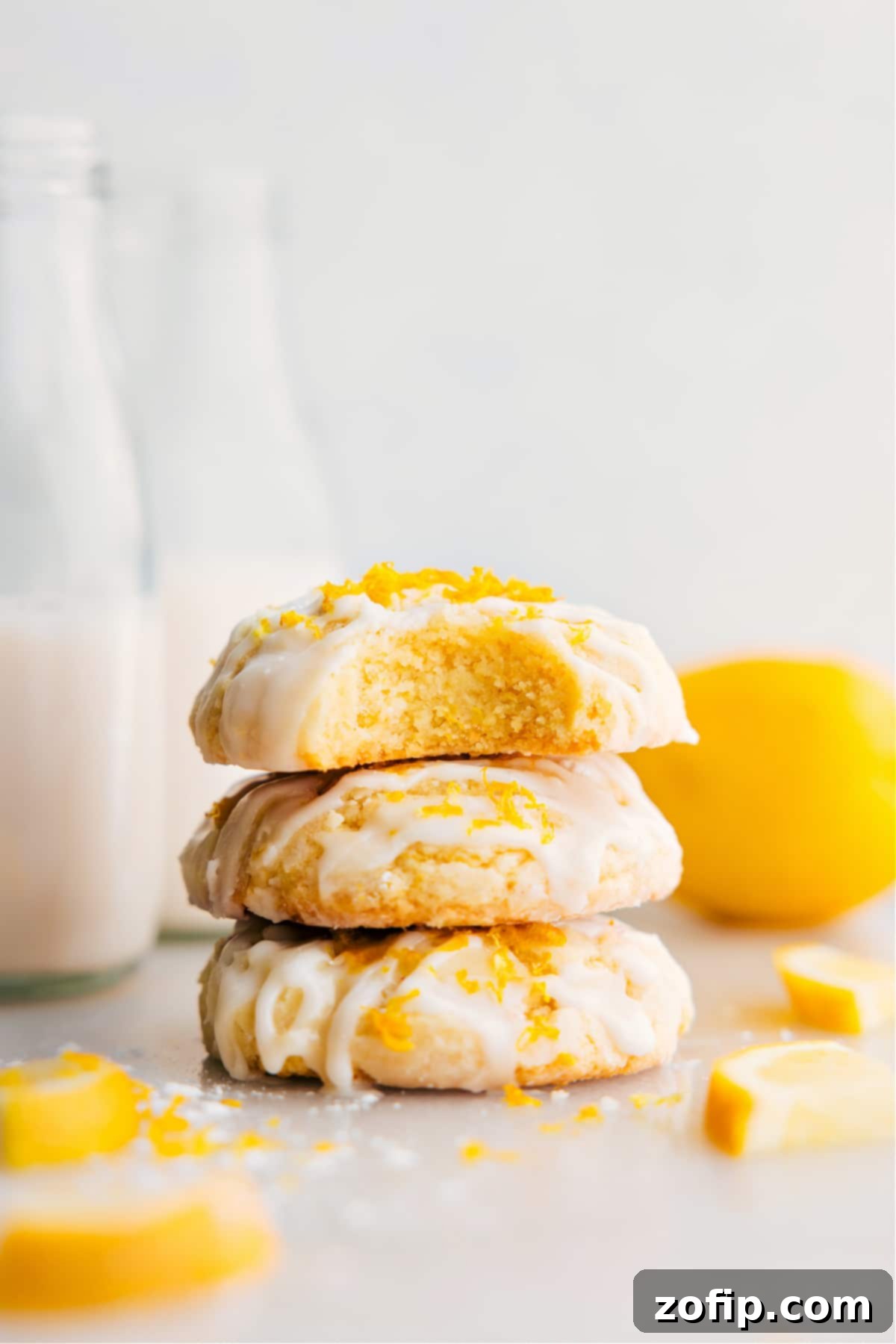
Lemon Cookies offer an unparalleled burst of citrus delight, delivering a perfectly chewy and wonderfully thick texture reminiscent of your favorite bakery treats. Each bite is infused with a vibrant lemon flavor, beautifully complemented by a simple yet irresistible 2-ingredient lemon glaze. If you’ve been searching for a lemon cookie that truly tastes like lemon, your quest ends here.
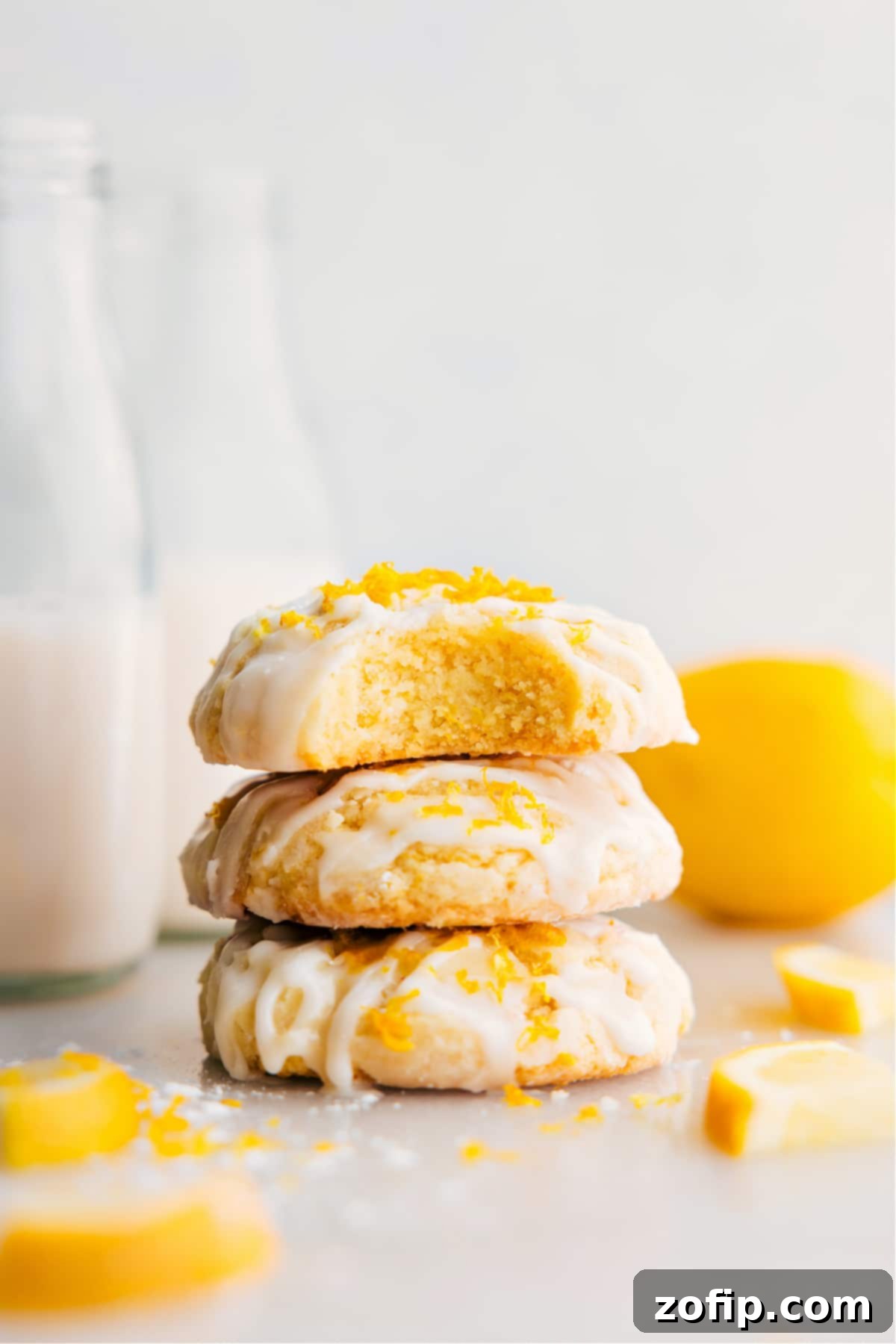
Experience the Best Lemon Cookies Ever
Prepare to be amazed by these truly exceptional lemon cookies! They are not just thick and soft; they are incredibly chewy, bursting with an authentic lemon flavor that sets them apart from the rest. Unlike many lemon cookie recipes that fall flat, tasting more like a standard sugar cookie with a hint of citrus, our recipe ensures a profound lemony essence in every mouthful.
Achieving this impeccable balance of intense lemon flavor and a perfect cookie texture can be surprisingly tricky. Simply adding more lemon juice, while seemingly logical, often leads to thin, crisp cookies – a delightful treat in its own right, but not the desired thick and chewy outcome for this particular recipe. To overcome this challenge and deliver a superior flavor profile, our recipe harnesses a powerful combination of key ingredients:
- Generous amounts of fresh lemon zest, which captures the essential oils and aromatic compounds of the lemon without adding excess liquid.
- Pure lemon extract, which amplifies the citrus notes, ensuring a robust flavor punch without altering the dough’s consistency.
- A bright and tangy lemon-juice glaze, providing the final flourish of fresh lemon brightness and a beautiful bakery-style finish.
This thoughtful approach ensures that each cookie is intensely flavorful, delightfully soft, and wonderfully chewy – a true celebration of lemon in dessert form. These are the chewy lemon cookies you’ve always dreamed of, perfected to a bakery-style standard right in your own kitchen.

Essential Ingredients for Perfect Lemon Cookies
Crafting these delectable lemon cookies begins with selecting and preparing the right ingredients. Each component plays a vital role in achieving the signature taste and texture that makes these cookies so special:
- Unsalted Butter: It’s crucial that your butter is at room temperature. This allows it to cream beautifully with the sugar, incorporating air and creating a light, fluffy base for your cookies. Cold butter won’t emulsify properly, leading to a denser result.
- Granulated Sugar: We opt for white granulated sugar to provide a pure, sweet base that allows the vibrant lemon flavor to shine through without competition from molasses notes found in brown sugar. It also contributes to the crisp exterior and chewy interior.
- Lemon Zest: This is where the majority of our intense lemon flavor comes from! The zest contains essential oils that deliver a potent citrus aroma and taste without adding unwanted liquid that could alter the cookie’s texture.
- Eggs: Large eggs act as a binder, holding all the ingredients together and providing essential structure to the cookies. Using room temperature eggs also helps them emulsify better with the butter and sugar, contributing to a smoother, more uniform dough.
- Vanilla Extract: A touch of vanilla extract (or vanilla bean paste) adds depth and complexity, beautifully complementing and enhancing the bright lemon notes without overpowering them. It’s a subtle but significant flavor enhancer.
- Lemon Extract: To truly elevate the lemon flavor to bakery-style levels, lemon extract is a game-changer. Unlike lemon juice, it intensifies the citrus punch without adding excess moisture to the dough, which could make the cookies thin and flat. Always choose pure lemon extract for the best, most authentic flavor; it can typically be found alongside other baking extracts in your local grocery store.
- Baking Powder: As a leavening agent, baking powder is responsible for giving these cookies their delightful rise and fluffy texture. For optimal results, ensure your baking powder is fresh and active – old baking powder can lead to flat, dense cookies.
- All-Purpose Flour: Accurate flour measurement is paramount. Using too much flour can result in dry, crumbly, and flavorless cookies, while too little will cause them to spread excessively during baking. We recommend using the “spoon and level” method or, even better, a kitchen scale for precise measurement.
- Powdered Sugar (for rolling): Rolling the dough balls in powdered sugar before baking serves multiple purposes. It adds an extra layer of sweetness, creates a beautiful “crinkle” effect as the cookies bake and expand, and contributes to that signature bakery appearance.
Quick Tip for Zesting Lemons
When zesting your lemons, be mindful to only capture the bright yellow outer layer, carefully avoiding the white pith underneath. The pith is quite bitter and can impart an undesirable flavor to your cookies. Using a microplane zester is highly recommended, as it allows you to precisely remove only the flavorful zest, leaving the bitter pith behind for a truly pure lemon essence.

Step-by-Step Guide: How to Make Irresistible Lemon Cookies
Follow these detailed steps to create your own batch of perfect, bakery-style lemon cookies:
- Prepare Lemon Zest and Juice: Begin by zesting your lemons using a microplane, aiming for approximately 3 tablespoons of finely grated zest. Once zested, juice the lemons to yield about 2 tablespoons of fresh lemon juice. Set the juice aside, as it will be used later for the delightful lemon glaze.
- Cream Wet Ingredients: In the bowl of a stand mixer fitted with the paddle attachment, combine the softened unsalted butter, granulated sugar, and lemon zest. Beat on medium speed for 2-3 minutes, or until the mixture becomes light, fluffy, and resembles creamy peanut butter. This step is crucial for incorporating air, which contributes to the cookies’ light texture. Next, beat in the room temperature eggs, vanilla extract, and lemon extract until just combined. Be sure to scrape down the sides of the bowl with a spatula to ensure all ingredients are thoroughly incorporated.
- Incorporate Dry Ingredients and Initial Chill: Gradually add the baking powder, salt, and all-purpose flour to the wet ingredients. Mix on low speed until the dry ingredients are just combined and no streaks of flour remain. Be careful not to overmix, as this can develop the gluten in the flour, leading to tough cookies. Once mixed, cover the dough tightly with plastic wrap and chill it in the refrigerator for 20 minutes. This initial chill helps the butter firm up, preventing excessive spreading during baking, and allows the flavors to meld.
- Prepare for Rolling and Second Chill: While the dough is chilling, line a large plate or baking sheet with parchment paper. Pour about 1/2 cup of powdered sugar into a small, shallow bowl – this will be used for coating the dough balls.
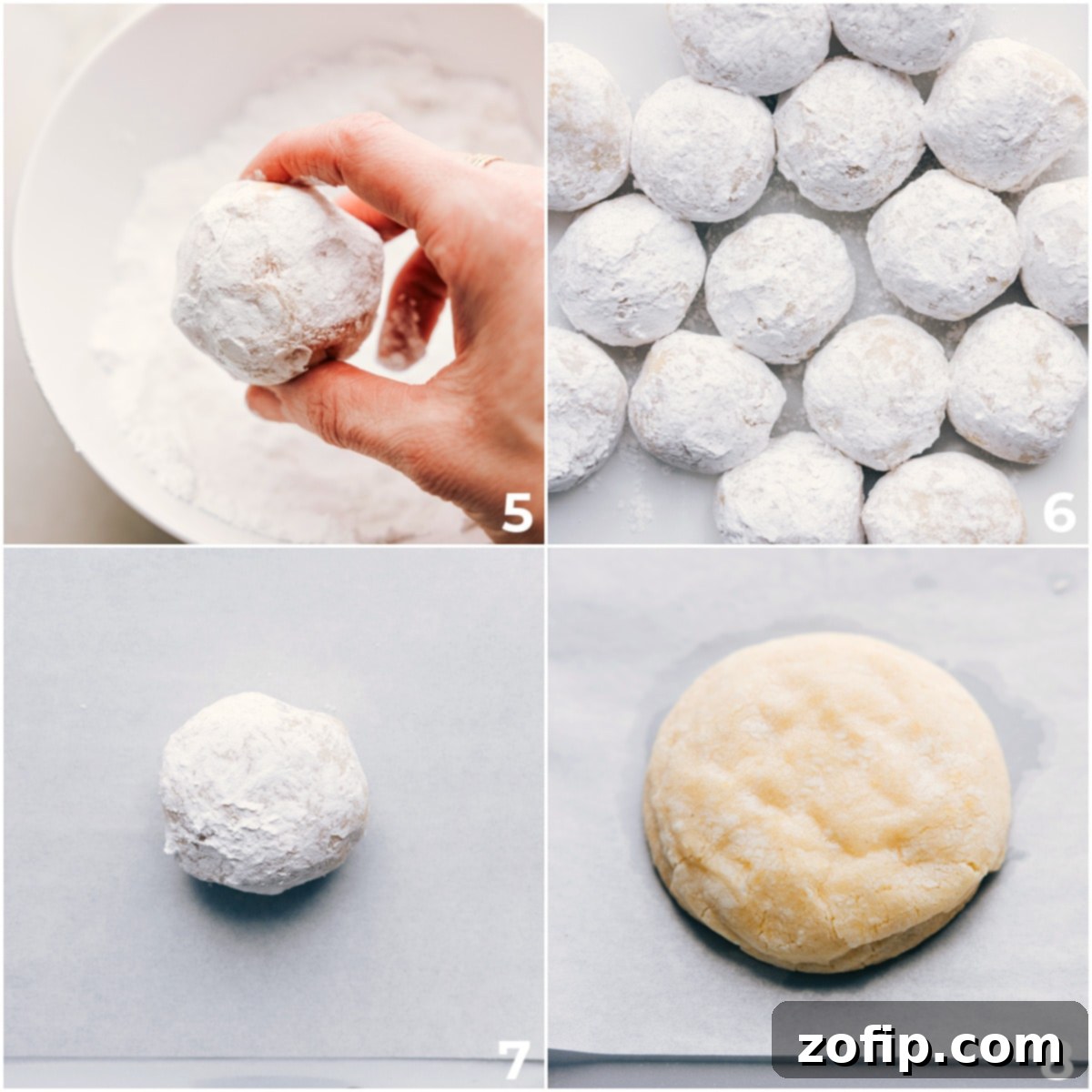
- Portion, Roll, and Chill Dough Balls: Once the dough has chilled, divide it into uniform balls, each approximately 1/4 cup in size (around 60 grams for consistent baking). Roll each dough ball thoroughly in the powdered sugar until it’s generously coated. Place the coated dough balls onto the parchment-lined plate. Repeat this process until all the dough has been portioned and rolled. For the best results, chill these coated dough balls again for another 20 minutes in the refrigerator (or 10 minutes in the freezer if you’re short on time). This second chill is key to preventing spreading and enhancing the cookie’s final texture and chewiness.
- Bake to Perfection: Preheat your oven to 325°F (162°C) and line a large baking sheet with fresh parchment paper. Arrange 6 chilled dough balls on the prepared baking sheet, ensuring they are spaced well apart. Bake for 10-15 minutes, or until the cookies are puffed, the edges are lightly golden, and the centers appear set but not overly browned. Remember, slightly under-baking these cookies is key to their soft and chewy texture.
- Cool and Glaze: Once baked, remove the cookies from the oven and let them cool on the baking sheet for 5 minutes. This allows them to set up slightly before transferring. Carefully move the cookies to a wire rack to cool completely. While the cookies cool, prepare the glaze: whisk together the reserved 2 tablespoons of lemon juice and 1 cup of powdered sugar until perfectly smooth. For easy drizzling, transfer the glaze to a zip-top bag, snip off a tiny corner, and artfully drizzle it over the fully cooled cookies. Serve and enjoy these delightful lemon cookies at room temperature or even chilled for a refreshing treat!
Achieve Bakery-Style Perfection: Top Tips for Lemon Cookies
To ensure your lemon cookies turn out perfectly every time, keep these expert tips in mind:
- Embrace Room Temperature Ingredients: Always allow your butter and eggs to come to room temperature, typically for about an hour before baking. Room temperature butter creams more smoothly with sugar, incorporating more air, which leads to lighter and fluffier cookies. Similarly, room temperature eggs emulsify better, creating a more uniform and cohesive dough.
- Precision with a Food Scale: For unparalleled accuracy in baking, a food scale is your best friend. Measuring flour by weight (400 grams is ideal for this recipe) is far more consistent than using measuring cups, which can vary wildly depending on how you scoop. A food scale also ensures your dough balls are uniform in size, guaranteeing even baking and consistent results.
- Slightly Under-bake for Softness: The secret to a perfectly soft and chewy cookie lies in slightly under-baking them. Keep a close eye on your cookies; they should appear set and no longer glossy on top, with only a hint of golden color around the edges. They will continue to set as they cool on the baking sheet.
- Cool Completely Before Glazing: While the aroma of warm cookies is tempting, these particular lemon cookies are best enjoyed at room temperature or even chilled. More importantly, it’s crucial to allow them to cool completely on a wire rack before applying the glaze. Glazing warm cookies will cause the glaze to melt and run off, creating a messy rather than a beautifully finished cookie.
- Maintain Softness After Baking: Once baked, transfer your cookies to a wire rack immediately after the initial 5-minute cool on the pan. Cooling on a wire rack allows air to circulate around all sides, preventing the bottoms from becoming soggy due to trapped steam. For optimal softness during storage, keep the cooled, glazed cookies in an airtight container at room temperature.
- Don’t Overmix the Dough: After adding the dry ingredients, mix just until no dry streaks of flour remain. Overmixing develops gluten, which can lead to tough, dense cookies instead of the desired soft and chewy texture.
- Freshness Matters: Always use fresh lemons for the zest and juice. The flavor difference between fresh and bottled lemon juice is significant and will truly impact the final taste of your cookies. Also, ensure your baking powder is fresh for proper leavening.
- Parchment Paper is Your Friend: Lining your baking sheets with parchment paper prevents sticking, ensures even browning, and makes cleanup a breeze.
- Bake in Batches: Avoid overcrowding your baking sheet. Baking 6 cookies at a time allows for optimal air circulation, ensuring each cookie bakes evenly and perfectly.
Lemon Cookies: Your Questions Answered
Flat cookies are usually a result of the dough not being chilled sufficiently, or the flour being under-measured. Chilling the dough is critical as it solidifies the butter, which in turn helps prevent the cookies from spreading too much during baking. Ensure you chill the dough as directed, and measure your flour accurately, preferably by weight.
Absolutely! These lemon cookies are excellent for making ahead. You can freeze the prepared dough balls for future baking sessions, or simply chill them in the refrigerator if you plan to bake within a day or two. For the best flavor and texture, we recommend preparing the lemon glaze fresh just before serving the cookies.
Crumbly lemon cookies typically indicate either an excess of flour in the dough or that they have been over-baked. To avoid this, always measure your flour with precision (a food scale is highly recommended), and bake the cookies only until they are just set and lightly golden around the edges, rather than until they are deeply browned.
While you technically can, using fresh lemon juice for the glaze and fresh zest in the dough makes a significant difference in flavor. Bottled lemon juice often contains preservatives and lacks the vibrant, bright taste of freshly squeezed lemons, which is essential for these bakery-style cookies.
Eureka or Lisbon lemons are commonly available and work wonderfully, offering a classic tart and bright flavor. If you can find them, Meyer lemons provide a slightly sweeter and less acidic flavor with a more aromatic zest, which can also be a delightful choice for these cookies.
While these cookies are perfect as is, you can certainly experiment! A touch of poppy seeds (1-2 tablespoons) can add a lovely texture and visual appeal, turning them into lemon poppy seed cookies. You could also try incorporating a small amount of finely chopped culinary lavender for a sophisticated lemon-lavender twist.
Storage Solutions for Soft Lemon Cookies
To keep your baked lemon cookies wonderfully soft and fresh, allow them to cool completely on a wire rack after glazing. Once cooled, store them in an airtight container at room temperature for up to a week. For longer storage, you can freeze the cookie dough balls.
Instead of freezing baked cookies, we highly recommend freezing the unbaked dough. Simply form the dough into balls as directed, roll them in powdered sugar, and freeze them solid on a sheet pan. Once frozen, transfer the solid dough balls to an airtight freezer-safe bag or container and store for up to 3 months. When you’re ready to bake, simply place the frozen dough balls on a prepared baking sheet and bake directly from the freezer, adding a few extra minutes to the baking time as needed. The glaze does not freeze and thaw well, so it’s best to prepare a fresh batch of glaze right before serving your freshly baked cookies.

Explore More Zesty Lemony Treats
If you’re a true fan of all things lemon, you’ll love these other bright and refreshing dessert and drink recipes:
- Lemon Blueberry Sweet Rolls with a luscious sweet glaze – a perfect breakfast or brunch treat.
- Classic Lemon Pie featuring a buttery graham cracker crust, offering a delightful balance of tart and sweet.
- Refreshing Sparkling Blackberry Lemonade, made with fresh blackberries for a vibrant and bubbly drink.
- Timeless Lemon Bars, featuring a rich, zesty lemon filling atop a crumbly shortbread crust.
- Elegant Lemon Curd Cookies, generously filled with homemade, velvety fresh Lemon Curd.

Lemon Cookies
Video
Equipment
- Stand mixer
Ingredients
- 16 tablespoons unsalted butter room temperature
- 1-1/2 cups granulated sugar
- 3 lemons (for zest and juice)
- 2 large eggs
- 1 teaspoon vanilla extract see note 1
- 2 teaspoons lemon extract see note 2
- 2 teaspoons baking powder
- 1 teaspoon salt
- 3 cups all-purpose flour see note 3
- 1-1/2 cups powdered sugar divided (for rolling and glaze)
Instructions
- Zest lemons with a zester to get 3 tablespoons zest. Juice using a citrus juicer to get 2 tablespoons juice. Set aside the juice for the glaze.
- In a stand mixer, cream butter, sugar, and lemon zest until fluffy, about 2–3 minutes. Beat in eggs, vanilla, and lemon extract until combined. Scrape sides, then add baking powder, salt, and flour. Mix until no dry streaks remain.
- Cover dough tightly and chill in fridge for 20 minutes.
- Line a large plate with parchment paper. Add 1/2 cup powdered sugar to a small bowl for rolling.
- Divide the dough into 1/4 cup-sized balls (about 60 grams). Roll each ball generously in powdered sugar and place on parchment-lined plate. Repeat until all dough is used.
- Chill dough balls for 20 minutes in fridge or 10 minutes in the freezer. Preheat oven to 325°F (162°C) and line a large sheet pan with parchment paper.
- Bake 6 cookies at a time for 10–15 minutes until puffed and slightly golden around the edges. Cool on the pan for 5 minutes, then transfer to a wire rack to cool completely before glazing. Repeat with remaining dough balls.
- Whisk 2 tablespoons lemon juice with 1 cup powdered sugar until smooth to make the glaze. Transfer to a zip-top bag, snip off the corner, and drizzle over cooled cookies. Enjoy at room temperature or chilled.
Recipe Notes
Note 2: Lemon extract is essential for boosting the citrusy flavor without adding moisture. Ensure you use pure lemon extract for the best results.
Note 3: Precise flour measurement is crucial. Too little flour will cause cookies to spread excessively, while too much will lead to dry, bland cookies. A food scale, measuring 400 grams of flour, offers the most accurate result.
Note 4: For the best texture and consistent baking, these cookies perform optimally when portioned to roughly 60 grams of dough per ball. Altering the size may affect baking time and final texture.
Storage: To store, cool baked cookies completely, then place in an airtight container at room temperature for up to a week. For longer preservation, freeze raw dough balls solid on a sheet pan, then transfer to an airtight bag for up to 3 months. Bake directly from frozen, adding a couple of extra minutes as needed. The glaze doesn’t freeze well, so make it fresh when ready to serve.
Nutrition
Nutrition information is automatically calculated and should only be used as an approximation.
Please note: This recipe has been updated for an even better baking experience. The previous version utilized LemonHead candies, which have become increasingly difficult to source. If you happen to find these candies and wish to try the older version, you can access it here.